

Push-rod vs Pull-rod: How F1 teams are shaping 2026 suspension strategies

In Formula 1, suspension architecture is a critical determinant of aerodynamic efficiency, and for F1 2026, teams are aligning their front and rear setups around pushrod and pullrod configurations to maximise performance within the regulations.
Regulatory constraints largely determine a team’s approach to suspension design, with the final configuration shaped by a range of technical and aerodynamic factors. So far in F1 2026, we’ve seen an array of different solutions.
Pushrod vs Pullrod: key technical trade-offs
Want more PlanetF1.com coverage? Add us as a preferred source on Google for news you can trust.
The key difference comes down to whether teams employ pushrod or pullrod suspension, a choice often dictated by the aerodynamic requirements of the car.
There’s generally no right or wrong answer when it comes to pull-rod versus push-rod argument from a suspension geometry or leverage perspective. The overriding consideration is generally how it can be packaged within the broader context of the car, especially aerodynamic performance.
The reason this is a factor is that the suspension arms, both front and rear, sit within a region that can be disruptive to the flowstream. Any deviation from what would be considered conventional has the potential to alter the airflow’s trajectory downstream, creating aerodynamic issues.
Push-rod suspension is easier to work on and dial in, but raises the centre of gravity, can limit diffuser efficiency, and even interfere with airflow into the radiators and floor.
Pull-rod design can improve weight distribution and clean up airflow into the sidepods and floor, but is harder to work on, more complex to design around, and is slightly less forgiving when it comes to its tuning.
Given that any design changes being implemented incur a trade-off, there must be an incrementally larger advantage from one design to the other.
Meanwhile, the packaging and placement of the components can also inflict a penalty when making setup changes, with time lost to making changes if those components are more difficult to access.
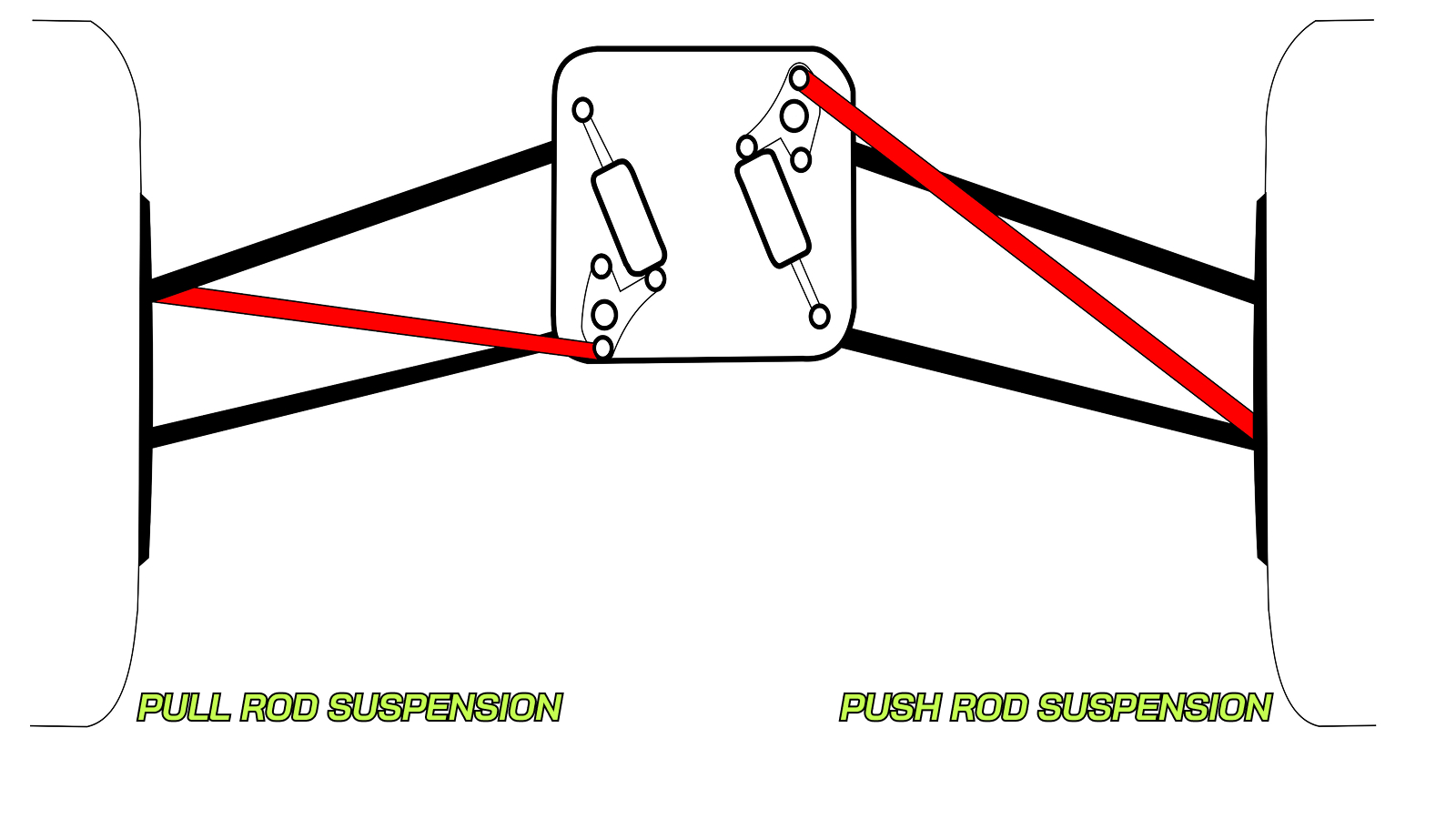
Under the previous regulations, teams toward the front of the grid gravitated toward a pull-rod front suspension arrangement and push-rod rear.
At the front of the car, this generally came down to the ability that the arrangement gave them to incline the rest of the suspension elements. That helped aerodynamically to deal with the approaching airflow and move it more effectively toward the floor and sidepods.
At the rear of the car, the decision to move to push-rod was largely driven by the dimensions of the diffuser. A pullrod arrangement might have impinged on the size and shape of the underfloor – as seen under previous regulations, albeit in the opposite direction.
For F1 2026, the majority of cars were launched with push-rod suspension front and rear, though Alpine and Cadillac have both bucked that trend.
| Team | Front Suspension | Rear Suspension |
| Mercedes | Push-rod | Push-rod |
| Red Bull | Push-rod | Push-rod |
| Ferrari | Push-rod | Push-rod |
| Racing Bulls | Push-rod | Push-rod |
| Haas | Push-rod | Push-rod |
| Cadillac | Pull-rod | Pull-rod |
| Alpine | Pull-rod | Pull-rod |
It’s a choice that highlights how, even within the tight confines of modern F1’s technical regulations, there is room for interpretation.
Each team has made its decision based on what it feels works best as a complete package when it comes to suspension, aerodynamics, weight distribution, and even cooling.
That Audi and Cadillac have gone in a different direction highlights a different philosophy.
Does that point to a key discovery they’ve made that others haven’t? Only time will tell.
In part five of the series we’ll shift focus to a more general overview of how the cars have changed aerodynamically and how we can use past assets to better understand where the teams might focus their attention to find performance under this new ruleset.
Want to be the first to know exclusive information from the F1 paddock? Join our broadcast channel on WhatsApp to get the scoop on the latest developments from our team of accredited journalists.
You can also subscribe to the PlanetF1 YouTube channel for exclusive features, hear from our paddock journalists with stories from the heart of Formula 1 and much more!
Read Next: Adrian Newey masterclass revealed as Aston Martin AMR26 dissected