
Adrian Newey faces brutal Aston Martin reality as AMR26 reliability crisis bites early


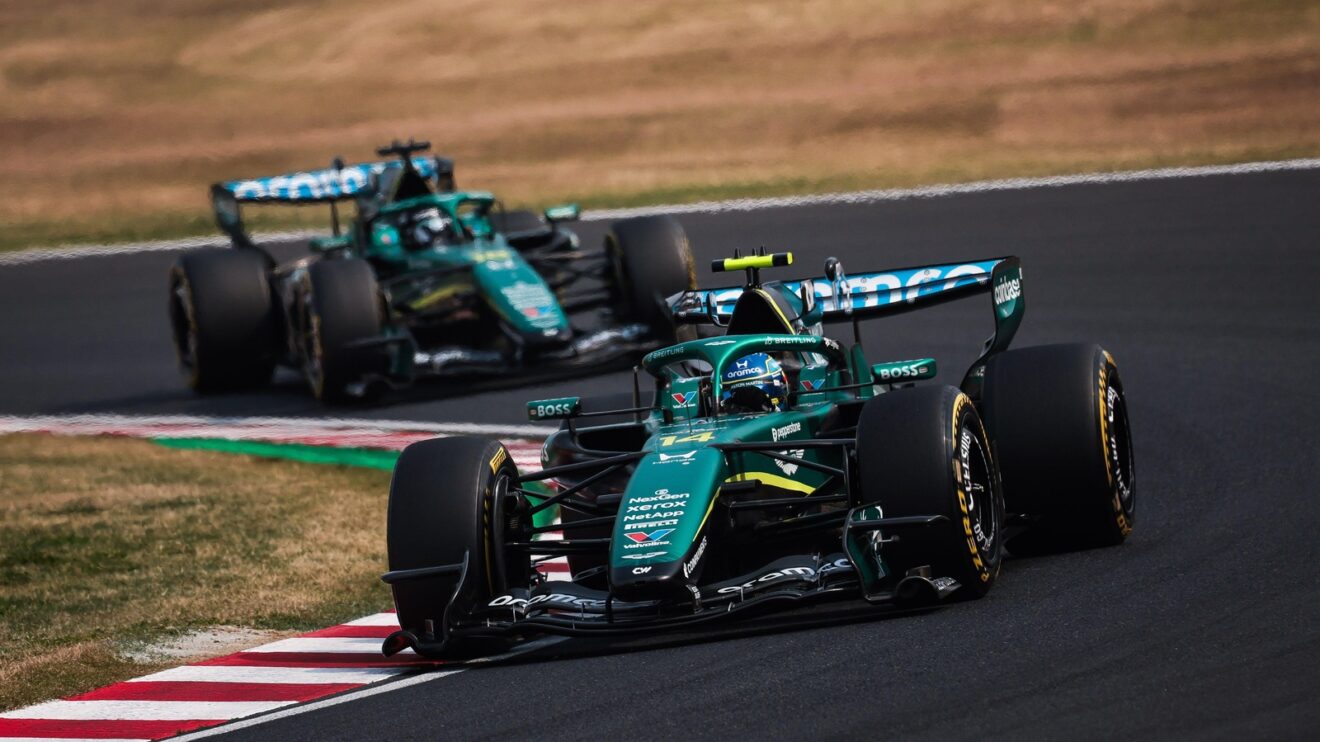
It has been a difficult start to F1 2026 for the Adrian Newey-led Aston Martin squad.
Aston Martin may have been one of the most exciting prospects coming into F1 2026, but it’s clear the Adrian Newey-led squad needs time to find its feet.
Following the removal of Andy Cowell as a team boss, Adrian Newey has taken full control of Aston Martin to kick off what is a very difficult start to the new regulations cycle.
Adrian Newey Aston Martin AMR26 reliability struggles exposed
Want more PlanetF1.com coverage? Add us as a preferred source on Google to your favourites list for news you can trust.
One of the most anticipated cars on the F1 2026 grid was undoubtedly the Aston Martin AMR26, the first car developed by Adrian Newey with the bevy of top-level resources available to him at Lawrence Stroll’s team, particularly as it finally brought together the powerhouses of Newey and Fernando Alonso in the twilight of the two-time F1 World Champion’s career.
Given his track record of success, with only the stillborn McLaren MP4/18 regarded as a ‘failure’ (although that was through fragility in its aggression, rather than lack of performance), surely the AMR26 would take Aston Martin a step forward to join the ranks of the truly front-running teams?
Pre-season chat in the paddock was mixed. Some sources suggested that Newey is “past his best” and his first offering would be a “fat green whale”, while others pointed to how a new career challenge would only rejuvenate a man who, at the start of the most recent regulations cycle change in 2022, stole a march on the rest of the grid by paying close attention to the suspension design of the Red Bull RB18 to unlock the full potential of the ground effect regulations faster than anyone else.
It’s difficult to evaluate where Aston Martin truly stacks up performance-wise, but, as it stands, it appears that the Silverstone-based squad is in for an annus horribilis – what could be the worst season of its current iteration since Stroll’s purchase of the team eight years ago.
As has been well-documented over the first weeks of this championship, much of this appears to be down to early struggles to create a stable platform of reliability with Honda.
Having given up on its long-standing Mercedes arrangement, Stroll’s squad signed up with the Japanese manufacturer as it formally returns to Formula 1 as a full-bore power unit supplier to become the de facto Honda factory team.
But this arrangement has not kicked off smoothly. The AMR26 was late hitting the track in Barcelona for its shakedown, with the team only succeeding in getting the car on track late on the penultimate day. Crawling around the circuit, the car broke down almost immediately as sources pointed to the power unit and chassis not communicating properly with each other and triggering an energy recovery system issue.
Bahrain testing wasn’t much better: both Fernando Alonso and Lance Stroll were left frustrated by regular issues with reliability. The main issue, as has been explained with remarkable openness and transparency by Honda and Newey, has related primarily to battery pack shaking.
“What is important to remember is, effectively, the PU, the combination of the ICE and possibly the MGU as well, is the source of the vibration. It’s the amplifier,” Newey said in Australia.
“The chassis is, in that scenario, the receiver. A chassis, a carbon chassis, is a naturally stiff structure with very little damping, so the transmission of that vibration into the chassis, we haven’t made any progress on.”
With the battery shaking itself to the point of destruction, leading to one particularly ugly breakdown towards the end of Bahrain testing that all but ended its pre-season programme early, it’s meant that the focus at the start of this campaign has been on unlocking reliability, rather than chasing performance.
In that same extraordinary press conference in Australia, Newey explained how the vibrations risked triggering “nerve damage” for the drivers as Honda concentrated on introducing countermeasures to combat the vibrations.
With neither car making it to the end in Australia, it was in China that the full extent of the vibrations became truly apparent. While Lance Stroll retired on Lap 9 with a power unit issue, Alonso withdrew from the race at two-thirds distance as he was overcome due to discomfort from the excessive shaking he was being subjected to.
It hasn’t been a good start to the relationship between Aston Martin and Honda, although there are no external signs of it turning acrimonious just yet.
Stroll’s team has not attempted to disguise the extent of how Honda’s shortcomings have cost it dearly at the start of this regulation cycle: at a time when the four Mercedes-powered teams were racking up huge mileage and gaining good insight on performance and operational techniques pertaining to energy management, Aston Martin was sitting in the garage, going nowhere.
It’s been a hugely challenging start to the dynamic between the two sides but, despite the firm finger-pointing from Aston Martin, Honda has not fired back to any great extent. Indeed, its only real riposte has been that its level of vibration was at an acceptable level while on the test bench but, once mated to the AMR26, it is amplified to the battery-destroying levels that have been so costly.
With Honda also pointing out that Newey had made late requests to change the integration design of the battery, the specific area of unreliability, this may go some way to explaining why the issues have happened.
However, Honda can’t lean solely on this as a defence, as, while a lack of reliability is the major limiting factor at present, Newey has also very firmly pointed out that the Japanese manufacturer must start working hard on its 2027 power unit as it’s “very clear a very large step in combustion engine power” is needed.
At Honda’s home race at Suzuka, the first hurdle was cleared: Fernando Alonso completed the full race distance to mark Aston Martin’s first finish of the season, underlining the progress that has been made in establishing that reliability baseline.
More on Aston Martin’s troubled 2026
Fernando Alonso likens Aston Martin struggles to McLaren 2023 as ‘huge potential’ remains
Aston Martin continues AMR26 upgrade plan despite F1 2026 struggles
What have the drivers had to say?
With Aston Martin’s season derailed by Honda’s issues, the positive that the team can take from this is that there is only one direction that it can go.
While Honda is, quite literally, thousands of kilometres behind on understanding compared to the likes of Mercedes, Ferrari, and Red Bull Powertrains, the FIA safety net of the ADUO [Additional Development and Upgrade Opportunities] may play a big part in allowing Honda to close the gap on its rival manufacturers.
Essentially, Aston Martin has found itself in the same position that McLaren did just over a decade ago: Honda started work on the new power unit regulation cycle behind its rivals and is now, frantically, trying to close that gap. There’s no reason to doubt that Honda can, and will, come good again, but the question mark is on when.
But patience will likely be needed, and what Stroll and Newey need to be wary of is doing exactly what McLaren did last decade: put in all the hard yards of providing the cars for the real-world testing of the Honda power units, only to cut and run to another supplier just as Honda started figuring things out, much to Red Bull’s benefit as that partnership started winning races and titles.
Unfortunately for Alonso, who must not be able to believe his bad luck to be reunited with an underperforming Honda right as he finally gets a Newey-penned car, his patience might end up not being rewarded; at 45 years old this year, the time required to turn Aston Martin-Honda around into race winners from this position may be a step too far within the constraints of a driving career that is already extended beyond the usual longevity.
As for the chassis, it’s one that Lance Stroll has suggested isn’t the “rippiest beast” around the corners, but the AMR26 is one with a “lot of potential”, according to Alonso, and Newey himself has suggested that it could be a top-five level chassis if its full potential could be used.
Certainly, it’s an innovative design, with Newey explaining that it could “certainly be interpreted as aggressive”.
“It’s got quite a few features that haven’t necessarily been done before,” he said.
“Does that make it aggressive? Possibly. Possibly not. The car is tightly packaged. Much more tightly packaged than I believe has been attempted at Aston Martin before.
“This has required a very close working relationship with the mechanical designers to achieve the aerodynamic shapes we wanted. But I have to say that all the mechanical designers here have really embraced that philosophy.
“It hasn’t made their life easy, quite the opposite, but they’ve really risen to the challenge.
“It starts with the overall packaging of the car: where is the car carried over the wheelbase, where are the main masses carried.
“Then it’s worked through to the front and rear suspension – the front and rear suspension both have their own very important part to play in that manipulation of the flow field.”
Unfortunately, the potential of the package is unlikely to be seen this year, given the power unit and reliability constraints, but that hasn’t stopped the team from starting on its upgrade and development path, with Newey withdrawing to the factory after the Australia season opener in order to concentrate on finding ways to carry the team forward.
In Japan, a revised front wing and floor edge were introduced; according to Alonso, these weren’t made with an eye to performance, but more for ensuring that the correlation between Aston Martin’s state-of-the-art infrastructure at the factory and the real world is accurate; without knowledge that this correlation is accurate, introducing changes would only muddy the waters of progress far more.
As for Newey himself, I wrote in the pre-season that this year may be career-defining for him as he’s taken on a huge new challenge at Aston Martin. Under Stroll’s ownership, Newey has been given full autonomy over a team for the first time in his career and, according to sources from his previous teams, he is a man who has usually needed someone to temper his ideas. It’s the biggest question of this career step: Can a highly successful technical leader be an effective team leader without a managerial buffer?
But Newey is known to be looking for a team principal to slot into the role he occupies after usurping Andy Cowell; he appears cognisant (heh) of where his strengths lie as he looks to take a step back into the shadows to concentrate solely on technical matters.
While it is a highly questionable start for Newey, his decades of experience and proven track record of taking teams from competitive to dominant mean that it’s a case of watching and waiting. After all, Aston Martin has not been a winning team. Its infrastructure has barely had time to let the concrete dry, while top-level personnel have been shifting around: it’s only since August 2025 that Enrico Cardile has taken charge of the technical department.
The ingredients are all there, but the baking process has only just started and, while the team has slipped from the midfield to the very back in these early stages of Newey’s leadership, this fundamental reset of everything is perhaps exactly what Newey has identified as it needing in order to transform into something more potent.
After all, while his past successes at Williams and McLaren were more instantaneous, these were already established heritage teams with knowledge of how to win. After being convinced to leave McLaren to join Red Bull, it took four years for Christian Horner’s team to win with a Newey-penned car, and five for a title.
So, yes, it’s a horrible start, and Newey will face justifiable pressure in the short-term as a previously solid midfield outfit has clearly slipped backwards. But, amidst all the doom and gloom, there are plenty of reasons to be optimistic in the medium to long term.
Want to be the first to know exclusive information from the F1 paddock? Join our broadcast channel on WhatsApp to get the scoop on the latest developments from our team of accredited journalists.
You can also subscribe to the PlanetF1 YouTube channel for exclusive features, hear from our paddock journalists with stories from the heart of Formula 1 and much more!
Read Next: Audi’s early promise masked by power unit limits and costly race setbacks