
Carlos Sainz battling ‘animal instinct’ in F1 2026 qualifying demands


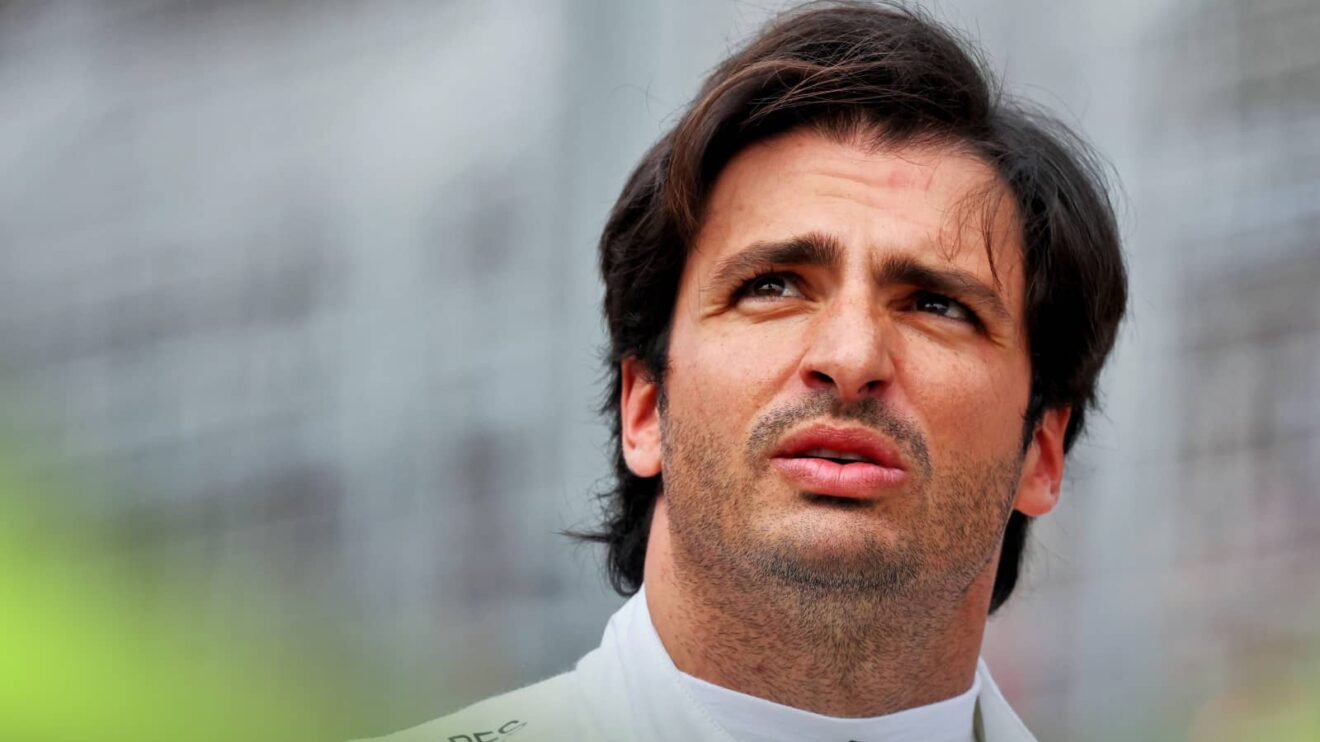
Williams driver Carlos Sainz at the 2026 Australian Grand Prix
Carlos Sainz believes he is closing in on Formula 1’s new qualifying technique after finally breaking into Q2 at the Japanese Grand Prix.
F1 2026 wholesale regulation has put the onus on the power units, with the emphasis on electrical energy.
Carlos Sainz explains new F1 qualifying approach under 2026 rules
Want more PlanetF1.com coverage? Add us as a preferred source on Google to your favourites list for news you can trust
The new PU has a 50/50 split between electrical and combustion power, with the new energy recovery systems able to recover twice as much energy per lap as they did last year. But at the same time, the MGU-H, which controlled the lower revs under battery power, has been removed.
It has not only created issues at launches, with the drivers struggling to find the ideal start configuration, but it also led to more lift-and-coast, battery harvesting and super clipping.
And with that went the flat-out 100 per cent start to finish lap in qualifying.
Former F1 driver Jean Alesi believes it is actually penalising the drivers who are quickest over a single lap such as Charles Leclerc and Max Verstappen.
More on the F1 2026 championship
F1 2026: Head-to-head qualifying statistics between teammates
F1 2026: Head-to-head race statistics between teammates
But the rules are the rules for everyone.
Carlos Sainz, who had six pole positions with Ferrari, has just one Q2 appearance in the new regulations with Williams.
He didn’t put a lap on the board in Australia, undone by a battery issue, while in China he was 17th before breaking into Q2 in Japan where he qualified P16.
He reckons he’s beginning to get a handle on today’s qualifying, which isn’t about going flat-out for a lap – as the batteries can’t – but about managing one’s efforts to put in the best lap possible.
“Honestly, my group of engineers and myself,” he told the media in Japan, “we’ve done a very good job over the winter to understand it, and I feel like we’re doing a very good job on understanding it and driving it.
“And in that sense, I think I’m 90, 95 per cent close to understanding everything.
“There’s definitely surprises that come now and then, but I feel like I’ve been not very surprised by it, given how new it is. It’s more how disciplined you want to be with your driving.
“So it’s how your natural instinct, or animal instinct, kicks in in a Q2 lap or a Q3 lap, when you go and push that out, how much you’re gonna upset the system, and the system is gonna backfire in you.
“And yeah, I think we all understanding this, it just goes against our natural instinct.
“I think that’s where you will see us, always a bit gutted after qualifying, because you always feel like you could have done better, you always feel like you could have done more, you always feel like you can be more efficient when you’re driving.
“But the reality is that I think, from my side, I understand it’s just how disciplined I want to be with it.”
Want to be the first to know exclusive information from the F1 paddock? Join our broadcast channel on WhatsApp to get the scoop on the latest developments from our team of accredited journalists.
You can also subscribe to the PlanetF1 YouTube channel for exclusive features, hear from our paddock journalists with stories from the heart of Formula 1 and much more!
Read next: Coulthard surprised by FIA inaction over Max Verstappen journalist ejection