
Carlos Sainz urges Formula 1 to fix new engine rules despite team opposition


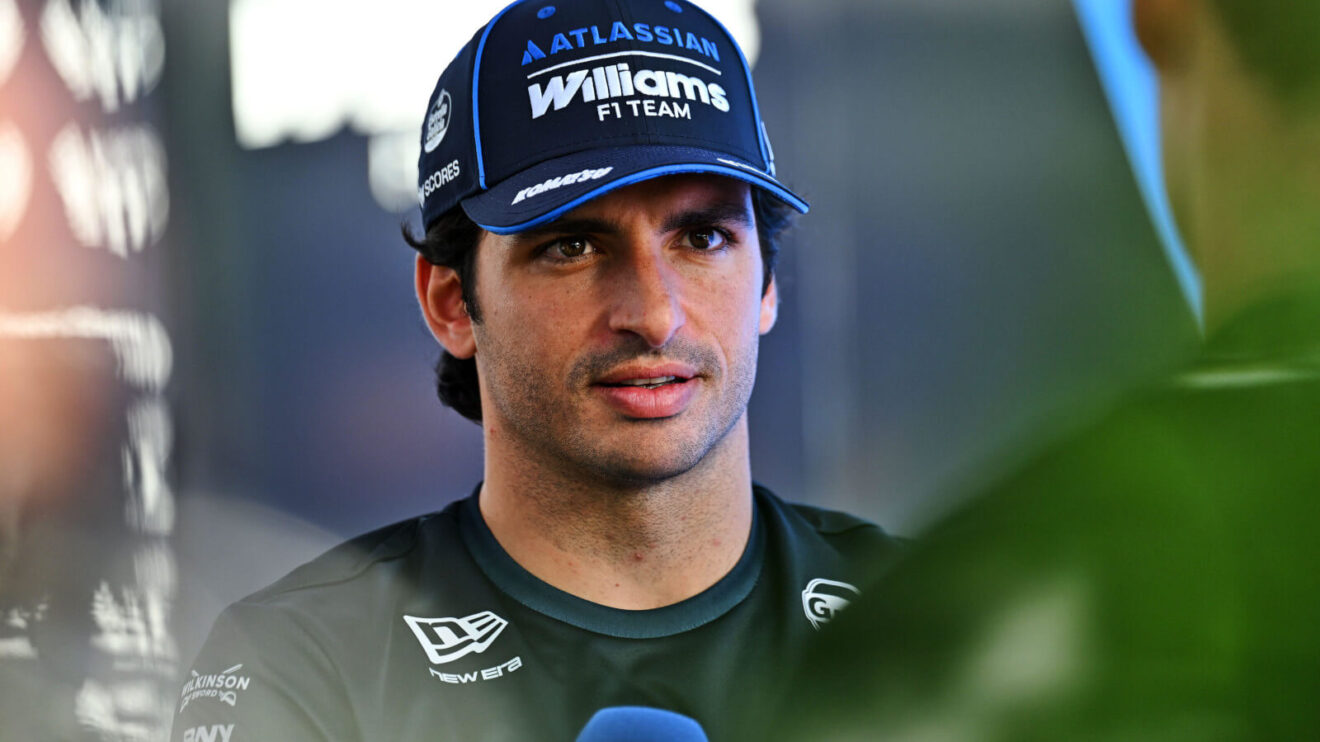
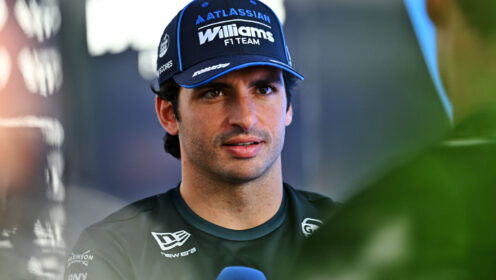
Carlos Sainz interviewed in the paddock
Carlos Sainz has laid out the three things he doesn’t like in today’s new Formula 1 era, and has urged Formula 1 to use its “power” to push through changes even if some teams are opposed.
Williams driver Sainz has been one of the more vocal critics of Formula 1’s new technical era, with the sport introducing new cars and engines this season. But it is the latter that is making headlines – and for the wrong reasons.
Carlos Sainz lists three problems with Formula 1’s new engine regulations
Want more PlanetF1.com coverage? Add us as a preferred source on Google to your favourites list for news you can trust
This year’s engines are powered by a 50/50 split between combustion and electrical power, which has altered the way Formula 1 goes racing.
Instead of being flat-out lap after lap, the drivers are having to downshift as they come to the end of the straights to harvest battery power, they’re taking the corners slower than ever before, and whether they can pass the car ahead largely depends on where they are in their battery cycle.
Boost mode versus overtaking mode adds another layer to the battery debate.
The Australian Grand Prix saw the new regulations play out for the first time with a thrilling early-race battle between George Russell and Charles Leclerc for the victory.
The lead changed hands eight times in 12 laps, but it was, according to some, an artificial battle given the protagonists’ battery power had a lot to do with whether they were first or second.
Sainz says that while he expects the teams will improve the show as they adapt to the new regulations, Formula 1 needs “help”.
“Well,” said the Williams driver, “for sure, there’s going to be a combination of development of the engines, development of the software, development of the teams, that will also make it better with development.
“But development can only take you so far, and I also think we need a bit of help from the regulations.
“It’s Formula One, and in the end, the formula that we came up with for Formula One, for me, is not the purest nor following the DNA of Formula One itself. So I think it definitely needs some tweaking.”
Quizzed on what exactly he wants to see change, Sainz replied: “I don’t like seeing top speed decreasing in the middle of a straight and having to lose 30, 40 kph through a super clip in the middle of a qualifying lap.
“I don’t like having to lift and coast in the middle of a qualifying lap.
“And I don’t like, let’s say the racing that we saw in Melbourne. I think the closing speeds that we have when you use the boost button, plus the overtake mode, having 60 kph difference in an overtake, and overtaking like if the other car is completely stopped, it’s not a real overtake of Formula One.
“Anything that allows you to do that, I think it’s in a way you can call it artificial. I’ve seen some people call it artificial. I just see that’s not the DNA of the sport.
“I think the DNA of the sport is to put yourself in a position to do an overtake and finish it with a strong braking performance or a nice switchback. Energy should only allow you to get to that point, but not to overtake someone like if they are completely stopped.”
More from the Chinese Grand Prix on PlanetF1.com
Lewis Hamilton tipped to win F1 2026 Chinese Grand Prix
Max Verstappen jokes he swapped simulator for Mario Kart but insists he won’t leave F1
Sainz, who even before the first race of the season called on Formula 1 and the FIA to be “open-minded” to changes if needed, once again urged F1’s powers-that-be to do what is best for the sport, irrespective of opposition from some teams.
After all, teams will also support their own cause.
“I think not everyone will be aligned, but they shouldn’t be,” he said of teams agreeing to mid-season changes. “I mean, in the end, that’s the problem. When you talk to the teams, you will always have performance interests.
“That’s why, even if they’re not, F1 should have enough power to not have to depend – from which I think the regulations allow to – to depend on the teams that have an interest on one thing or the other.
“We believe that if the formula is not correct, people can complain and say it’s not in favour of the way it suits the car or whatever, but F1 shouldn’t have to care too much about that, and should be able to do what’s the best for the sport, what’s the best for everyone in the sport.”
Want to be the first to know exclusive information from the F1 paddock? Join our broadcast channel on WhatsApp to get the scoop on the latest developments from our team of accredited journalists.
You can also subscribe to the PlanetF1 YouTube channel for exclusive features, hear from our paddock journalists with stories from the heart of Formula 1 and much more!
Read next: Lewis Hamilton confirms Ferrari rear wing decision for Chinese GP despite ‘potential drawbacks’