
Christian Horner reveals Mercedes approach before Toto Wolff took charge


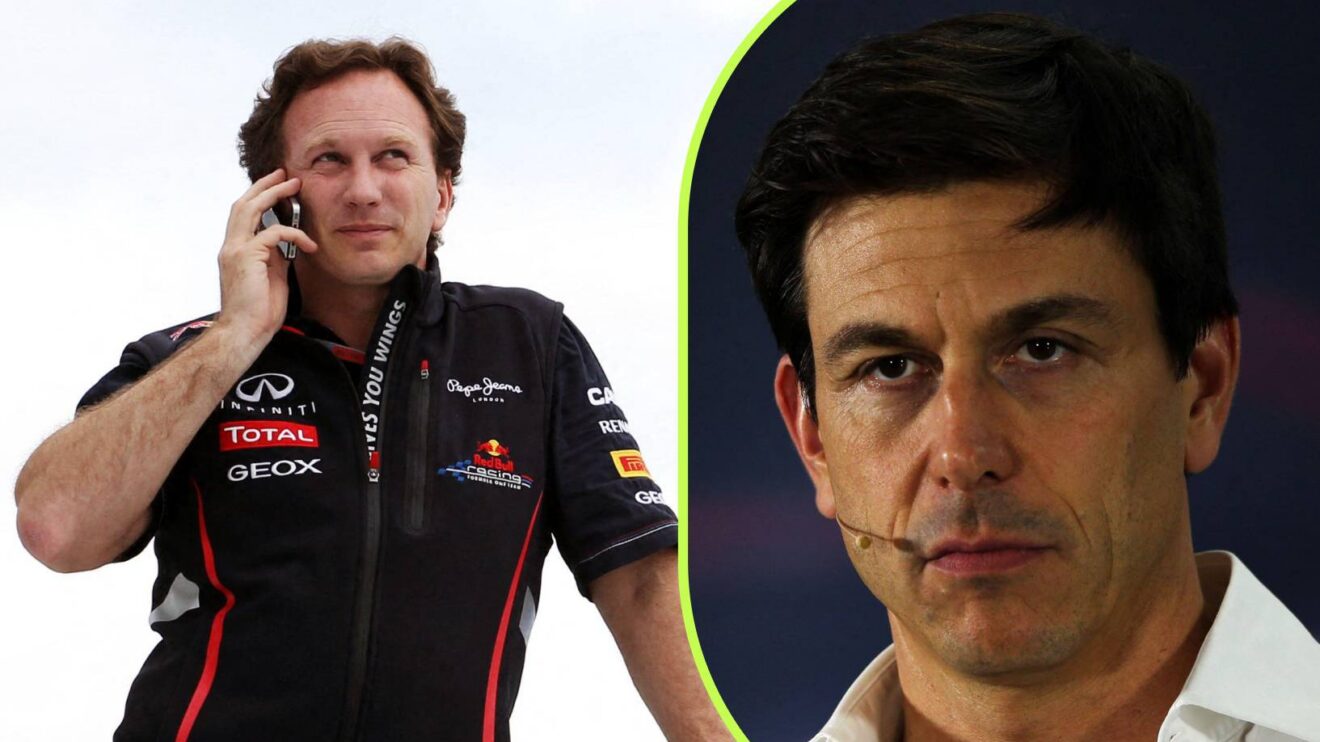
Christian Horner has revealed how he was approached to become Mercedes’ team principal before Toto Wolff, and how close he came to saying yes…
Horner had already built Red Bull into a championship-winning team by the time Niki Lauda knocked on the British executive’s door to sound him out about switching sides.
Christian Horner reveals how Niki Lauda tried to sign Lewis Hamilton for Mercedes
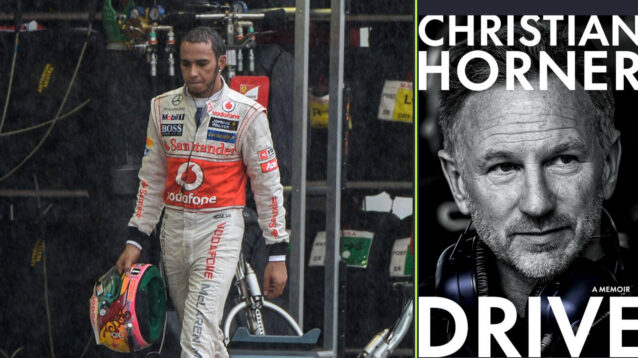
Horner revealed the approach in his new tell-all memoir, Drive, in which he has recounted the seismic moments of his F1 career to date.
One particular excerpt was an approach from then-non-executive chairman at Mercedes, Niki Lauda, who tried to poach Horner away from Red Bull.
Horner had made waves over the previous years when, as the youngest team boss on the grid, he had overseen the efforts of Dietrich Mateschitz’s team to become a disruptive force in F1. Within five years of entering F1, Horner had overseen the team’s first race victories and, in 2010, delivered Red Bull’s first titles with the Constructors’ Championship and Sebastian Vettel’s maiden driver’s crown.
Horner revealed that, in 2012, Lewis Hamilton’s wavering motivation at McLaren saw him approach Red Bull for a clandestine meeting to evaluate how he could make a switch from Woking to Milton Keynes, but, despite interest from both sides, a deal was never agreed.
This was partly down to money, as Hamilton – under then-manager Simon Fuller – commanded an eye-watering salary, but the prospect was also given tepid reception by Helmut Marko, whose preference was still to continue prioritising Sebastian Vettel and Red Bull’s existing junior prospects.
Mateschitz too “wasn’t particularly keen on the idea” as personality clashes between Vettel and Mark Webber meant the idea of replacing the Australian with another “emotional racer” was risky.
In the end, the pursuit of Hamilton was never a full-blooded attempt to secure his signature but, with the 2008 F1 World Champion seeking pastures new, he was eventually tempted away by Mercedes, with 1976 F1 World Champion Niki Lauda the seductive voice in his ear.
Christian Horner explains why he rejected Mercedes team principal offer
Horner revealed how he and Lauda had communicated on the matter, with the Austrian seeking to find a suitable replacement for the retiring Michael Schumacher after 2012.
Horner wrote in his book that Lauda was “uncertain” about the deal, due to the financial outlay required, but suggested to Lauda that he, as a wealthy individual in his own right, underwrite the contract himself, with the idea being that he could personally make money back from revenue streams such as merchandise sales.
The Red Bull boss explained how, by the time of the Singapore Grand Prix that year, he believed Lauda had successfully convinced Hamilton to join Mercedes for 2013, but the two-way communication between the two led Lauda to make overtures to Horner directly, as the Brackley-based squad eyed up a successor to Ross Brawn.
“Maybe our interactions over Lewis had stuck with him because later that year, during the Christmas break, Niki came to my house and asked me to join Mercedes as his team principal.” Horner wrote.
“I was caught off guard. Leaving Red Bull had never crossed my mind.
“When he then laid out a series of dazzling numbers, I realised he was discussing my potential salary.
‘Red Bull will never pay you what Mercedes can,’ he said.
“‘I respect you as a racer. I want you to come. Besides, Helmut is a miserable bastard.’
“I listened to his offer and shook my head. At that point, Sebastian was at the peak of his powers, and Red Bull were in the ascendancy.
“‘Niki, I’ve been winning World Championships with Red Bull,’ I said. ‘I’ve built everything from scratch.
“I feel a loyalty to Dietrich and the team. So as much as I appreciate this, I’m not going to join Mercedes.”
More on Christian Horner
‘Secret’ Lewis Hamilton meeting in new Christian Horner book claim
Horner addresses Liam Lawson and Co. in telling Red Bull admission
Toto Wolff joined Mercedes after Christian Horner rejected the role
Not long afterwards, in January 2013, Toto Wolff bought into the team with a 30 per cent stake, becoming an executive director and managing partner.
Horner said of the appointment that it was “interesting but seemingly inconsequential; so, what was the worst that could happen?”
In the years since, Horner’s team boss rivalry with Wolff became the most pronounced and contentious on the grid, culminating in a particularly acrimonious 2021 season in which their squabbling was just as bitter as the on-track battling between their drivers, Max Verstappen and Lewis Hamilton.
Christian Horner reveals how he exploited Toto Wolff’s weaknesses
Horner went on to explain how he feels both he and Wolff are more similar to each other than perhaps either would care to admit, and how he identified an early weakness in Wolff that he sought to exploit.
“Toto was clearly shrewd, smart and a winner,” he said.
“But when things went against him during races or our quarterly Formula 1 Commission meetings, he sometimes overreacted, at which point Niki was often required to step in as a calming presence.
“Acting as the voice of reason, he’d remind Toto of a very important fact: It’s racing. Because as everyone knew, Niki was an experienced world champion; he understood what it took to succeed; and his worldview was that a driver, or individual, learned the biggest lessons during their most painful defeats.
“I wasn’t one for reading leadership books or business manuals; I enjoyed operating on instinct and experience. But I got the impression Toto took a very different approach.
“I first noticed it in the way he carried himself; in meetings and conversations, he rehashed ideas and statements I’d heard elsewhere. It occasionally reminded me of that Harvard bar scene in Good Will Hunting.
“That’s not to say I didn’t respect him, because I absolutely did. He was finding his feet, just as I had. But he was a rival. So, I spent the first season or two looking for weaknesses, as Ron Dennis and the others had done to me when I’d arrived in 2005.
“My conclusion was that Toto wore his heart on his sleeve, and as Niki had realised, his feelings were there for anyone to see. That made him vulnerable to provocation. Propaganda and mind games were useful weapons in Formula 1, especially if an opponent was known to be susceptible. A team boss that left a press conference flustered was most likely distracted afterwards, and unable to focus fully on his or her drivers and cars.
“If that person then threw their headphones down in the paddock or yelled at the people within their orbit, they were compromising the performances of their team in a self-destructive chain reaction.
“Formula 1 Commission meetings soon became an exercise in verbal jousting. I enjoyed winding up Toto, knowing that he would likely bite and become rattled. At times, our conflict felt like a sport within a sport.
“As with all rivalries, Toto and I are probably more alike than either of us would care to admit. Both of us are fiercely competitive. We are incredibly driven. And we each have a strong sense of what we stand for. We also view the sport differently from the other team principals around us.
“Toto and I viewed our roles differently from the new wave. We were CEOs as well as team principals, and while we wanted the best for our cars and our drivers, we also took a keen interest in the commercial side.
“We worked tirelessly to recruit world-leading talent and develop a vibrant working culture in our factories. Our job required us to deal with budgets and sponsorship deals, engine suppliers and the media. Most of all, we were the face of our organisations and the buck stopped with us. As the last of a dying breed, we were under an incredible amount of pressure. It’s little wonder we clashed so often over the years.”
Want to be the first to know exclusive information from the F1 paddock? Join our broadcast channel on WhatsApp to get the scoop on the latest developments from our team of accredited journalists.
You can also subscribe to the PlanetF1 YouTube channel for exclusive features, hear from our paddock journalists with stories from the heart of Formula 1 and much more!
Read Next: Red Bull technical director reveals cause of Max Verstappen’s RB22 degradation issues