
Red Bull technical director reveals cause of Max Verstappen’s RB22 degradation issues


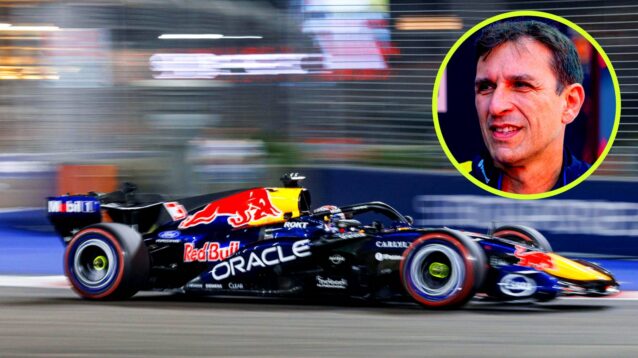
Pierre Waché has explained the nature of the 'aero degradation' Max Verstappen has complained about this year.
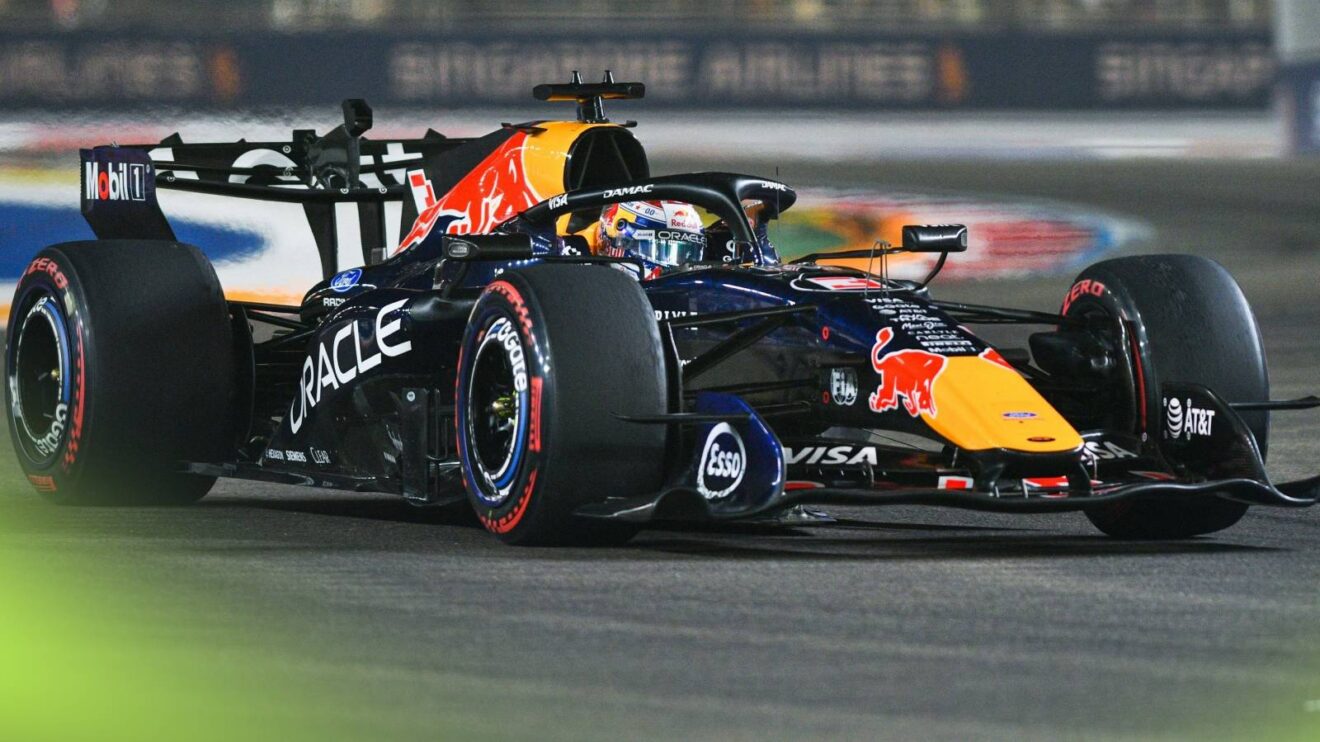
Red Bull’s Pierre Waché has revealed that the RB22’s ‘degradation’ issues are multifaceted, but it is an issue that the team is continuously improving.
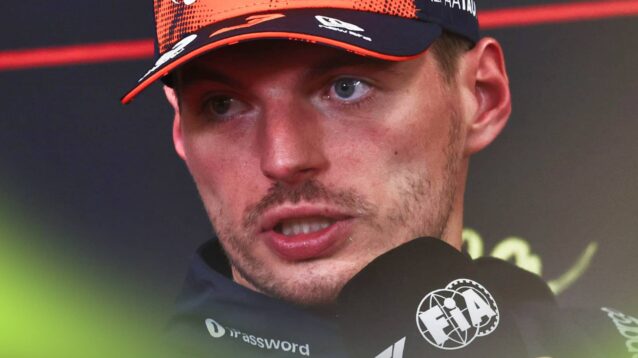
Throughout the middle of the season, Max Verstappen voiced concerns about what he felt was “aero degradation” on the RB22, a phenomenon that has since been confirmed is not all in his mind.
Pierre Waché explains Red Bull’s ongoing RB22 degradation problems
Complaints about aero degradation of the RB22 emerged through the summer, when Max Verstappen felt he had lost aero performance during qualifying for the Hungarian Grand Prix.
The issue, he said, felt as though it was continuously getting worse while he was on track, rendering the car increasingly difficult to drive.
In Italy, he felt he had similar issues and complained that the car felt it was “made of paper” as he revealed how it’s been a long-standing complaint, as safeguarding certain components meant he had to avoid attacking some corners and kerbs in a manner he’d like to.
The complexity of the issue was acknowledged by team boss Laurent Mekies, who confirmed that there has been visible evidence in car data, although the French engineer has stopped short of explaining what is behind the problem: “There is an element of car performance degradation that is happening through a session and through a race.”
While dialling out the ‘degradation’ can’t happen entirely with the RB22, with next year’s RB23 set to take a bigger step in this area, improvements have been made since the clearest indications of the problem emerged in Budapest.
Speaking in an extensive interview with PlanetF1.com, Red Bull technical director Pierre Waché outlined his knowledge of what has been going on, and confirmed how the “multi-aspect” nature of the problem means it’s impossible to completely eradicate without a diligent approach over time.
“We had some aero degradation. It’s clear,” he said, when asked about the extent of the aero degradation issue.
“I think I will not say aero degradation because aero doesn’t degrade by itself. It is part degradation, wear or affected by grounding: that aspect of the car, clearly, that’s something we work on.
“It looks a little bit better now. We worked on it, and after we have a mechanical grip degradation, like a link of mechanical or suspension that degrades on the car that we are still not fully on top of, clearly, and we work on it and try to improve for next year.
“But the problem is, when you have a certain weakness in terms of ride, all mechanical elements, when they are used at one point, the behaviour is a little bit different, and when it is the point of weakness, it is even more apparent.
“That is why I think it’s multiple aspects.
“How you reduce this type of evolution of behaviour with mileage and with time, but it’s a fundamental issue that, if you are better in this area in mechanical grip and in ride, the effect that is degrading a little bit, like all the car degrades, the apparent aspect for the driver will reduce if you improve overall performance there.
“If you are weak somewhere, if you are close to the cliff, at some point, if you are going a little bit worse, you feel it very well.”
More on Red Bull in F1 2026
Why Red Bull’s bold Laurent Mekies gamble is paying off
Verstappen reveals who he ‘hopes’ will succeed him as Red Bull’s leading driver
With Red Bull slowly but surely addressing the performance issues that held back the Milton Keynes-based squad from a full-bore assault on the championship this season, what is evident is that, with every upgrade package, the RB22’s performance profile has improved – a situation that wasn’t always the case through the ground-effect era, when correlation issues meant a degree of uncertainty as new parts filtered through.
Asked whether the switch back to a more conventional aero regulation set has been beneficial in this regard, rather than the difficulties of the ground effect requirements, Waché said there are more complications to the equation than simply the headline regulation set.
“I’m not an aerodynamicist. I think it’s a good challenge for them,” he said of the return to overbody aero regulations.
“It’s more going back to what type of car we had before ground effect, [like in] 2021, 2020.
“I think they know how to do this type of car, and I think the most challenging aspect is more in terms of… It’s not about the ground effect or not the ground effect; it’s how the overall package is affected by that.
“Because, if you don’t have a ground-effect car, depending on the characteristics of the aero you have, you will have different requirements in terms of setup, in terms of balance of the car and how it evolves around the type of corner; then what the main risk for us as a team was unknown, given the limitation of the aero rules that the team has. I speak about all the team.
“What type of characteristics we can achieve, and how we can run the car to maximise this characteristic, and when it’s new regs like that that is quite different from the previous one, it’s very difficult to anticipate, in simple terms, where the ride height is, where the peak of downforce is, and how the balance evolves based on this type of characteristic.
“That is, now we know better because it evolves.
“But the main aspect is, as a full team, we push for a certain direction, and even pushing to the weighting of where we want to be and how we have to evolve the setup of the car is an interaction between the full team in terms of vehicle performance, vehicle dynamics, racing engineering and aero going together to make sure that we are going the right direction and we understand clearly what we have. It’s difficult.”
Want to be the first to know exclusive information from the F1 paddock? Join our broadcast channel on WhatsApp to get the scoop on the latest developments from our team of accredited journalists.
You can also subscribe to the PlanetF1 YouTube channel for exclusive features, hear from our paddock journalists with stories from the heart of Formula 1 and much more!
Read Next: Ferrari disputes Red Bull ‘team to beat’ tag despite Max Verstappen form