
Exclusive: Pierre Waché reveals how Red Bull turned the RB22 into a race winner


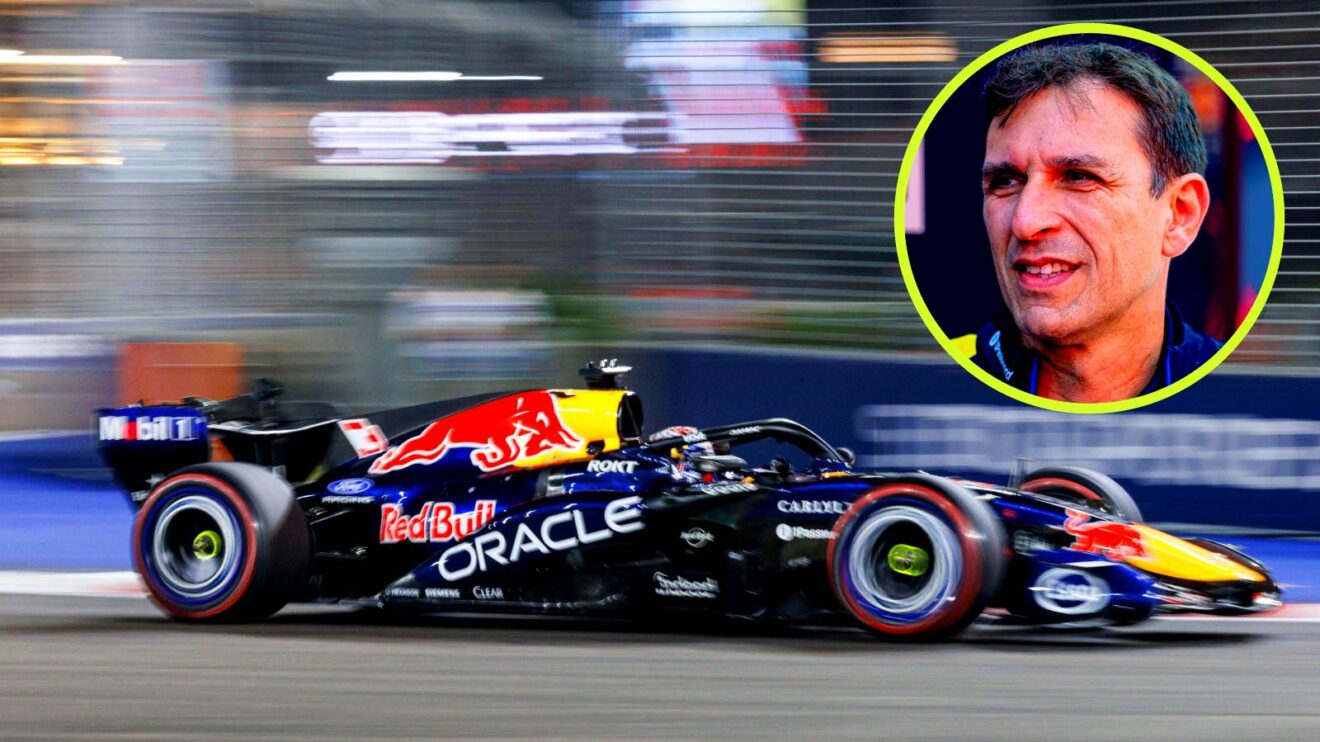
Red Bull's RB22 has turned into a race winner after a strong development cycle.
Red Bull’s intensive development of the RB22 has seen the Milton Keynes-based squad go from 1.5 seconds off the pace to impressive race winners during this season, and Pierre Waché has explained some of how that’s been accomplished.
With Red Bull having kept up development of last year’s RB21 until the bitter end, offering the team the chance to regain understanding of its tools and processes, this year’s car started off as perhaps the slowest and least consistent of the top four teams.
Pierre Waché admits Red Bull has not achieved its goals despite RB22 progress
But, having started the year circa 1.5 seconds off the pace of the front-running Mercedes, the competitive picture has changed throughout the year. In these early stages of the regulations, Ferrari and McLaren have each had moments in the sun as their respective developments closed the gap to the front, but, recently, it’s been Red Bull’s turn.
The early-season trickiness was dialled out via a significant upgrade introduced in Miami, while performance-focused upgrade packages rolled out in Austria and Baku saw Laurent Mekies’ team close down its time deficit to the point where, in Azerbaijan, Verstappen clearly had the pace to match the leading Mercedes of George Russell.
In Malaysia, the Dutch driver went one better, as he followed up this improvement to take the team’s maiden win of the season, before immediately underlining the surge with a second consecutive win just a week later in Singapore.
The smiles are back at Red Bull after a tricky 15-month period, in which the team has had to weather a significant leadership change and face the uncertainty of attempting to build a new winning cycle under Mekies.
Part of that uncertainty was a question many fans will have pondered over the years: Adrian Newey’s long-time technical leadership of the team ended during the last regulation cycle, and the 2026 car is the first that cannot claim to have any residual DNA of Newey’s penmanship still present.
Instead, it is Pierre Waché who has stepped out of that shadow as the face of Red Bull’s technical efforts, and the 51-year-old cuts a relaxed figure as he joined PlanetF1.com for an in-depth interview in the team’s hospitality unit at the Sepang International Circuit during the triple-header.
It’s been some 18 months since our last detailed conversation, with the last being during pre-season testing in 2025. Waché is more relaxed today, visibly more at ease, perhaps due to the clear direction of travel his team is on, compared to the uncertainty of early ’25 when correlation issues plagued the squad’s efforts.
“The positive is that we’ve turned the car in the right direction,” Waché says, as we settle in over a cappuccino to talk about all things RB22.
“I think the full team is frustrated because we are here to win, and we are here to show that we can fight for the championship. And it’s not the case this year.
“That is very frustrating for the team, for the effort that the people have put in, because it doesn’t matter what your performance is; everybody on the whole team is the same. Everybody is pushing hard to do the best, and we didn’t do the best, and there is frustration in our team.
“We developed the car; we had some issues with the car – that is not a secret. We had some issues with the steering that we sorted out in Miami.
“We had a weight issue where we also went on a diet. We know, clearly, in overall car performance, whether that be mechanical or aero – that we are behind some others. We developed in this and effected the full team to do the effort to achieve that.
“But, after this, [the rest] is also a relative performance. I don’t know what Mercedes is doing. Maybe they also lost something; I don’t know.
“It doesn’t look like they developed a lot during this year. We developed hard, and we just arrived behind them.
“It’s not very much a success, to be honest. I don’t want to be too pessimistic, but I’m realistic about where we are. You know, we are here to win. We didn’t achieve it. We showed that we are able to come back, but we did not achieve our goal yet.”
Pierre Waché reveals Red Bull’s biggest RB22 weakness despite recent wins
It’s indicative of the engineer’s mentality, which is also evident in Mekies, that, despite the strong momentum and “good news cycle” that Red Bull is currently in, Waché sees the negatives first, rather than the positives.
No better example of this is when I ask him to highlight where he believes the greatest strengths of the RB22 have been manifested.
“Clearly, at the beginning of the year, it didn’t look like we had a massive strength in terms of comfort based on the driver radio,” he said.
“I think we had a fundamental weakness in the car from the start that, clearly, the drivers were not happy with in terms of these multiple aspects.
“First, it’s linked to the engine regulations that are a frustration for the driver: when they go quicker on the throttle, they lost energy, and it’s not rewarding to go to rebalance the car on exit of the corner by putting on throttle and, after, accelerating quicker, as it was the case in the past, how a racing car normally is.
“After you lose energy, if you do that, you have some weakness there, and maybe we didn’t develop the car around this regulation from that aspect in terms of balance. Clearly, the ride of the car was an issue, and we were not particularly good on that aspect that we had to develop.
“At the beginning of the year, the overall balance of the car was not great in terms of the disconnection between high speed and low speed. I think, since Baku, the new package looks like it’s bringing a little bit to this balance evolution, and the aero group worked hard on that aspect.
“You clearly see less disconnection, and the strength of the car comes to be in low speed; starting to be better and better compared to competitors.”
It’s a clear example of this ‘engineer thinking’ that Waché sees the positives through a negative lens: it’s the most F1 of mindsets, indicative of just how, no matter what, these high-performing individuals are never satisfied.
When I pointed this out to him, Waché laughed: “You see your strengths by analysing your weaknesses”.
Life after Adrian Newey: Pierre Waché gives his verdict
It’s an admission that sums up Waché. The jovial Frenchman has had a hugely successful career up to this point, but, up until two years ago, the perception of the wider fandom, if not within the paddock, has been that the genius of Red Bull’s designs had been all from Newey as the duo worked closely together for so long.
But Waché is proving to be just as formidable in his own right, standing on his own two feet long after his former colleague’s departure for what, so far, has been a leadership project at Aston Martin, one with precious little reward.
With Waché proving that Red Bull has the potential to continue thriving under his leadership, does he feel any vindication to be in this position?
“No, no, I don’t,” he laughed, having pondered the question for a few seconds.
“I don’t think it’s depending on me. The performance you have on the team does not depend on one person. Adrian was a big part of our team.
“We are imitating from him in how we are and how I am. I learned a lot from him, and we are working based on our set-up, the full system, but the performance of the team depends on the people in the team, not on one person.
“As the public, you have the people at the front looking as an important aspect. I don’t think so.
“I think the most important people are the people you don’t see on the public side. I’m here to do my job. I’m happy with the team, and I’m happy with Red Bull itself, how they treat me, and how the system is working.
“But the main thing they give me is giving the capacity to the team to do their job, and how we find the performance. It’s a shame that he left because I think he was a big part of us, not only in terms of technical aspects, but in terms of culture and capacity.
“But now he has a different challenge. But it’s not only one person, as you see everywhere. Who is winning or not winning is not me; it is Red Bull.”
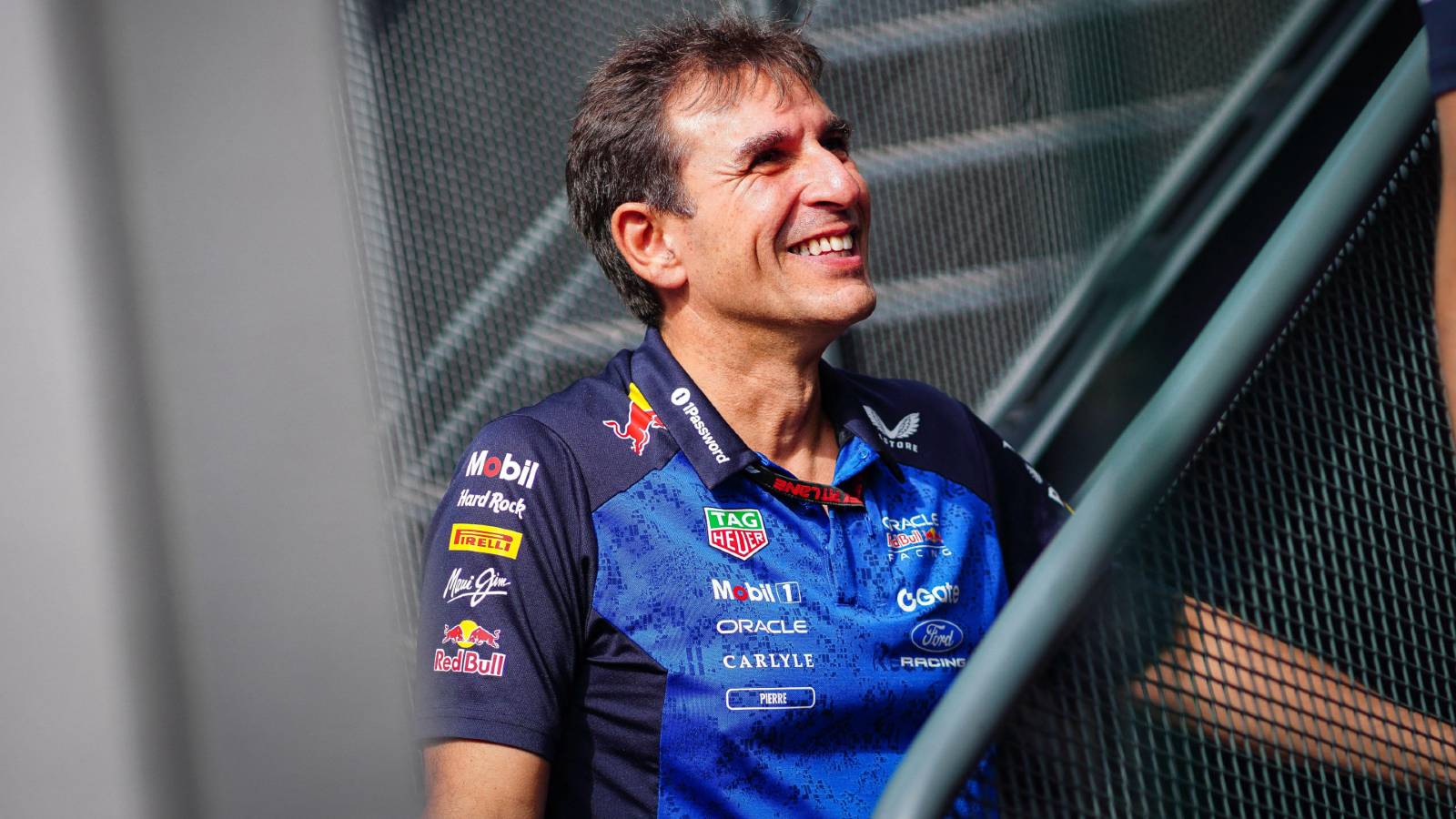
Pierre Waché explains Red Bull’s RB22 engine integration challenges in 2026
As we start to get stuck into the approach he’s taken in identifying the weaknesses of the RB22 and starting the development path for the car, Waché points out how critical the integration of the power unit has been to the entire package.
As a first-time engine constructor as Red Bull Powertrains, located on the same campus as the rest of the car departments, it’s an entirely new learning curve for Milton Keynes, having always had a supplier or factory arrangement: how did these considerations factor into the design of the RB22?
“There are multiple aspects of it,” he said.
“In this type of aero rules, it is important to find what is the most important aspect in terms of packaging, and it’s quite difficult because it’s very sensitive, and also the freedom of capacity you have to develop in terms of surfaces is low.
“Then it’s a detail aspect of it that is key, plus the integration of the engine was quite challenging. Not because it’s difficult with our [RBPT] team; I think it’s a chance we have to be together, but we don’t forget that it’s the first time we work together. We have to learn. We have to see some issues that we didn’t anticipate.
“I think clearly the energy management and how the engine works affect, massively, the concept of the car. As a simple example, the brakes: when you make the simulation, you see the brakes will have an easy life around the season, and finally you realise maybe not, because your engine is working against the brakes to find the energy.
“There’s a multiple-concept aspect of it that you don’t anticipate, or you anticipate a little bit but not at this extreme, affecting the development of the car, and it is something that we are learning together to make us stronger. But it’s maybe what we missed from the start.”
While the likes of Ferrari and Mercedes have oodles of experience as fully-fledged constructors, Red Bull is at the point of still figuring out how best to optimise this synergy between car and power unit departments, but Waché poured cold water on the idea that it actually gives him any greater creative freedom in design.
“I will not say that. The scope you have, I think, is not about the creativity of the staff. The main aspect is that we can discuss compromise,” he said.
“If you do that, we have that. The compromise between chassis and engine is taken into account; when they are not together, the compromise is already chosen – that is the main aspect.
“After the packaging, when you have a certain aspect, the lead time to achieve an engine and the lead time to have the chassis are completely separate.
“It’s more in terms of concept. This kind of thing we can discuss and make a direction change on both sides, compared to if you have somebody supplying you.
“I think it is a collaboration of the concept that is changing more than the packaging aspect.
“It can give you a little bit more because the reactivity is quicker, but this one depends on the capacity of the engine manufacturer or not; it’s more that the discussion from the start gives you a better compromise or, maybe it’s better to say, a choice of compromise. You are involved in the compromise.”
Want to be the first to know exclusive information from the F1 paddock? Join our broadcast channel on WhatsApp to get the scoop on the latest developments from our team of accredited journalists.
You can also subscribe to the PlanetF1 YouTube channel for exclusive features, hear from our paddock journalists with stories from the heart of Formula 1 and much more!
More from our extensive interview with Red Bull’s technical director, Pierre Waché, will be published this week on PlanetF1.com.
Read Next: Red Bull concedes ‘we didn’t give Hadjar a chance’ with ‘horrific’ Singapore GP