

Date emerges for crucial Power Unit Advisory Committee meeting
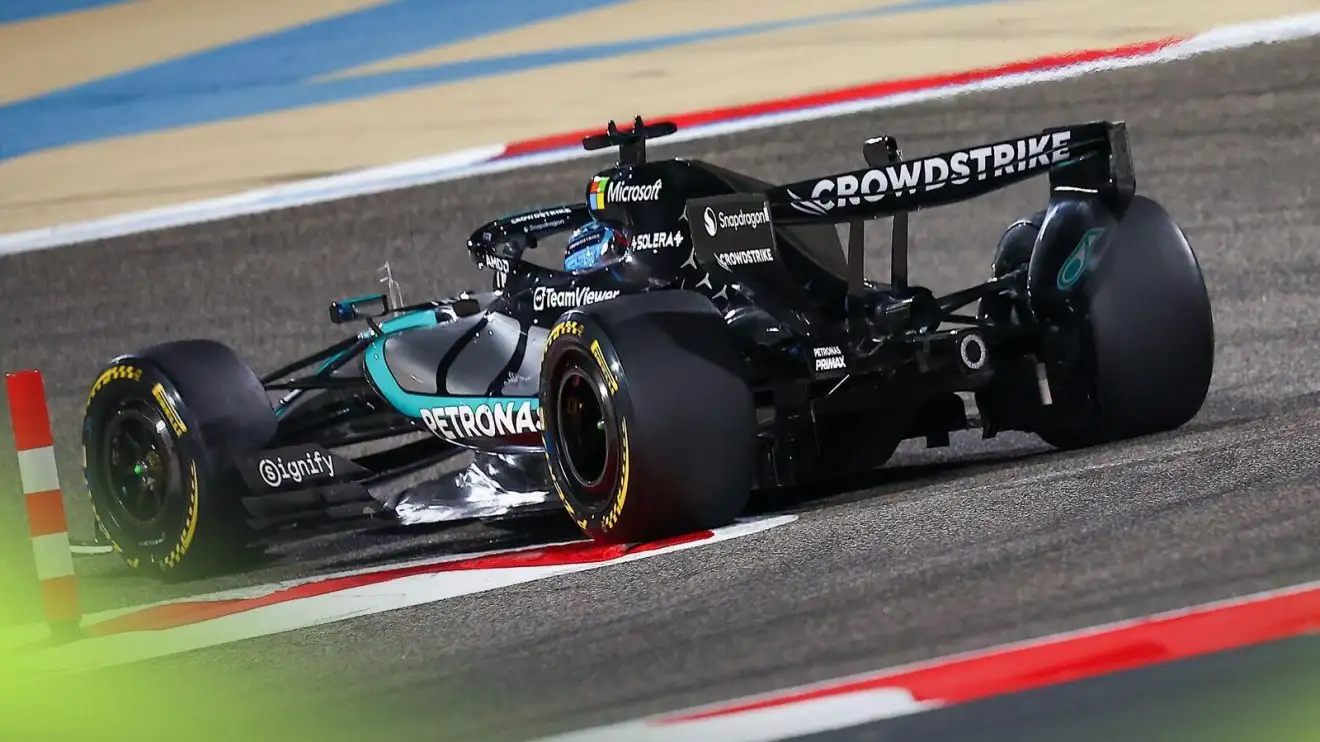
The Power Unit Advisory Committee is poised for a crucial meeting.
A potentially critical meeting involving the power unit manufacturers, the FIA and FOM is set to be held on Wednesday morning, PlanetF1.com has learned.
The timing is significant, with the March 1 homologation deadline looming.
Power Unit Advisory Committee set to meet on Wednesday
Want more PlanetF1.com coverage? Add us as a preferred source on Google for news you can trust.
Amidst the ongoing furore regarding the power unit regulations, brought about by the compression ratio saga that has unfolded over the winter, the Power Unit Advisory Committee [PUAC] is set for another meeting in Bahrain on Wednesday, the same day as the F1 Commission is set to meet.
While sources have been indicating for some that time such a meeting is expected, a curious silence about when the meeting may actually take place has emerged, although logic would suggest such a meeting is needed sooner rather than later, due to the engine homologation date being March 1.
Multiple sources have confirmed two separate meetings are set to take place on Wednesday morning, with the F1 Commission and the PUAC each setting out agendas, with one likely to feed the other.
The PUAC has met on several occasions in recent weeks, due to the power unit manufacturers [PUMs] seeking clarity on the topic of compression ratio measurements.
This topic centres on allegations that Mercedes, of the five PUMs, has been exploiting a grey area in the wording of the regulations, thought to have been discovered after personnel moved between manufacturers and highlighted it internally.
The regulation defines the permitted geometric compression ratio of each cylinder as limited to a maximum of 16.0. The same regulation also defines the conditions under which that ratio will be measured, i.e. at ambient temperature.
However, Mercedes is thought to be utilising a method of running at higher compression ratios while running hot on track, while still conforming with the measurement criteria.
This theory has not been outright denied by Mercedes’ Toto Wolff, who, last week, said the manufacturer is prepared to “take it on the chin” if a regulation change is made, but that the performance of its power units could suffer as a consequence.
In the eyes of the other four PUMs, the speculated situation is in breach of the regulations, with Mercedes left isolated in this stance as Red Bull Powertrains [RBPT] is said to have switched sides in the argument recently.
More on the F1 2026 power unit saga
Explained: F1’s complex power unit upgrade system
Red Bull denies switching sides in Mercedes F1 2026 engine row
For matters regarding the power unit, the PUAC is the body overseeing its governance, comprising of the five PUMs, the FIA, and FOM. It is a separate entity to the F1 Commission, which comprises of the 11 teams as well as the FIA and FOM.
PlanetF1.com understands the four non-Mercedes PUMs are set to present a methodology for measuring compression ratios at hot temperatures, with the four seeking to form a supermajority in a vote to introduce this test into the regulations as quickly as possible.
In order to achieve a supermajority, the four non-Mercedes PUMs will also need to secure the votes of the FIA and FOM in order to get the regulation change before the World Motorsport Council for ratification.
If a supermajority is achieved, the next question would be whether it’s possible for Mercedes, or any PUM potentially affected by the regulation change, to make the necessary changes to its power unit on time to make the homologation date of March 1, or whether mass protests against Mercedes-powered cars after the season-opener in Australia await.
Should a supermajority not be achieved, there is a possibility of teams lodging protests of the results in Australia, if the feeling remains strong enough that the alleged grey area being exploited by Mercedes is against the regulations.
With the crux of the matter being a focus of the ambiguity of the wording of the regulation, it remains to be seen whether the four PUMs can present a strong enough case to convince the FIA and FOM that a regulation change is required.
Want to be the first to know exclusive information from the F1 paddock? Join our broadcast channel on WhatsApp to get the scoop on the latest developments from our team of accredited journalists.
You can also subscribe to the PlanetF1 YouTube channel for exclusive features, hear from our paddock journalists with stories from the heart of Formula 1 and much more!
Read next: ‘What’s off limits?’ – F1 warned dangerous precedent risked in compression ratio saga