

F1’s ‘real men’s corners’ still matter as the sport rewards drivers differently


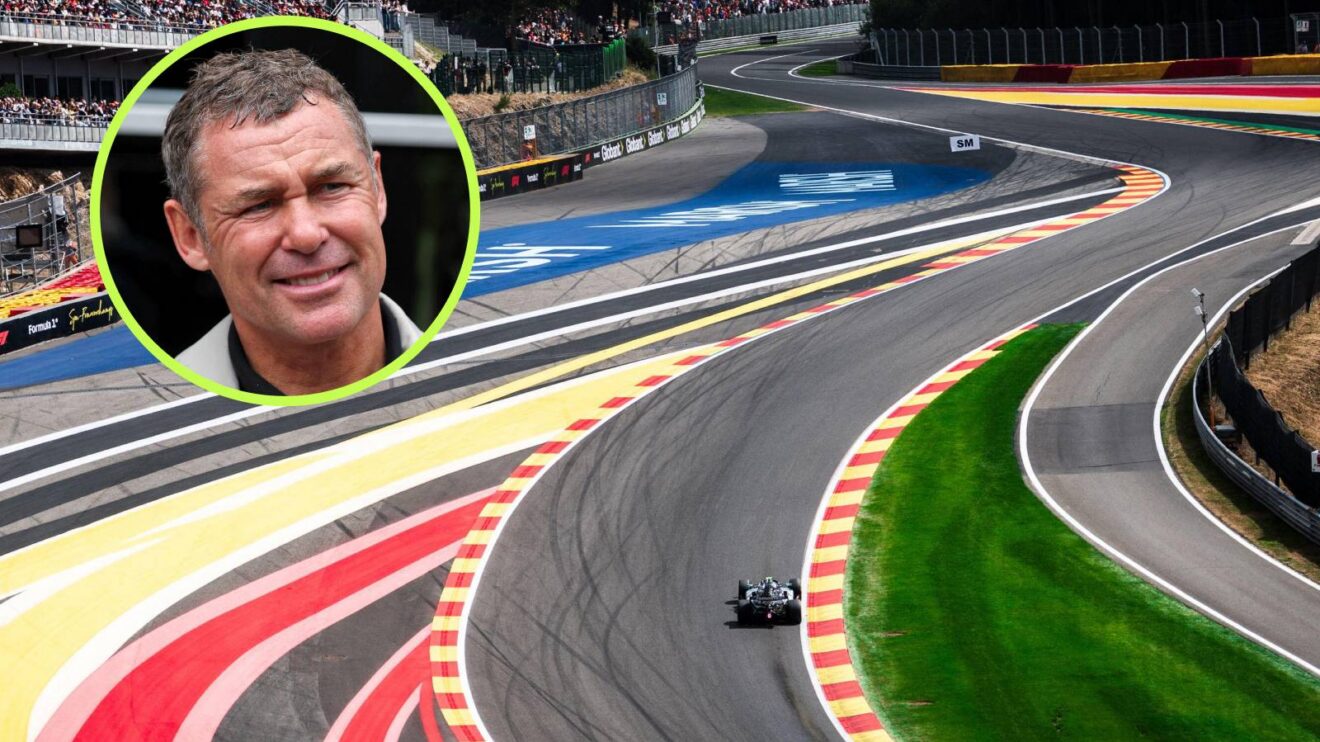
Tom Kristensen says the regulations in F1 2026 have changed the reward system for drivers, away from the immediacy of 'real men's corners'.
F1’s new regulations may have reduced the immediate rewards of the sport’s fastest corners, but the challenge has changed to benefit the smartest drivers, according to a Le Mans legend.
Nine-time Le Mans 24 Hours winner Tom Kristensen says that the increased complexity of modern-day Formula 1 has changed the reward system for drivers, with the most intelligent approaches now the ones to reap the benefits.
F1’s fastest corners face a new challenge under the 2026 regulations
Want more PlanetF1.com coverage? Add us as a preferred source on Google for news you can trust.
F1’s new regulation set has created plenty of debate since theory became reality as the cars hit the track for the first time in pre-season testing. It quickly became apparent that the new engine formula, which increased electrification to a near 50/50 split between the internal combustion engine and the electric motors, required a very different driving technique than what is the accepted norm of motorsport.
Rather than a driver being rewarded for outright speed, the need to be clever about energy harvesting and deployment – much of which is controlled via computer algorithms – has seen drivers required to sacrifice corner speed in favour of a more passive approach in order to ensure optimal battery deployment down the straights in order for better lap times.
It’s led to some unpalatable driving experiences, particularly at energy-starved circuits such as fan favourites Silverstone, Suzuka, and Spa, with upcoming events at Monza, Baku, and Las Vegas are also set to see copious amounts of lift and coast, downshifting on straights, and ‘superclipping’ – the practice of using the ICE to recharge the batteries while at full speed, which comes with a slow bleed of outright power.
It’s also resulted in some ‘Mario Kart’-esque racing, with some overtakes being immediately rendered moot as the attacking driver immediately becomes the defender, but is often powerless to do so due to their battery power having been depleted in the initial move.
With steps being taken quickly ahead of the Miami Grand Prix in May to address some of the initial shortcomings of the regulations, the engine rules will change to move to a 58/42 power unit split in 2027, before evolving into a 60/40 split in 2028. As for future regulations, the FIA has already promised a move away from electrification by way of a return to a V8 with sustainable fuels by 2030 or ’31.
But, with at least four years of these regulations to run, the most vocal complaints about the unique driving requirements have faded away now that the future has been broadly defined, with the likes of Max Verstappen making it clear he is no fan of the regulations, but no longer being willing to twist the knife of criticism.
Others, such as the Audi drivers, have been more positive about the regulations, with Gabriel Bortoleto disputing the theory that the fastest drivers can no longer utilise their speed.
“Do you see Verstappen being slow?” he said.
“Do you see a seven-time world champion being slow this year? Do you see Leclerc being slow? I don’t see them being slow. I still see them very competitive. So I wouldn’t say fast drivers are slow.”
Tom Kristensen has become the latest voice to evaluate the impact of the regulations, with the Le Mans legend speaking of the requirement for drivers to race more intelligently in order to generate speed and laptime.
“At some circuits, of course, such as Hungary, they can run sort of flat out,” he told PlanetF1.com, in an exclusive interview at the Hungarian Grand Prix. While retired as a racing driver, Kristensen remains heavily involved in motorsport as an Audi and F1 ambassador, as well as a Viaplay broadcaster, while his tenure as the FIA Drivers’ Commission president came to an end four years ago.
“But it’s true that you have had Silverstone, Spa, Suzuka, maybe Baku, Monza as well, where you will have those things. But it just speaks to the complexity of Formula 1 at the moment.”
With the likes of Suzuka’s 130R, Spa-Francorchamps’ Blanchimont, and Silverstone’s Maggotts/Becketts corners all being neutered in favour of becoming ‘recharging stations’, to borrow Fernando Alonso’s parlance, Kristensen said the drivers are now being rewarded in different ways to yesteryear when it comes to the challenge of these corners.
“Drivers don’t decide, so I would say it’s not so rewarding to go through, say, real men’s corners as we would say in my day, and you probably have to look a little bit more intelligently at how you approach a corner like that. Sometimes that’s not so rewarding,” he said.
“But anyway, F1 is complicated, and it’s complex, and it’s about being intelligent and creating an opportunity and creating an advantage for yourself. If that means that you have to do that a little bit differently, then I applaud that as well.
“But, from a driver perspective, certainly we like to be rewarded with having done everything on a knife’s edge through a corner at times. So yes, a little conflict there.
“But I mean, you also see that these regulations were done probably five years ago, interpreted and officialised four and a half years ago now, and, with the time scale of bringing things to the table in Formula 1, agreed by the manufacturers with F1, with the FIA, you normally have a lead time going into the regulations, and development is happening.
“Probably, you can say that it’s a little bit below expectation about where you would actually be in terms of the modern technology, so to speak. Maybe, that’s my own point of view.
“But, now it will be adjusted a little bit going forward. In Formula 1, if somebody has an advantage, they will, of course, be reluctant to make changes, so that’s a dynamic of being at the forefront in the toughest sport in the world.”
Kristensen’s nine Le Mans victories, seven of which came at the wheel of an Audi, make him one of the greatest drivers never to have raced in Formula 1, and his esteemed endurance racing career saw him having to draw on similar skills of management and technique to what F1 drivers now have to do.
Asked whether he sees similarities between the drivers’ energy management tactics and those of an endurance racer, Kristensen said there are areas of overlap.
“There’s a part of that, but we always said endurance was a sprint race from start to finish,” he said.
“But yes, sometimes, if you go back old school, we would save a little bit of fuel and, coming with a car low on aero, let’s say it would be the same if you go to like Monza as well; you can lift off a little bit earlier, and you can just coast for these 50, 60 metres. If you do that on some laps, you might be able to be in a window that you can do an extra lap.
“Things like that, I would say that’s pretty smart. So, in that sense, there are some aspects of it.
“But this is something we did 20 years ago, and then of course we started with the hybrid cars first at Le Mans, and that was a little bit similar, where you would implement the charging and where you would implement the boosting, where on the circuit to try to optimise the best possible way, and then always have a manual distribution in case you were either defending or if you were attacking your competitors, and I like that.
“But there are some circuits in F1 where it happens to be just a little bit too much now. Everyone is aware of that, but you can’t just click your fingers.
“The public loves it in the meantime, and let the drivers just work a bit harder. And in this period, it will definitely get better.”

More on Audi in F1
Mattia Binotto launches Audi 2030 title plan after project ‘relief’
Audi half-season review: Should midfield rivals start to fear the German giant?
As for whether he personally would enjoy racing in F1 under the current regulation set, Kristensen said he’d personally prefer greater freedom behind the wheel, but doesn’t believe that the drivers aren’t getting enough satisfaction from it as a driving challenge.
“Yes, I would, but there would be pressure if I’m not performing,” he said.
“I would have enjoyed it more when you can race freely. So I’m speaking about the reward of doing it, but the reward at the end of the day for an F1 driver is winning.
“Do you think Kimi Antonelli will say it’s bad? No, he loves it. He is leading the championship, and he is doing well. So you have in the sport as well, that sheer competitiveness, which will change the vocabulary of drivers and teams, but I think everyone is aware of it.
“You have the whole globe watching now, also, some who are not as committed to the ins and outs, like you and me; they love it. They think it’s absolutely fantastic, the pass, and then the repass.
“Okay, but maybe you should be a little bit more clever on the lap about where you pass because that prospect certainly is more brain capacity is being influenced to do well, but yes, it’s not flat-out racing on a few particular circuits anymore.”
Want to be the first to know exclusive information from the F1 paddock? Join our broadcast channel on WhatsApp to get the scoop on the latest developments from our team of accredited journalists.
You can also subscribe to the PlanetF1 YouTube channel for exclusive features, hear from our paddock journalists with stories from the heart of Formula 1 and much more!
Read Next: Mercedes promises major W17 gains after summer break