
Mercedes promises major W17 gains after summer break


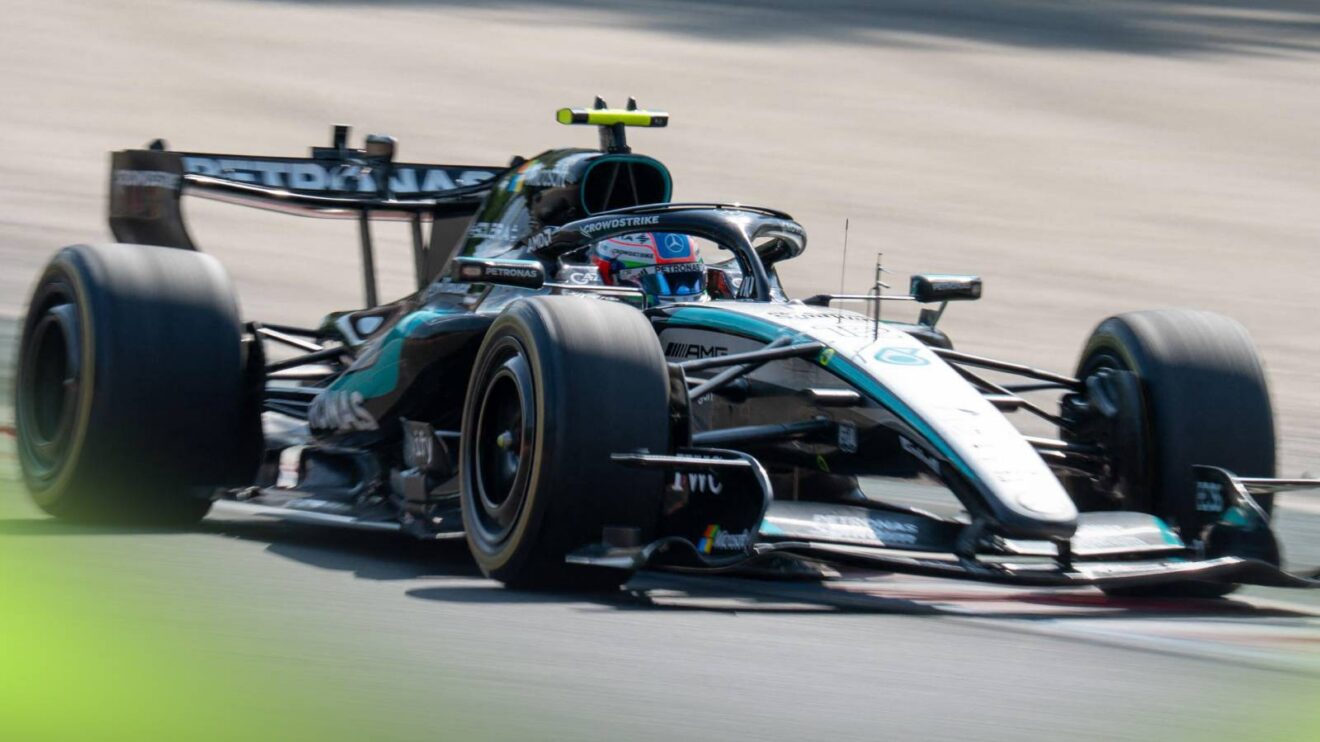
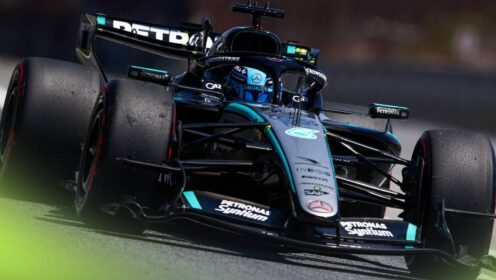
Mercedes will introduce more upgrades to the W17 after the summer break, with the team promising a 'decent' performance uplift.
Mercedes has promised a faster W17 is on the way after the summer break, as latest-specification components make their way onto the car.
While the likes of Red Bull, Ferrari, and McLaren have all introduced bigger upgrade packages to their cars during the first half of the season, Mercedes’ upgrade approach has been more measured.
Mercedes W17 set for post-summer upgrades
Want more PlanetF1.com coverage? Add us as a preferred source on Google for news you can trust.
Every Grand Prix weekend, the FIA releases a declared submissions list of upgrades for each car, which features the aerodynamic updates made by each team.
Some of these declaration lists can be quite chunky: for instance, a look at Aston Martin’s declarations for its ARM26 evolution in Hungary shows Adrian Newey’s team declared 16 individual aerodynamic revisions, of varying levels of significance in terms of change.
The event documents allow a picture of the extent of revisions made to each car over a longer period of time, and what’s become clear is that, over recent races, Mercedes‘ declaration lists have been shorter and smaller in significance than some of the declaration lists made by McLaren, Ferrari, and Red Bull.
Indeed, since the Miami Grand Prix at the start of May, coming back after a month off racing, Mercedes have introduced 20 line items deemed sufficient for the FIA’s declaration list – the lowest number of the top four teams.
McLaren has introduced the most, with 32 line items, while Ferrari and Red Bull have each introduced 29.
| Race | McLaren | Mercedes | Ferrari | Red Bull |
|---|---|---|---|---|
| Miami | 7 | 2 | 11 | 7 |
| Canada | 7 | 8 | 0 | 4 |
| Monaco | 6 | 1 | 3 | 4 |
| Barcelona | 1 | 1 | 8 | 2 |
| Austria | 2 | 2 | 4 | 7 |
| Britain | 2 | 0 | 1 | 1 |
| Belgium | 2 | 3 | 0 | 1 |
| Hungary | 5 | 3 | 2 | 2 |
| TOTAL: | 32 | 20 | 29 | 29 |
With Mercedes’ upgrades total circa 50 per cent lower than its immediate rivals, it’s perhaps not surprising that the W17 is no longer quite the dominant force that it was at the start of the season, with Ferrari and McLaren becoming race winners in recent Grands Prix.
Indeed, McLaren’s Andrea Stella pointed firmly at his team’s aero upgrade package in Hungary, consisting of five items that included a new floor design, as being the reason behind Lando Norris’ comfortable win in Budapest.
With Mercedes retaining competitiveness, if not dominance, rivals may have more to worry about in the second half of the season, with the Brackley-based team set to roll out with updates that have been in the production pipeline.
With team boss Toto Wolff having revealed a “strategic” approach to its upgrade plan as Mercedes has got itself into a “good spot” with regards to the budget cap, the team is set to take a step forward in speed in the second half of the championship.
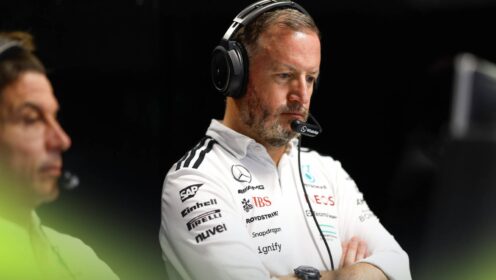
“Early in a regulation cycle, the wind tunnel is sort of cranking away and churning away at X tenths of a second per week, per month, and the choice that you’re making is: when do you turn that performance into parts, and is it most efficient and most effective to do it in small bits, or in one larger package?” Mercedes deputy team principal, Bradley Lord, explained to select media, including PlanetF1.com, in Hungary.
“Likewise, some componentry, you can find a gain on a floor and be able to add that very quickly as a mod; some of it requires a brand new floor and brand new architecture.
“Now, ideally, your performance upgrade comes at the same time as you need to: that floor runs out of life, and therefore you’re needing to bring a new, fresh one, and that fresh one becomes an upgraded one.
“So, trying to time all of that is the sort of art of it; you can only bring the performance that you’re finding in the tunnel.”
In 2025, the fourth year of a static ruleset, gains were not only infinitesimal due to teams reaching the full potential of what was possible, but became non-existent as teams switched over development focus to the new ruleset in 2026.
In these early stages of a new regulation cycle, there is much lower-hanging fruit to find to unlock performance, which is why the development race is particularly frantic, as well as seeing teams able to produce form-changing packages.
“We’re still seeing a really steep slope of progress, and what we’ve done over the first half of the season is we’ve brought one headline package, I guess, to Montreal,” Lord said of Mercedes’ approach.
“But there have been little things and little bits at every race, both visible on the aero side and in the declarations, but also in calibrations, controls, and all of the subtleties of this formula as well that have thus far been sufficient to keep us fighting right at the front, notwithstanding the fact that others may have brought a couple of bigger packages.
“The other point was we launched a first version of the car and then brought quite a significant initial upgrade to the final test and Melbourne as well. So that was the first one.
“The second one came in Montreal, and then post-summer break, there’s a decent amount of performance working its way through the production machinery at the moment, then start coming to the car from the races after shutdown.”
More on Mercedes in F1 2026
How Kimi Antonelli found Mercedes breakthrough after Baku reset
Toto Wolff reveals ‘strategic’ Mercedes upgrade plan for second half of F1 season
Mercedes leads the Constructors’ Championship by 72 points, with a startling first-half performance from Kimi Antonelli outweighing his inexperience to set the Italian teenager up with a 50-point lead over Ferrari’s Lewis Hamilton.
It’s all a far cry from where Mercedes was during the ground-effect era, a regulation set that the team had started with high hopes as it rolled out a particularly unique design with its initial 2022 challenger.
But its uniqueness ultimately showed why it was a concept other teams didn’t choose: the W13 only achieved one victory, courtesy of George Russell, and Mercedes opted to make personnel changes by moving technical director Mike Elliott out of his role and reverting on its attempted succession plan by reinstalling James Allison in that position.
By mid-2023, Mercedes had steadied the ship and, despite not winning a race, secured the runner-up slot in the championship. While winning races in 2024, it slipped to fourth overall as McLaren and Ferrari took a step forward, while 2025 saw it win a single race en route to second place overall.
The ground-effect era, despite some strong headline championship positions, never quite gelled for Mercedes, but the tearing up of the rulebook for ’26 has seen the team return to a baseline that was the norm in the previous regulation cycle between 2014 and ’21.
“It’s relative, isn’t it? The struggle was two second-place finishes in the Constructors’, a third and a fourth, but never in contention for any of those four titles,” Lord said, when asked by PlanetF1.com about what has changed to help bring Mercedes back to the front after a four-year cycle in which it was solid, but never the clear leader.
“So I think we did a lot of work during that period to understand why we had started the ground effect era [behind], and there was a massive amount of work that went into understanding what were the capability gaps, what were the improvements we needed in simulation, the ability to predict performance, things like that, and we tried to learn a lot of those lessons for the preparation for this rule set as well.
“So I think one of the strengths that we’ve had is that we’ve come in with a very close working relationship between the chassis team and the engine team, and been able to develop tools within the chassis team’s capability that have enabled us to simulate the behaviour of the cars really well and understand what the fundamental challenges of this rule set would be, and then respond to them accordingly.
“So it’s been a lot of work; a lot of credit to James [Allison] and the technical team working with him. The operational team then are able to work the miracles of turning an idea into componentry as quickly as possible.
“Obviously, I think every team has been on a steep learning curve in terms of how to get the maximum performance for the budget you have available under the cost cap as well, and so through those cycles of learning, the ability to squeeze the most out of the available financial resource as well is something that we’re constantly trying to improve so that it translates into maximum lap time at the circuit.”
Want to be the first to know exclusive information from the F1 paddock? Join our broadcast channel on WhatsApp to get the scoop on the latest developments from our team of accredited journalists.
You can also subscribe to the PlanetF1 YouTube channel for exclusive features, hear from our paddock journalists with stories from the heart of Formula 1 and much more!
Read Next: Jos Verstappen conversation sparks Albon and Williams prediction from Coulthard