

Ferrari rules out Australian GP protest as Mercedes engine saga nears boiling point
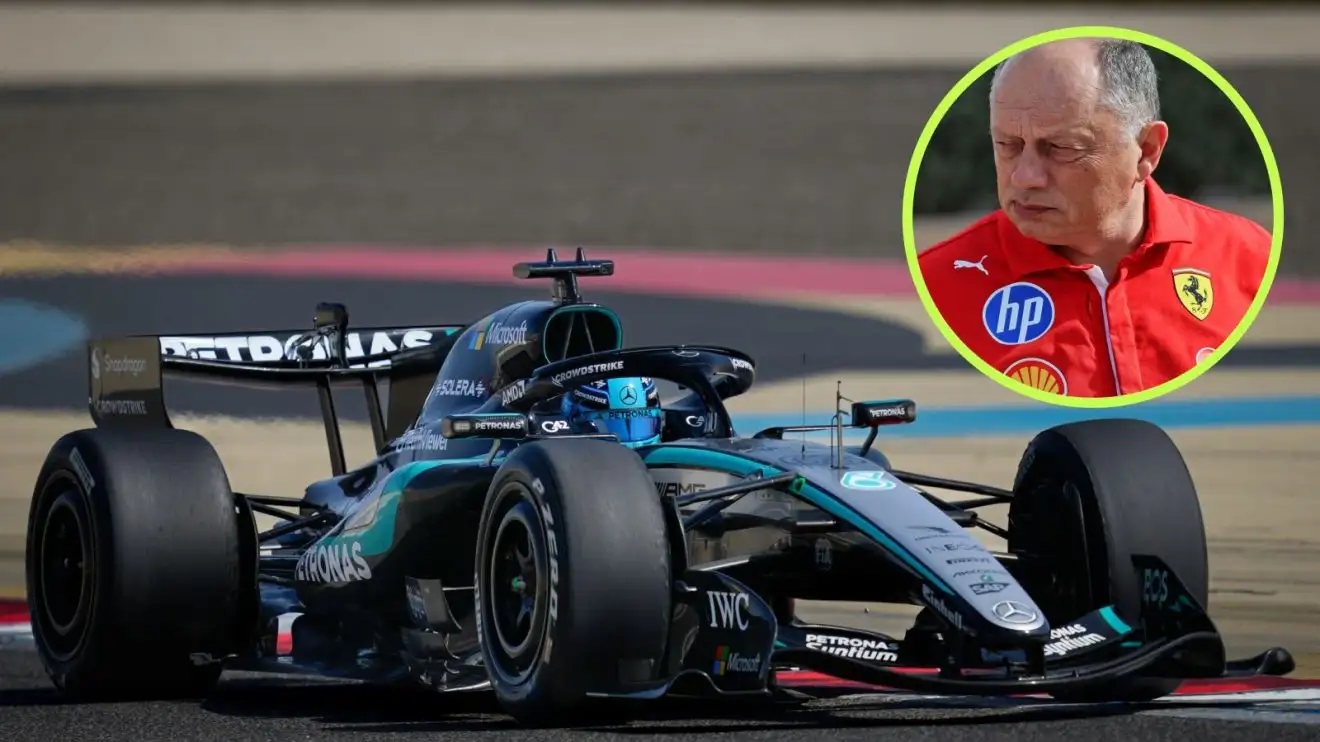
Ferrari will not protest the Mercedes engine in Melbourne
Ferrari has confirmed that clarity regarding the engine compression ratio saga – which has Mercedes at the centre of it – is what the Scuderia is chasing.
Amid a series of meetings, and the idea to test the compression ratio when hot tabled, Ferrari team principal Fred Vasseur is hoping for clarity on the regulations to emerge next week. Crucially, he confirmed that Ferrari does not intend on lodging a protest at the first race in Melbourne, regardless of how the situation evolves.
Ferrari will not protest Mercedes engine
Want more PlanetF1.com coverage? Add us as a preferred source on Google to your favourites list for news you can trust.
During the off-season, rumblings began to emerge that a loophole had been discovered by two manufacturers in the new engine regulations, with reports pointing to Mercedes and Red Bull Powertrains.
The unrest revolves around the engine compression ratio. Formula 1’s governing body, the FIA, lowered the ratio from 18.0 to 16.0, as new 50/50 electric and biofuel engines enter the sport.
The FIA confirmed that this was a compromise agreed upon to tempt new manufacturers into the sport, those being Audi, Ford, and a returning manufacturer in Honda’s case.
But, with the compression ratio only to be measured at ambient temperatures, rumours started to circulate claiming that a grey area had been uncovered, allowing Mercedes and Red Bull to increase that ratio when running at track temperature.
However, the situation has evolved, with Red Bull having seemingly joined the Mercedes opposition to this loophole, creating a united front against the Silver Arrows, one which is pushing for a change to the regulations which would introduce a compression ratio test at hot temperatures.
As reported this week by PlanetF1.com’s Thomas Maher, the PUAC [Power Unit Advisory Committee], has discussed the matter in a series of meetings with the FIA and FOM [Formula One Management]. The final meeting logically must be held before the engine homologation deadline on 1 March.
It has been widely reported that a meeting of the F1 Commission is to be held next week, featuring all 11 teams, the FIA and FOM, where this new test which Mercedes’ rivals desire is also set to be discussed.
Ferrari team boss Fred Vasseur was asked for his stance, when he met with PlanetF1.com and others at Bahrain testing.
“My point of view on this is, it was, by definition, for me when we started the new regulation, with a new regulation on the battery, on the engine, on the chassis, on the tyres, on the sporting regs, on everything, that for sure we are going into the direction they have to have grey area.
“In that the different understanding of the regulation from teams to teams, sometimes from teams to the FIA, and this, I would say that it’s a direct consequence of a new regulation. It was always like this in F1.
“The most important for me is to get clarity, because that if everybody can accept that we made mistakes or we didn’t have the same understanding of the other, what we need is to have a clear cut, it’s okay now, it’s like this, and I think it’s what we can expect from next week, at least myself I’m expecting a clear decision.”
More on the Mercedes engine row via PlanetF1.com
‘This could be embarrassing’ – Wolff on what’s behind Mercedes engine loophole saga
Bahrain telemetry suggests Red Bull engine edge after Wolff claim
A supermajority vote could force through change to the compression ratio tests, though it is a spiky topic, as by the letter of the law, or regulation, Mercedes has not done anything illegal, and the deadline for engine homologation is only weeks away.
With Red Bull apparently now part of the opposition, that would leave Mercedes vulnerable to a supermajority vote, which requires four of the five manufacturers, plus FIA and F1 agreement.
In the event that no changes to the tests are pushed through, Vasseur was asked whether Ferrari would protest the Mercedes engine at the season-opening Australian Grand Prix.
“We are not there to make a protest,” he confirmed.
“We are there to have a clear regulation and to have everybody with the same understanding of the regulation, but don’t speak about protest.”
The teams have three more days of testing in Bahrain ahead between 18-20 February, before practice begins in Melbourne on 6 March.
Additional reporting by Thomas Maher
Want to be the first to know exclusive information from the F1 paddock? Join our broadcast channel on WhatsApp to get the scoop on the latest developments from our team of accredited journalists.
You can also subscribe to the PlanetF1 YouTube channel for exclusive features, hear from our paddock journalists with stories from the heart of Formula 1 and much more!
Read next – Russell: Should be watching ‘pretty scary’ Red Bull, not Mercedes engine


