
Practice session changes and wet-weather controls revealed in new FIA documents
The FIA has confirmed a series of rule tweaks and revisions for the F1 2026 season.
The FIA has announced a series of rule changes and tweaks ahead of the F1 2026 season, following its General Assembly week in Uzbekistan.
The final meeting of the World Motor Sport Council signed off on the ratification of a series of tweaks and rule revisions for the new F1 season.
FIA confirm practice changes among several rule revisions
Updates have been made to all of the new regulations documents for the F1 2026 season, with the majority of these changes applying to the Sporting rulebook.
One particularly eye-catching change is that of a revision to the rules for a Sprint weekend practice session, which outlines that if a red flag interruption happens before the 45-minute mark has elapsed, the session can be extended to match the time lost due to the red flag.
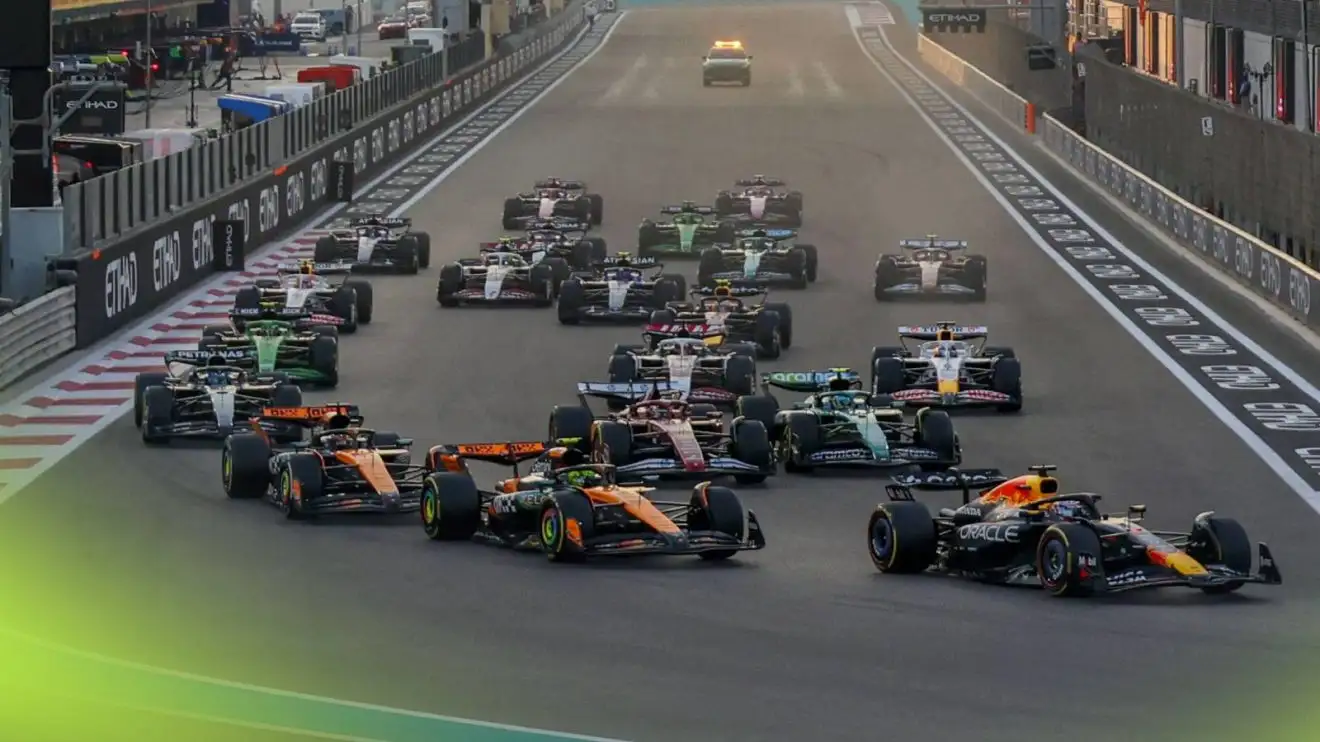
In wet-weather conditions, the Race Director has also been given the authority to increase the maximum distance between the Safety Car and the leader, as well as all the competitors behind. This distance has been increased to a maximum of 20 car lengths, with this increase communicated clearly to all competitors when such a decision is made.
This gap can be increased by the race leader when the signal that the Safety Car is withdrawing is sent.
Other changes include further clarification of the suspension of the starting procedure and of the resumption procedure, as well as tidying up and clarifications of the complicated wording of other Articles.
As an example, one change is not a change at all, but merely making the wording clearer: “Whilst a car is stationary in the pitlane as a result of incurring a 5-second Penalty or a 10-second penalty, it may not be worked on until the car has been stationary for the duration of the penalty.
“In this context, touching the car or driver by hand or tools or equipment will all constitute working.”
In the Financial Regulations, activities related to team Academy programmes are now excluded from the budget cap. The definition of this means the activities undertaken to scout, train and develop emerging young drivers for potential Formula 1 seats.
FIA overhauls active aerodynamics modes for wet-weather conditions
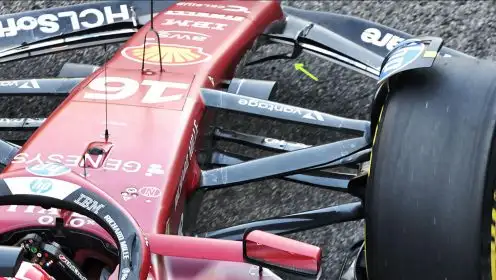
In 2026, the new cars will race with active aerodynamics, with a low-drag configuration for straights, and a high-downforce configuration for cornering.
Changes have been made to the regulations to increase the safety margin for wet-weather running, in that modes of ‘partial activation’ can be declared by the Race Director.
Similarly to how DRS activation has been suspended in the past, the Race Director can now call for partial activation, in which the front wings are in straightline mode, ie. low drag, with the rear wings in cornering mode, ie. high drag.
Article B.7.1.2 of the new sporting regulations gives the Race Director the authority to disable full activation of the active aerodynamics in conditions of low-grip, permitting only partial activation.
If a change to partial or full deactivation is made during a segment of a Sprint Qualifying or qualifying session, that state will remain in effect for the remainder of that segment of the session.
The FIA has also revealed that the areas of activation, similar to DRS zones, will be communicated to the teams over a month ahead of each Grand Prix.
These areas of activation are not necessarily uniform, meaning some will permit full activation of the active aerodynamics, while some will only allow for partial, depending on the level of safety margin required for any given section.
More on the FIA
FIA explained: What does it stand for and how does it govern F1?
Explained: What is ‘parc fermé’ and how does the FIA enforce it?
FIA outlines changes to the International Sporting Code
The General Assembly has also signed off on amendments to the International Sporting Code.
One change made is that the “obligation to accomplish some work of public interest”, one of the penalties that may be imposed on a competitor, has been updated to specifically refer to ‘work in the interest of motor sport’.
An FIA event Observer role, appointed by the relevant FIA sporting departments at its own cost and without decision-making powers, will monitor the consistent application of the ISC and the FIA regulations.
Updates have been made to allow stewards officiating in FIA World Championships and the FIA Formula 2 and Formula 3 Championships to be able to re-examine their decisions on their own initiative, if they “discover a significant and relevant new element” which was unavailable to them at the time of their decision.
The FIA has also allowed for the creation of an ‘Out-of-Competition Stewards Panel’, allowing the FIA to address alleged breaches occurring outside an Event, in time-sensitive situations, in matters not directly affecting an ongoing Event, or in cases involving multiple Events. Event Stewards may also delegate their authority to this panel.
The governing body has also introduced a ‘Fit and Proper Person Test’ (FPPT), which is a tool to “protect the image, reputation, and integrity of FIA Championships”.
This test will allow FIA championships the option to assess whether certain natural persons should be deemed “Fit and Proper Persons”.
This assessment determines whether individuals meet the required standards of integrity and do not fall under any of the disqualifying conditions, set out in a new Appendix F to the ISC, such as involvement in bankruptcy proceedings, convictions for fraud or similar offences, or being subject to governmental sanctions regimes, among others.
Read Next: Imminent Audi F1 milestone with F1 2026 engine set to burst into life