
FIA yellow flag rules trigger division after Antonelli Hungarian GP penalty


The FIA has made a decision on Kimi Antonelli
Formula 1’s long-running debate over what constitutes “enough” of a lift under yellow flags has flared up again, with Anthony Davidson revealing that even the drivers are divided on the issue.
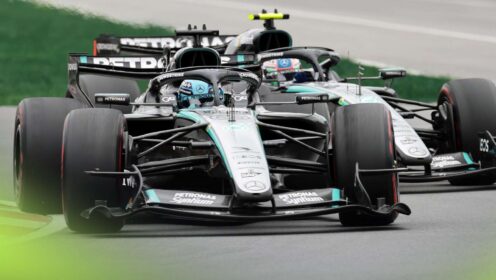
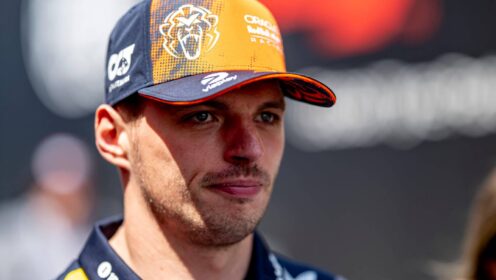
Antonelli, who had crossed the line with the fourth fastest time, was handed a three-place grid penalty at the Hungaroring for failing to slow sufficiently under yellow flags when Max Verstappen spun late in Q3.
F1 drivers divided over FIA yellow flag rules
Want more PlanetF1.com coverage? Add us as a preferred source on Google to your favourites list for news you can trust.
The Italian was penalised just weeks after his teammate George Russell escaped a similar potential infringement at the Austrian Grand Prix.
That Saturday, Russell lifted as he passed the yellow flags for Verstappen’s spin in the Red Bull at Turn 9 whereas Antonelli, behind him on the track, aborted his lap.
Russell held onto pole position when the stewards determined that no further investigation was necessary as he had lifted sufficiently.
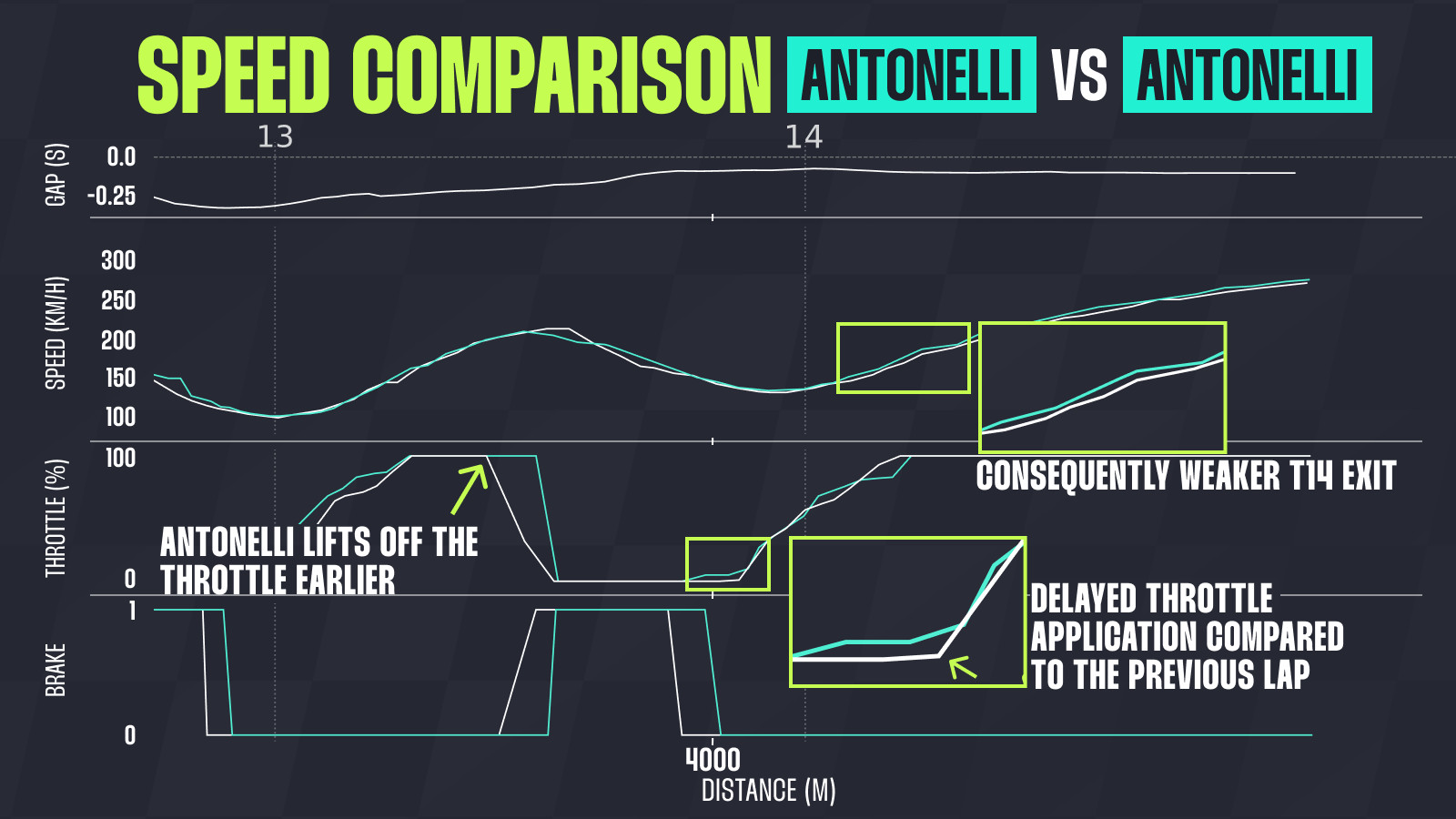
As revealed by PlanetF1.com’s data analyst Uros Radovanovic, Russell lost about 0.08 seconds compared to his previous lap, whereas Antonelli dropped about 0.6s.
It begs the question; what is sufficiently?
Mercedes’ deputy technical director Simone Resta, and deputy team boss Bradley Lord discussed the issue with former F1 driver Davidson on Mercedes’ Nu Silver Arrows Radio Show.
“When I reviewed the incident,” said Davidson, “I genuinely wasn’t sure which way the stewards would go. It was very close.
“Even if Kimi saw the yellow immediately, he’d already started reacting. He came off the throttle earlier than normal and began backing out of the corner. Do you remember how much earlier it was?”
Lord replied: “Around 15 metres earlier. He lifted and coasted into the corner, but the stewards ultimately judged that he hadn’t lifted enough to satisfy the regulations.
“In Austria, he’d completely abandoned the lap. This time the reduction wasn’t considered sufficient, so they made their decision.”
Resta offered mitigating circumstances in that Antonelli was not only on a hot lap, but also a better one having not put in an ideal final sector in his previous lap.
“There was another element to the qualifying situation as well,” explained the former Ferrari man.
“The benchmark lap being used for comparison wasn’t actually an ideal lap. In that particular sector, the reference wasn’t representative of Kimi’s true pace.
“That made the situation more difficult because even after lifting, he was effectively being compared against a slower-than-optimal sector.
“Kimi pointed out afterwards that if you compared the sector to FP3, when the car was heavier on fuel and therefore naturally slower, he was still quicker despite lifting.
“In some ways it was a perfect storm. He did react, but because of the reference lap being used, the reduction wasn’t enough to satisfy the requirement.”
The reduction, though, is not outlined in black-and-white in the regulations, it is for the stewards to decide whether the driver slowed enough or not.
That has led to suggestions that a double waved yellow would be the better course of action as that would take the uncertainty out of the situation.
But even the drivers cannot agree on that.
Davidson revealed that he had spoken with Russell, a Grand Prix Drivers’ Association director, and even the drivers are divided on the best path forward.
“Having spoken to some of the drivers, I think it was George who mentioned after Austria that there still isn’t complete agreement within the paddock about how yellow flags should be handled during qualifying,” he said.
“Some drivers believe that whenever a car is stopped on track, it should automatically be a double yellow. That way, everybody knows exactly where they stand.
“Others argue that’s unfair if the incident is nowhere near their part of the circuit and it results in a lap being compromised unnecessarily.
“Even among the drivers themselves, there doesn’t seem to be a universal view on what the correct approach should be.”
Lord, having witnessed two different outcomes for his drivers, accepts the stewards are in a difficult situation as no two events are the exact same.
“You certainly don’t envy Race Control or the stewards,” he said. “Every incident is different. The circumstances are different, the corner speeds are different, the amount of run-off available is different and the context changes every time.
“Like everyone watching, we’re sometimes frustrated by decisions and other times pleased with them. Consistency is always difficult because no two incidents are exactly alike.”
F1 2026: The season’s winners and losers
The results of the F1 2026 championship
The F1 2026 Drivers’ and Constructors’ Championship standings
Antonelli went on to finish the Hungarian Grand Prix in third place, adding another 15 points to his season’s tally.
The Italian leads the Drivers’ Championship by 50 points ahead of Lewis Hamilton heading into the summer break.
Want to be the first to know exclusive information from the F1 paddock? Join our broadcast channel on WhatsApp to get the scoop on the latest developments from our team of accredited journalists.
You can also subscribe to the PlanetF1 YouTube channel for exclusive features, hear from our paddock journalists with stories from the heart of Formula 1 and much more!
Read Next: Lando Norris hits back as 40-minute London stalker ordeal detailed