
Revealed: Graeme Lowdon’s final interview before surprise Cadillac F1 exit


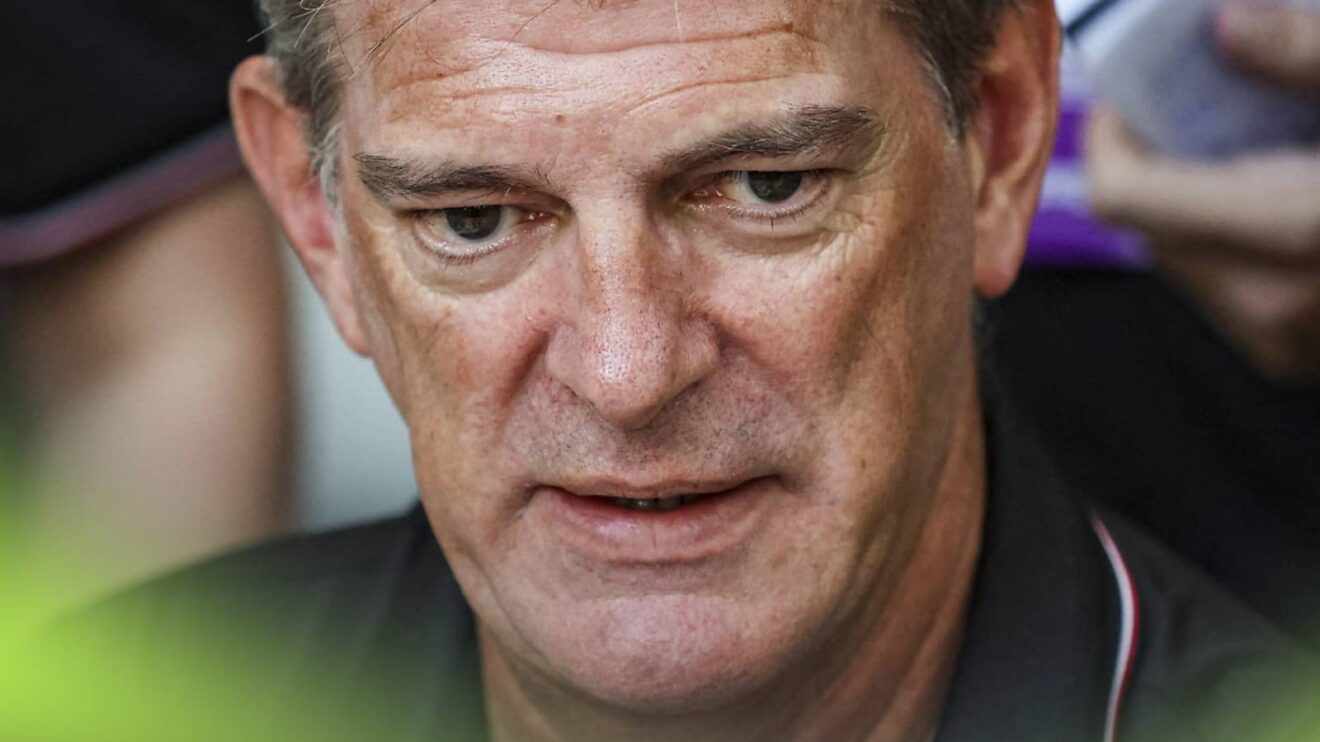
Graeme Lowdon been replaced as Cadillac F1 team principal
In his final media session before being replaced as team boss, Graeme Lowdon spoke about a fundamental lesson Cadillac could learn from Jean Todt’s Ferrari leadership.
Lowdon spoke with select media including PlanetF1.com in a mid-season review at the Hungarian Grand Prix, the final race before the summer break and Cadillac’s decision to replace him in his role.
Graeme Lowdon explained Cadillac’s need for stability and long-term development
Want more PlanetF1.com coverage? Add us as a preferred source on Google for news you can trust.
On Wednesday, Cadillac confirmed a change in leadership of its team, as CEO Dan Towriss spoke to media following the announcement that former Renault executive director, Marcin Budkowski, has replaced Lowdon with immediate effect.
Thanking Lowdon for his efforts in building Cadillac up and overseeing its arrival onto the grid, Towriss confirmed that it had not been a mutual decision to part, and that he had informed Lowdon of his decision to make a leadership transition on Wednesday morning.
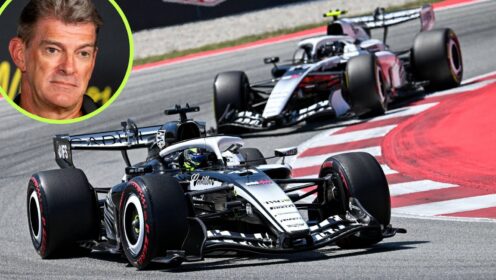
The abrupt change came as a surprise, given that Cadillac’s first half-season can largely be reflected on as a success, given the relative competitiveness and competency with which the team has been able to participate – a major contributing factor for this no doubt being down to Lowdon’s past experience leading the small Manor/Marussia team in the early 2010s.
However, consistent reliability issues, particularly in the areas of brake cooling and suspension, proved a headache, with Towriss and Budkowski pointing out that the reliability concerns have had an effect on the accumulation of valuable mileage.
That can be taken as a significant hint as to some of the logic behind Towriss’ decision to replace Lowdon, primarily a business leader, with an engineering-focused team principal.
Towriss revealed that he and Lowdon had spoken about an eventual transition of leadership once the first phase of the team’s growth had been completed, reasoning that point had been reached more quickly than anticipated, allowing for the interpretation that Lowdon could be viewed as a victim of his own success.
Certainly, the former Cadillac team boss gave no hints whatsoever that he anticipated such a move when he gave a mid-season review of the team’s progress during a sit-down session with select media at the Hungarian Grand Prix.
“It is so difficult to know where a new team should be because it’s a relative game,” he said, when asked if it’s been a season of over accomplishment.
“But if you look at all of the things that we measure, which is how well have we executed? Have we hit deadlines for shaking down the car on the right day, being on full car dyno at the right time, racing at the right time, all the rest of it? Then all of that’s been hit.
“The performance is well ahead of what everybody had expected outside of the team. As I said before, because it’s a relative game, it’s really difficult for us inside to know exactly where we’re going to sit.
“But the fact that we outperformed, in terms of pace, a very well-established team shows that everyone in the team has done a tremendous job.”
With Cadillac outperforming even Adrian Newey’s highly anticipated Aston Martin AMR26, an offering from a far more established team, the overall success of the first half was tempered by reliability issues.
Lowdon himself offered hints that the public complaints from the drivers brought a certain level of tension behind the scenes: “You need a degree of tension to constantly improve, and I think they’ve hit the right level.”
But the issues seemed largely outweighed by the massive positives accomplished during the first months of racing, and Lowdon said he could look back with satisfaction at how his outfit was being treated, even by the media.
“When we have had problems, we’ve quite rightly been judged by the same yardstick as every other team,” he said.
“When I read the various media reports of whatever, we’re being measured as if we’re a team that’s been in the paddock for a long time, and we can’t complain about that.
“Actually, I think it’s quite a compliment that we’re measured on that same yardstick because it shows that we’ve turned up with a professional approach. We’ve had respect for the competition, which we always said that we would, and we’re trying to build a platform for the future, not just kind of ‘wham bam, here we are’ sort of things.”
Given Cadillac was being held up to the same level of scrutiny as a new organisation, against the likes of far more venerated teams, Lowdon said the performance levels had vindicated the push from TWG and GM to get the team on the grid, having initially been rejected from the grid by the commercial rights holder, due to the perceived lack of value and competitiveness the entry – initially under an Andretti Autosport iteration – appeared to present.
“I think it validates the entire reasoning behind the acceptability of a new team coming in, because there are all sorts of horror stories about what it could be like,” he said.
“I think more importantly even than the initial kind of performance is the fact that we’ve laid out our stall about the foundations for the future and how we want to go about things, and really genuinely want to bring something different and build a team that can make a difference as well.”
It’s in that building of foundations that Cadillac now appears to have changed course, feeling another person is more suited to the next phase of development than Lowdon was.
It’s indicative of F1’s brutal nature that, despite the assured competency with which Cadillac has arrived, it hasn’t been enough to convince Towriss that Lowdon deserved more time.
Whether this is the correct approach, only time will tell, but the fact that Lowdon only has a sample size of 11 races means he is unlikely to compare favourably against Budkowski by season end, in terms of headline results.
Certainly, at a time when the team is starting to switch from an approach of building the fundamentals to chasing refinement, like its immediate rivals, Lowdon had indicated a longer timeline to success than perhaps Towriss had anticipated.
“I think it takes years, actually. The common thing in all of the successful teams is stability,” he said, pointing to the example of Jean Todt’s stewardship of Ferrari that began in 1993 – years before the team became truly competitive as Todt weathered a series of setbacks and losses that, nonetheless, saw CEO Luca di Montezemelo keep faith in him. It wasn’t until 1999 that a title was delivered, and 2000 until a Drivers’ Championship was won.
“It was probably the five or six years of… I don’t know what you would call it, but it wasn’t winning. It was stability, and it was building and building and building. Same at McLaren [in late 2010s].
“You pick your team, you run with it, and it takes time because it’s so complicated, such a complicated game. I’ve got a master’s degree in mechanical engineering, and some of the reports I read ahead of a grand prix really stretch my understanding of aerodynamics, fluid dynamics, heat transfer and God knows what else… it is super super complex.
“Then, on top of all of that, are the operational systems and everything, not just pit stops and stuff, but strategy.
“If something fails on a car, there will be multiple systems behind that, all of which have to be developed and honed. None of which you can take from another team. Everything you have to build.
“So it’s difficult to describe because, obviously, the fans just see the two cars and you see the guys driving it and that’s what the sport should be, but it’s so complex behind it, and it’s often not easy to explain because sometimes the the difficulties or the things that trip you up are actually the simplest things, and you don’t need a degree in astrophysics to just get out the wrong side of the bed and do something out of sequence or something like that.”
More on Cadillac in F1
Why was Graeme Lowdon removed by Cadillac? Dan Towriss explains shock change
Valtteri Bottas dismisses Cadillac exit rumours with emphatic message
Certainly, this timeline may have been one of the areas that Lowdon and Towriss were not aligned on, although the American executive opted against detailing the ins and outs of his Wednesday morning conversation with Lowdon in response to a question from PlanetF1.com.
Lowdon is yet to comment on his removal, but the fundamental messaging of his final media session suggests that he may have been blindsided by the decision in much of the same way that the F1 paddock was – Towriss revealing that he had moved quickly on his decision, given that a planned transition over a longer period of time would likely have led to media leaks, and potential destabilisation of the team.
With Budkowski due to start work on Monday, the Polish engineer inherits Lowdon’s legacy when he walks into the Silverstone-based factory of the American squad.
According to Lowdon, the team isn’t quite at the point of moving into the refinement phase, meaning Budkowski could take some time to make an impact within the organisation.
“We’re still recruiting like mad, and so there’s still an awful lot of building going on,” Lowdon said.
“Q2 of this year has allowed us to start understanding the strengths and weaknesses of the MAC-26, as well, and also the strengths and weaknesses of the team operationally.
“We like to say every day is a school day. If it’s a day where we haven’t learned something, it’s a day we’ve wasted, and so we’re just trying to find every area that we can improve and constantly, constantly improve, and, at the minute, it’s big chunks because there’s just so much to do and there’s so much that’s new as well, and so we’re somewhere off that area where you’re just refining things. Where I think a lot of the other teams are probably more in that mode.”
Lowdon’s offered keyword, stability, is one Budkowski also pointed to as he spoke to the media for the first time in his new role on Wednesday. With a senior leadership change comes inherent instability, at least in the short term, so what approach will Budkowski take to the second half of the season as he sets about moulding the squad in his image?
“Competitive organisations are built in the long term,” he said.
“Every team that we have seen being successful and winning races or competing at the highest level of F1 has been a few years in the making, has enjoyed stability and a very strong organisation. In my conversations with Dan and with the top management of General Motors, we’re exactly aligned on that.
“It doesn’t mean that the next race isn’t important or the season isn’t important. Of course, it is. We’re here to race; we’re here every time we go to a racetrack. We want to make the best possible results. Try to score some points. Try to do some good performances.
“But it’s a matter of arbitration. There is a limited amount of resources, whether that’s people or money within the cap that you have to distribute between this season and next season, and you’re going to have to make these decisions at some point.
“So, taking into account that the season matters and that we’re learning this season will give you a good understanding for developing next year’s car.
“But also, at some point, you have to transition your resources. So I think it’s a combination. You have to be there on the ground. That’s why I will be attending races. You have to try to get the most out of what you have. Try to squeeze the last bit of performance from your development pipeline.
“A lot of my focus will be on looking at how the organisation is structured, how it’s working, whether the right processes are in place, and where we want to get to, because you have to put a strategy in place in the longer term.
“There’s no more magic wand in F1. That’s long gone; you can’t just come in and wave a magic wand and suddenly make a car more competitive. It’s hard work.
“It’s a lot of people having to work together, work in the same direction. My focus will be to align the team in the right direction, give them a vision for the future, and make sure we spend our time, resources and money on the right things. That’s going to be a combination of short-term and long-term objectives.”
While a succinct explanation of Lowdon’s removal hasn’t been directly outlined, the comments from Lowdon, Towriss, and Budkowski suggest a fundamental misalignment on priorities: Lowdon’s appeared to be on a slow build, with the ongoing reliability issues suggesting that immediate competitiveness was secondary to the bigger picture of the organisational structure and the building blocks.
But, for Towriss, patience with this approach appears to have worn thin, and, sensing the potential for bigger results in the short-term, has replaced Lowdon with someone who may be more aligned with being willing to make quicker moves, much like Alpine did three years ago when Otmar Szafnauer was sacked mid-season, 30 races into a 100-race plan.
Three years on, Alpine has achieved no more success, with further management changes made since, but will the approach pay off for Cadillac? Only time will tell.
Want to be the first to know exclusive information from the F1 paddock? Join our broadcast channel on WhatsApp to get the scoop on the latest developments from our team of accredited journalists.
You can also subscribe to the PlanetF1 YouTube channel for exclusive features, hear from our paddock journalists with stories from the heart of Formula 1 and much more!
Read next: Five biggest winners of F1 2026