
F1 cannot ignore warning signs after Oliver Bearman crash exposes 2026 flaws


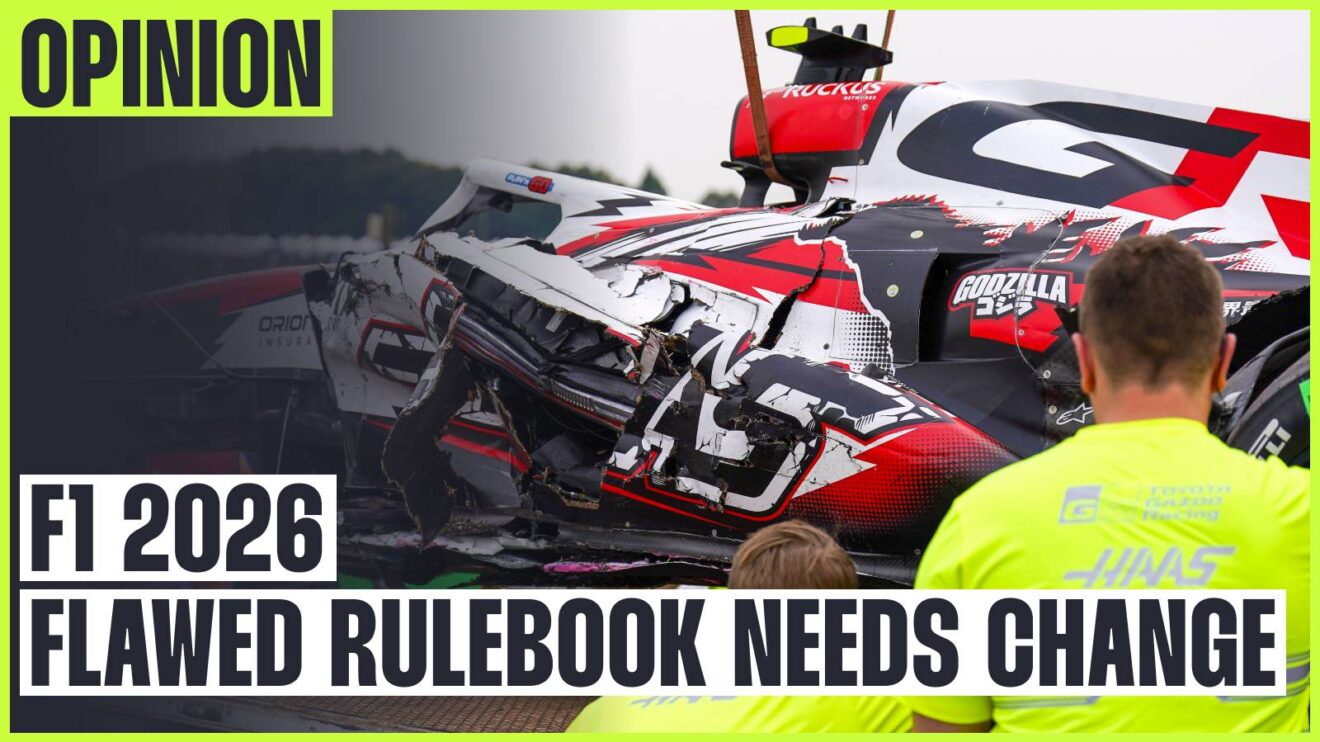
Oliver Bearman's crash at Suzuka has shone a light on why the F1 2026 regulations need rapid change.
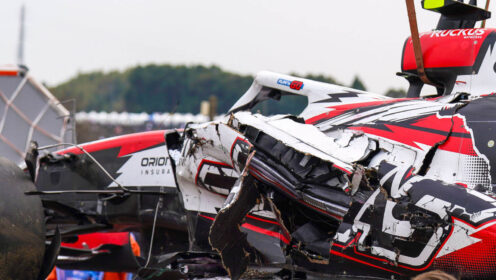
Oliver Bearman’s crash at Suzuka delivered hard evidence that the warnings about the flawed F1 2026 regulations were justified, and it’s time to take the driver’s complaints seriously.
After the first three races of the new regulation cycle, it’s become clear that the engine formula isn’t quite hitting the right notes when it comes to performance and, following Bearman’s hefty crash, there are now proven safety concerns to take into account.
Oliver Bearman’s crash exposes F1 2026 flaws
Want more PlanetF1.com coverage? Add us as a preferred source on Google to your favourites list for news you can trust.
One look at the headlines and social media after the Japanese Grand Prix, and it’s clear that the main talking points are not the positives: Kimi Antonelli may be popular and likeable, but his second-ever career victory has paled into insignificance against a deluge of downbeat and critical assessments from a bevy of depressed F1 drivers.
At a time when the FIA and Formula 1 could have been celebrating the dawn of a great new era for the sport, they find themselves embroiled in non-stop negativity that has only grown louder across the first three race weekends, despite the on-track action actually being somewhat entertaining.
Far from the new regulations being heralded as a spectacular success, which the chassis and aero side of things could well be, the first few weeks can only be giving the powers-that-be a huge headache.
Almost all of the drivers won’t stop talking about how little enjoyment they’re getting from driving, the sport’s talisman Max Verstappen keeps threatening to quit because of how incompatible he feels the regulations are with a top-level motorsport, and social media is ablaze with fans making fun of the unnatural ‘Mario Kart’ dynamics brought on by a series that now actively hinders its fastest drivers with its energy harvesting requirements.
Since these cars became a reality and emerged on track for the first time, there’s been a sense of trepidation. Talk of unusual driving requirements evolved into one or two high-profile names lashing out, and those voices have only grown in number and become louder and louder: the drivers are simply unable to hide their unhappiness with what the formula has become, even if this is diluted by the more enjoyable moments of on-track battling.
But there’s now a sense of urgency to the criticisms following the Japanese Grand Prix, particularly given that this race featured a crash that appeared to be solely brought on by side effects of the regulations, due to the speed deltas between cars circulating normally vs. using their electrical boost.
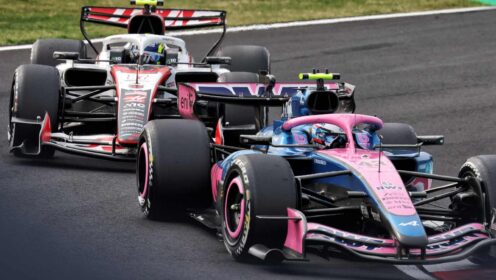
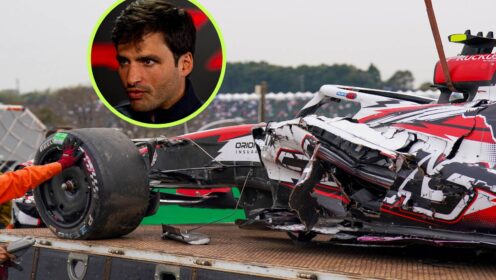
Oliver Bearman’s fearsomely fast 50G impact after he took action to avoid hitting the Alpine of Franco Colapinto approaching Spoon was caused by his catching the Argentine driver at a closing speed far beyond what can be reasonably anticipated: both drivers were ‘flat out’, yet Bearman was doing 50kph more than the Alpine, based on an estimate from Colapinto, as the Haas was in deployment mode.
Deployment isn’t something the drivers are in control of, leading to bizarre situations such as Lando Norris revealing that he even overtook Lewis Hamilton without planning to – the deployment just happened to kick in to enable it.
“Honestly, some of the racing… like, I didn’t even want to overtake Lewis,” reigning World Champion Lando Norris said after the race.
“It’s just about the battery deploys, and I don’t want it to deploy, but I can’t control it. So I overtake him, and then I have no battery, so he just flies past. This is not racing, this is yo-yoing.
“When you’re just at the mercy of whatever the power unit delivers, the driver should be in control of it, at least, and we’re not.
“Yes, the racing can look great on TV, but the racing inside the car is certainly not as authentic as it needs to be.”
Suzuka exposed just how badly the new regulations have resulted in an atrophying of driver talent, with some of the most elite drivers in the world openly explaining how they are having to drive more slowly in order to achieve faster laptimes, such are the energy foibles of these wheezing power units.
As I’ve written before, it’s not that the potential of these power units is lacking. The peak performance is exceptional, and the laptimes are only a few seconds, at most, off what we were seeing last season. But the peak performance is so fleeting, and requires such daft driving techniques, that what started as reluctant murmurs of discontent from the drivers during pre-season testing has now turned to open and obvious ridicule.
Seven-time F1 World Champion Lewis Hamilton has been positive about the racing over the first two race weekends of the year, but, upon being off the pace in Japan, was less complimentary as he revealed that he had struggled with the power output from his engine throughout the race.
Max Verstappen’s stance is well-known at this point and doesn’t need repeating but, if you are new, he’s past the point of anger at the situation and, instead, appears to be giving serious thought to a sabbatical until something changes, saying on Thursday that he has to think about his “life here” in the paddock.
Fernando Alonso has been quietly getting on with it, but has also made it clear that the challenge of F1 is not what it was, stating that half of his Aston Martin team could drive the AMR26 around the first sector of Suzuka as quickly as he, given the need to restrain speed in order to keep the battery topped up for the straights. He’s also said that overtaking these days is “accidental” as drivers must make evasive manoeuvres to prevent accidents when deployment kicks in.
But, as the drivers are also pointing out, they feel their complaints are not being listened to. “The drivers don’t have any say, we don’t have any power, we’re not on the committee, and we have no voting rights,” Hamilton said, while Norris hinted that the considerations of the drivers are not being taken into account by the sport’s shareholders, “There’s no point in saying it, honestly. It doesn’t matter what we [drivers] say. As long as the fans enjoy it, that’s all that matters…”
At present, it’s difficult to say anything other than that the power unit regulations are fundamentally flawed in their execution. Peak performance may be impressive, but the compromises needed to achieve the potency within are far too great and, as Suzuka proved, are actively dangerous given the potential for a deploying car to encounter one that isn’t and, worse, one that could slow down due to harvesting at unexpected parts of the track.
After all, who didn’t think George Russell was breaking down when he suddenly slowed approaching Spoon in the closing stages of the race? That dramatic loss of speed was down to nothing more than a moment of unexpected superclipping while trying to save energy…
F1 is very lucky that Oliver Bearman was largely unscathed on this occasion, but it would be unwise to ignore the warning signs that his huge crash represents. It only took two and a half races for the first major incident. How long will it be until the next? And let there be no doubt: there will be a next, unless fundamental changes are made.
The artificial back-and-forth nature of the hollow racing battles that we’ve seen across the opening weekends is perfect fodder for social media feeds, which lends itself well to presenting F1 as incredibly entertaining excitement, which resulted in a small quietening of discontent after a relatively engaging Chinese Grand Prix.
But, despite the showbiz aspect, and against the backdrop of an incredible amount of online and social negativity as well as driver criticism, it’s also important that the sport’s broadcasters and media shine a light, responsibly, on the negative aspects these regulations have introduced.
Bizarrely, the UK broadcaster Sky F1 and its crew have elected against doing this and, instead, suggest that every pass is a display of breathtaking skill, and that lifting off to go faster is, in fact, a new and interesting way to go racing.
It is not. While the back-and-forth may make for somewhat entertaining viewing, the sport has changed fundamentally to little more than an inane spectacle, and sources have suggested to PlanetF1.com that the deeper-rooted issues are playing a secondary role of importance when it comes to commercial considerations between the rights holder and broadcasters – something that was borne out by the prominent promotion of the Mario Kart movie on the grid at Suzuka, a move that seems utterly juvenile at a time when the sport is struggling to be taken seriously.
It’s an interesting editorial choice Sky has taken, made all the more intriguing by the wealth of experienced former racing drivers on its presenting panel, enthusing about the regulations in ways that the active racing drivers are decidedly not.
It’s an inane spectacle that not only risks hemorrhaging viewers as the hollowness of it all strips the sport of its prestige and sense of importance, but also risks big crashes for the unhappy drivers.
Never one to be cowed from speaking his mind, GPDA chairman Carlos Sainz was forthright in calling for change – and making it fast.
“These kinds of accidents were always going to happen, and I’m not very happy with what we’ve had up until now,” he said.
“Hopefully, we come up with a better solution that doesn’t create these massive closing speeds and a safer way of racing.”
An initial plan to evaluate tweaks after the Chinese Grand Prix was pushed out to have a meeting after the Japanese Grand Prix instead, with revisions only being made by way of a maximum energy harvesting reduction for qualifying at Suzuka.
“I was so surprised when they said, ‘No, we will sort out qualifying and leave the racing alone, because it’s exciting’,” Sainz continued.
“As drivers, we’ve been extremely vocal that the problem is not only qualifying, but it’s also racing. We’ve been warning that this kind of accident was always going to happen.
“Here, we were lucky that there was an escape road. Now imagine going to Baku, or going to Singapore, or going to Vegas, and having these kinds of closing speeds and crashes next to the walls.
“We, as GPDA, have warned the FIA that these accidents are going to happen a lot with this set of regulations, and we need to change something soon, if we don’t want them to happen.
“It was 50G, I heard, just imagine what kind of crash you could have in Vegas, Baku, etc.
“I hope it serves as an example, and the teams listen to the drivers, and not so much to the teams and some people who said the racing was okay, because the racing is not okay.”
It’s worth remembering that, six months ago, the FIA President, Mohammed Ben Sulayem, appeared to become aware of just how grim the picture might truly be, as he set about trying to fast-track a route back to a naturally-aspirated V8 or V10 engine with sustainable fuels, a last-gasp effort to head off what he could see coming.
With no significant support from the power unit manufacturers to make it happen at that point, this switch has been put on the long finger for now, but, in light of F1 2026 starting to expose the full picture of how poorly received and anemic these new V6s are, it’s no longer unimaginable that emergency measures might be evaluated to hasten getting rid of them.
The issue is that precious little wiggle room has been left in the regulations to allow for change: the power units are homologated until 2030, with prescribed development windows. The electrical energy is required in order to make the cars fast enough to be F1, with the internal combustion engine simply too weak to propel the cars around by themselves if a redress of the ICE vs. electrical ratio is sought.
But that doesn’t mean attempts at redress won’t be made. Sources have suggested there is a growing awareness that the 50/50 split between the ICE and electrical has been a mistake, and that listening to the drivers is going to be a key focus on the path forward.
If these regulations are to succeed and not cost F1 its hard-fought new fanbase as grown over the last decade, then the answer seems simple: open up the development and allow for an engine war. Given the rate at which teams and manufacturers can improve performance, think of the gains in energy harvesting that could be found. Or, if electrical energy isn’t to a given PUM’s liking, then they can concentrate on improving the combustion engine’s power to reduce the need for the electrical side.
Think of the current engine as merely the baseline, rather than the finished product. It would likely need a revision of the power unit budget cap, but the happiness of the PUMs should be secondary to the health of the sport.
F1 2026 could and should have been a moment of triumph, but, instead, pandering to the PUMs has resulted in this highly anticipated moment, years in the making, being met with relentless negativity and ridicule.
The warnings were ignored, but now, with F1’s new reality becoming ever more stark, will stubborn pride win out against the need to make serious and fundamental changes to improve the situation? Will the desire for shallow entertainment outweigh maintaining F1’s position as the pinnacle of motorsport?
The alarm bells couldn’t be ringing more loudly, and one would hope arrogantly attempting to pretend all is well isn’t the path that will be chosen.
Thankfully, there is some light at the end of the tunnel: the FIA issued a statement after the race to confirm meetings will be held in April with an eye to improving the situation, and sources have suggested changes are likely: in the short-term, tweaks to energy deployment limits and, in the longer-term, a revision to the split between the combustion engine and electrical.
A firm hand is needed to get control of a situation that risks causing untoward damage to F1’s image in the mainstream as an elite motorsport, and one would hope that the April meetings are the first step towards resolving some of the issues.
Want to be the first to know exclusive information from the F1 paddock? Join our broadcast channel on WhatsApp to get the scoop on the latest developments from our team of accredited journalists.
You can also subscribe to the PlanetF1 YouTube channel for exclusive features, hear from our paddock journalists with stories from the heart of Formula 1 and much more!
Read Next: Japanese GP 2026 driver ratings: Piastri surge, Bearman crash, and Alonso’s quiet performance