

‘Daddy, don’t go’ – Sebastian Vettel opens up on F1 career decline
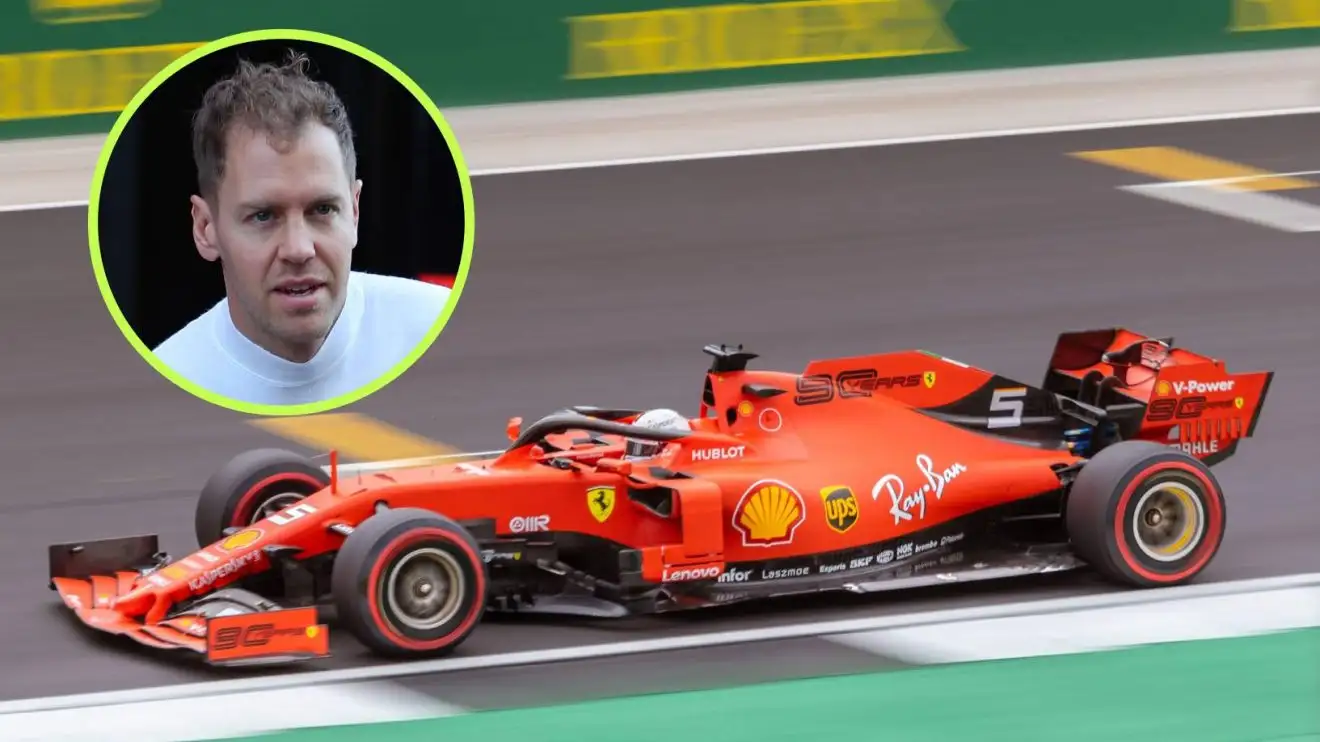
After some wobbles in 2018, Sebastian Vettel said his F1 motivation began to decline in 2019.
Sebastian Vettel has opened up on his decline in peak performances, revealing when he started to question himself as an F1 driver.
The four-time F1 World Champion retired from the sport at the end of 2022, with any chances of a comeback to the sport seemingly having faded away entirely in the years since.
Sebastian Vettel reveals when he began to question F1 career
Want more PlanetF1.com coverage? Add us as a preferred source on Google to your favourites list for news you can trust
Vettel was the leading light of Formula 1 between 2010 and ’13, winning four consecutive titles as he claimed multiple records and entered both himself and Red Bull into the history books.
Until Max Verstappen came along, Vettel was the youngest winner of a Grand Prix thanks to his victory at the 2008 Italian Grand Prix, but he still retains the youngest-ever F1 World Champion record ahead of Lewis Hamilton, Fernando Alonso, and Verstappen.
After his spell of dominance at Red Bull, Vettel moved to Ferrari seeking a new challenge, aiming to emulate the feats of his close friend and childhood hero Michael Schumacher by adding to his pile of titles.
But his Ferrari dream never quite played out as he’d hoped. While a regular frontrunner and race winner, his two title tilts with Ferrari in 2017 and ’18 ended in defeat, and, by 2019, Vettel’s powers appeared to be on the wane as the rookie Charles Leclerc had the measure of him during their first season together.
Leaving Ferrari having been trounced by Leclerc in 2020, Vettel joined the Aston Martin squad and put in two years in which he appeared to have rebuilt his confidence, but his desire to stay in F1 had waned. He announced his retirement after 2022 and, while he’s been linked with several vacant seats over the years since, has shown no desire to return to F1 after settling into a quiet personal life with his wife and young children.
Appearing on the Beyond the Grid podcast, Vettel openly discussed the topic of his ‘peak’ as an F1 driver, even revealing when he began to experience self-doubts and his performance level started to slip away.
A critical difference, in Vettel’s eyes, is the definition of ‘peak’ and whether that relates to speed or performance levels, with the German feeling that he’d already hit his peak of speed as early as 2008 and ’09, but wasn’t yet “complete” as a driver.
“Speaking of myself, I think you have to distinguish between peak performances and then peak all around. Because I think you are probably able to deliver peak performances for a much longer time than the actual lasting peak performance or consistency,” he mused.
“Nowadays, drivers come in, and they’re very ready. Even you see with the rookies, they’re all doing a really good job, and that’s because you start so early and you start to prepare so professionally, so early.
“For sure, in Formula 1, the demands are different, and there’s more, and so on. But I think there’s nothing that speaks against being very ready very quickly. I came to Formula 1 in 2006/2007, and I would say, already by 2010, obviously, I won the championship. I was sort of at my peak. But then in ’11, I was much more ready to win the championship than I was in 2010, for example.
“I had strong years, obviously, winning the championship, 2015 was a very strong year. 2017/2018, and then [by] ’19 and ’20, I was on my way down already, and I’m happy to say that now, because I didn’t have that really last ultimate push anymore.”
Once upon a time, Vettel had been consumed by hunger for more wins, more records, and more dominance, but this had faded with age, to the point where, even in his years of success with Ferrari, his desire to make the effort needed had begun to slip.
“I remember, actually, in 2018, I started the season and traveled to the first race. I really felt like I didn’t want to go. I wanted to go racing, for sure, but I didn’t want to travel,” Vettel said, as he denied having been aware of his hunger starting to ebb away from him.
“It’s like I couldn’t be bothered sitting a day in a plane again, and that was weird. Like, ‘What are you talking about?’ I said to myself, ‘You love this. Of course, I do’.
“Then I won the first race, and then I was like, all hyped, went to the second race, ‘I’m gonna win, I’m gonna win’.
“I won the second race, and then the season went on. It was a very, very strong season. And then in 2019, maybe it was also a time when the kids started to be old enough to phrase, ‘Daddy, don’t go.’
“Before, I always had the looks from the dog, like he knew when the suitcase was in front of the door that I was leaving. And it was hard to say goodbye to the dog, but with kids, it was much, much harder.”
Vettel’s passion for his career may have started to dwindle by that point, and the matter wasn’t helped by the fact that, in 2019, Ferrari fell off the boil in terms of performance, making it even more difficult for Vettel to keep up his motivation to give 100 percent.
“In 2017, we started off really well. We were missing ingredients. Mercedes beat us in 2018. We were more complete. Our car was better. Our package was better. We didn’t make it. Mercedes was stronger at the end of the season, and they beat us,” he summed up.
“2019 was a strange year, because our car was okay, and our engine was really, really good. Remember which year I’m talking about.
“So we struggled to just make progress as a team, real progress like ‘Okay, we are closing the gap’, or ‘We are actually getting stronger in developing the car’, especially the second part of the season.
“I really, really wanted to win the championship with Ferrari, trust me. Now, I’m cool, but I really wanted it so bad, and it didn’t happen.
“2019 was sort of the break year, I would say, for myself, because I started to feel like ‘We’re not making it. We’re not good enough’.”
Vettel, now 10 years past the point at which he had been the fresh-faced young driver seeking to threaten the establishment, only had to look across the garage to see what had changed.
“At the same time, Charles came in in 2019, and Charles had so much energy, a completely different time in his career,” he said.
“When we finished fifth and sixth or third and fourth, in fairness, I was spoiled. I mean, I won four championships, I won so many races, I had so many poles, whatever, all I was interested in was winning. That’s the sort of athlete I was. I wanted to win. I wanted the biggest trophy. I wanted that moment on the podium where I knew I won the race, I wanted the Monday morning feeling of ‘I won the last race and feel so good’, but the feeling doesn’t last long enough. So you’ve got to win another one.
“Charles came in and, when we finished fifth and sixth, he was over the moon with a fifth and sixth because of different stages of his career and the first time in a competitive car, I think that’s when I started to struggle a bit.”
More on the all-new regulations for F1 2026
F1 2026 tech analysed: The future of overtaking and biggest car advantage identified
F1 2025 vs F1 2026: Nine key questions ahead of massive regulation changes
The long delay to start the F1 2020 season, brought about the beginning of the COVID-19 pandemic, which resulted in the entire F1 calendar being torn up and rescheduled, meant Vettel had time to reflect on what it was he was missing, and what he wanted to do.
“[In 2020], we’re not racing. I get this fantastic break that I never had, and enjoy it so much with the family, and. at the same time, becoming aware of the kids growing, of problems in the world and how they started to affect me, and I’m reflecting then,” he said.
“I would say at that time I was probably not at the peak anymore, and with Aston Martin starting a new challenge, I think I was ultimately looking for this reassurance that I can still do this.
“Which sounds silly, because ‘Of course, I can do it. I’ve proven it so many times’.
“This uncertainty or insecurity is something that we all have. All the drivers have it on the grid today. I was speaking to Michael [Schumacher] about this many years ago, and even he had it.
“For me, when I say ‘even’, it’s because he is the greatest. I grew up with posters of him on the wall. He was the best in everything I could imagine with racing. And he was insecure! ‘What? You?’
“So we all have that. I think those years, from a results point of view, of course, I would have loved to see the team growing faster, but they were important for me because I started to feel really comfortable again with my driving.
“I think I did have peak performances, even at a later stage. But, overall peak, probably not anymore.”
Read Next: Drivers hit out at ‘scum of the earth’ online abuse following Kimi Antonelli incident


