
How Russell destroyed the competition in Azerbaijan GP qualifying


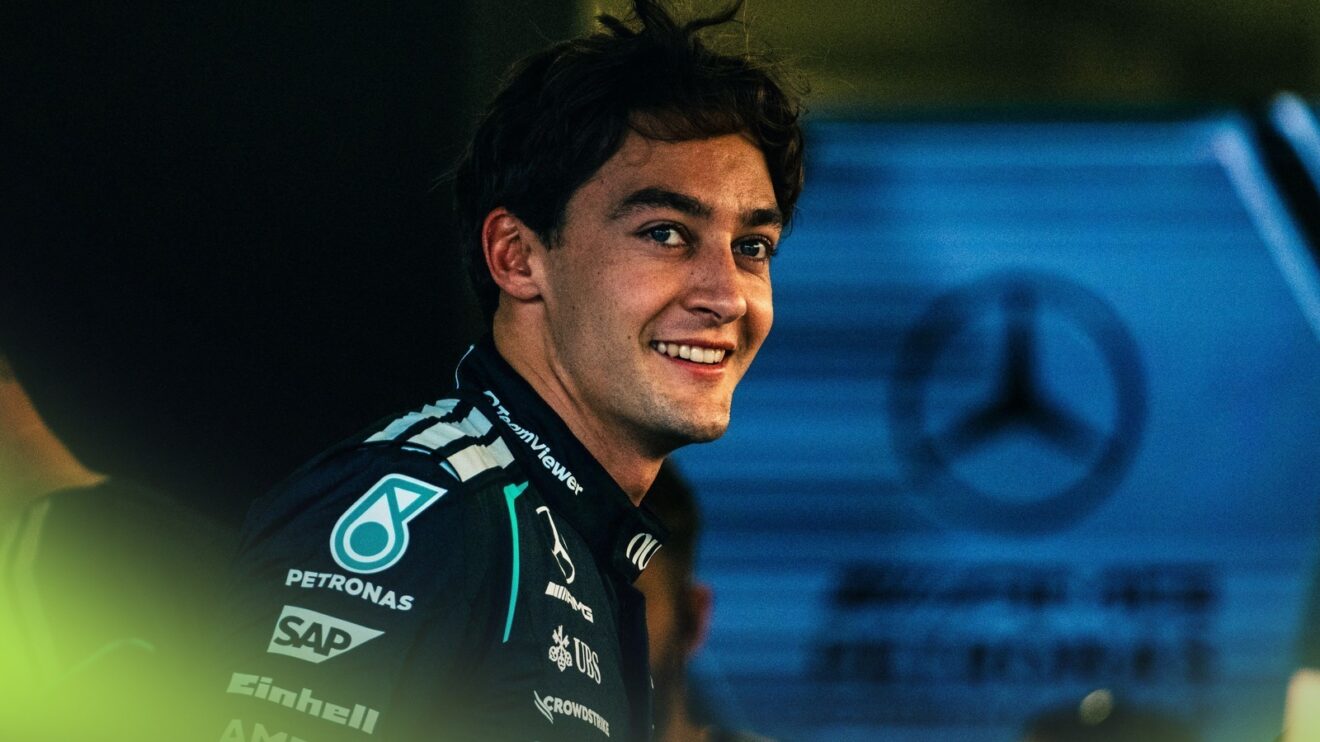
George Russell dominated qualifying for the Azerbaijan GP.
George Russell dominated qualifying for the Azerbaijan Grand Prix, racing to pole position by the largest margin of the season.
Russell was nine-tenths clear of Charles Leclerc in second, with telemetry data from his lap revealing exactly how the Brit stormed to top spot.
How Did Russell Open Up Such a Massive Margin?
That Mercedes were the outright favourites for qualifying in Baku was something we could have anticipated even before the weekend kicked off, but that premise was firmly validated during the opening day of track action across the two practice sessions.
Aided by a powerful slipstream, Russell topped the timesheets in FP1, confirming his great form in Baku later in FP2.
Even then, it was evident that the Briton possessed far greater confidence in his car compared to Kimi Antonelli.
Under braking through the technical middle sector, where pinpoint precision is paramount, Russell was noticeably superior, gaining substantial time on every run.
Baku is a circuit that leaves no room for alternative driving styles, particularly around the city section with 90-degree corners, a trait that clearly played into Russell’s hands.
In FP3, Max Verstappen took a step forward following a revised energy deployment strategy elected by Red Bull.
Conditioned by this season’s trends, we expected him to throw his hat into the ring for pole position, but this time it was not to be.
How George Russell dominated qualifying
In short, George Russell was fast everywhere.
As shown in the graph below, the only places where Leclerc and Piastri were noticeably quicker were the launch from the starting grid to Turn 1, and Turn 3 itself; from that point on, the delta line trends relentlessly upward as Russell’s lead continuously expanded.
Where Russell shone in tandem with Mercedes’ remarkably potent power unit was the sequence from Turn 3 through to Turn 8.
In this section of the track, vehicle speed drops below 100 km/h in virtually every corner. Consequently, on traction out of each turn, the driver demands maximum output from the engine alongside a rock-solid rear end.
When equipped with a PU as dominant as Russell had beneath him, and paired with his flawless execution, the lap time delta quickly swings heavily in your favour.
This is evidenced in the entry speed the Briton carries before turning into every corner through this section, making him consistently quicker than his rivals.
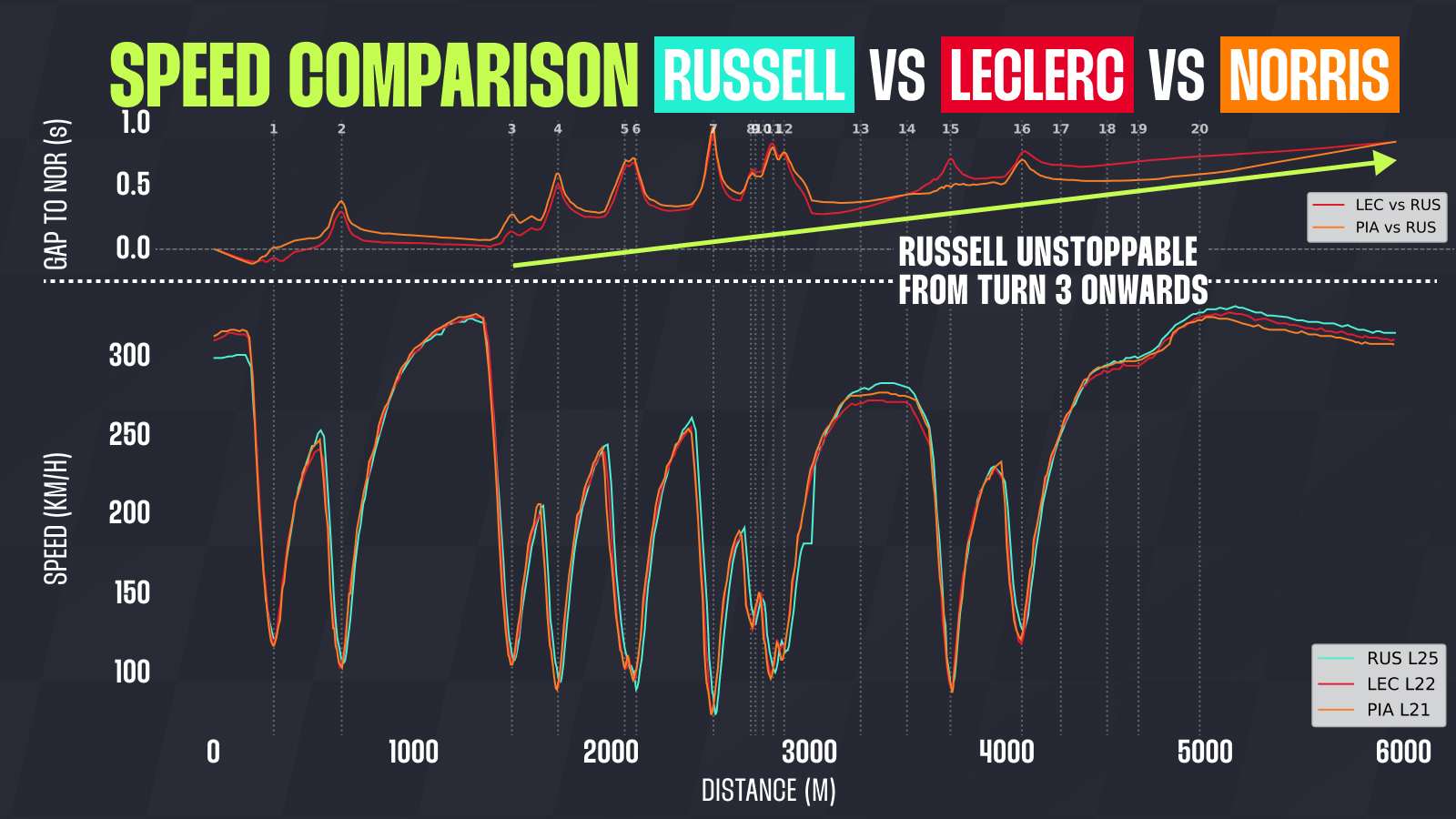
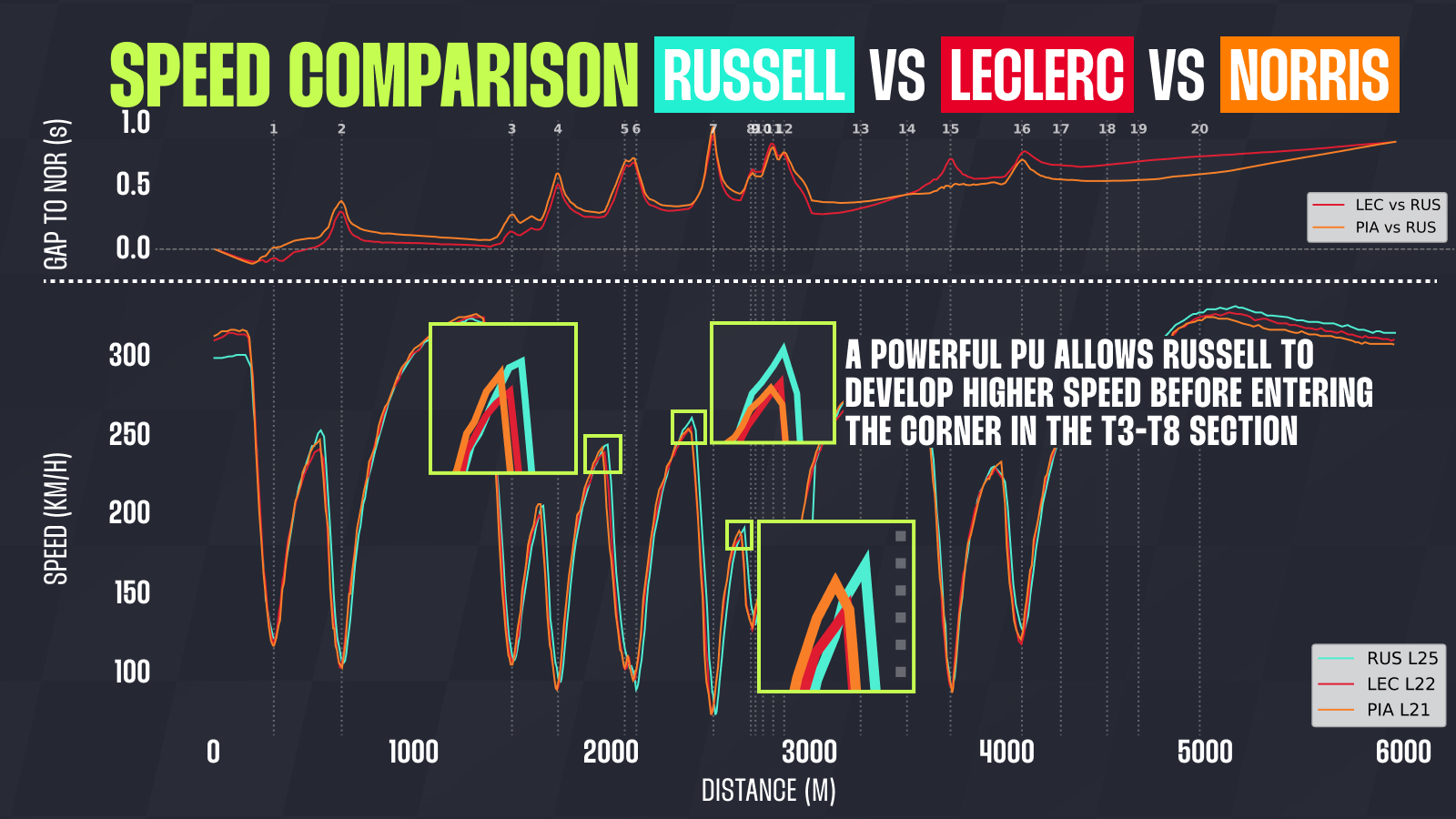
By the exit of the middle sector, Russell held a 0.5-second advantage over Leclerc and a 0.6-second margin over Piastri, and that was before even reaching the section where the W17 truly comes into its own: the main straight.
Down the main straight, the Mercedes power plant demonstrated why it is currently the benchmark.
Beyond delivering sustained grunt throughout the entire lap, its high thermal and harvesting efficiency allowed Russell to start the main straight with a more charged battery, translating to maximum deployment boost and unmatched top speeds.
The graph below displays how the top three drivers compared (keeping in mind that Leclerc even got a mini-slipstream off Hamilton), as well as their speed relative to the rest of the field.
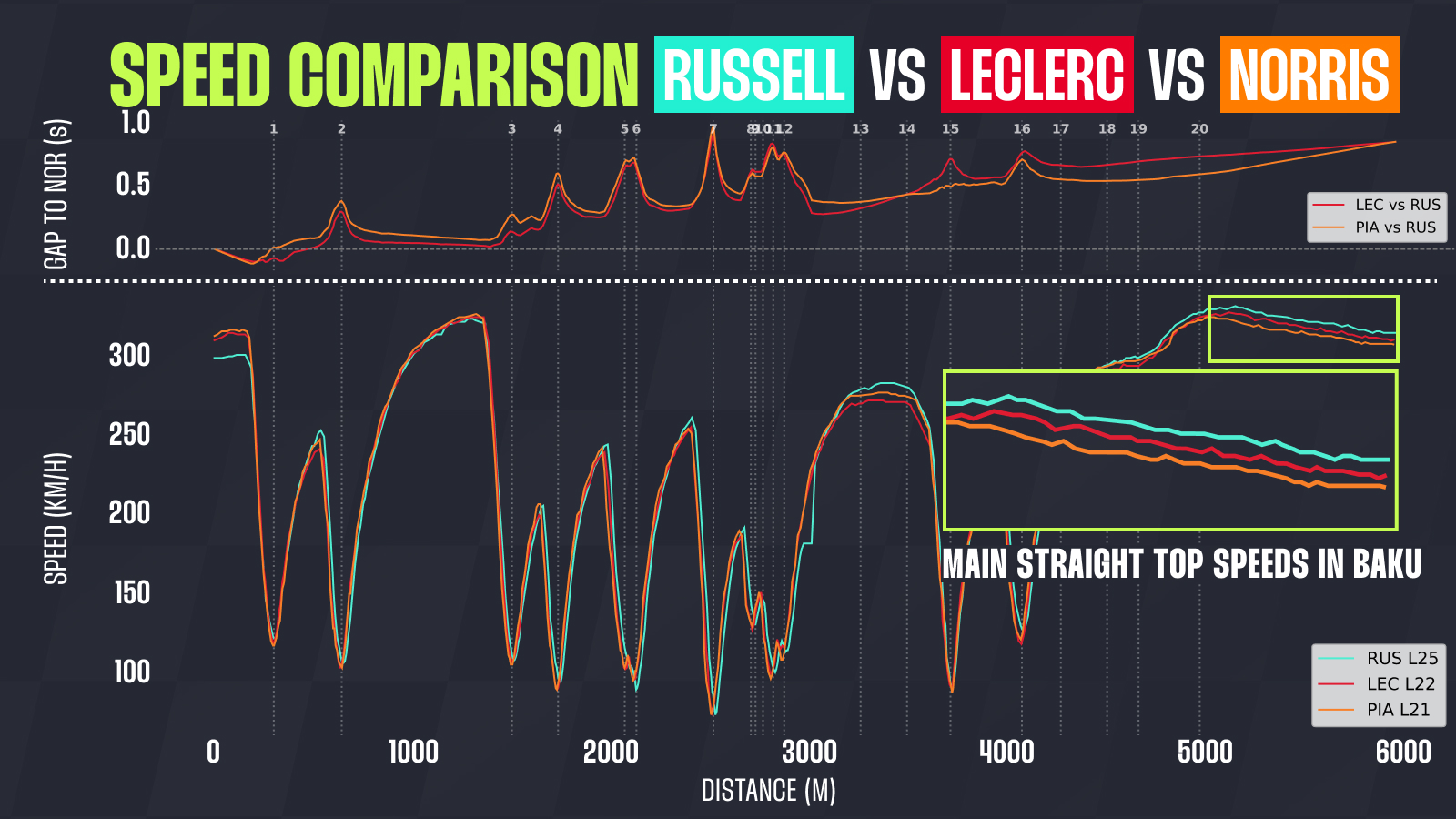
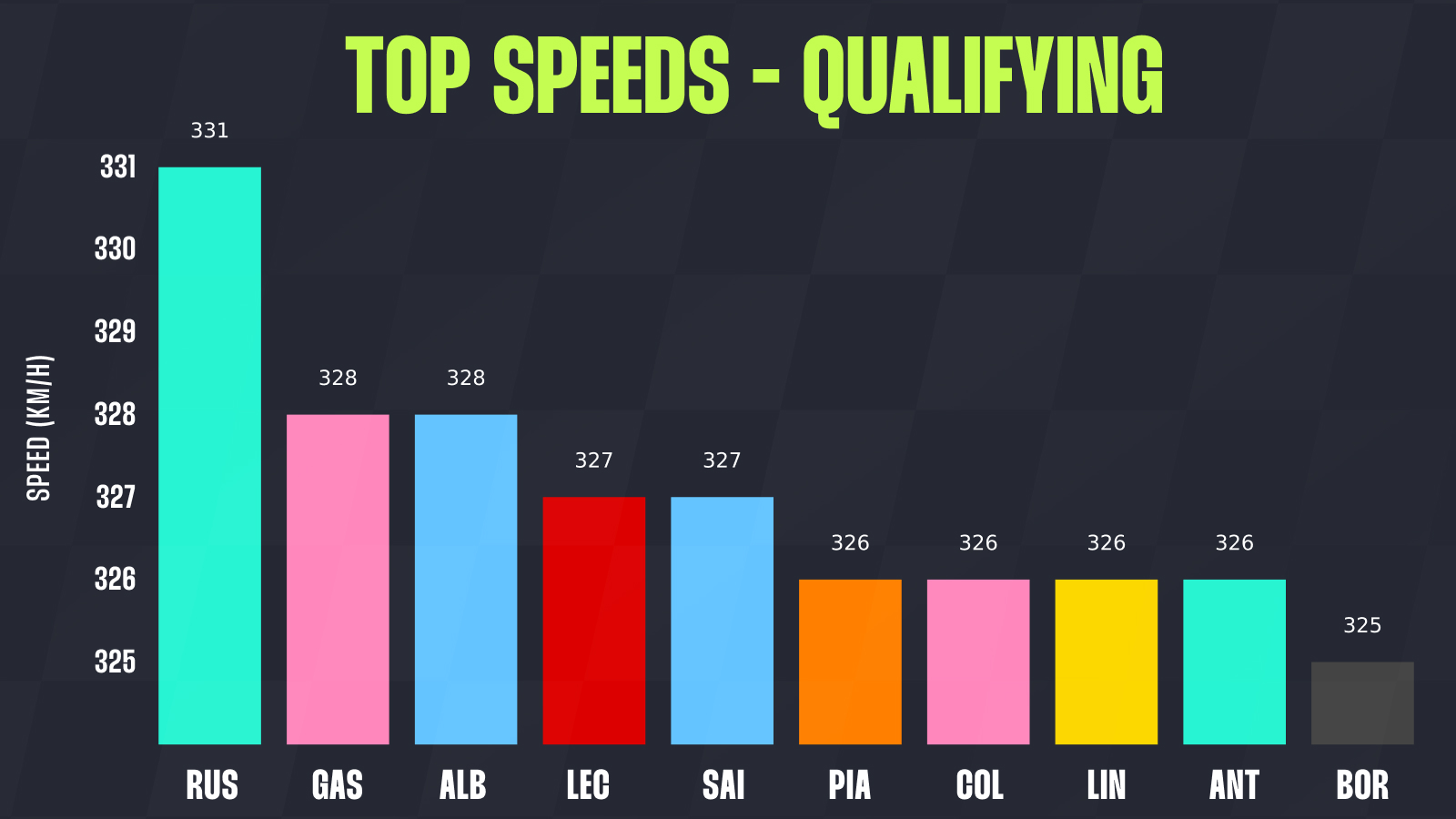
In other words, nobody was in the same league as Russell. In fact, his initial flying lap in Q3, a 1:43.037s, was good enough for pole position – he didn’t even need to go back out for a third attempt and shave off an additional half a second.
The Battle for P2: Carlos Leclerc vs Oscar Piastri
The battle that proved far more captivating during this qualifying session was the duel between Piastri and Leclerc for P2, a fight Norris almost certainly would have entered had he not committed an error on his final push lap.
Throughout the first two sectors, the pair were glued to one another.
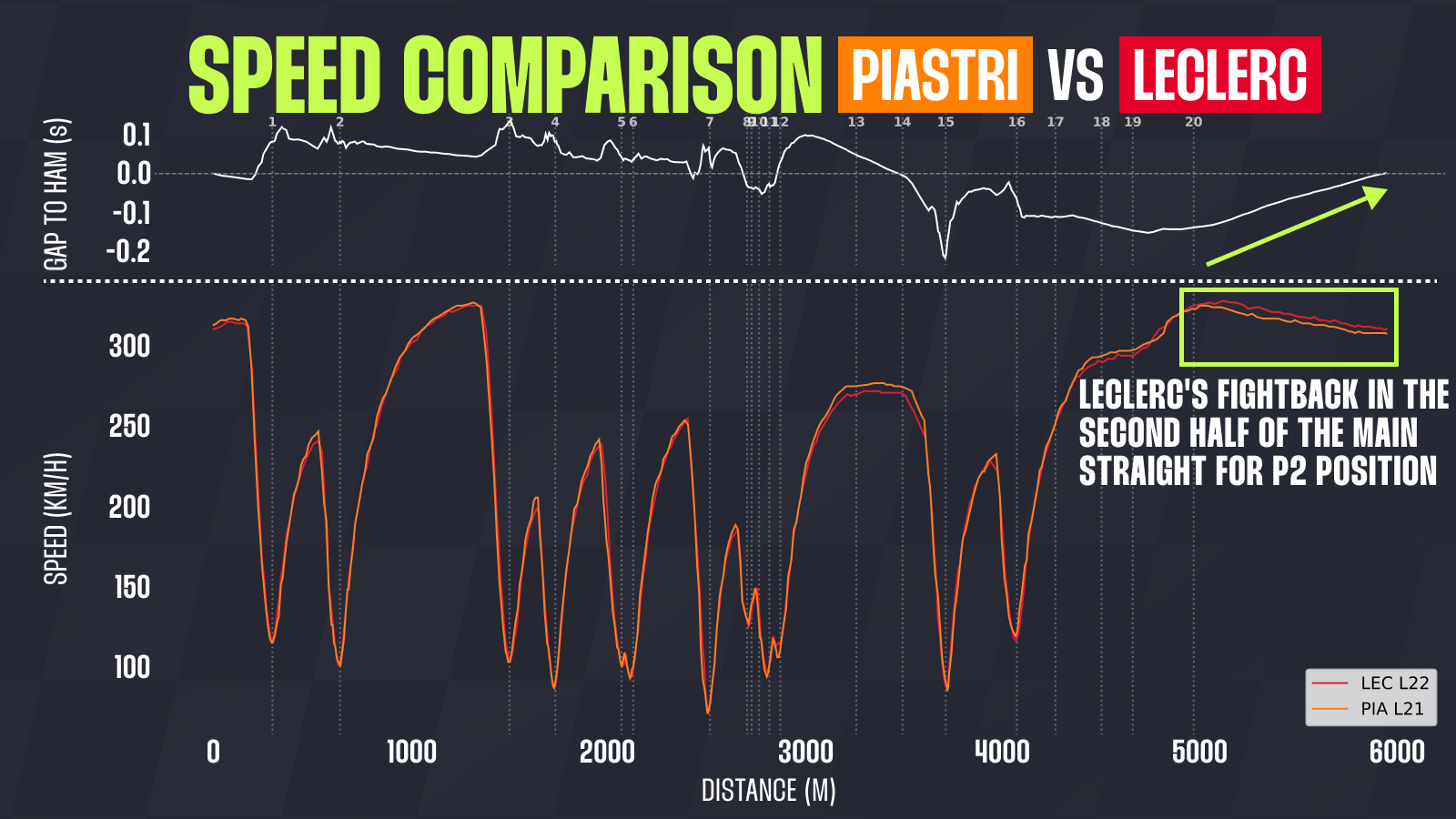
Leclerc was marginally faster through the mid-corner apexes, whereas Piastri built an advantage between Turn 12 and Turn 14 via electrical deployment.
Coupled with a cleaner run through the crucial Turn 16 and getting onto the throttle earlier gave Piastri a 0.2-second buffer heading into Turn 20.
However, aided by a small slipstream off Hamilton and an extra deployment boost, the Ferrari driver managed to claw back all his lost time in the latter half of the lap.
Ultimately, it proved enough to cross the line 0.001 seconds ahead of the Australian.
There is no doubt that Russell remains the outright favourite heading into the Azerbaijan Grand Prix, particularly given that Kimi Antonelli will start well down the order.
A heavily shuffled grid behind Russell should trigger plenty of intriguing battles, but on the streets of Baku, absolutely nothing is guaranteed.
Want to be the first to know exclusive information from the F1 paddock? Join our broadcast channel on WhatsApp to get the scoop on the latest developments from our team of accredited journalists.
You can also subscribe to the PlanetF1 YouTube channel for exclusive features, hear from our paddock journalists with stories from the heart of Formula 1 and much more!
Rad Next: F1’s 2030 V8 engine: What we know about the next power unit rules