
F1’s 2030 V8 engine: What we know about the next power unit rules


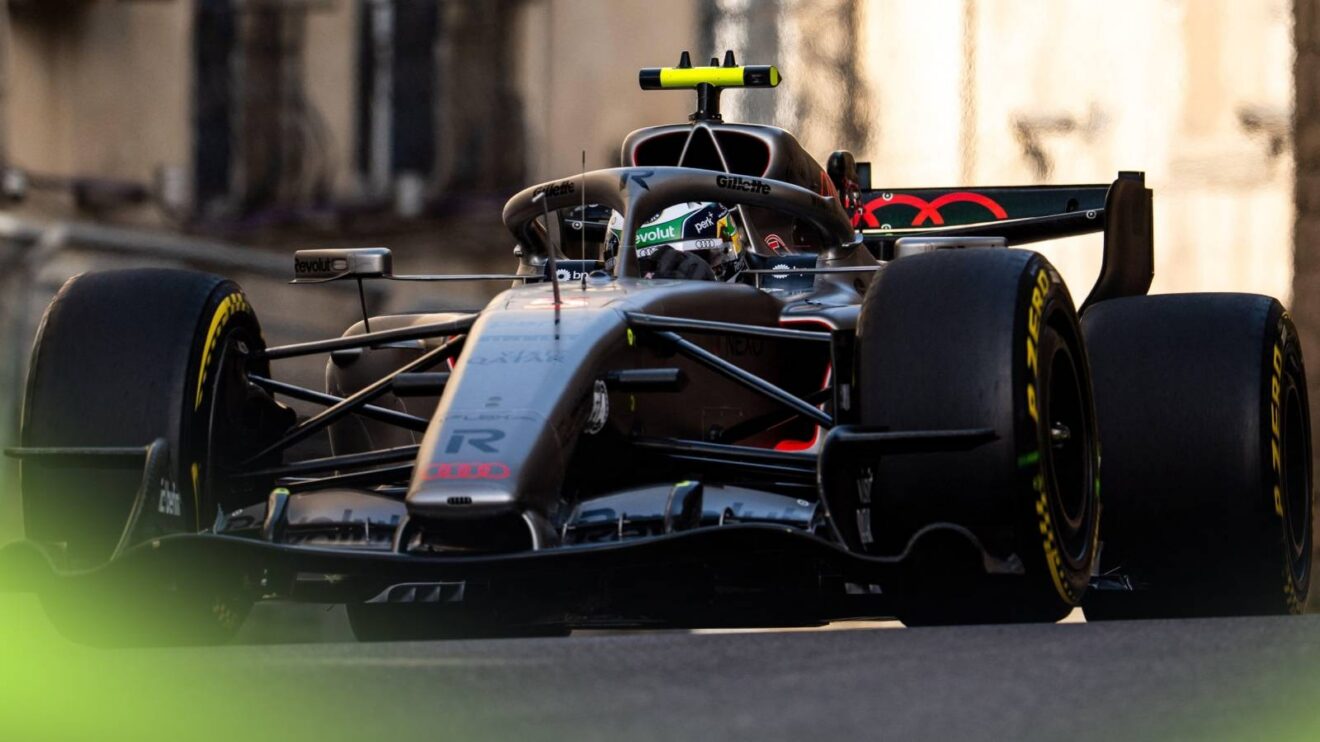
The plans for the new F1 2030 V8s are starting to take shape.
The concrete plans for the next engine rules cycle could be revealed before the end of this season, but what are the goals with the new V8 architecture?
While F1 is only in the first year of the current engine rules cycle, the realisation that change is needed has seen swift action to devise a roadmap to the next engine rules cycle.
What we know about F1’s 2030 V8 engine regulations
The introduction of the power units used in F1 2026 saw the sport move further towards electrification, reducing the importance of the thermal engine [internal combustion] in the ratio against the MGU-K hybrid electrical output to create a near 50/50 split between the two.
Put simply, the rules now mean that the ICE is somewhere in the region of 400 horsepower, with the MGU-K contributing 350kW of electrical energy, roughly corresponding to a doubling of this horsepower figure.
But the limited energy regeneration opportunities, combined with a small battery, resulted in the need for drivers to engage in unique, and antithetical to racing, behaviours in order to harvest the energy required for deployment around the circuit.
While steps have been taken to reduce this unusual behaviour, such as by reducing the maximum permitted recharge limit and increasing the peak superclip power from 250 to 350kW, the continuing displeasure voiced by the drivers at neutered circuits such as Spa-Francorchamps and Silverstone and the general malaise about the driving experience has meant the regulations will slowly evolve through the next two seasons.
Next year, the ratio split will move to 58/42 in favour of the ICE, further improving the situation even if that has resulted in a compromise being needed by way of slightly shorter races due to the increased fuel flow rate, and, in 2028, the ratio will move to 60/40 to further reduce the importance of the electrical component of the power unit for outright performance.
It will remain at 60/40 for 2029, before a switch in engine regulations for 2030, with the process of fleshing out the exact details of the upcoming regulations now being undertaken via discussions amongst the Power Unit Advisory Committee [PUAC].
Once a pathway has been identified at PUAC level, it can be tabled at the F1 Commission for a vote to further the legislative process, but this pathway is not yet fully ready.
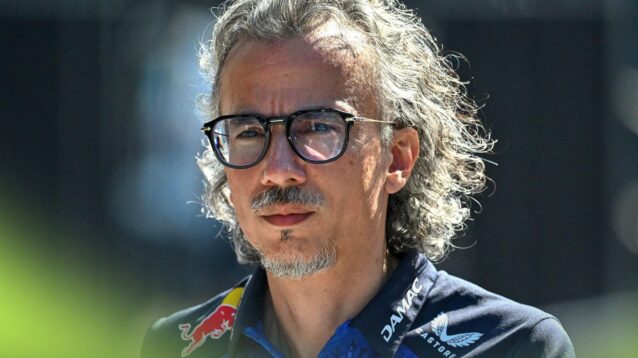
Two of the five current power unit manufacturers were represented in the team personnel press conference in Baku on Thursday, and PlanetF1.com asked Audi boss Mattia Binotto, and Red Bull’s Laurent Mekies, in his capacity as Red Bull Powertrains CEO, about the current status of discussions.
“There is no clarity yet,” Binotto said.
“So, we know that FIA is still elaborating what may be the concepts they would like to propose. We know it’s a V8 for certain, 2030 the earliest introduction.”
The general direction for the next cycle, which has been vocally led by the FIA president Mohammed Ben Sulayem and backed by F1 CEO Stefano Domenicali, is to see a return to a V8 architecture, but these are unlikely to be naturally aspirated as was the case when this design was last used between 2006 and ’13.
Instead, the intent is to stick with a turbocharger, to bolster a 3.0-litre V8, utilising the technology to boost the power element while the turbine reduces peak decibel levels by way of sitting in the exhaust flow, absorbing some of this energy.
This is also likely to retain some form of electrification, albeit only to a small scale; an initial figure put forward by Italian journalist Roberto Chinchero has suggested a figure of 100kW – this figure is less than a third of the current electrification aspect, and only a little more than was used on the KERS systems rolled out on the first electrified V8s back in 2009, which utilised a deployable 60kW of temporary power boost.
Something similar is also likely to return as a form of overtaking aid, with a ‘push-to-pass’ mode integrated into the power settings.
“Push-to-pass is important for the racing situation, overtaking, so making sure that at least we are not creating trains and no one can overtake,” he said.
“So, a push-to-pass will be there. What’s the type of push-to-pass? Still to be discussed and agreed.
“So, there is not a clear, let me say, at the moment, way of doing it. There are multiple ways of doing it. It can be boost pressure, it can be DRS, it can be KERS, so electrical. So, the way to do it will be part of the discussions we will have with FIA.”
While the concept of a turbocharged V8, even with this electrification aspect, is comparatively straightforward compared to the complexities of the very new and unique power units of 2026, there is a sense of urgency amongst the PUMs that the roadmap for the new cycle is defined as soon as possible, in order to allow for the correct scaling of resources to begin research and development and start on the process of turning a design into a tangible offering to hit the test benches.
More on V8 engines plans on PlanetF1.com
V8 engines will return to Formula 1 by 2030 declares FIA president
FIA president’s four-word V8 promise to F1 fans
Asked about what the manufacturers will need to have certainty, Binotto said, “On the timing, if it would be 2030, what does it mean in terms of starting the development? It has to be very soon.
“It has to be before the end of the year. I think the regulation needs to be agreed and voted before the end of the year to have certain clarities, by 2027, to start really the design and concept phase.”
Another big consideration and main objective with the new regulations is to significantly reduce costs for manufacturers, who are also all now held to a budget cap, separate from that the teams must adhere.
“The current power unit is still very expensive and we believe that having a clear target on cost would be important,” Binotto said.
Audi is known to have been tempted to sign up to F1 2026 in large part because of the direction of travel with the power unit regulations focusing on increased electrification, which has significant road relevance crossover, and Binotto suggested that this relevance remains a key consideration for Audi.
“When considering the format of the V8 itself, we believe that we still need to retain some advanced technologies,” he said.
“I think that F1 has always been the edge of the platform for innovation, ahead of technology, and we believe whatever will be the overall format, it has to remain a platform for innovation for all the manufacturers.
“So yes, welcome the V8, welcome a better sound, welcome a cost saving. And when it comes into the details of hybrid, I would say yes, turbo, possibly yes.
“But all the details, I think, need to be discussed with the FIA. That’s why I think that discussion will start very soon. As Audi, we are very open, very collaborative, and I’m pretty sure that together with the FIA we will find the right compromise.”
From PlanetF1.com’s enquiries in the paddock, the urgency to outline a roadmap for the next regulation cycle is not only related to informing the manufacturers, but also to reinforce the endpoint to the misstep that is the current engine regulations – a key consideration for reassuring fans at this still-early stage of the cycle that the future rules return to a less complex and more natural formula.
It is to the credit of all the stakeholders, including FOM following Domenicali’s ongoing defence of the present regulations, that a consensus around not making the process of firming up the new regulations does not appear to have yet hit any major stumbling blocks, nor are any currently anticipated – not always the easiest of tasks in a sport in which competitive and commercial self-interests can override any sense of collaborative process.
“Even though it’s a massive topic because, in the end, it will dictate the next generation of regulations, I think we are at the point where all the manufacturers, I don’t think we have very different ideas or very opposite ideas about what we all want from it,” Mekies said of the plans.
“I think we want flat-out racing, flat-out qualifying. That will probably dictate the next architecture. And as Mattia said, you want flat-out racing, flat-out qualifying and retaining the technological challenge and the technological laboratories. And of course, we would like to do that also by ticking a few of the boxes.
“But I think in terms of these high-level objectives, with the FIA, with F1, with the teams, I think we are all pretty aligned.
“And how do you do it in the details, with the various options we have, it will be the discussion over the next few months. But in terms of what we want to achieve as stakeholders of the sport, I think we are all quite aligned.”
Want to be the first to know exclusive information from the F1 paddock? Join our broadcast channel on WhatsApp to get the scoop on the latest developments from our team of accredited journalists.
You can also subscribe to the PlanetF1 YouTube channel for exclusive features, hear from our paddock journalists with stories from the heart of Formula 1 and much more!
Read Next: F1 Tech Analysis: Secrets behind massive Audi upgrade uncovered