
Lewis Hamilton Singapore GP gamble traced to crucial Ferrari mistake


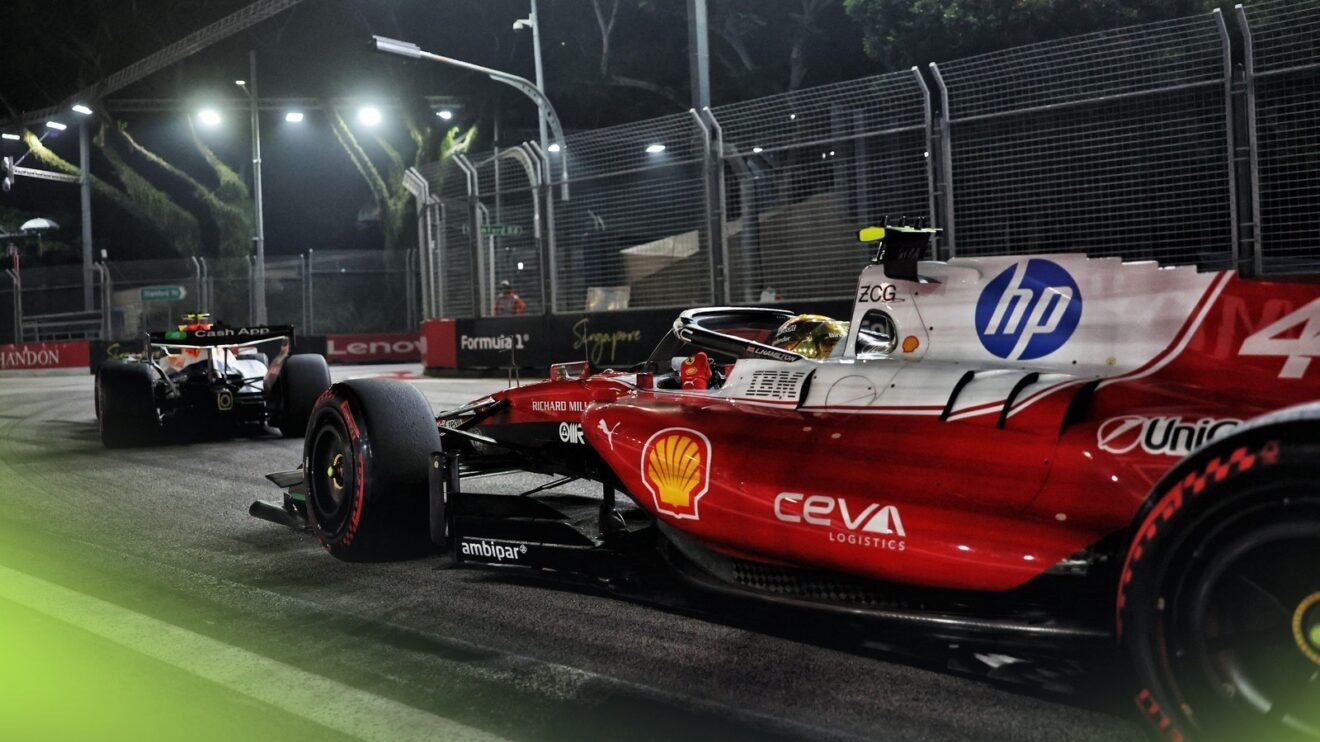
Lewis Hamilton started third in the Singapore Grand Prix.
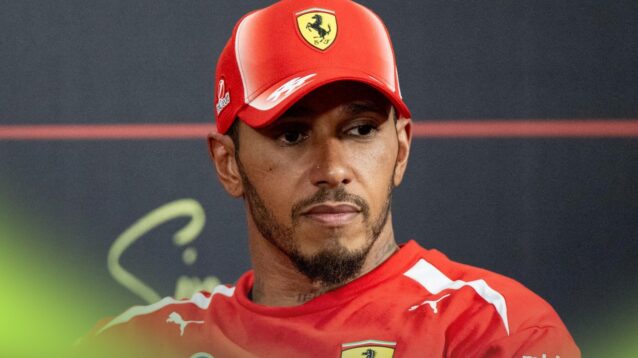
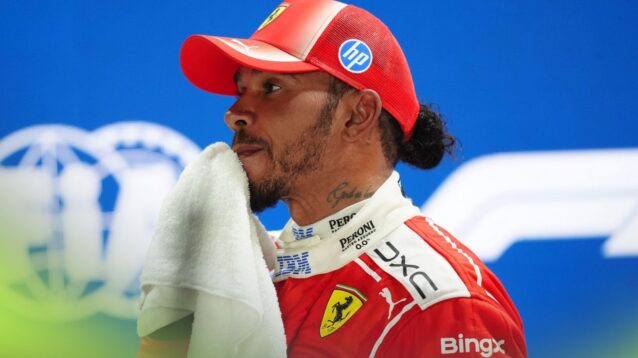
Lewis Hamilton had a Singapore Grand Prix podium within his grasp, but his decision to defy the team’s strategy call saw it slip through his fingers.
The decision was Hamilton’s, as he admitted after the race, but telemetry data reveals what he was actually trying to achieve, and where the real root of the problem lies.
Why Lewis Hamilton made bold Singapore GP strategy call
Alongside Hamilton’s miscalculation in the second half of the race, another error – one you could call rookie-level – marred Ferrari’s strategy during the Singapore Grand Prix, and for this, the team is solely to blame.
The timing of the pit stops meant that after Leclerc completed his first stop, both drivers ended up side-by-side on track, running different tyres and different paces, which hurt both of their races.
Ferrari chose to split their strategies from the race start to attack Max Verstappen in two different ways, with Hamilton starting on the medium compound and Leclerc on the softs.
Everything was going to plan until around lap 13, when Hamilton began to lose pace. Although the medium tyre proved to be the weaker race option overall, as seen with other drivers, the unstable rear end of the SF-26 on a rear-limited circuit like Singapore made this problem even worse.
Consequently, Hamilton had to pit much earlier than planned. He was bleeding time, and switching to soft tyres was his only way to stay in contention, especially with everyone behind him running on softs.
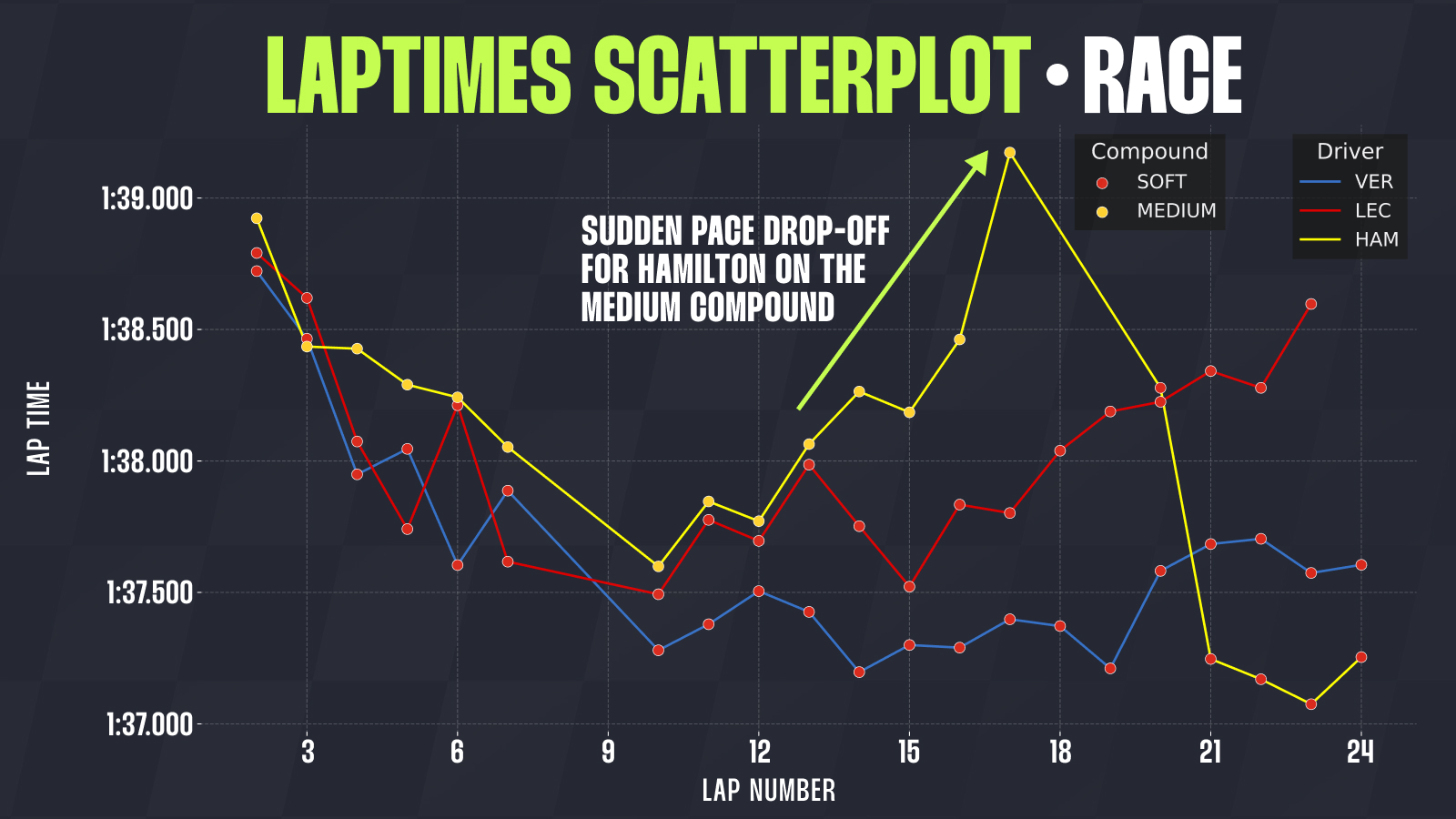
Hamilton rejoined the track and started a brilliant stint, running half a second faster than Verstappen in the opening laps.
Meanwhile, Ferrari’s engineers had a crucial decision to make.
Knowing the mediums were struggling, they had to manage Leclerc on softs, yet to pit and switch to mediums.
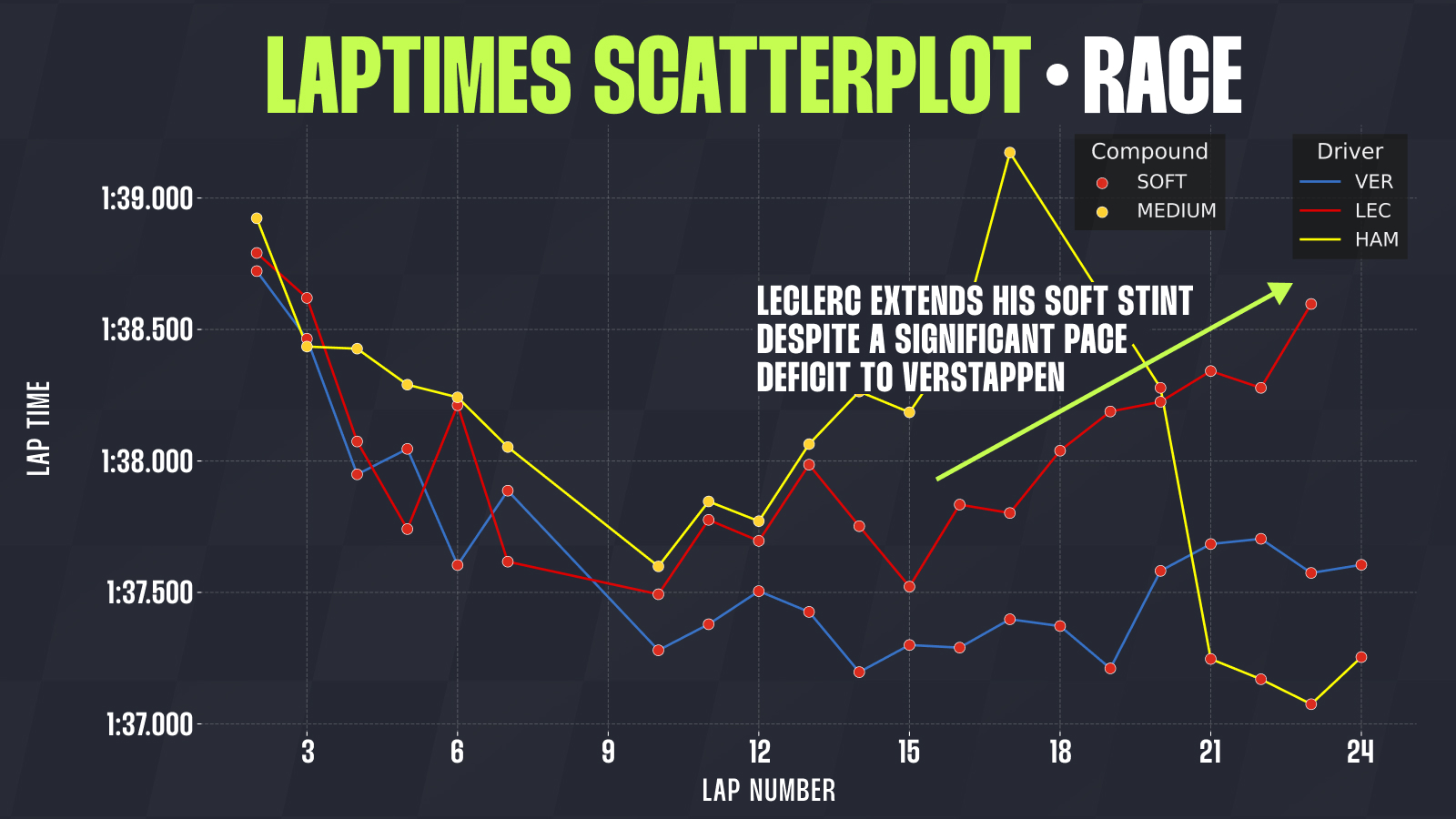
The dilemma was whether to pit him early and commit to a two-stop race, or extend his stint as long as possible to run the mediums to the end on a one-stop strategy.
Ferrari chose the second option, and Leclerc stayed out even after his pace dropped well below Verstappen’s.
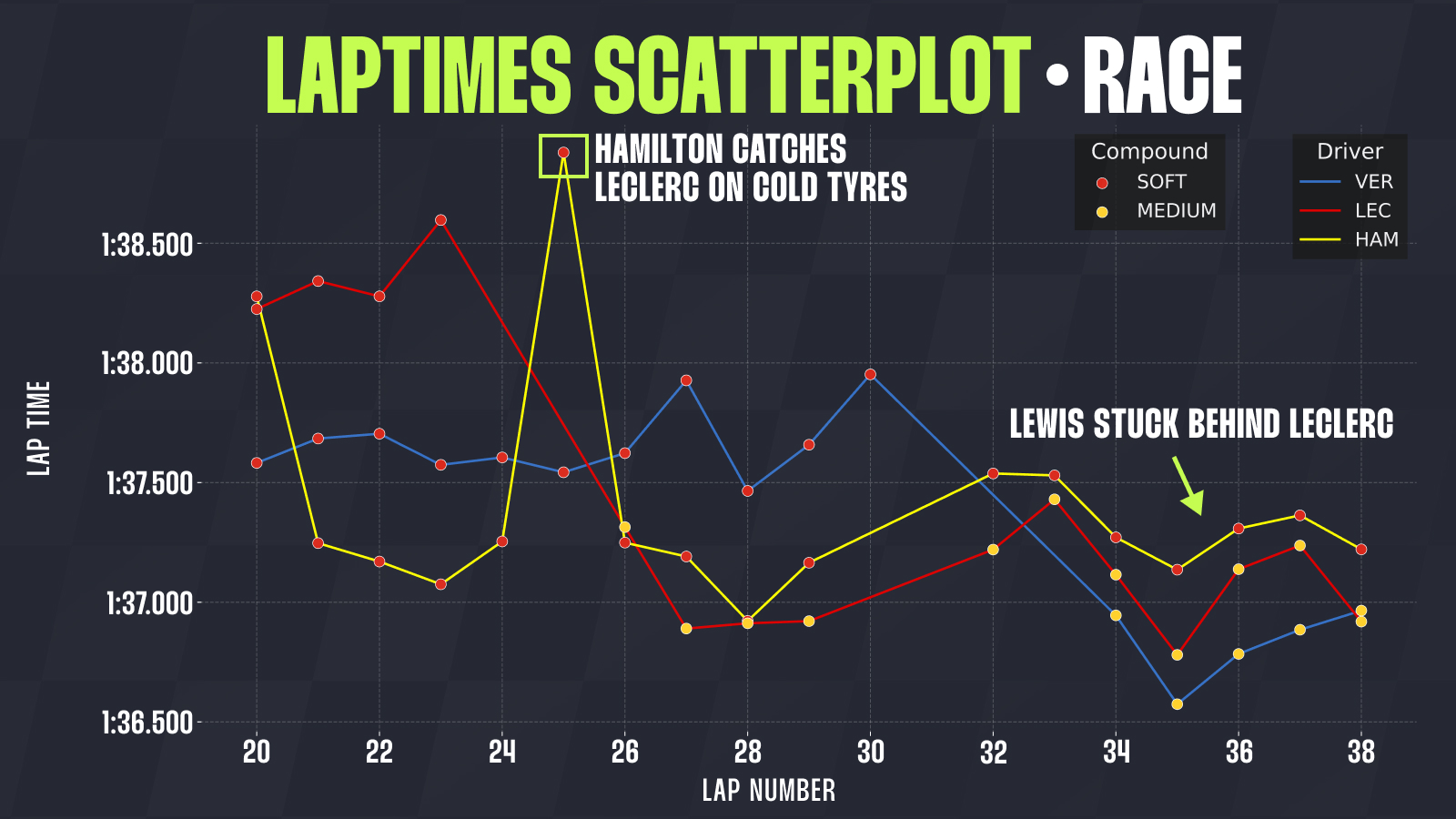
He was then called in at the worst possible moment, rejoining on cold medium tyres right in front of Lewis, who was the fastest man on track at the time.
That move alone cost Hamilton two full seconds, as shown on the graph, before leaving him stuck behind a slower Leclerc.
This ruined his pace and wasted the potential of his fresh tyres. Moreover, this moment almost certainly influenced Hamilton’s decision later in the race.
Team boss Fred Vasseur however insists it was the right call.
“Within two laps, he was two seconds behind,” Vasseur argued.
“The tyre advantage was for Lewis; for Charles, he pitted six laps later. So it was the right call.”
The root cause behind Hamilton’s strategic call
Just a few laps before the Virtual Safety Car, Hamilton and his race engineer had a confusing radio exchange.
Hamilton wanted information on the lap times of drivers on soft tyres at the end of their stints. Instead, the race engineer gave him current lap times.
When the Briton repeated the question, he still didn’t get the information he asked for, instead he received was the team’s opinion that it didn’t think the soft tyres could last to the end.
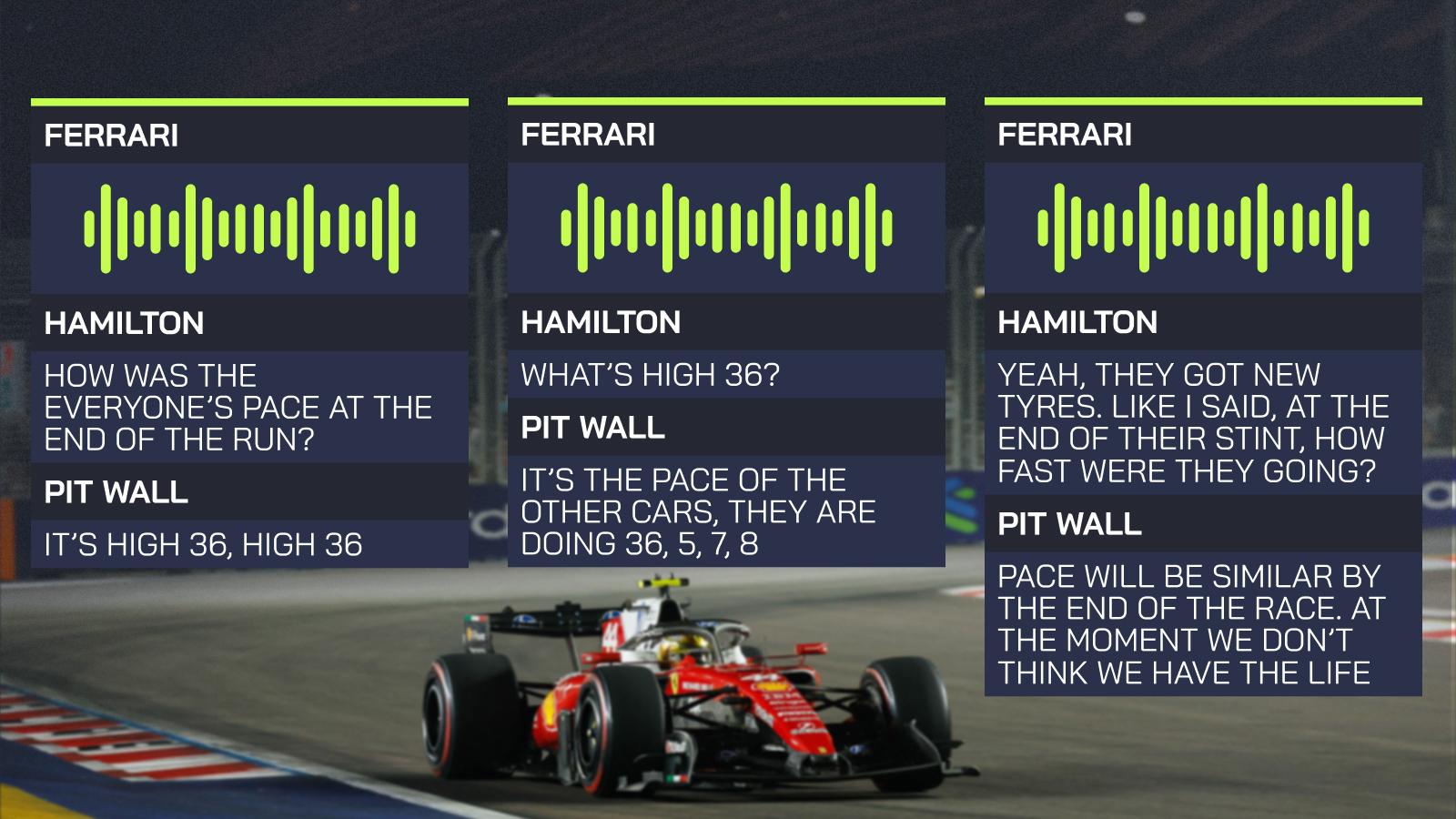
Without that crucial data, and knowing he hadn’t used the full potential of his current set, it’s easy to see why Hamilton tried to stay out, keep track position ahead of Leclerc, and try to defend it until the finish line.
“Sorry boys. I let you down today with that strategy,” Hamilton said over team radio after taking the flag in sixth place.
“My call, and I lost us valuable points. I’ll try and make up for it in the next one.”
After missing his post-race media duties, Hamilton issued a statement via the team speaking about his race.
“I had a good second stint and the pace was back, but I couldn’t make the progress I needed,” he said.
“Under the VSC, the team called me in but I missed the entry.
“After that, I decided to stay out and try to hold track position to the end but in the closing laps, I was struggling massively with tyre degradation and lost three places, finishing P6, which doesn’t reflect the pace we had in the car today.”
It is understandable why the team went along with the driver’s call.
We have seen several times this season where their strategic views differed, and Hamilton had always followed the team’s instruction until now.
Besides, nobody truly knew how long the Soft tyres might last, as no driver had attempted such a long stint.
This time, the gamble proved costly.
Where a double-stack pit stop during the VSC would have easily saved third place on the podium, Hamilton instead dropped three positions, losing valuable points for both himself and the team.
From lap 41 to the end of the race, the Briton was an average of 2.5 seconds per lap slower than Leclerc, who was the fastest driver on track at that point.
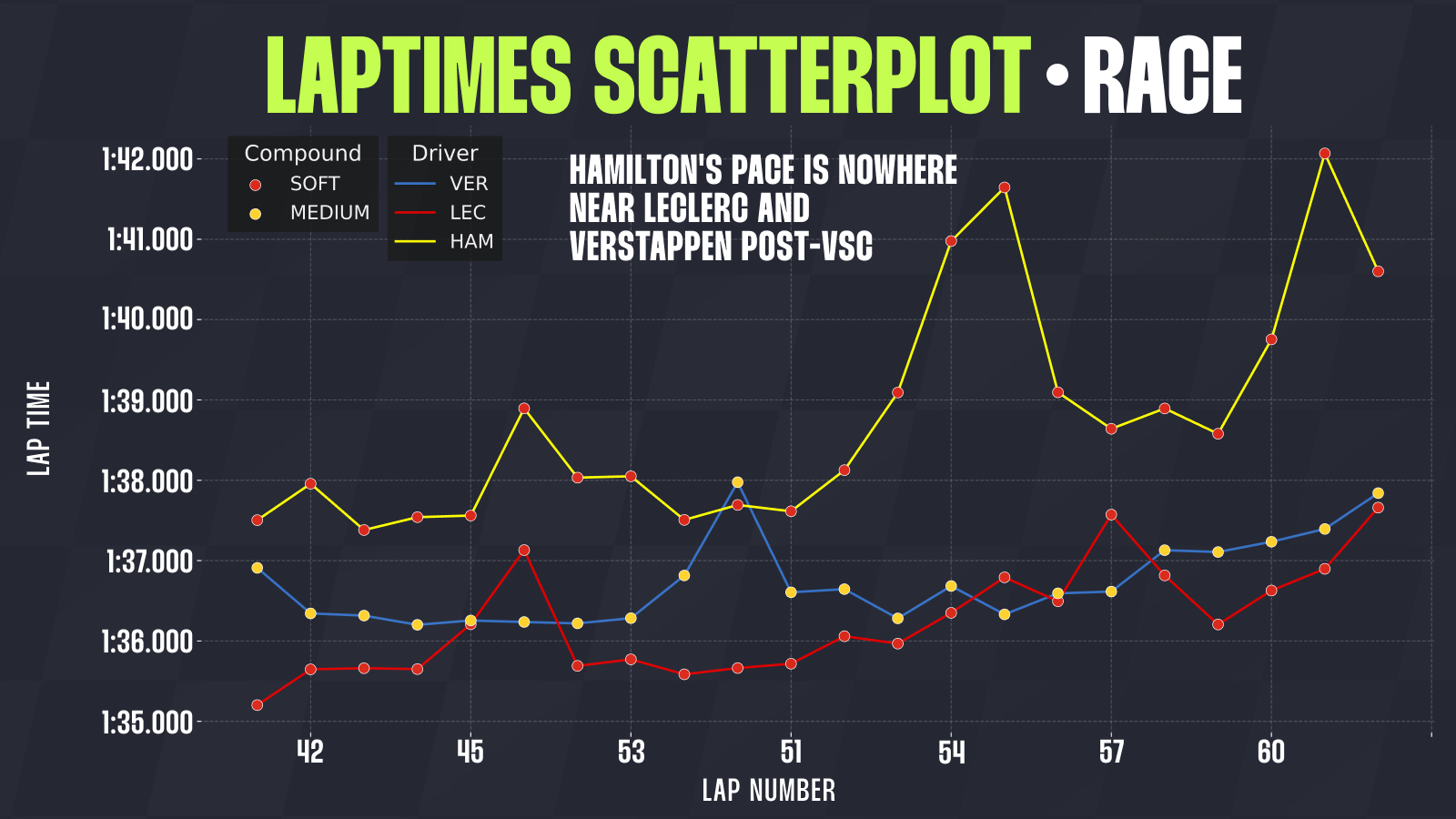
While the ultimate responsibility lies with Hamilton, it’s important to identify the root cause: poor communication between team and driver.
Clear radio communication is vital, even if it mostly stays hidden from the viewers, and it is an area Ferrari has long struggled with.
Want to be the first to know exclusive information from the F1 paddock? Join our broadcast channel on WhatsApp to get the scoop on the latest developments from our team of accredited journalists.
You can also subscribe to the PlanetF1 YouTube channel for exclusive features, hear from our paddock journalists with stories from the heart of Formula 1 and much more!
Read Next: Ferrari boss hits back after Lewis Hamilton Singapore GP blunder