
Telemetry highlights full impact of FIA error in Singapore GP sprint qualifying


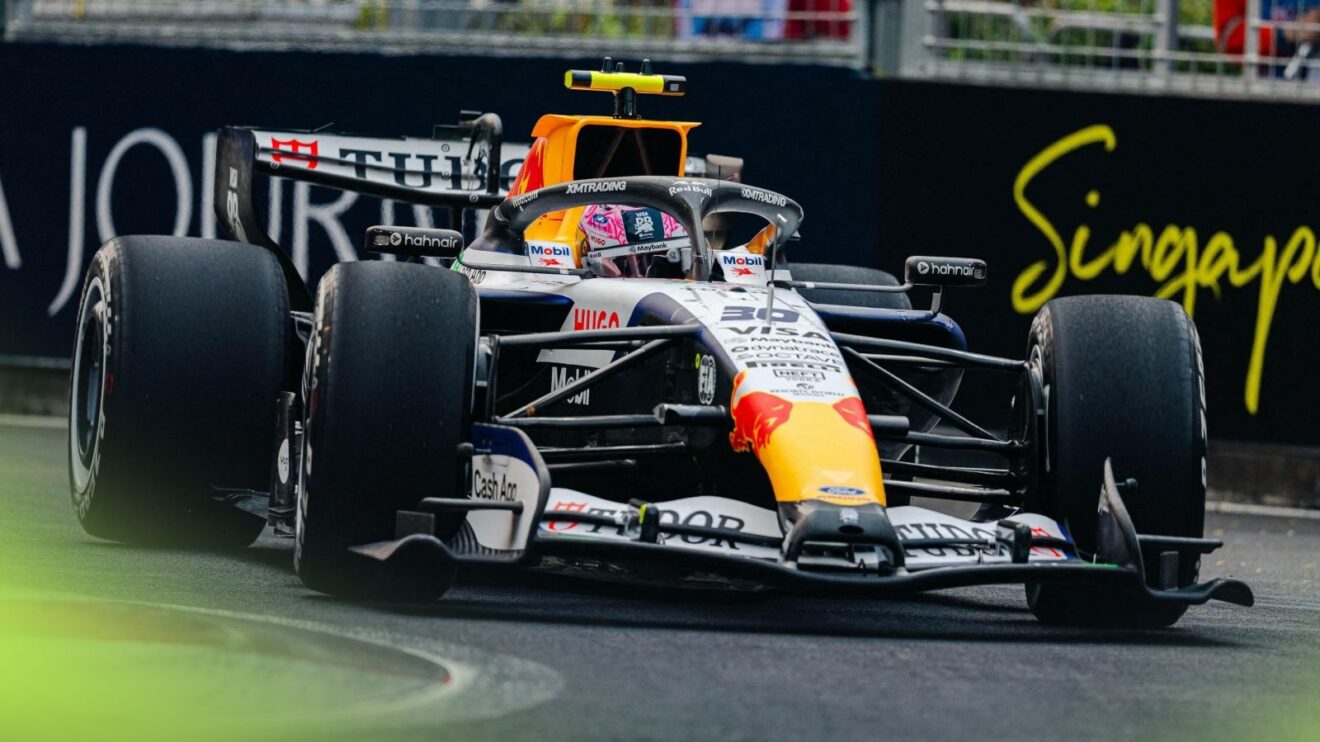
Liam Lawson in action for Racing Bulls
A human error by FIA Race Control during sprint qualifying for the Singapore Grand Prix resulted in some drivers having overtake mode available while others not, purely depending on their location on track.
This glitch impacted several drivers, and telemetry data reveals exactly who suffered and where they bled time.
Revealed: Who was affected by FIA Singapore GP error
As revealed via untelevised radio communications, Carlos Sainz was among the unluckiest drivers caught in this scenario. Carlos received a message from his race engineer informing him that his first sector was two tenths of a second faster than Albon’s, before something bizarre occurred with his power unit at Turn 8.
“There is an FIA ‘slow in,’ looks like everyone was hit by an engine issue. Your sector 1 was two tenths up on Alex, don’t know what happened from there with the PU.”
And the telemetry data confirms it unequivocally:
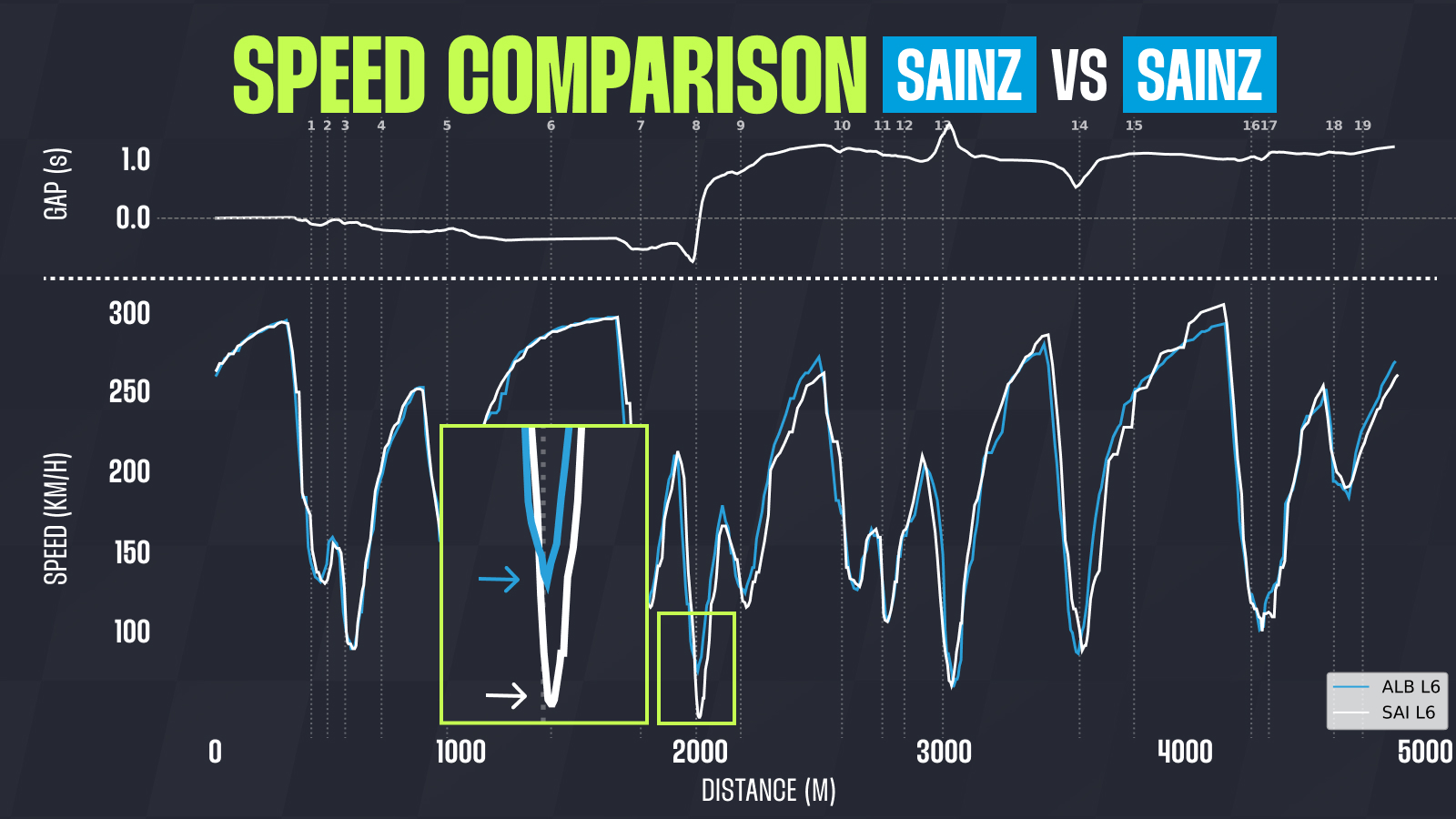
Sainz held the upper hand through Sector 1, as shown by the white delta line, followed by a sudden spike where the Spaniard lost a full second in a single corner. Looking at the speed trace where Sainz’s second flying lap is marked in white, a massive discrepancy in apex speed is clearly visible at Turn 8.
Beyond that corner, his lap time progression and telemetry traces return to normal (except for the T15 – T16 straight), but the damage was already done: his lap was over a second slower than his teammate’s. This relegated Sainz to dead last in Sprint Qualifying, behind both Cadillac drivers.
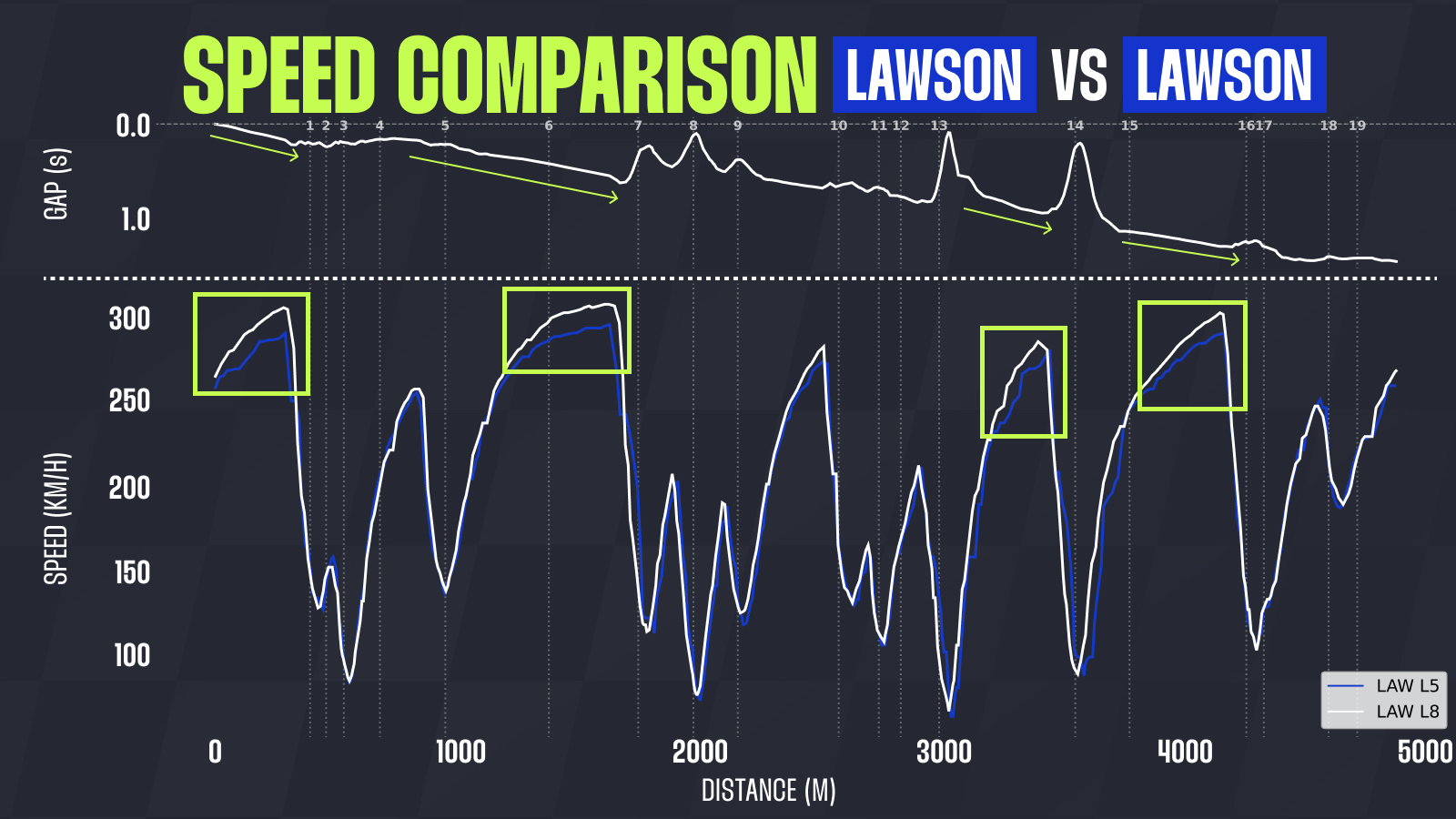
Next on the list of drivers impacted by this oversight was Liam Lawson, though fortunately for him, it did not compromise his ultimate result as he later successfully advanced up to SQ3.
However, comparing his final push lap in SQ1 (when he didn’t had overtake mode) with his opening run in SQ2 reveals a big contrast. Down every straight, the top speed he achieved during SQ2 was significantly higher, contributing to a massive 1.4-second lap time improvement, as clearly illustrated in the graph below:
Another driver with every right to be aggrieved by this system failure is Lance Stroll, who, unlike his teammate, failed to make the cut for SQ2. Lance completed two push laps during SQ1, but on his second attempt, overtake mode was completely unavailable for him. Although he managed to improve his lap time by a tenth on his second run due to track evolution, the data once again reveals noticeably lower top speeds down the straights.
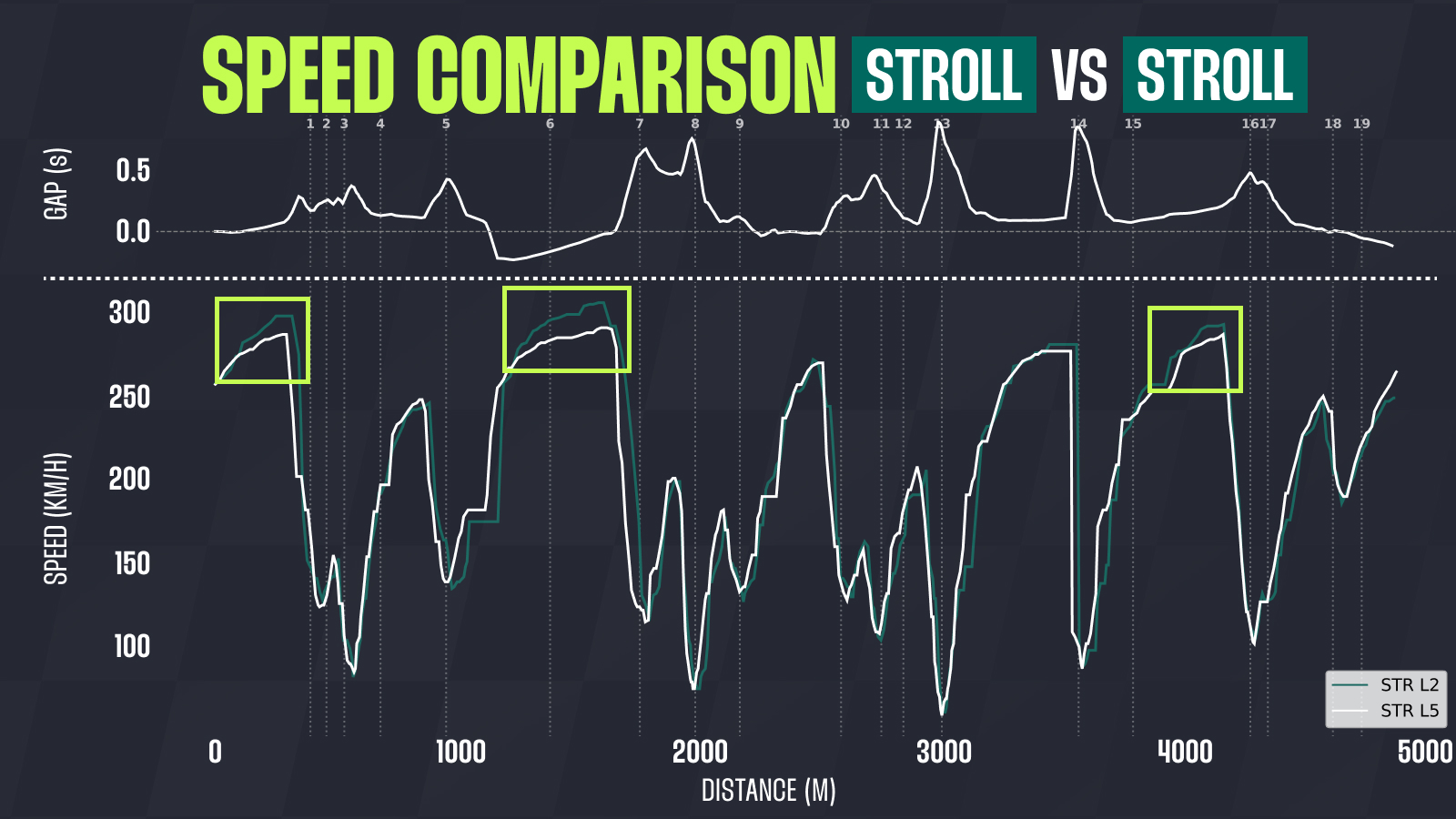
The most striking deficit occurs along the longest straight between Turn 5 and Turn 7, where the Canadian surrendered nearly 20 km/h in top speed prior to the braking zone for Turn 7. Noticeable speed drops are also evident along the start-finish straight and the blast between Turn 15 and Turn 16.
Why did the system fail?
This systemic failure occurred because overtake mode was not re-enabled following a red-flag stoppage during SQ1. Once the mistake was spotted, overtake mode was manually re-activated for roughly 27 seconds before being deactivated once more, leaving an arbitrary selection of drivers with extra battery deployment while others were left without.
Latest Singapore GP talking points on PlanetF1.com
FIA issues statement after ‘human error’ sparks Singapore GP qualifying issue
FIA confirms Max Verstappen decision after Lewis Hamilton investigation
As Sainz later stated, some drivers effectively operated with a power unit producing half a second less performance than rivals, instantly stripping away any chance of remaining competitive on track.
This manifested primarily as a loss of electrical deployment along the straights when the MGU-K is required to deliver full output, whereas Sainz’s specific power drop in a single corner remains particularly strange.
It is highly probable that these drivers were not the only ones impacted by this error.
Want to be the first to know exclusive information from the F1 paddock? Join our broadcast channel on WhatsApp to get the scoop on the latest developments from our team of accredited journalists.
You can also subscribe to the PlanetF1 YouTube channel for exclusive features, hear from our paddock journalists with stories from the heart of Formula 1 and much more!
Read next – Max Verstappen overcomes ‘suspected’ Red Bull issue to secure Singapore Sprint pole