

Verstappen in the fight? More to come from Mercedes? What the data tells us about Friday in Sepang


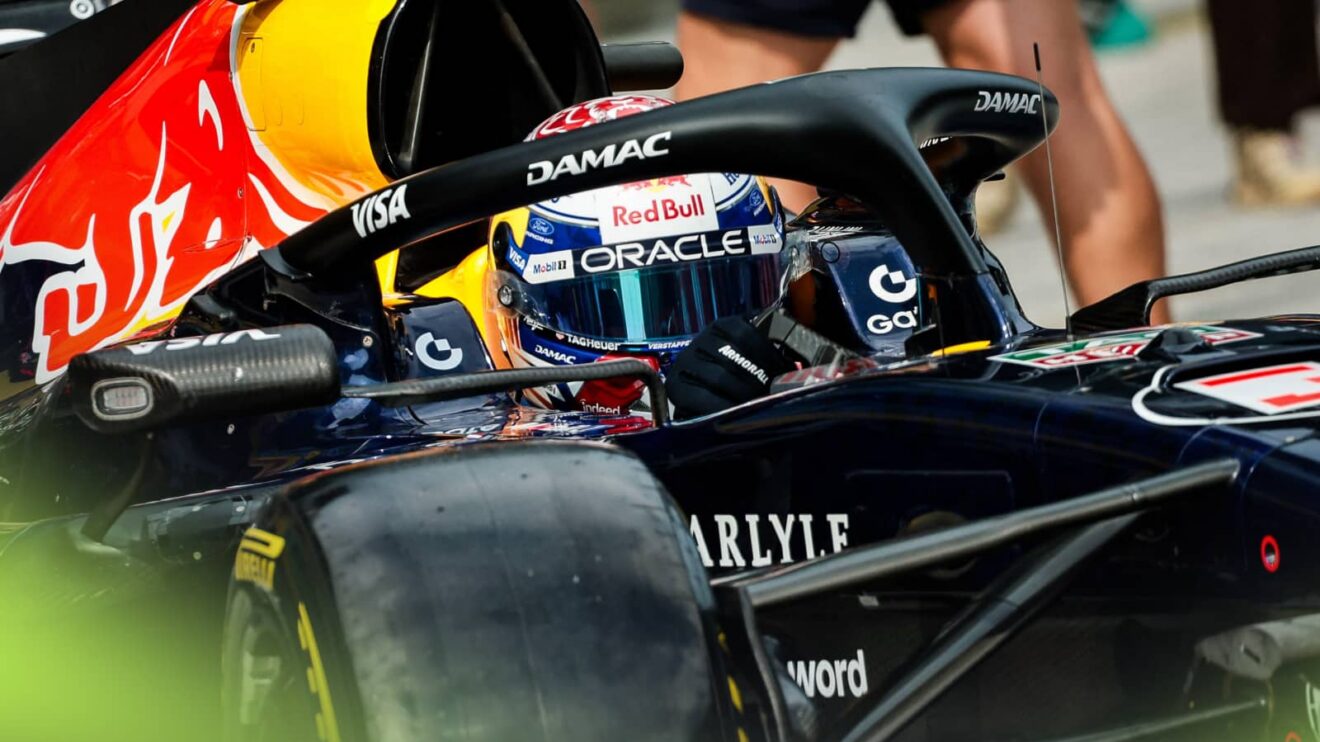
Max Verstappen (Red Bull RB22) in the pit lane in Sepang
With Red Bull and Mercedes looking very quick in FP1, and Ferrari and McLaren later joining the party in FP2, it seems the racing in Malaysia is set to be incredibly tight between all four teams.
Who stood out in this battle and where, as well as what the long-run data reveals about the pace at this track, we analyse with the help of telemetry data.
Who is the favourite for the 2026 Bahrain GP in Malaysia?
What makes this year’s race in Malaysia particularly unusual is that only 10 of the 22 drivers have actually raced here in F1.
When it comes to the top teams, that means just Lewis Hamilton and Max Verstappen, who also happens to be the winner the last time we raced here in 2017.
Of the rest, nobody has ever driven an F1 car at this track.
That, together with the character of the circuit, the asphalt surface and Mercedes’ new upgrades (as well as the recent ones from McLaren and Red Bull), probably helps explain why the grid looks so evenly matched after FP2.
During the first hour of practice, Red Bull – or more precisely Max Verstappen – looked like the driver to beat.
Max was very strong over a single lap and on the long runs, a sign that the recent upgrades to the car are doing the job.
Moreover, Sepang circuit is a very complex one, with long straights, fast and slow corners and heavy braking zones, which puts it firmly in the ‘if you’re quick here, you’re quick everywhere’ category.
Where Red Bull shone brightest in FP1 was the final sector, and especially the fast Turn 12, where they harvested the least energy compared with Ferrari and Mercedes.
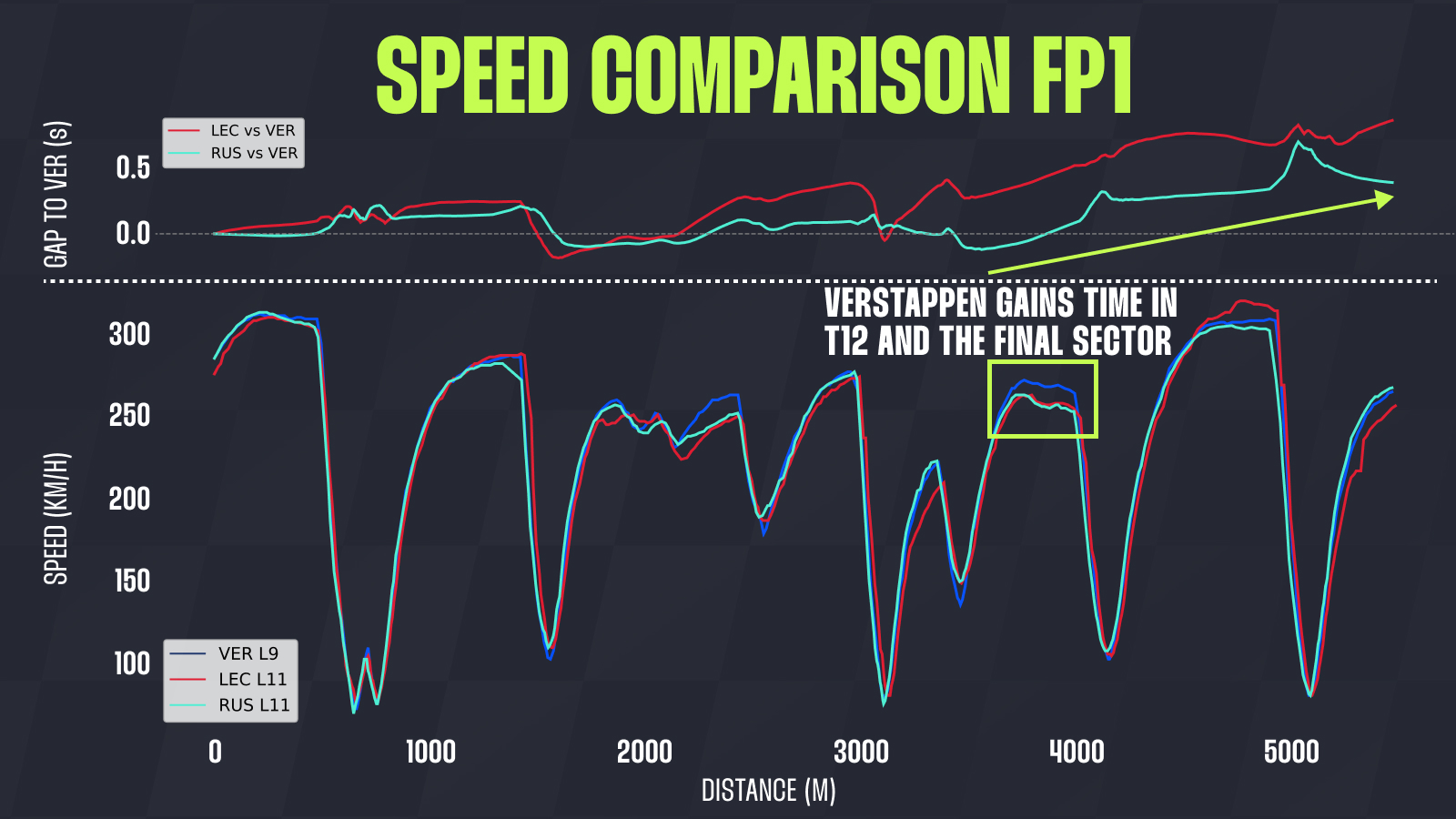
Mercedes, on the other hand, looked as though it wasn’t using the full power of its power unit, which is evident from its speeds on the straights, while it was clear that neither McLaren nor Ferrari were in their optimal window when it came to car set-up.
Given how long it has been since we last raced here, we can conclude that the FP2 data is more representative of the true performance of the top teams.
So what did FP2 show us?
The main takeaway is that race pace will matter more than qualifying this weekend.
With the threat of rain before the start of the second session (which never actually arrived), every team scrambled to fit in as many laps as possible on their long-run simulations to get their set-up for Sunday as well sorted as they could.
Tyre degradation looks extremely high, meaning that if you manage to cut it down through car set-up, it could make a massive difference to your race – which was the teams’ main objective in FP2.
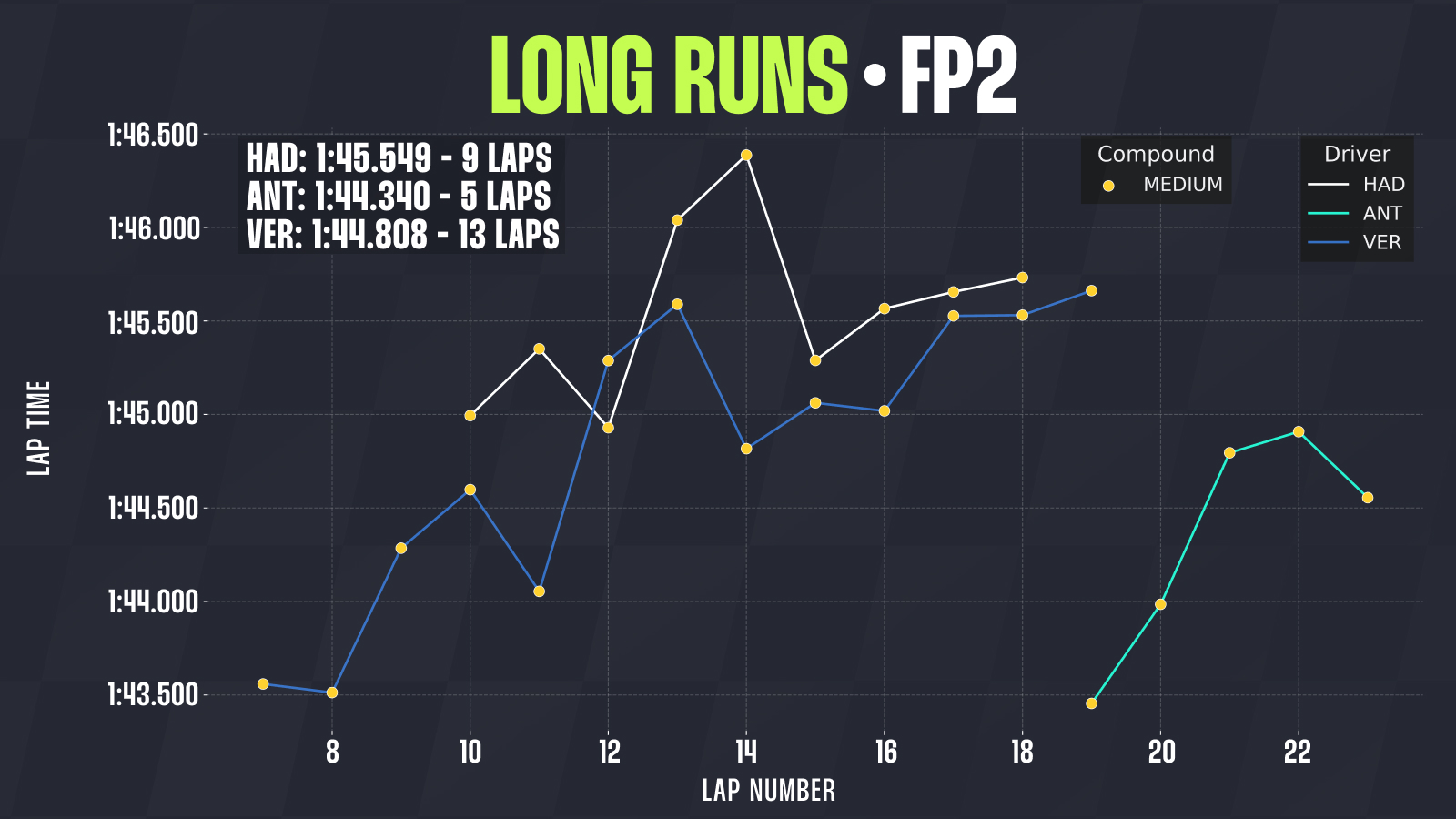
Once again, Red Bull made itself the one to beat – Verstappen showed very strong pace on an ultra-long run on the medium tyres, while Hadjar set a very good time on his quick lap.
Russell also ran a very long stint on the softs, and ended up averaging exactly four tenths slower than the Dutchman.
Antonelli, meanwhile, got off to a bumpy start on his soft-tyre long run and, thanks to traffic on track, switched to the mediums, where he had better pace.
As for Ferrari and McLaren, all of their drivers did their long runs on the softs and completed roughly the same number of laps, which allows for a fairer comparison.
Leclerc stood out as the best of the four, with an average pace a full four tenths better than the next quickest, Norris.
Both Hamilton and Piastri were noticeably slower, the other half of their garages in FP2.
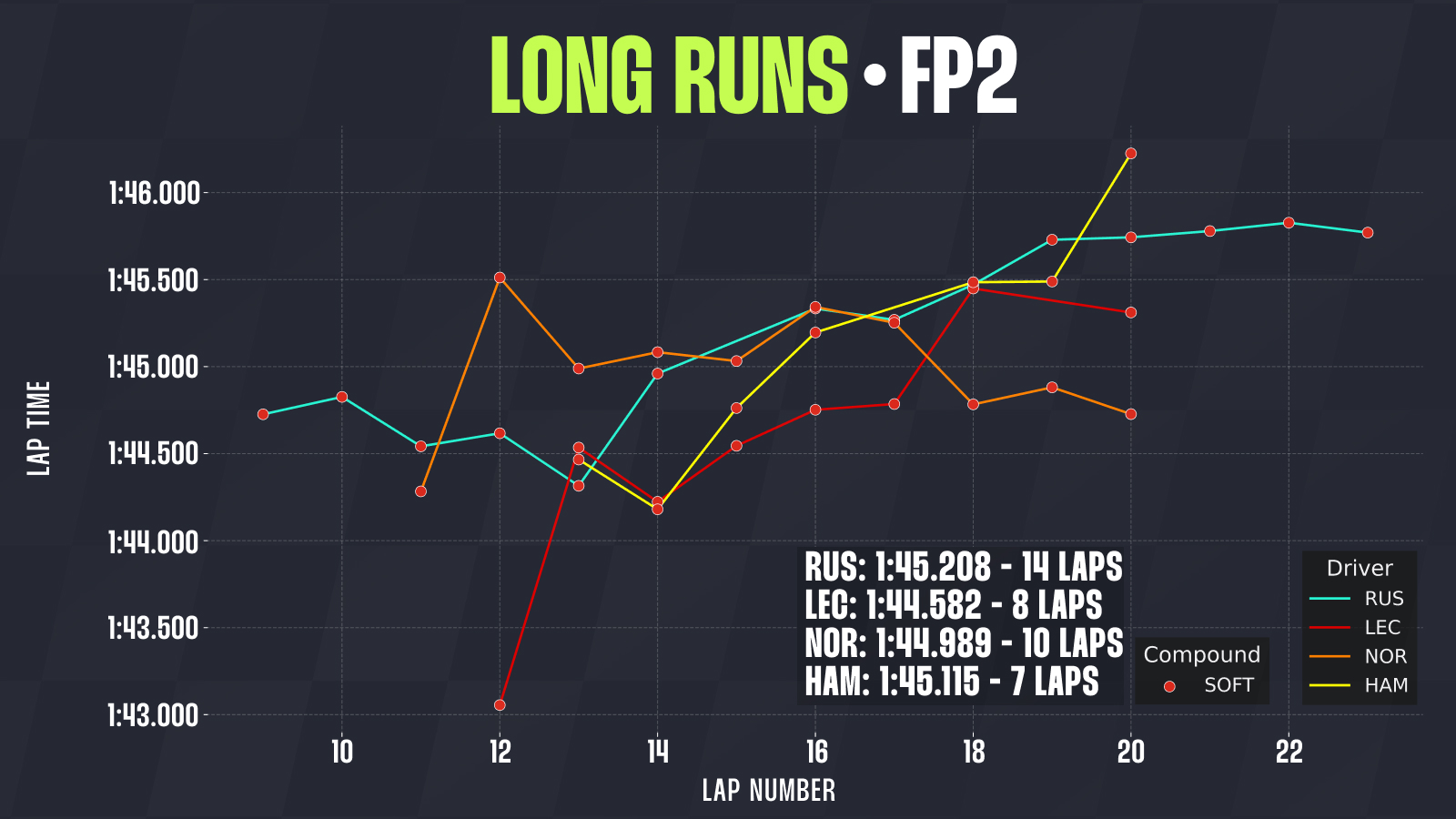
With these numbers, we can conclude that Ferrari has taken a genuine step forward compared with FP1 and look to be on the right track.
The SF-26 was known for its kind treatment of the tyres at the start of the season, and if that trait comes back to life at Sepang, the team could be in the mix for a podium, something its hasn’t been anywhere near in the last several races.
Ferrari’s only remaining problem is the car’s nervous rear end.
If we look at the analysis of the fast laps in FP2, we can see that the gap between the teams is once again very thin.
Leclerc managed to set the best time, but it’s worth bearing in mind that neither Russell nor Antonelli completed their quick laps.
Leclerc was very good through the slower corners of the final sector, particularly Turns 11 and 14 – just look at how he manages to carry more apex speed than Hadjar and Norris in the graph below.
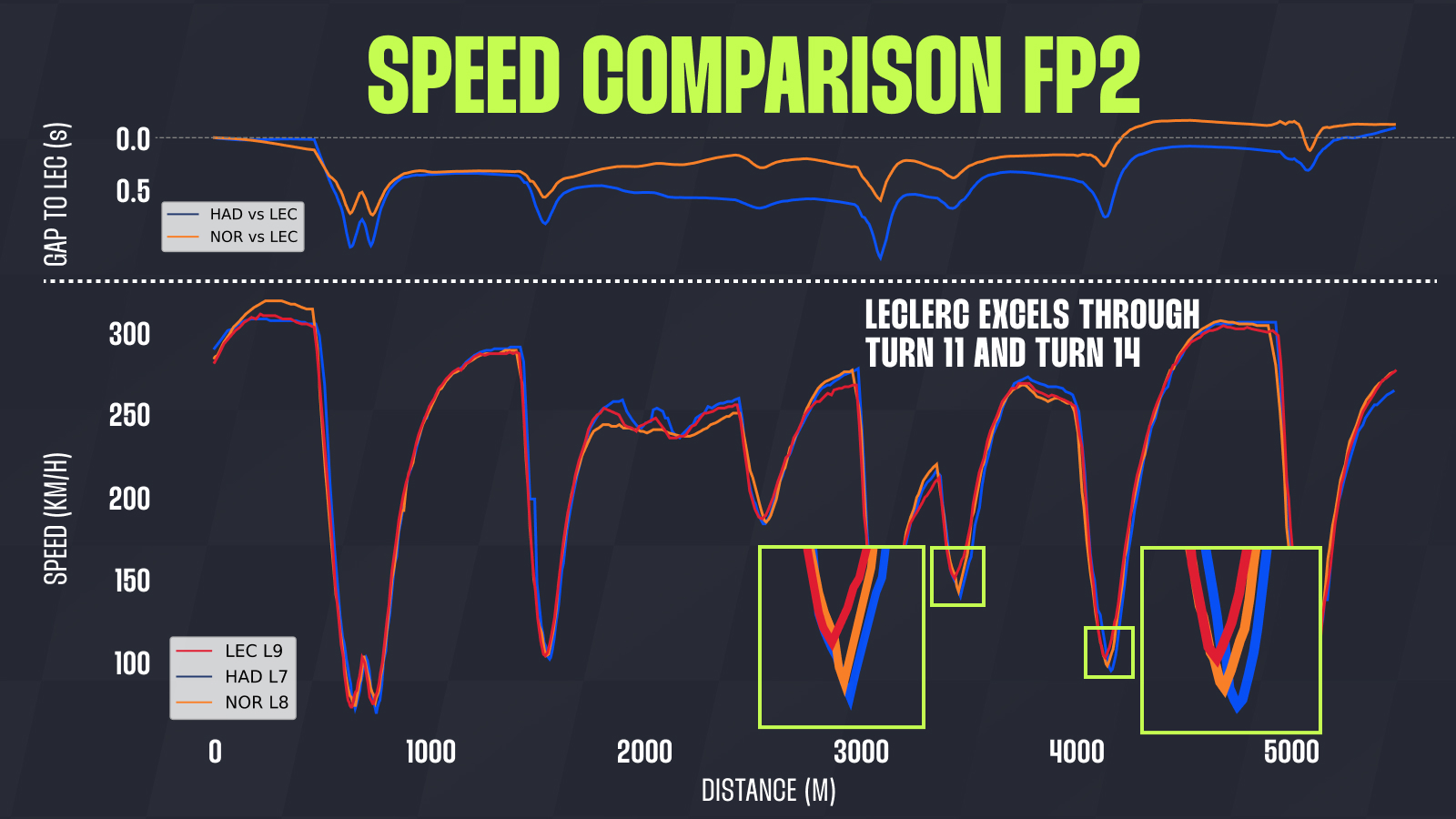
Red Bull makes the difference in the second sector, at Turns 5 and 6, where once again the RB22 harvests the least energy, as well as on the mini-straight mode run to Turn 9, while McLaren is the one with the biggest deployment on the start/finish straight at the beginning of the lap.
All things considered, it is very hard to pick a favourite for tomorrow’s qualifying, or indeed for the race itself, and we mustn’t forget the biggest wildcard in Malaysia – the weather.
We have a very interesting rest of the weekend ahead of us, with everything still very much to play for.
Read next: Revealed: Mercedes takes up 2026 development path abandoned by McLaren