

‘When it rains, it’s wet’ – Bahrain GP in Malaysia weather forecast


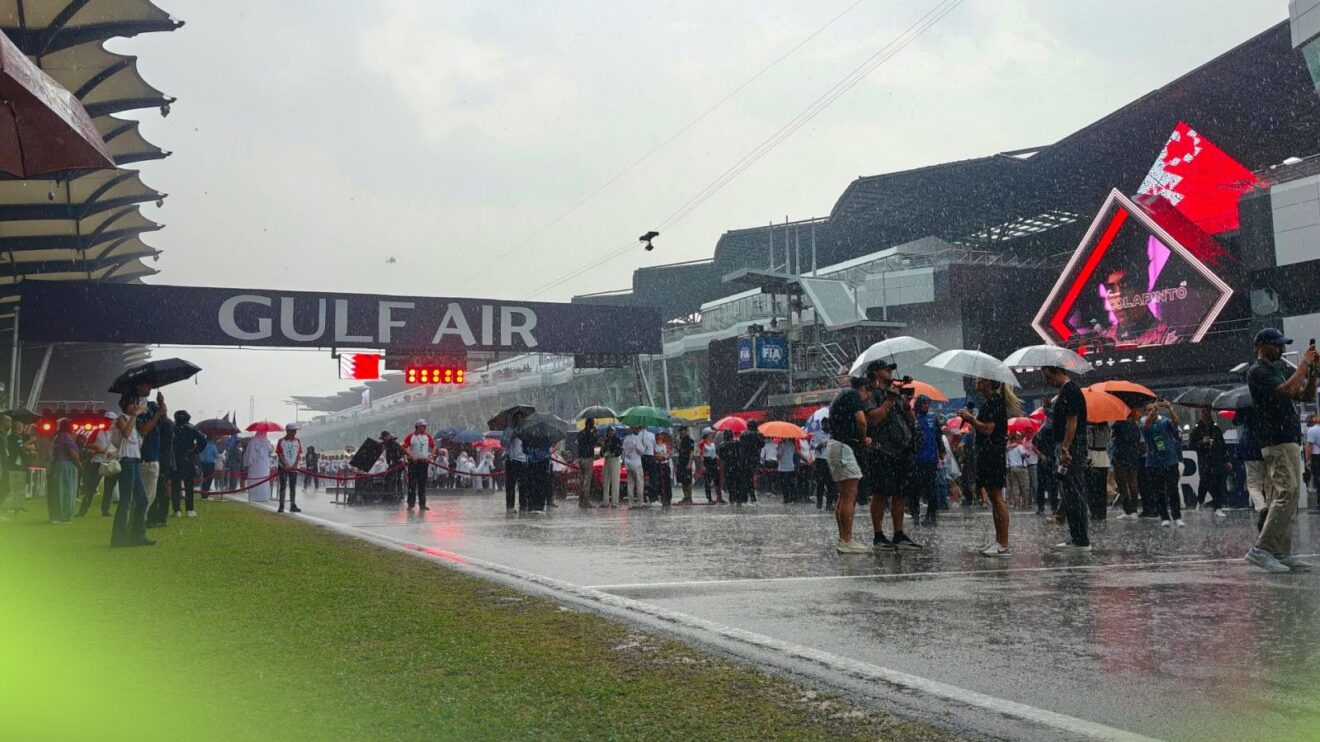
The weather has set in at Sepang ahead of the Bahrain GP in Malaysia.
Max Verstappen has delivered his sage advice as F1’s most recent race winner at the Sepang International Circuit ahead of a potentially wet race weekend: “When it rains, it’s wet – and when it’s wet, it’s very slippery.”
This weekend’s Bahrain Grand Prix in Malaysia is forecast to take place in mixed weather conditions, with rain predicted for Friday’s practice sessions before petering out on Saturday, but ahead of the race itself, the heavens have opened.
‘When it rains, it’s wet’
The Sepang forecast is typically unclear, with pockets of rain bubbling up all around the track, but temperatures remaining high.
Despite the rain that began to fall around 45 minutes before lights out in Malaysia, this was only on specific areas of the track, with the portions of dry track destroying the intermediate tyres across a handful of installation laps to the grid.
As the Mercedes drivers left the garage, they were warned that the localised showers were clumping together, creating a larger and more intense rain cell.
So far this season, F1 has managed to avoid any meaningful wet running.
It begs the question; what should they expect?
“So when it rains, it’s wet, and when it’s wet, it’s very slippery,” quipped Max Verstappen during Thursday’s FIA press conference in Malaysia.
Asked if the green tyres or the blue ones would be better, Verstappen replied: “Depends on how wet. But yeah, normally when it’s wet, it’s slippery.”
For Oliver Bearman, that was simply “the answer.”
However, the Haas driver has not been encouraged by what he has heard from his rivals who have run this year’s Pirelli intermediate and wet tyres.
“The climate is a bit up and down around here, but it also dries very quickly so I think it will be the first opportunity this weekend that we’re going to properly run on the inters and the wets because we haven’t really done that yet this year, and we don’t really know,” he continued.
“I haven’t heard a lot of good things to be honest from people who’ve tested them. It’s been interesting to hear what people have to say about the inters and the wets, and this is a unique one because it’s probably going to be wet, but it’s also generally warm.
“So maybe we get an easier time with the tyres. But I’ve heard that they’re challenging tyres to drive, so I think we’re going to see the first experience using those tyres this weekend, so that’s a question mark for everybody.”
More ahead of the Bahrain Grand Prix in Malaysia
Why is the Bahrain Grand Prix taking place in Malaysia?
Bahrain GP predictions: Russell’s final nail, Verstappen lockdown, rain chaos
F1 takes in the first-ever Bahrain Grand Prix in Malaysia from October 2-4, and while the weather at the Bahrain GP is normally a given, Sepang has shown itself to have quite a different story.
Racing under the Bahrain Grand Prix name, Formula 1 heads back to Sepang for the first time in nine years at a location with a notoriously volatile climate. We’ve seen it all at Sepang in years gone by, and we may just do so again this weekend.
Bahrain Grand Prix in Malaysia F1 weather: What is the weekend’s forecast?
Sunday 4 October [Bahrain Grand Prix in Malaysia]
Sunday’s race may well be touch-and-go as to whether or not rain affects proceedings in the race.
Chances of rain at lights out sit around 50% this early stage – although the track is likely to be damp with the rain that has already fallen.
A temperature of 30°C is set to continue through the race, and the chances of rain currently decrease as the race goes on so, if wet weather does affect things on Sunday, it could be a wet-to-dry event if any rain falls.
How has the weather been at previous Malaysian Grands Prix?
Taking in the Malaysian Grand Prix name specifically here, the weather has thrown up heat, humidity, and a whole load of rain in years gone by.
In dry conditions, Sepang proves an intense physical challenge for the drivers. The humidity in play adds a further layer of tiredness to overcome as the race goes on and, much like the Singapore Grand Prix, sees drivers lose a significant amount of weight in race conditions.
Combined with all that, though, comes the risk of monsoon-like rain at any given moment.
For the biggest example of this, look no further than the 2009 edition of the Malaysian Grand Prix. If you’re old enough to remember the words ‘Kimi Raikkonen’ and ‘ice cream’ in the same sentence, this is for you.
Jenson Button was comfortably leading the race for Brawn until, around the halfway point, the heavens opened and within minutes, cars were aquaplaning and racing became too dangerous.
A red flag was thrown after 31 of 56 scheduled laps and, because of the strength and duration of this storm, the remainder of the race had to be called off and half-points were awarded.
The drivers, who would normally want to race with every bone in their body, backed the decision as well. Lewis Hamilton said: “It was impossible to drive out there. It’s the most dangerous conditions I have ever raced in,” while Fernando Alonso added: “The visibility is nothing, [we] could have a serious accident if we restart.”
So, if and when rain does hit, quite literally anything could happen.
Want to be the first to know exclusive information from the F1 paddock? Join our broadcast channel on WhatsApp to get the scoop on the latest developments from our team of accredited journalists.
You can also subscribe to the PlanetF1 YouTube channel for exclusive features, hear from our paddock journalists with stories from the heart of Formula 1 and much more!
Read next: The F1 2026 Drivers’ and Constructors’ Championship standings