

FIA confirms special measures for Bahrain GP in Malaysia


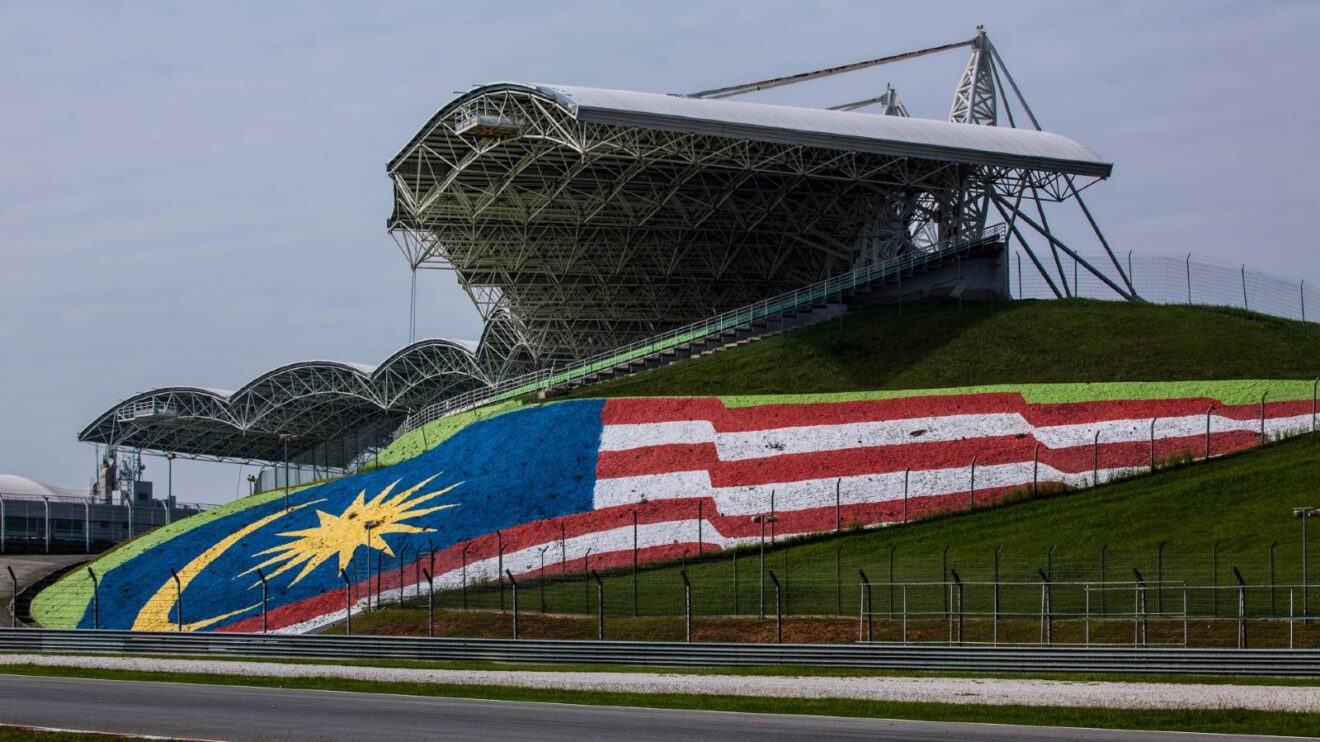
The grandstands at the Sepang Circuit in Malaysia.
The FIA has declared a Heat Hazard for the Bahrain Grand Prix in Malaysia, with the Sepang weekend set to bring soaring temperatures and punishing humidity.
If it isn’t raining at Sepang this weekend, it will be swelteringly hot – and sometimes, it will be both at the same time.
FIA heat hazard declared for Bahrain GP in Malaysia
Heavy rain greeted the Formula 1 teams as they began to arrive in Malaysia in the build-up to round 16 of the F1 world championship, the ‘Bahrain Grand Prix in Malaysia’.
T-shirts and umbrellas were the order of the day on Tuesday as the rain bucketed down, even though the ambient temperature was in the high 20s°C.
PlanetF1’s Thomas Maher braved the conditions for a quick update.
A weather update from Sepang 👀🌧️ pic.twitter.com/hr1POymPWz
— PlanetF1 (@Planet_F1) September 30, 2026
The rain is forecast to dissipate into the weekend, but with that comes an increase in the temperature.
The FIA has officially declared a heat hazard.
“In accordance with Article B1.5.10 of the FIA F1 Regulations, having received a forecast from the Official Weather Service predicting that the Heat Index will be greater than 31.0 °C at some time during the Race at this Competition, a Heat Hazard is declared,” read the FIA statement.
More on the Bahrain GP in Malaysia
Why is the Bahrain Grand Prix taking place in Malaysia?
Bahrain GP in Malaysia weather forecast: What is the risk of rain in Sepang?
Formula 1 introduced a heat hazard regulation in 2025 in response to the scorching temperatures at the 2023 Qatar GP, where several drivers required medical attention after suffering heat exhaustion.
A heat hazard, which can be declared if temperatures rise above 31°C, signals that the conditions are not just uncomfortable for the drivers, but potentially harmful.
Once a heat hazard is declared, regulations come into play, requiring teams to equip cars with advanced driver cooling systems and increasing the minimum car weight to accommodate this additional equipment.
Drivers still have the choice, however, of whether or not to wear a cooling vest. Should they opt out, the car is then fitted with extra ballast to ensure weight parity, and that drivers are not penalised for wearing the vests.
“Any driver may elect not to wear any items of personal equipment that form part of the Driver Cooling System,” reads Article 26.19 of the FIA F1 Sporting Regulations. “In such circumstance, all other components, including any cooling medium, of the Driver Cooling System must be fitted.
“In addition, the difference in mass between the driver’s personal equipment normally used and any items of a driver’s personal equipment that form part of the system must be compensated by the fitting of 0.5kg of ballast in the cockpit.”
Want to be the first to know exclusive information from the F1 paddock? Join our broadcast channel on WhatsApp to get the scoop on the latest developments from our team of accredited journalists.
You can also subscribe to the PlanetF1 YouTube channel for exclusive features, hear from our paddock journalists with stories from the heart of Formula 1 and much more!
Read Next: FIA makes key Sepang decision for Bahrain Grand Prix