
Max Verstappen telemetry exposes Red Bull’s Silverstone performance problems


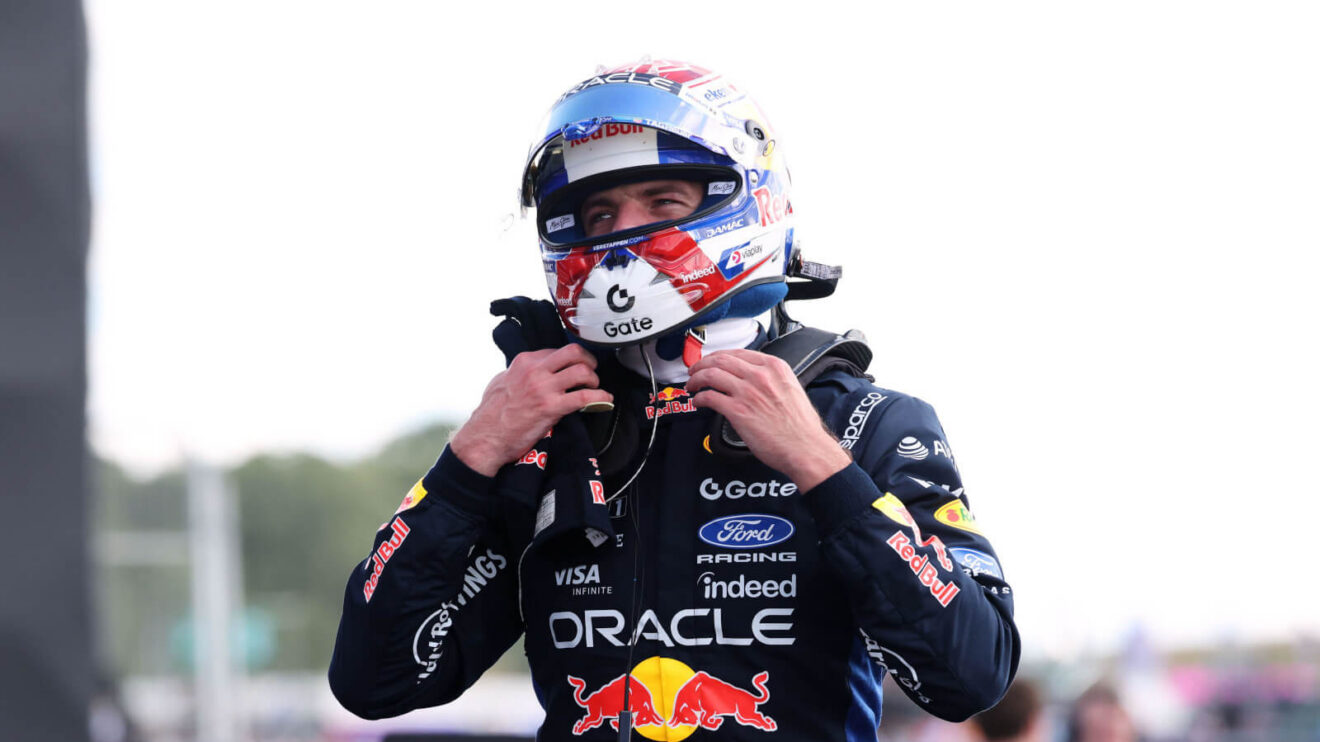
Max Verstappen qualified seventh for the British Grand Prix
After showing signs of a revival in Austria, Red Bull suffered another reality check at Silverstone as Max Verstappen slumped to seventh on the grid, almost eight-tenths adrift of pole.
Whether the main problem for Red Bull is the engine, or if something else is at play, is revealed with the help of telemetry data.
Max Verstappen telemetry analysis explains Red Bull’s Silverstone deficit
Want more PlanetF1.com coverage? Add us as a preferred source on Google to your favourites list for news you can trust
The large upgrade package that the team brought ahead of what we can call their home race in Austria promised a turnaround in the performance of the RB22. The race pace was better than the Ferraris, and even better than Mercedes’ in the second part of the race. Everything indicated that we would see a competitive Red Bull in the following races.
However, it didn’t take much to prove the exact opposite.
Max Verstappen finished qualifying in P7 with a massive deficit to pole, while Isack Hadjar was the better half of the team this time, qualifying in P5.
What we could hear during Q2 was the four-time world champion complaining about the power unit, making a comment in Q3 that this problem had become even worse. The track times confirmed it – Verstappen’s first lap in Q3 was actually slower than his last one in Q2.
What we can see from the data is that Red Bull wasn’t losing time only on the straights – they were actually losing it a little bit everywhere.
From the graph below, we can see that the only place where Verstappen was faster than Antonelli was Turn 3 (due to Kimi’s mistake) as well as the straight from Copse to Maggots, which is a consequence of a different deployment strategy.
Also, pay attention to the apex speeds through the fast corners Becketts and Stowe, the time Antonelli makes up here is truly significant.
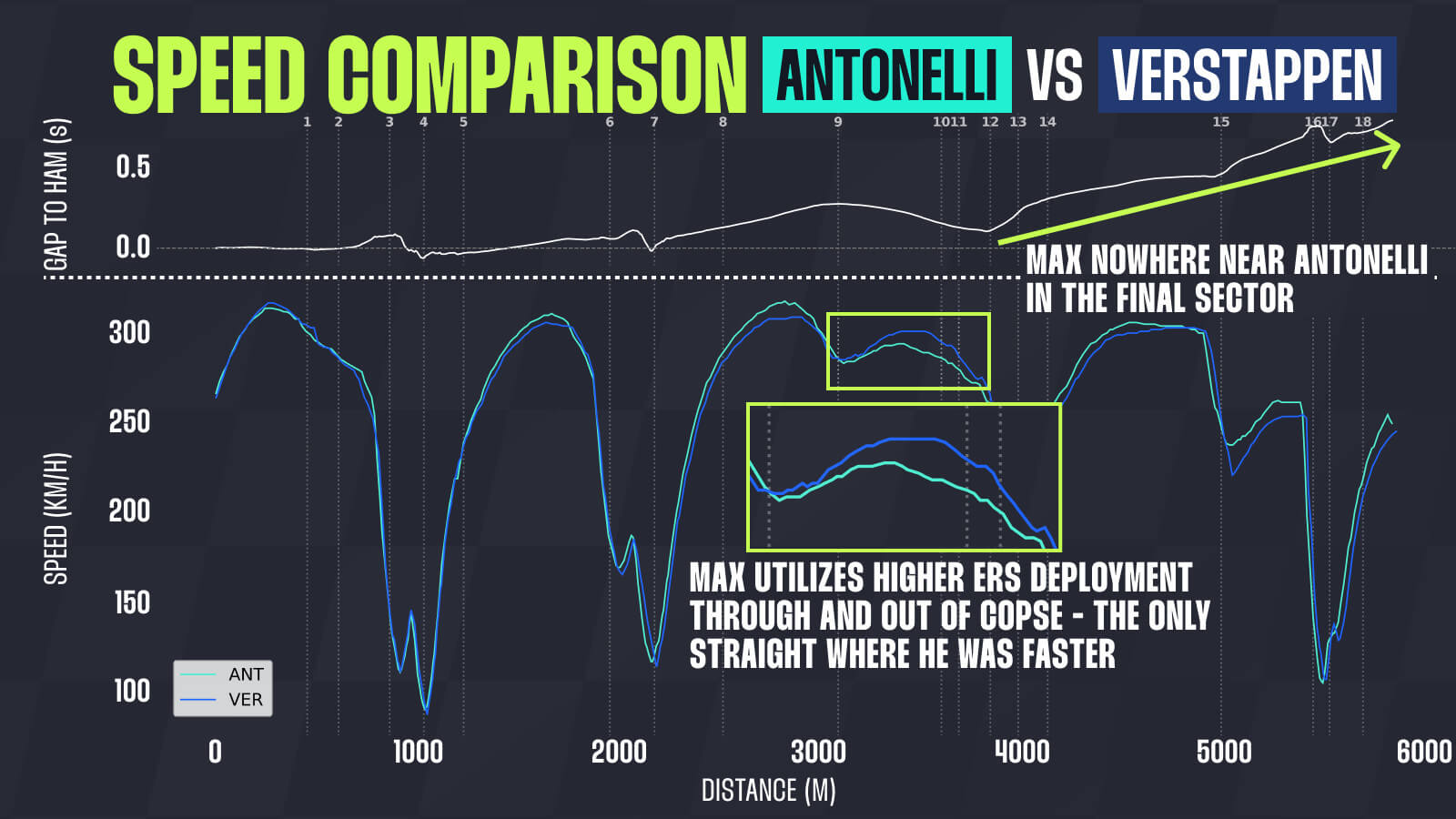
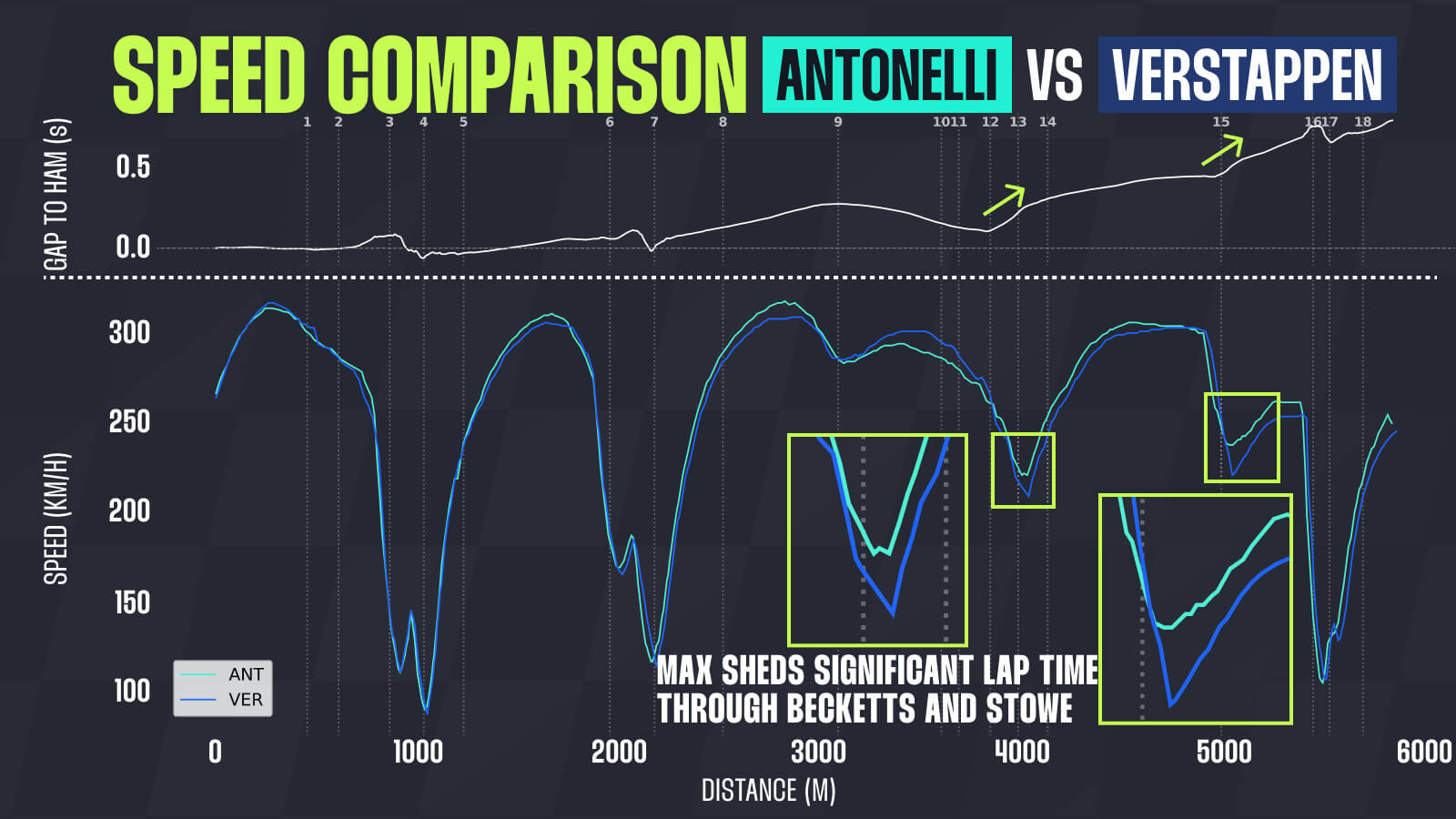
The only sector in which Max was at all competitive was the first one, while the deficit in the other two was significant. And this tells us that besides the PU, which is the biggest factor here, the problem is deeper and certainly extends into the car setup, which was not optimally tuned for the fast Silverstone circuit.
It is very interesting to see such differences in top speeds between Mercedes and Red Bull, keeping in mind that according to the FIA, Red Bull is actually the team with the best power unit, while Mercedes will have the right to one more PU update until the end of the season.
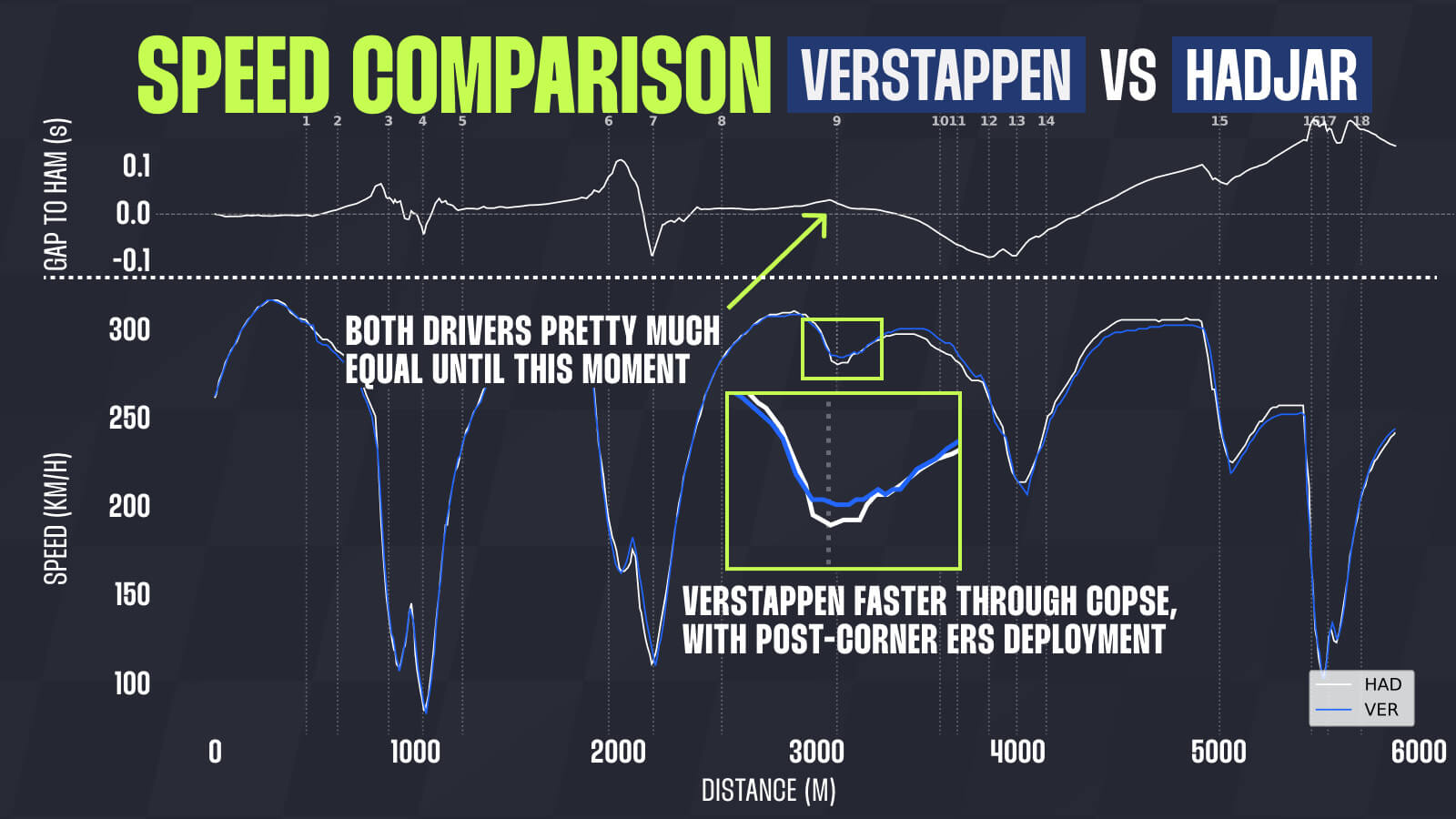
However, what is also worth paying attention to is the lap difference between Verstappen and Hadjar. The Frenchman was faster than the four-time champion this time. The data reveals to us here that Hadjar’s side of the team put together a smarter deployment strategy.
Namely, both drivers were pretty much even in the first sector. Verstappen charges the battery through Turn 6, while Hadjar does so through Turn 7, but in the end, this brings an advantage to neither.
The difference begins to grow after Copse; Max uses more electrical energy on the exit of this corner, which gives him an advantage through the Maggotts-Becketts sequence of about one tenth of a second. At the same time, on this part of the track, Hadjar continues to charge the battery and does not shift into 8th gear, unlike Max.
After Chapel, Hadjar is the one using electrical energy, but not all of it. It is interesting to see how on the Hangar straight, Isack’s speed remains pinned to that exact number after reaching 305 km/h. This gives him the opportunity to use the rest of the remaining energy after Stowe, thereby further increasing his advantage over his teammate.
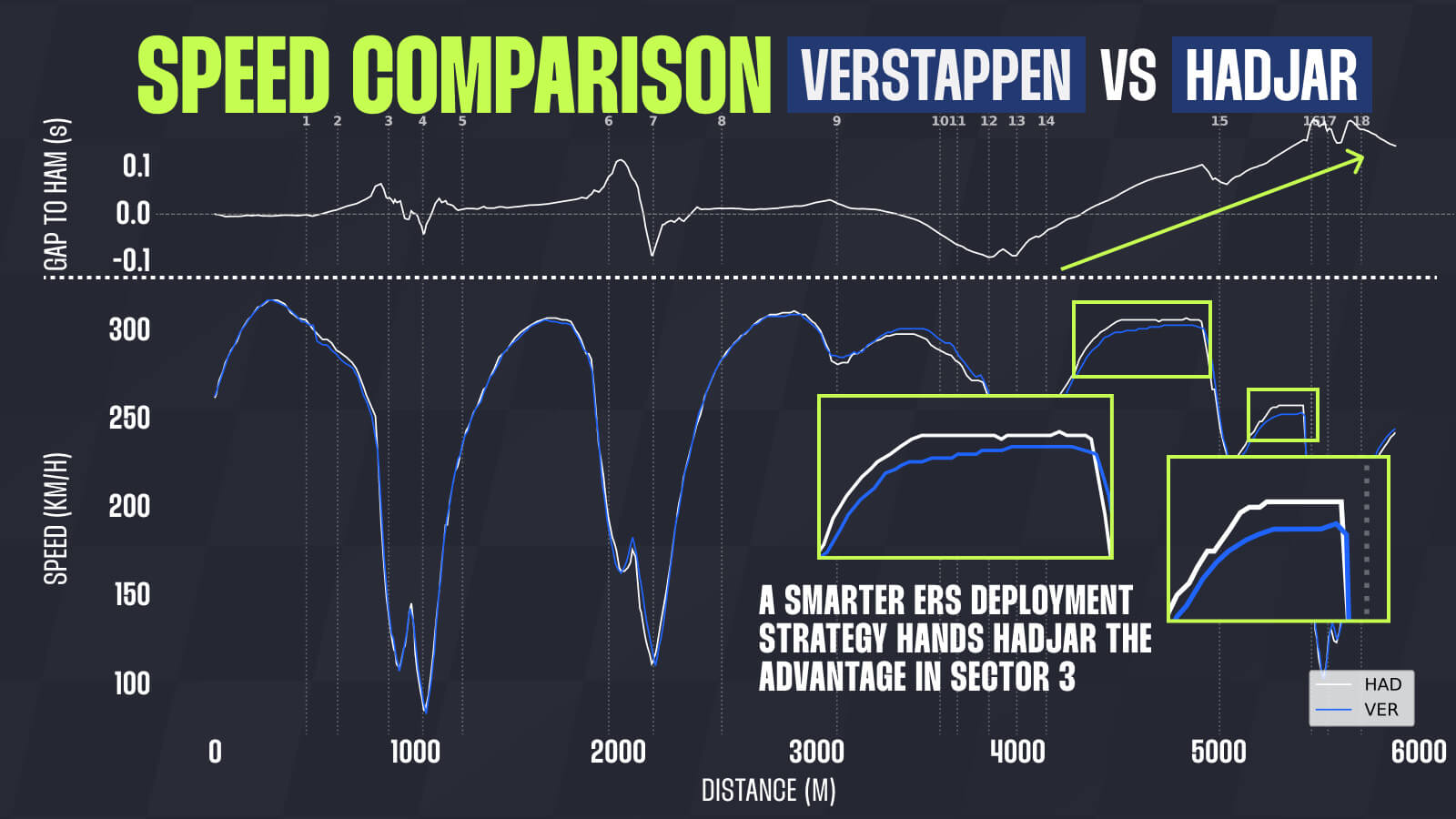
In the end, Hadjar manages to be faster by 0.147 seconds, but the ideal lap times show that this difference could have been even larger. Namely, the Frenchman had an additional 0.121 seconds in his pace that he didn’t manage to extract, however, this difference would not have changed his starting position for Sunday’s race.
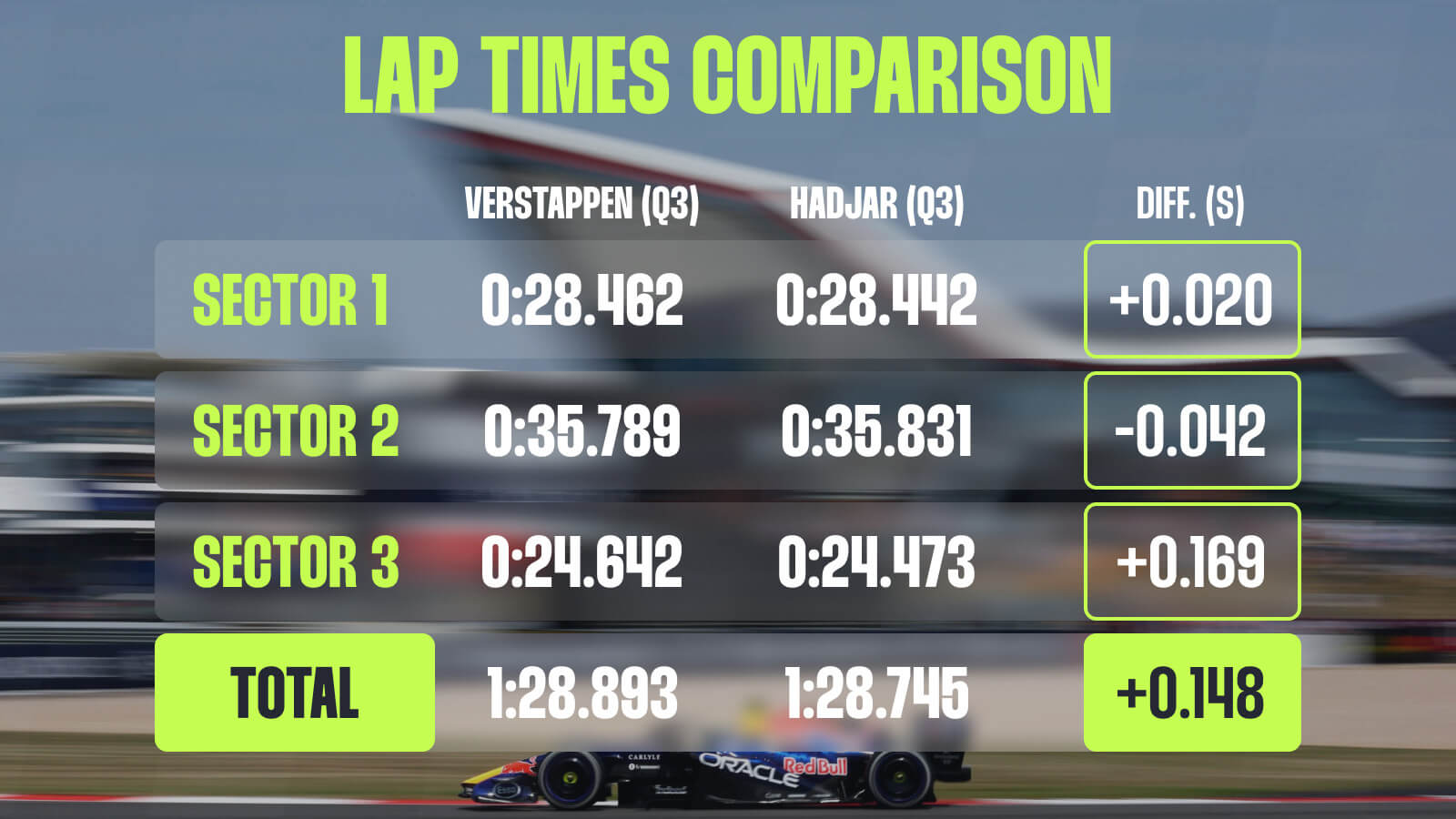
Considering everything mentioned, we can expect that Red Bull’s main rivals in the race will be the McLaren drivers, who also cannot be satisfied with their performance on track. Mercedes and Ferrari look significantly better, and it seems the race will create a gap between these two pairs of teams, meaning w are likely to see a fight between Ferrari and Mercedes, as well as Red Bull’s battle with the McLaren drivers.
However, if there is any driver from whom we can expect a turnaround from Saturday to Sunday, it is definitely Max Verstappen. It remains to be seen how much race pace the Dutchman will manage to find in the car and whether that will be enough to make our prediction fall flat.
Want to be the first to know exclusive information from the F1 paddock? Join our broadcast channel on WhatsApp to get the scoop on the latest developments from our team of accredited journalists.
You can also subscribe to the PlanetF1 YouTube channel for exclusive features, hear from our paddock journalists with stories from the heart of Formula 1 and much more!
Read next: Kimi Antonelli stars as Max Verstappen struggles: British GP qualifying winners and losers