
Where did Mercedes’ pace vanish during Bahrain GP in Malaysia qualifying?


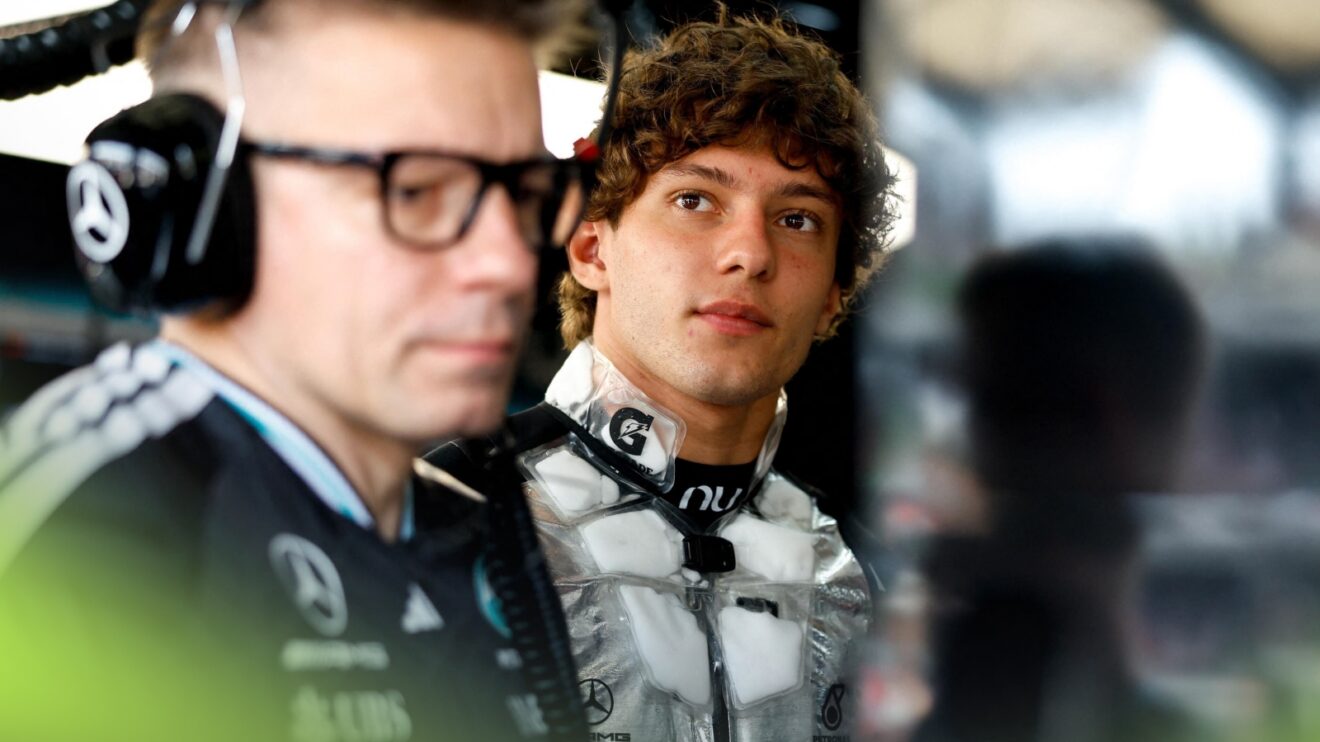
Antonelli led the charge as Mercedes suffered a tough qualifying in Sepang
The utterly dominant Mercedes we witnessed last weekend in Azerbaijan completely evaporated from the fight for pole position this weekend following the introduction of their new upgrade package.
Let’s dive deeper into the telemetry to examine the exact issues currently plaguing the German squad.
Is the new upgrade package working?
When a team introduces such a radical aerodynamic update package, it invariably takes time to dial in a vehicle balance that complements the redistribution of aerodynamic loads acting on the chassis – and Mercedes are currently right in the middle of that setup window search.
With that in mind, a slight dip in Mercedes’ form might have been anticipated; however, when you claim pole position by a staggering 0.8-second margin at the previous event, you still expect to be firmly in the hunt for pole.
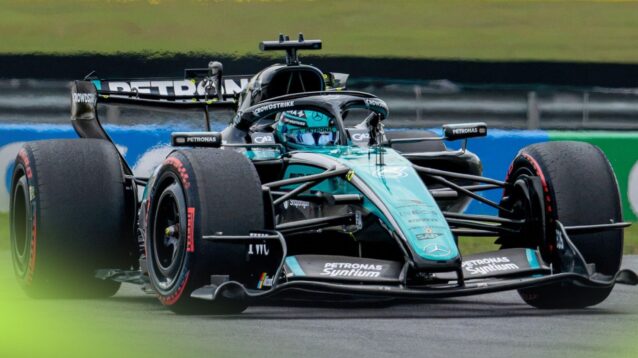
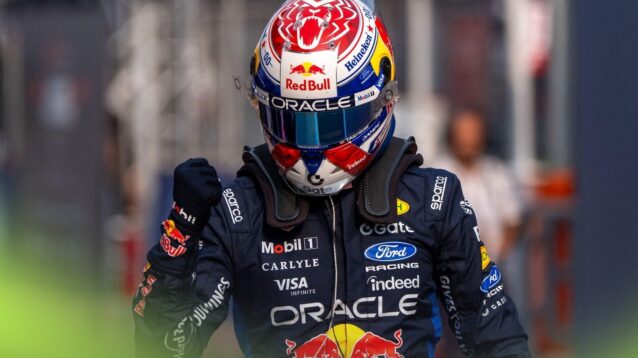
The reality in Malaysia, however, was starkly different. Red Bull assumed the mantle of dominant package on track, while the W17 in Antonelli’s hands could manage no better than fourth – half a second adrift – with Russell lagging all the way down in eighth, almost eight tenths off pole position. What a dramatic reversal of fortunes between two weekends for the Briton.
Why were Mercedes so slow?
The primary factor is that they forfeited the straight-line speed dominance they previously enjoyed. Examining the overlay graph comparing Antonelli’s and Verstappen’s fastest laps, there is not a single straight on the circuit where the Italian held an advantage. They were reasonably evenly matched along the blast from Turn 3 to Turn 4 and from Turn 14 to Turn 15, but virtually everywhere else Max commanded a margin.
At first glance, this suggests the new upgrade package has increased overall aerodynamic drag, though it remains far too early to draw definitive conclusions.
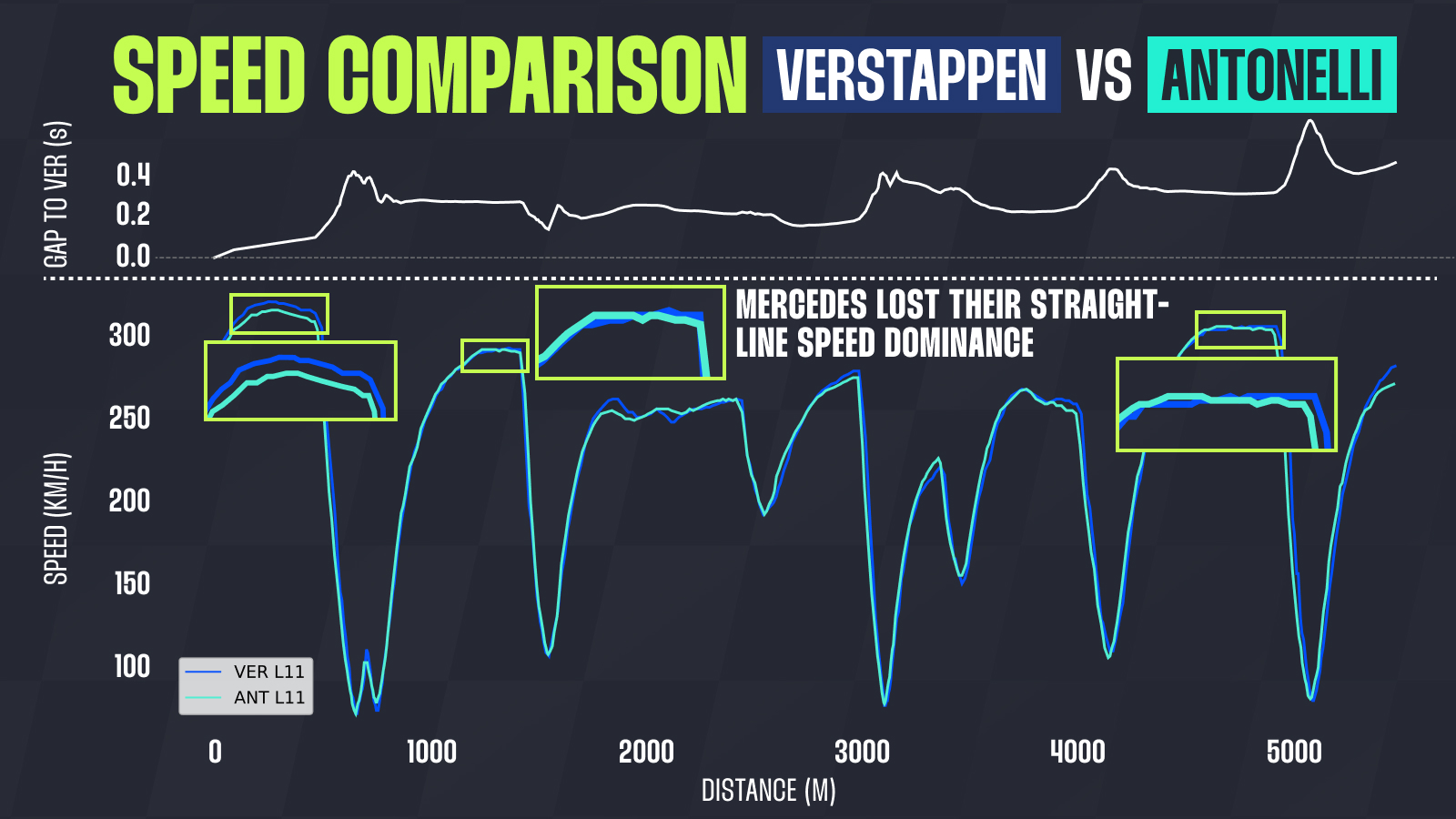
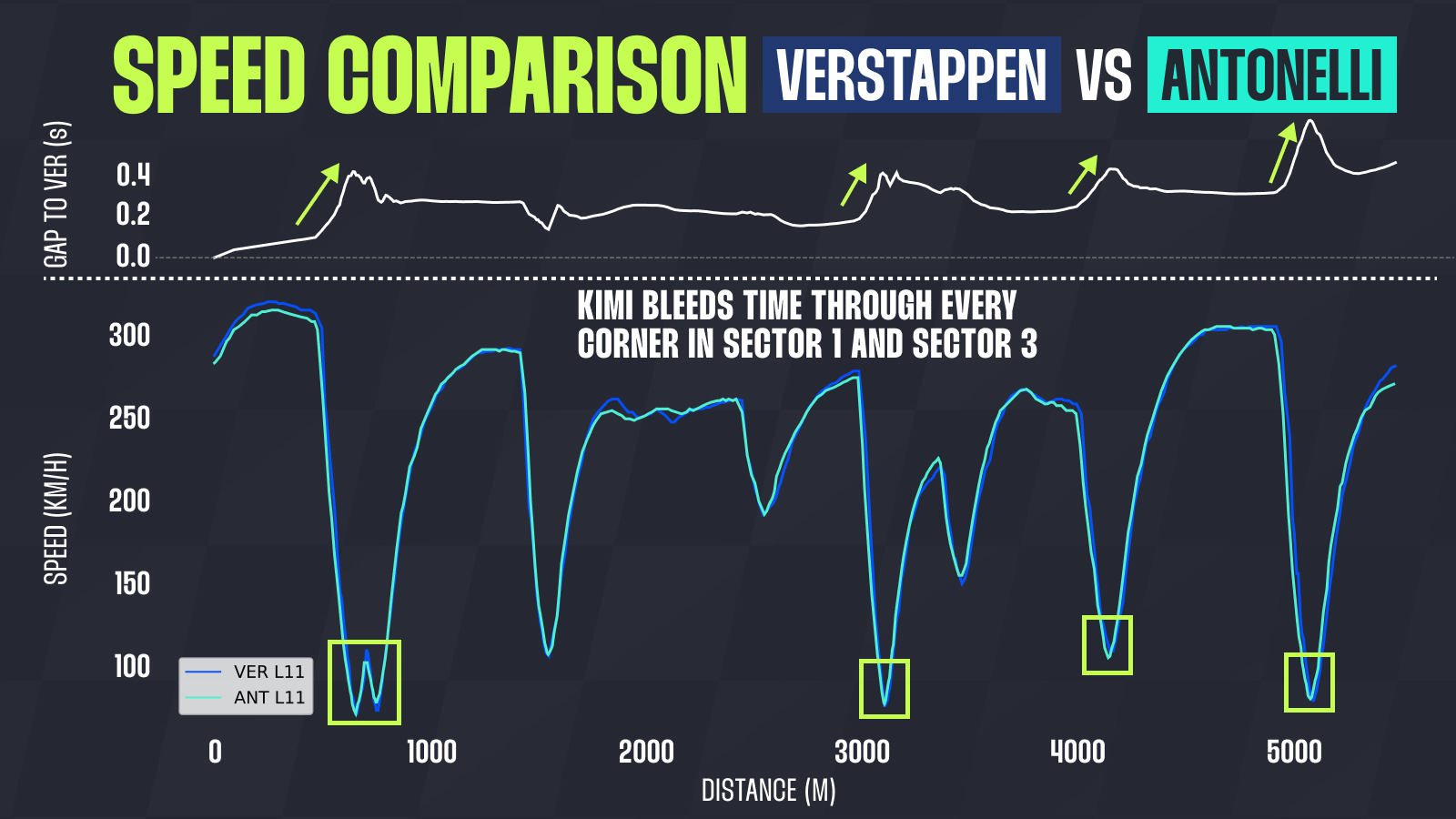
What is particularly concerning, however, is that Mercedes trailed Red Bull even through the corners – most notably in low-speed turns. In fact, the only corners where Kimi managed to claw back time were high-speed Turns 4, 5, 6, and 7; everywhere else, he was losing ground.
This is vividly illustrated in the graph below; note how the lap time delta line spikes in Verstappen’s favour through virtually every corner in Sectors 1 and 3.
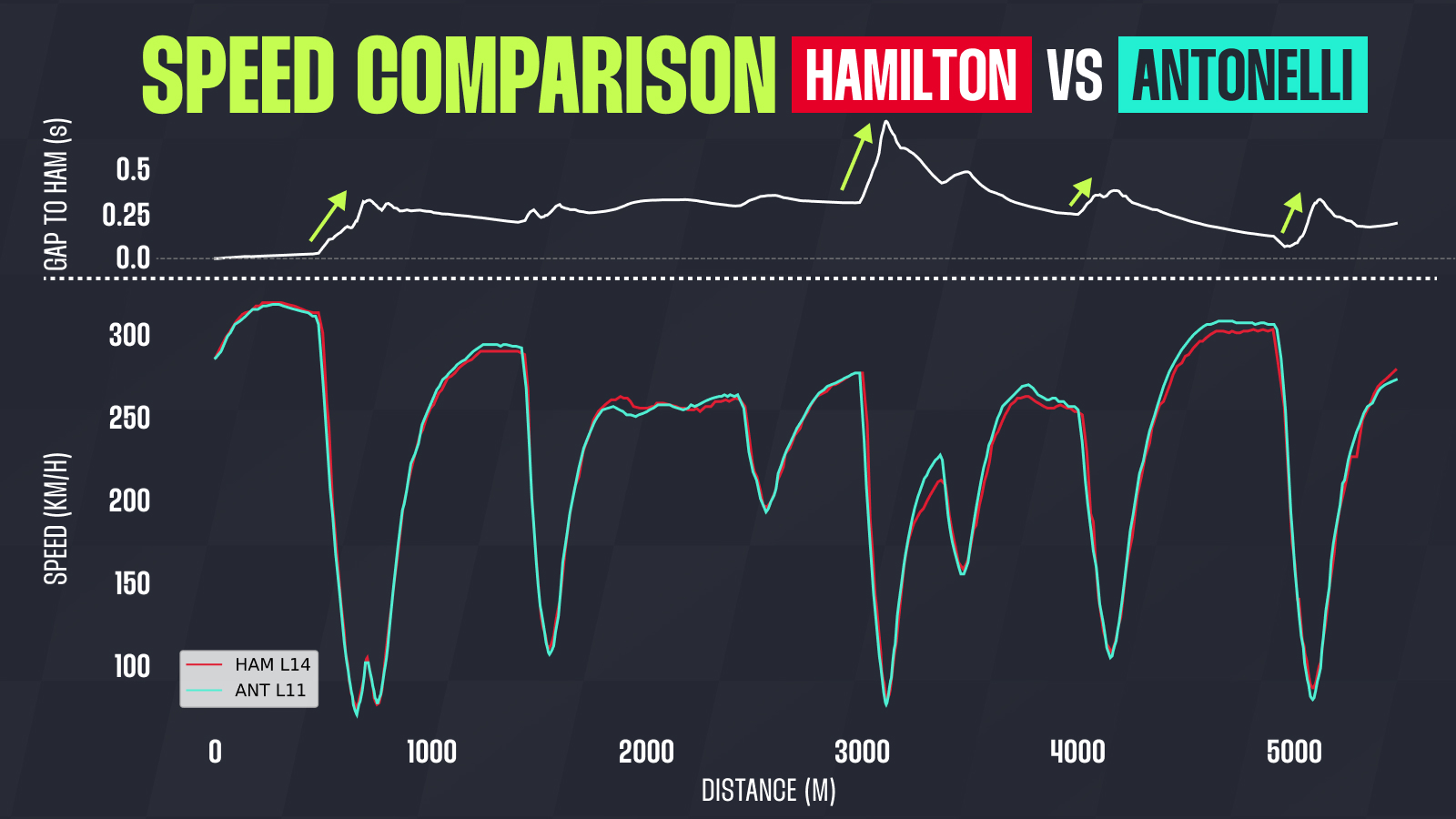
To make matters worse, Red Bull wasn’t a car that particularly sparkled through the corners – it was simply competent enough to minimise time loss while capitalising on its straight-line power, whereas Ferrari, by contrast, proved exceptionally strong through the turns in Malaysia.
Thus, comparing Hamilton to Antonelli makes this trend of cornering time loss even more pronounced.
It is also worth noting that Antonelli made an error during Q2, running off-track, which saw his flying lap deleted and forced him to scrub an extra set of fresh soft tyres. Given the substantial single-lap time deficit on used softs, Kimi paid the price for that mistake by having only a single push lap in Q3, whereas everyone else had two.
In those high-pressure situations, a driver naturally plays it slightly safer to guarantee a clean lap; had Kimi been afforded a second attempt in Q3, he would have joined the battle with Lewis for a front-row start.
Latest Bahrain GP talking points on PlanetF1.com
Secret Honda engine upgrade emerges after latest FIA findings
Lewis Hamilton: ‘Lots of drivers at the front can’t compete with Alonso talent’
What happened to Russell?
From a flawless weekend in Azerbaijan with an eight-tenth advantage in qualifying, Russell now finds himself virtually the same margin adrift of pole position, bringing his championship comeback bid to a grinding halt (at least for now).
This outcome offers further confirmation of just how impressive Kimi has been this season – with new upgrades and a revised car setup, having only a single run in Q3, the Italian managed to extract more performance from the W17.
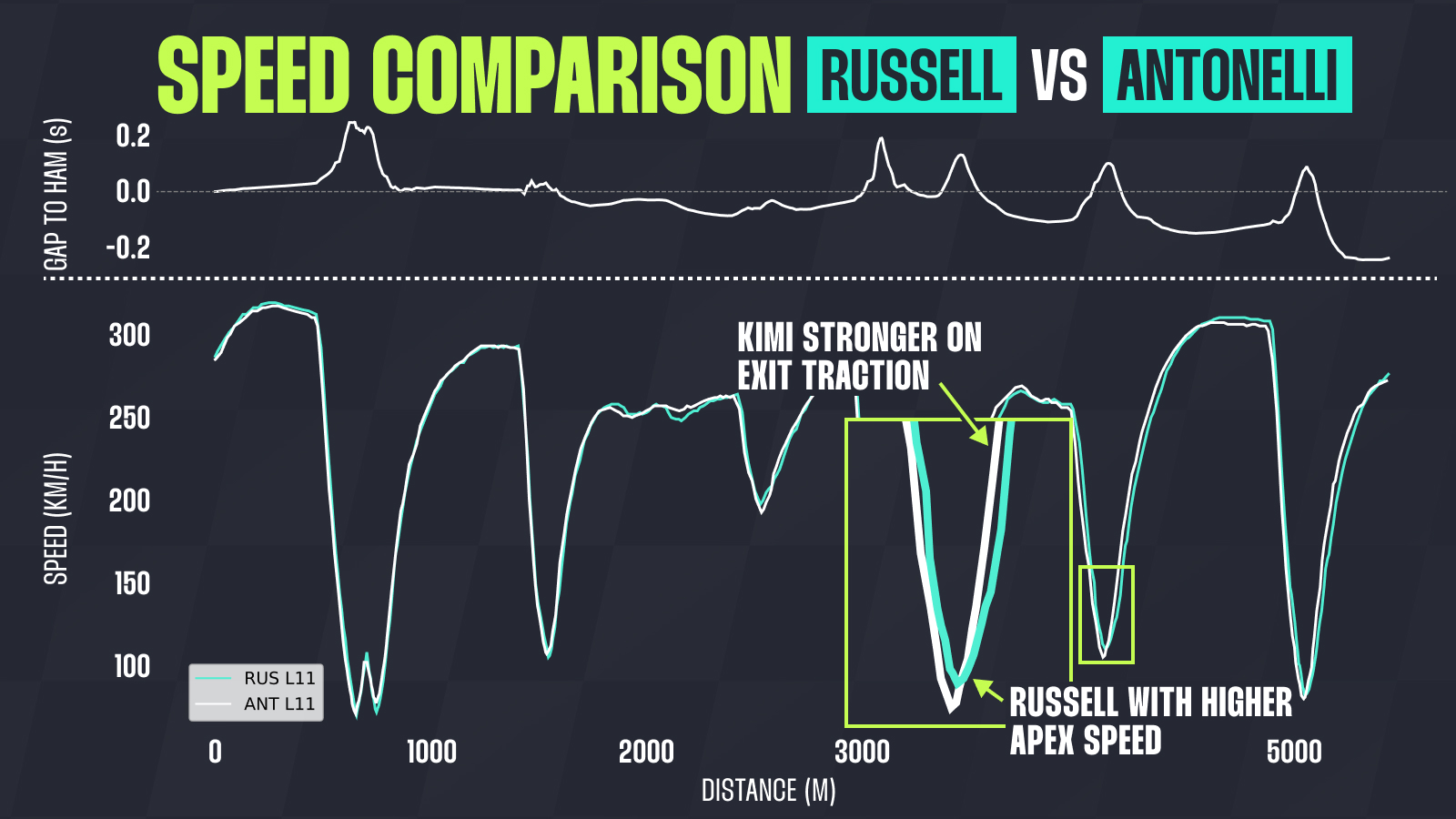
What we are witnessing once again this weekend echoes our analysis from last time: the fundamental divergence in driving style between Kimi and George, which was particularly visible through the final sector and once again yielded no advantage for the Briton over his teammate.
Through the final two corners in particular, George brakes earlier, initiates turn-in sooner, and carries higher apex speed, yet Kimi consistently outperforms him on traction at corner exit. The Italian’s point of difference lies in his more aggressive entry, harder braking, and sharper vehicle rotation on exit.
Look at the delta trace in Sector 3 – Russell initially builds an advantage on entry to each turn, but the delta relentlessly swings back in Antonelli’s favour on exit, with the gap between the two widening with every passing corner.
What can Mercedes achieve in the race?
Isack Hadjar’s 5-place grid penalty will play into the hands of both drivers, promoting Kimi to P3 on the grid and Russell to P7. Mercedes’ long-run race pace during FP2 looked promising – Kimi recorded the strongest average lap time, albeit across the shortest stint among the leaders.
In Russell’s case, we can expect him to hold an edge over the McLaren drivers, though Hadjar charging from behind will pose a formidable threat given his strong underlying pace.
The race itself remains a vast unknown and will serve as a stern test of team strategy and adaptability to shifting track conditions – which, with a touch of luck, could well open the door for Kimi to fight for overall victory.
Want to be the first to know exclusive information from the F1 paddock? Join our broadcast channel on WhatsApp to get the scoop on the latest developments from our team of accredited journalists.
You can also subscribe to the PlanetF1 YouTube channel for exclusive features, hear from our paddock journalists with stories from the heart of Formula 1 and much more!
Read Next: Bahrain GP in Malaysia: Verstappen dominates as Hamilton makes front row