
F1 2026 front wings: Different design choices under microscope


The first designs to emerge from a new regulatory cycle will always result in a bunch of differences, as the teams make decisions in isolation, before having the opportunity to see how their rivals have approached the same challenges.
The front wing represents a confluence of design options and as such, we’ve seen teams interpret the rules in very different ways.
No cookie cutter solutions
Want more PlanetF1.com coverage? Add us as a preferred source on Google to your favourites list for news you can trust.
This is primarily because the overall design scheme for the front wing has been altered, not only to incorporate the active aero aspect required with these regulations but, the governing body have also sought to reduce the aerodynamicists ability to create outwash.
This aerodynamic structure has been destructive for a number of years, as it manifests into a larger wake issue downstream, as the aerodynamicists look to use other surfaces to propagate flow structures that combine with it.
To combat this, the width of the wing and placement of the endplate has been adjusted significantly when compared with previous regulations.
However, whilst these constraints are intent on creating more of an inwash profile, the designers will still look to mitigate the result, in order to improve performance.
This can be achieved in a number of ways and is helped by the inclusion of diveplanes and vertical vanes on the top of the footplate, which itself has freedoms that the designers will leverage.
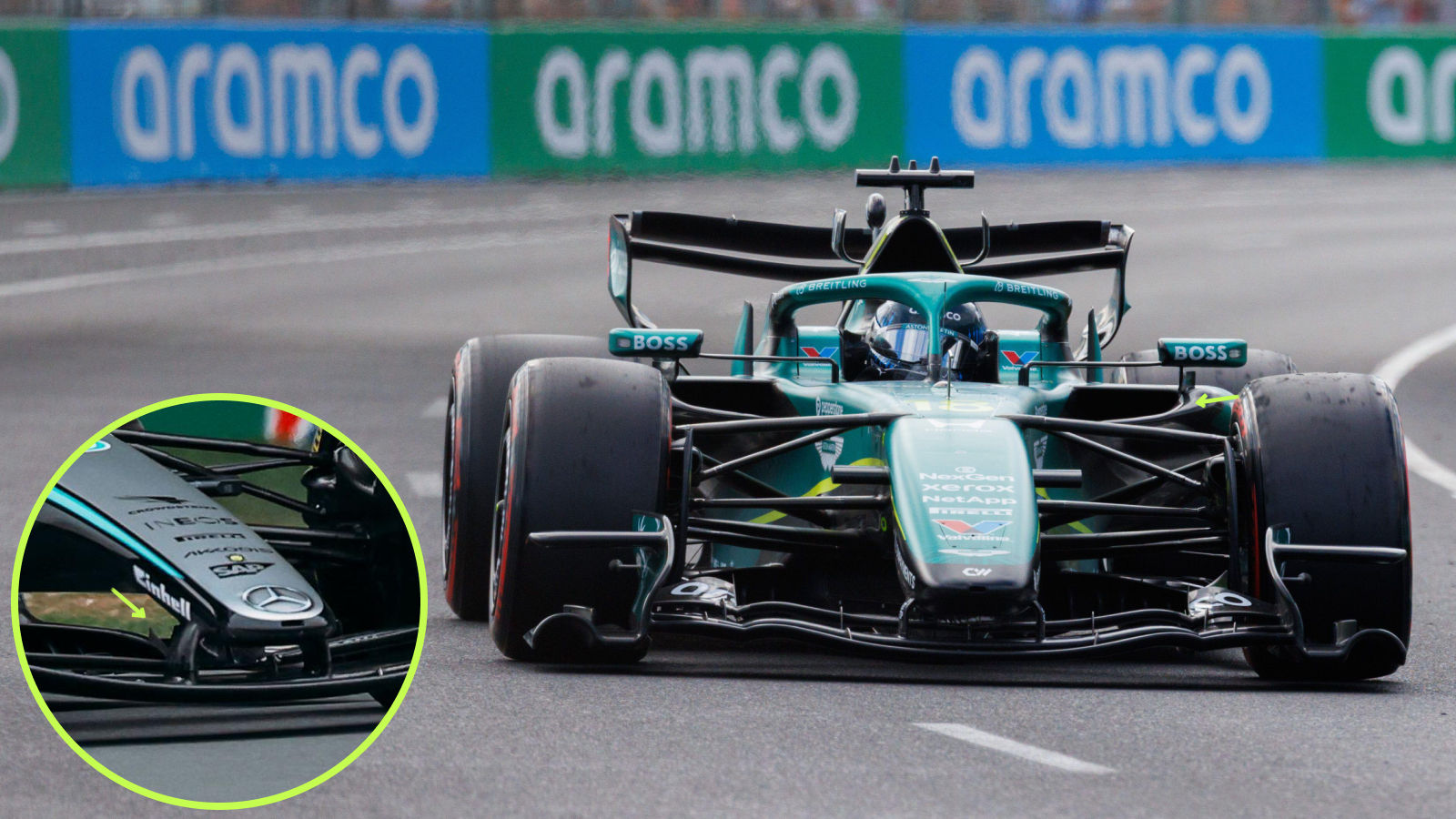
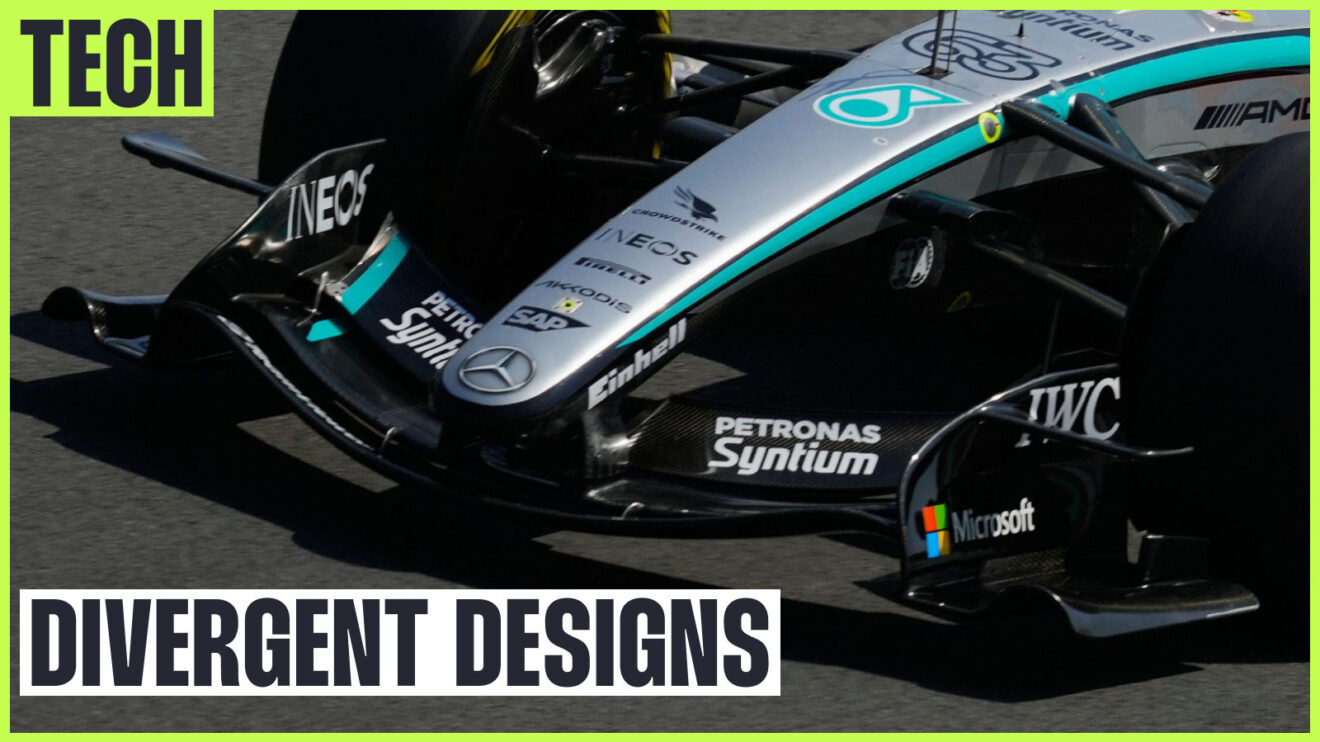
One of the most fascinating quirks to the overall layout of the front wing can be found on the Mercedes W17 and Aston Martin AMR26, as both have opted to mount the front wing on the second element of the three allowed, rather than on the mainplane.
This results in only the upper element being employed for active aero, whereas the remainder of the grid employs both of the upper flaps.
But, whereas Aston Martin’s entire upper flap rotates, the flap on the Mercedes W17 has a central panel that remains static throughout (inset, arrowed).
More F1 2026 tech analysis from PlanetF1.com
F1 2026 uncovered: Ferrari’s FIA-alerting halo winglet and more on the new generation of cars
F1 2026 uncovered: Haas responds to Ferrari SF-26 exhaust flap with rapid China upgrade
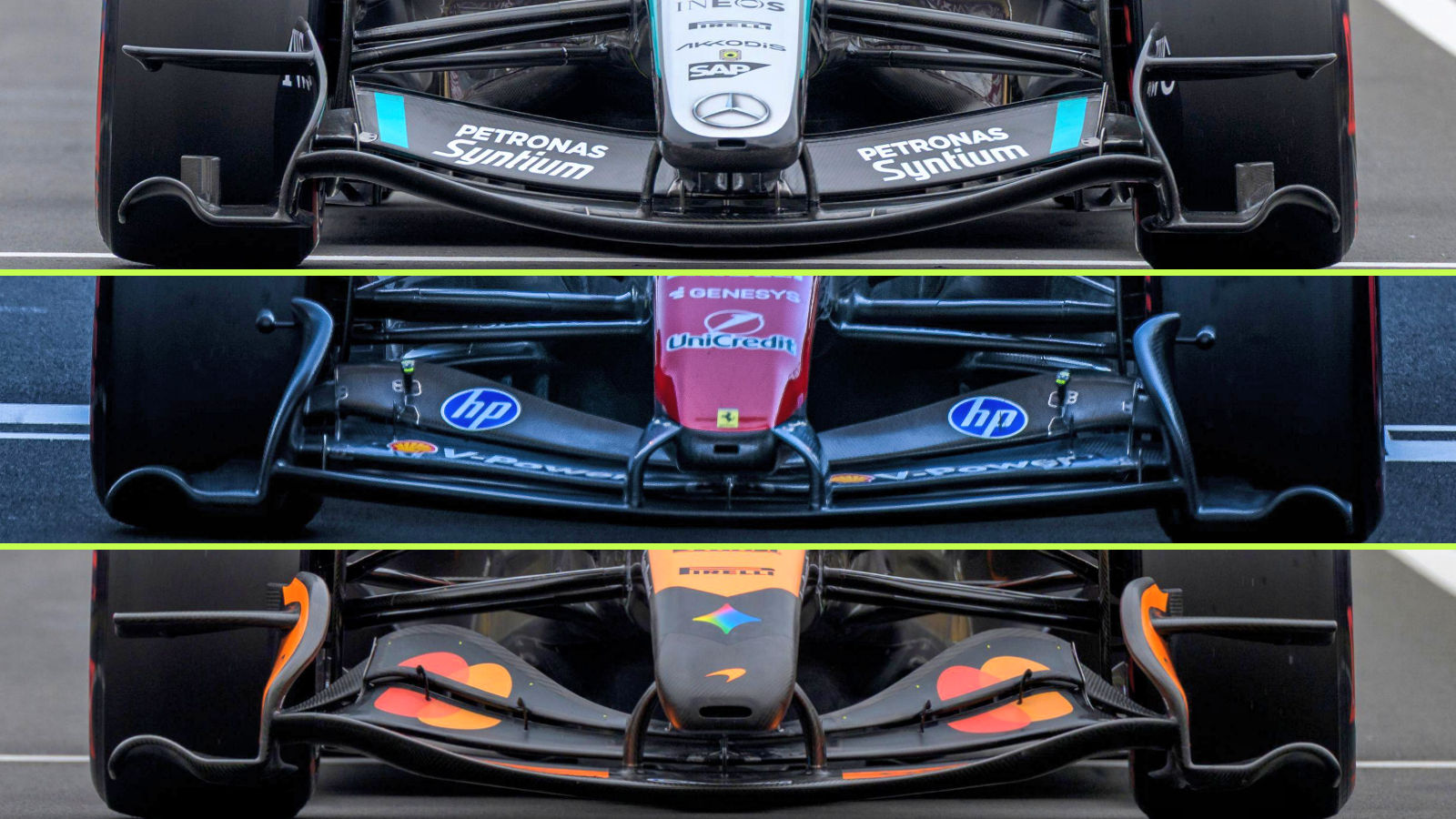
There’s not really a common thread when it comes to the chord length or shape of the elements on any of the front wing designs up and down the grid either.
Some have opted for a more balanced distribution across the three elements, some have a short chord mainplane, with larger upper flaps, whereas some have a large mainplane and shorter flaps.
The shapes also differ, with some opting for more extreme contouring to the mainplane’s leading edge, resulting in similar choices for the flaps.
Then others have opted for flatter mainplane geometries and more evenly distributed flap designs.
The current top 3, for example, have very different approaches from one another, not only in terms of the mainplane and flap geometries but also in the design of the endplate and footplate architecture.
Ferrari have also opted not to carry a diveplane or vane arrangement in the outboard portion of their wing, whilst Mercedes have both and McLaren only have a diveplane.
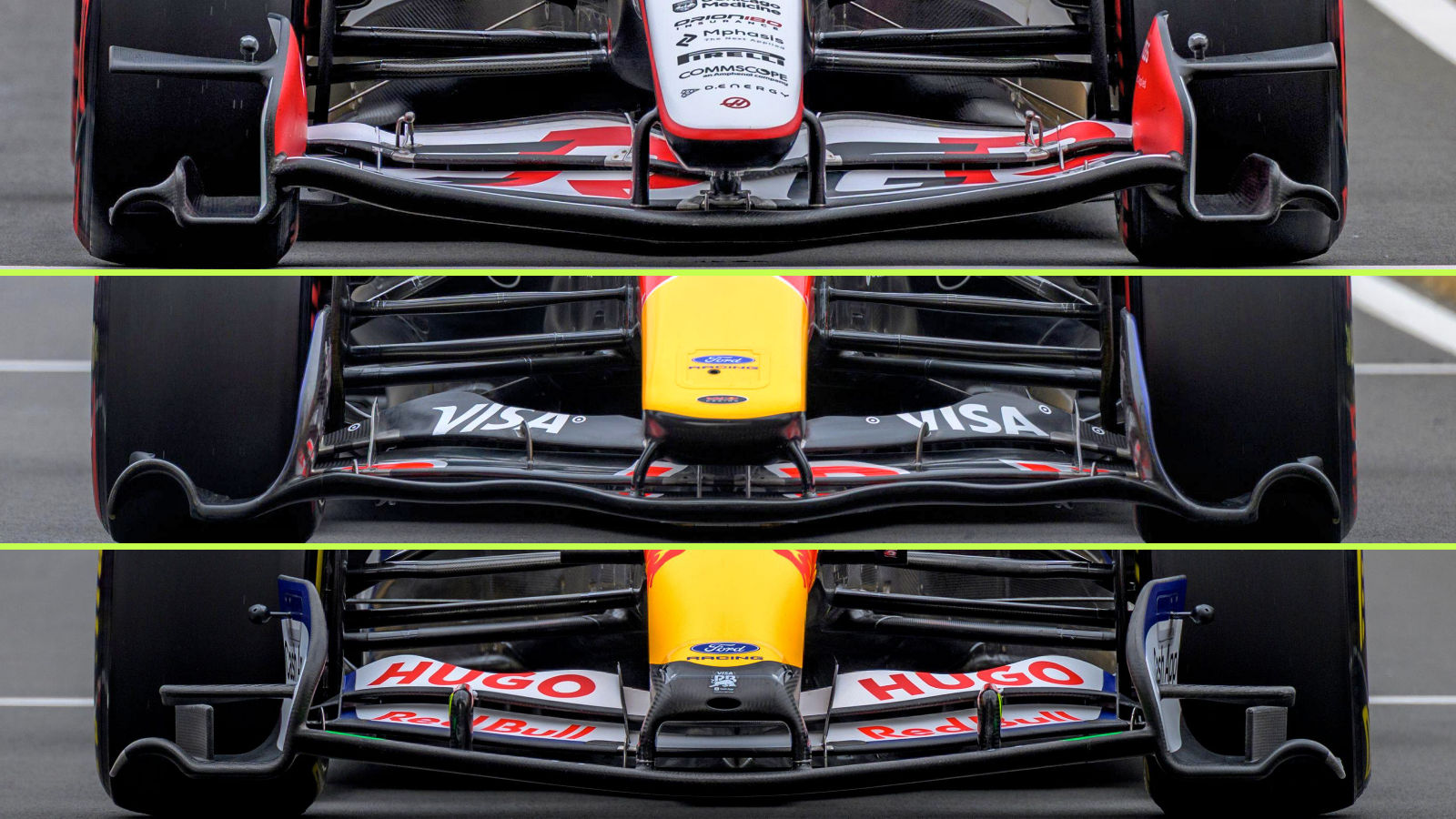
Haas have gone their own way entirely with their footplate design, with a squared-off inner profile creating a full length vane.
Notably this trio’s endplate geometry differs quite substantially from the aforementioned trio too, as does their use of diveplane and footplate vanes.
Red Bull don’t have a diveplane but do have a low, outwardly angled vane at the rear of the footplate, whilst Racing Bulls have a much larger vane and very low mounted diveplane.
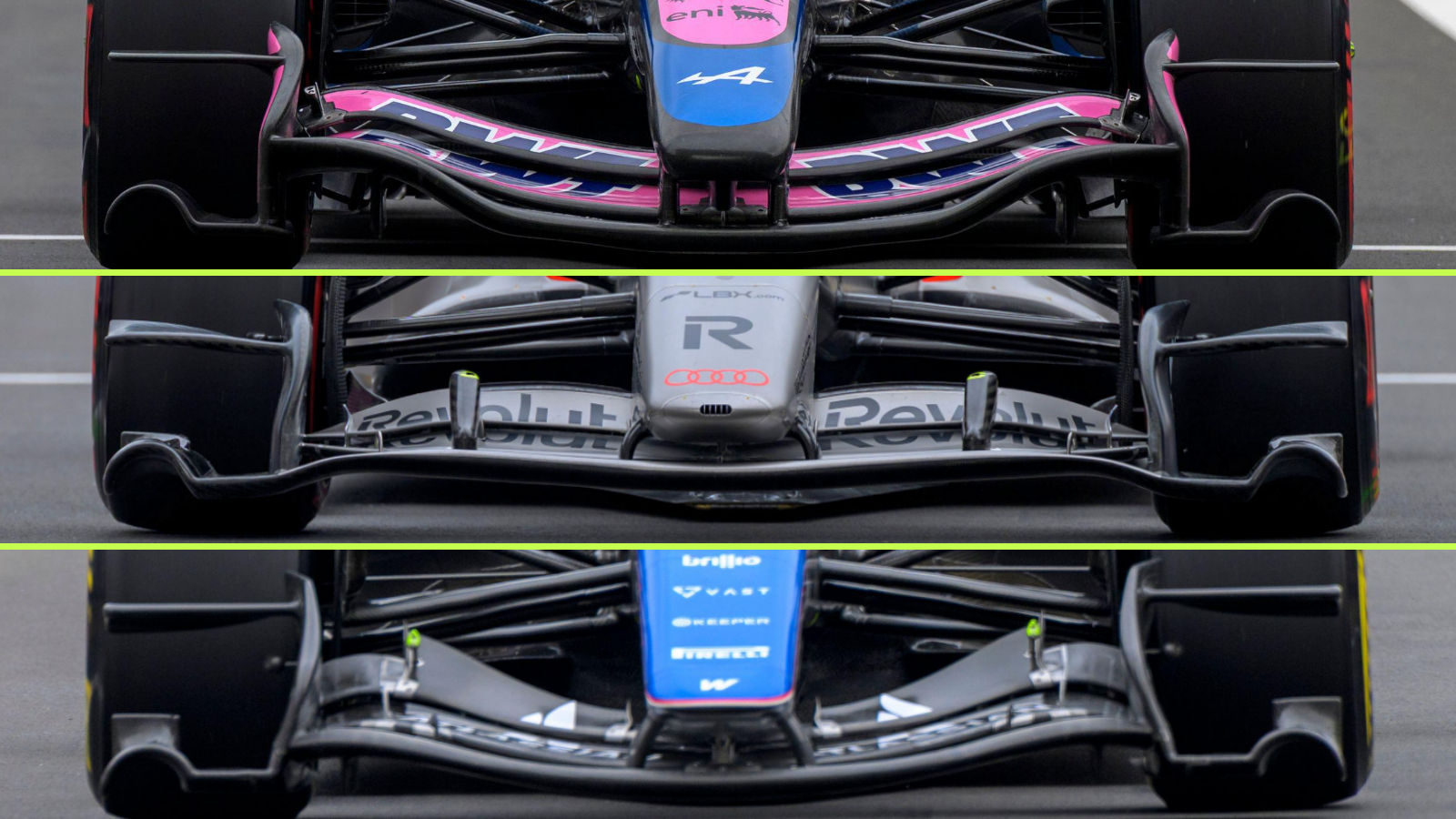
In this trio we have Alpine as the most extreme example of all the teams when it comes to where their mainplane and flaps meet with the endplate.
This not only exposes the strake mounted beneath the front wing but also the furniture attached to the lower part of the front brake fence.
You’ll also note the footplate extends laterally into the inboard side, which will clearly help to spool up a vortex structure too.
Meanwhile, Audi have opted for two front wing adjusters, housed on either side of the wing, rather than the centreline option that most of the field have chosen.
Williams have opted for a wider static section in the outer portion of their flaps, which results in a taller upper element being used for the inner, moveable section.
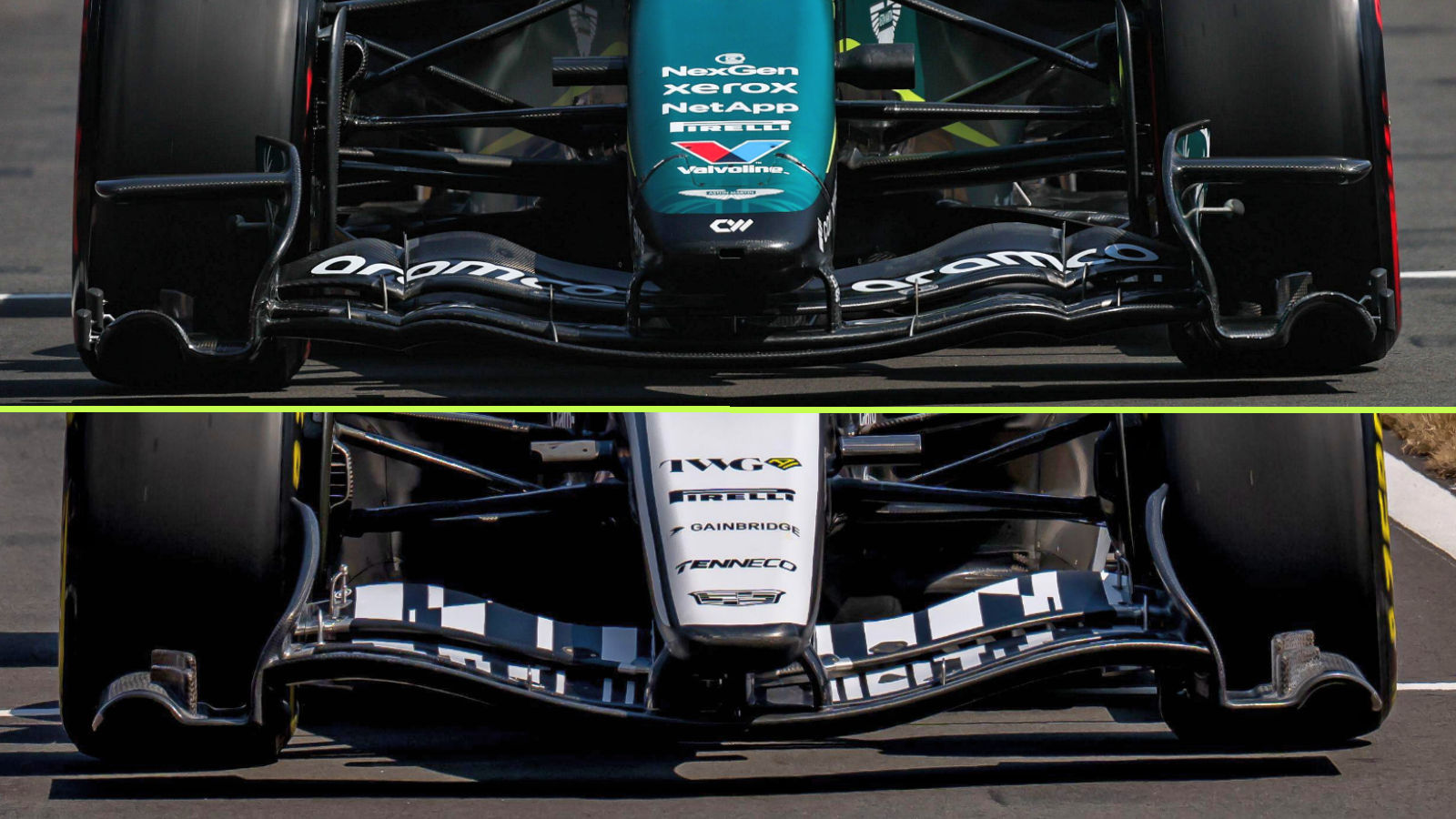
Aston Martin have already introduced a new front wing at the Australian Grand Prix, with the V-shaped flap profile used by the team in 2024 making a comeback.
Cadillac haven’t strayed too far away from what you’d consider a conventional approach for these regulations, with a two vane arrangement on the top of their footplate the most interesting detail of note.
Course correction
We’ve already seen teams make changes to their front wing in the opening couple of races but it’ll be interesting to see how teams gravitate towards ideas that they might have seen their rivals use, as updates will likely be a plenty throughout 2026.
Want to be the first to know exclusive information from the F1 paddock? Join our broadcast channel on WhatsApp to get the scoop on the latest developments from our team of accredited journalists.
You can also subscribe to the PlanetF1 YouTube channel for exclusive features, hear from our paddock journalists with stories from the heart of Formula 1 and much more!
Read next: Cadillac drivers target summer break points as ‘big steps’ expected from upgrades