
FIA makes surprise decision for Japanese Grand Prix as key change emerges


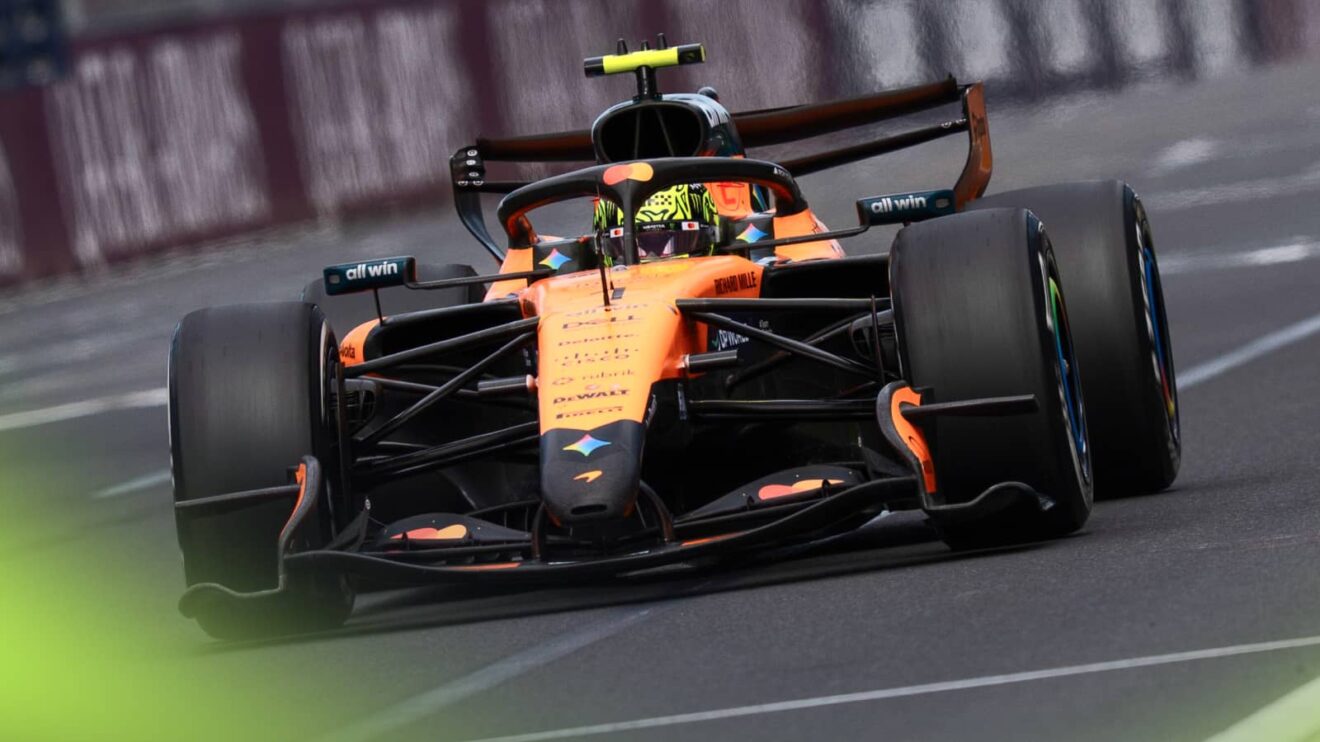
Lando Norris (McLaren MCL40) with active aero open on the main straight in Australia
The FIA has revealed that F1 drivers will be able to activate ‘straight mode’ on the approach to Suzuka’s notorious 130R corner at the Japanese Grand Prix.
A so-called ‘active aero’ system has effectively replaced the previous DRS mechanism for the F1 2026 season.
FIA adds extra active aero zone for Japanese Grand Prix at Suzuka
Want more PlanetF1.com coverage? Add us as a preferred source on Google to your favourites list for news you can trust
Unlike DRS, which applied only to the rear wing, active aero allows drivers to open and close both the front and rear wings to suit different parts of each circuit.
As the name suggests, straight mode is used to enhance speed on the straights by reducing drag. The cars then revert to their natural configuration to maximise downforce levels for the corners.
In previous years, only one DRS zone – located on the main straight – has been made available at the Suzuka circuit.
Go deeper: Matt Somerfield’s F1 2026 tech analysis
F1 2026 front wings: Different design choices under microscope
Explained: How Ferrari pushed F1 2026 regulations with Chinese GP developments
However, the FIA has revealed that an additional straight-mode zone will feature this weekend on the flat-out section between Spoon Curve and 130R.
130R is one of the fearsome turns in Formula 1 following a number of dramatic accidents at the corner over the years.
Toyota driver Allan McNish suffered a huge 69G crash at 130R in 2002 in which his car breached the barrier (below).
As reported by PlanetF1.com last month, meanwhile, Williams junior Luke Browning suffered a similar accident at 130R during a recent Super Formula test with his car landing over the fence.
This weekend will mark the first time since 2012 that a DRS-style mechanism will be available to drivers at that specific section at Suzuka.
Following the introduction of DRS in 2011, drivers were able to use the moveable rear wing at any part of the lap in practice and qualifying.
However, a change was made ahead of the 2013 season to clamp down on the free use of DRS amid concerns that drivers were testing the limits of the overtaking aid, resulting in a series of high-speed spins as they tried to gain laptime over their competitors.
The straight between Spoon and 130R is among the narrowest parts of the Suzuka lap with a limited run-off area on both sides of the circuit.
The section also passes over the exit of Degner 2, making Suzuka the only figure-of-eight circuit on the F1 calendar.
During the DRS era, it was common for DRS zones to be removed by the FIA during a race weekend if safety concerns were raised in drivers’ briefings.
This memorably occurred at the Australian Grand Prix in 2022 when the DRS zone on the high-speed approach to the Turns 9-10 chicane was dropped due to safety reasons.
Despite these previous concerns being aired, a straight-mode zone was in place at Albert Park for F1’s visit to Australia earlier this month.
As reported by PlanetF1.com on Tuesday, slower cornering speeds are expected at 130R and the esses due to the energy requirements of the F1 2026 cars, potentially helping to facilitate the move to add an extra straight-mode zone.
Alpine racing director Dave Greenwood said: “With reduced downforce on the cars, we’ll definitely see lower apex speeds in the opening sequence of corners — the esses from Turn 3 to 7 — and drivers will take them in a lower gear.
“By the start of the second sector, from the first Degner to the hairpin, the cars should be in a much more similar performance window to last year.
“The effect of less downforce will be keenly felt around Spoon.
“Drivers will be grip-limited for longer there, which will make it more challenging. I think we’ll see more variation in the lines taken and it’s critical because of the exit you need onto the next straight.”
“I think we’ll see some variation in speeds through 130R across the teams, as you won’t want to waste energy if you’re scrubbing speed laterally on the tyres.
“I think we’ll see cars harvesting before they reach the Turn 16 chicane. I think we’ll also be much quicker than in previous years out of the hairpin and on the exit of Spoon.”
Want to be the first to know exclusive information from the F1 paddock? Join our broadcast channel on WhatsApp to get the scoop on the latest developments from our team of accredited journalists.
You can also subscribe to the PlanetF1 YouTube channel for exclusive features, hear from our paddock journalists with stories from the heart of Formula 1 and much more!
Read next: Why Jonathan Wheatley walked away from Audi and where he could land next