

F1 2026 race starts: Ferrari in spotlight as Stella makes ‘responsibility’ point
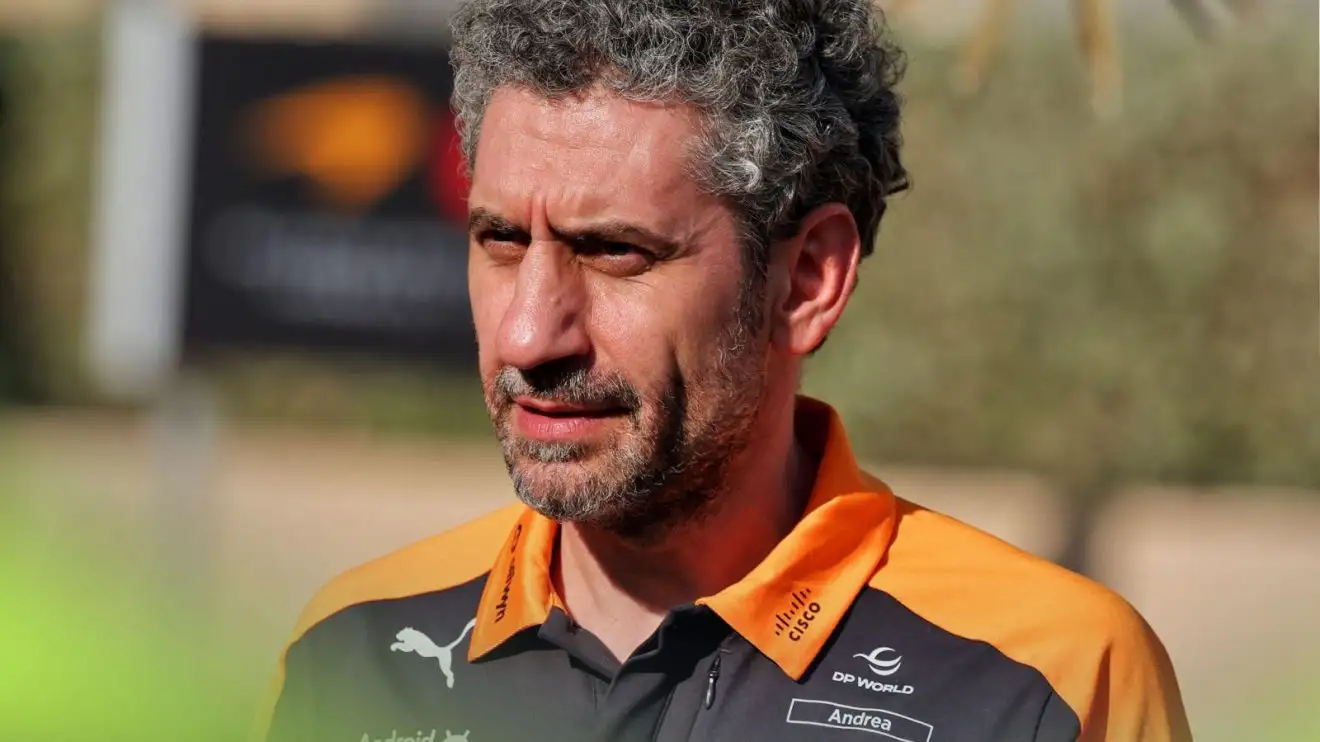
McLaren team principal Andrea Stella
McLaren team principal Andrea Stella raised three points of concern, surrounding race starts and overtaking, which are “imperative” to address before the season-opening Australian Grand Prix.
With safety concerns surrounding race starts generating debate – a topic which has Ferrari in the spotlight amid talk of an edge for the Scuderia on that front – Stella says that this is not about competitive interests, stressing that teams, and governing body the FIA, must “play the game of responsibility” when it comes to making race starts, and overtaking, in F1 2026 safe.
F1 2026 race starts: McLaren boss requests competitive interests parked
Want more PlanetF1.com coverage? Add us as a preferred source on Google to your favourites list for news you can trust.
As teams and drivers get to grips with these new, vastly different Formula 1 cars, it has become apparent that launching them from a standing start has become a lot more difficult.
Since the MGU-H was removed for the new generation of F1 engine, it takes a lot longer for drivers to get their cars into the ideal configuration for a race start.
The MGU-H helped cover up the turbo lag across the lower rev range. Without it, the cars are taking longer to prepare for launch.
McLaren driver Oscar Piastri sounded the alarm in regards to safety implications, claiming that some drivers could have F2-style struggles getting off the line. Such a situation could pose safety risks for those stranded cars, and the ones which do get off the line correctly.
McLaren team principal Andrea Stella is singing from the same hymn sheet.
Mercedes driver George Russell, meanwhile, suggested that Ferrari appears to be able to “run higher gears” and could benefit at race starts.
But, Stella says the topic of safety at race starts goes beyond any competitive considerations.
“When it comes to the race starts, I have three elements that, in terms of racing, I think, deserve quite a lot of attention,” Stella began when speaking with PlanetF1.com and others.
“One is the race start. We need to make sure that the race start procedure allows all cars to have the power unit ready to go, because the grid is not the place in which you want to have cars slow in taking off the grid.
“This is a bigger interest than any competitive interest. So I think all teams and the FIA should play the game of responsibility when it comes to what is needed in terms of race start procedure.
“I’m thinking about the timings, for instance, the timing of the lights, the timing before the lights, they need to be in the right place to make sure that, first of all, that’s a safe phase of the way we go racing.”
For Stella, the safety concerns do not end at race starts.
With the increase of electrical power in these new engines, up to 350 kilowatts, battery management is expected to play a critical role in modern F1 competition, with the boost and overtake modes having come into play.
He continued: “I mentioned three aspects of going racing because I have also identified the overtaking as another point of attention, and the fact that there could be cars that follow another car, and the car ahead may want to lift to harvest, and this may not be an ideal situation when you follow closely.
“And this can give a raise to a situation like we’ve seen before a few times, in the wet in Valencia, [Riccardo] Patrese in Portugal, and there are a few more that definitely we don’t want to see any more in Formula 1.
“So I think starts, overtaking, and the lift off is the three situations that we need to look at with great level of attention, as a Formula 1 community, independently of each of us being a competitor.”
Stella added: “We’re not talking about how fast you are in qualifying. We are not talking about what is your race pace. We are talking about safety on the grid.
“Like I said before, there’s some topics which are simply bigger than the competitive interest. And for me, having safety on the grid, which can be achieved with a simple adjustment, is just a no-brainer. It’s just a bigger interest.”
Latest F1 2026 talking points via PlanetF1.com
Alex Brundle urges FIA to act over F1 2026 start safety fears
‘What’s off limits?’ – F1 warned dangerous precedent risked in compression ratio saga
In addition to his concerns regarding closing speeds, Stella also believes that the art of overtaking is set to become far more difficult, after the experiences of pre-season testing thus far.
The Drag Reduction System [DRS] used previously as an overtaking aid has been retired. The cars do now have moveable rear and front wings, though each car has that change of aero mode available at all times.
Stella does not believe that the electrical power boost, designed as the new overtaking aid, cuts it in current form.
“The second point is the overtaking. I think, unlike in the past, where we had the DRS and the DRS created such an advantage, an advantage from an aerodynamic drag point of view for the following car, this year, when you follow somebody, you have the same drag and the same power, so it becomes quite difficult to overtake.
“Our drivers have been racing with other drivers during these three days of testing in Bahrain and they found it extremely difficult to overtake. The fact that you have an additional amount of energy when you follow and you are within the one second is difficult to exploit, because this extra energy may mean that it’s just a little bit more deployment at the end of the straight, if anything.
“So I think again, as an F1 community, we should look at what can be done to make sure that we have sensible feasibility when it comes to overtaking. Otherwise, we lose one of the fundamental elements of the nature of racing, which is giving drivers the possibility to overtake.
“And then the third one, on which, again, I think there are simple technical solutions that can fix it, is the necessity to lift and cost, because this can give, once again, raise to situations which are dangerous for the car that follows.
“So three simple things, starts, overtaking, and finding measures to avoid the lift and coast. I think simple technical solutions exist, and these will be discussed in the next F1 Commission [meeting].”
While the drivers appear united in finding these cars more challenging to drive with everything which needs to be done, opinions are more split when it comes to how fun they are to drive.
McLaren’s reigning World Champion Lando Norris called these low-downforce machines “a lot of fun” to drive. Russell called them a “step forward”, though found having to take Turn 1 in Bahrain in first gear, to please the turbo, an “annoying” aspect.
Lewis Hamilton and Max Verstappen meanwhile are yet to be won over by the new rules.
Quizzed on Norris’ comments, Stella was asked whether it is in the best interest of the teams, and the sport, to create cars which are fast, but also fun to drive.
“I think what Lando is referring to in terms of the cars being fun to drive, is the fact that the cars are quite a bit slower in the grip-limited section,” said Stella. “In braking, you need to brake earlier, mid-corner action, there’s quite a lot of sliding. So you do have to drive these cars, a lot.
“Last year’s cars, they were very fast, but you could brake very late, go on power, and it was everything much more concentrated.
“This year, everything deserves almost longer and more actions from the drivers.”
Stella would pivot back to his concerns previously mentioned with this new formula.
“When it comes instead to the fact that you may have some driving elements which are necessary to exploit the best out of the power unit, I think we need to be careful that we don’t go too far.
“For me, what I said before, the priorities are the three topics that I mentioned before. I think if we fix the overtaking, I think if we fix the necessity to have this lift and coast, and if we fix the starts, we will have a good compromise in terms of the cars being fun to drive, because these cars slide, but at the same time, racing will be safe, and we would see overtaking, and we will be traditional enough that we are respecting somehow what we are, what we think is the DNA of Formula 1.
“So I think a compromise is possible, and I think that is the job of the F1 Commission that we have next week, to make sure that this is achieved.”
Stella concluded that, to his mind, it is “imperative” that these changes are pushed through in time for the first race in Melbourne.
Want to be the first to know exclusive information from the F1 paddock? Join our broadcast channel on WhatsApp to get the scoop on the latest developments from our team of accredited journalists.
You can also subscribe to the PlanetF1 YouTube channel for exclusive features, hear from our paddock journalists with stories from the heart of Formula 1 and much more!
Read next: Lewis Hamilton’s 22s Ferrari rev sparks fresh start row


