
Stella says F1 2026 battery management will not change development war
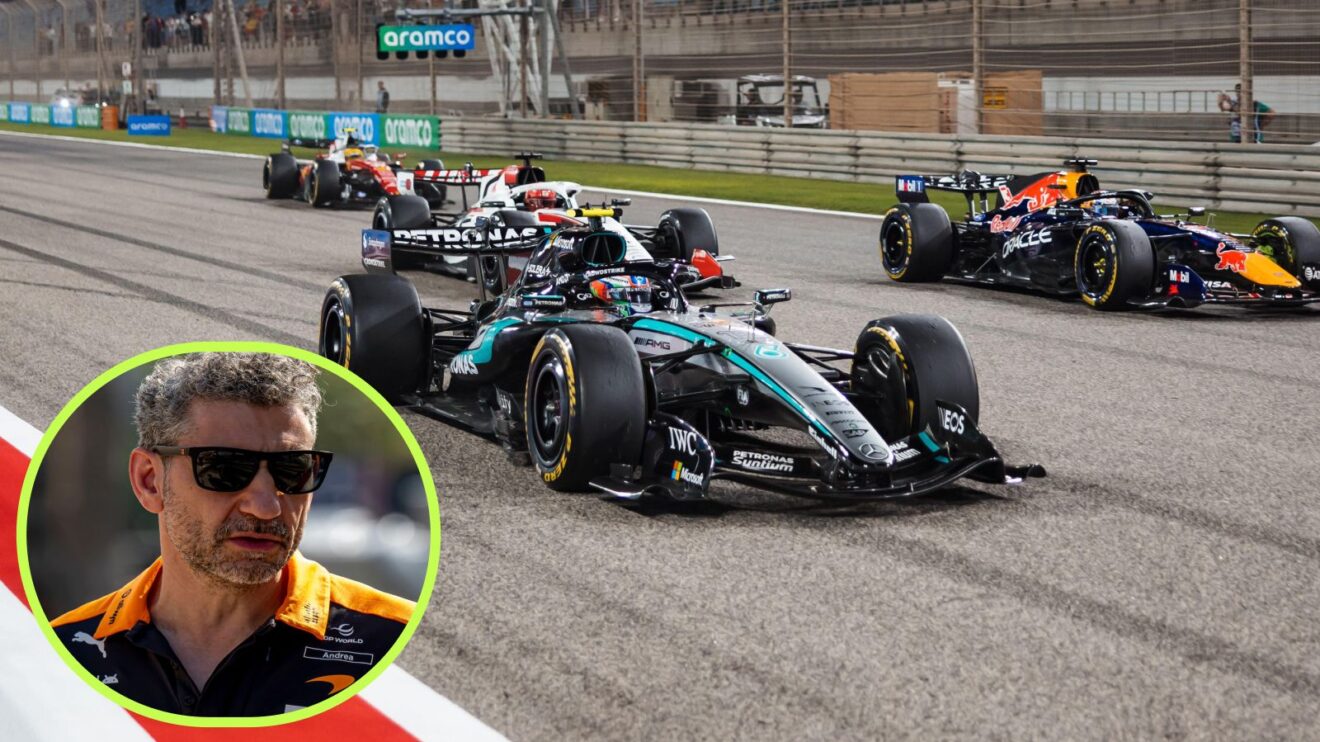
The new cars do not change the F1 development war, says Andrea Stella
The key to success in F1 2026 will look different to what the sport previously knew, with battery management to play a critical role.
However, McLaren principal Andrea Stella said that this will not change how teams look to develop the car. He also called on Formula 1 to ensure that the simplest version of the sport reaches the fans, pointing in particular to the complexity of the power units.
Andrea Stella insists aerodynamic efficiency still key for F1 2026
Want more PlanetF1.com coverage? Add us as a preferred source on Google to your favourites list for news you can trust.
A new-look Formula 1 arrives for 2026. The cars are smaller, lighter, and make use of active aerodynamics on both wings.
New engines feature triple the amount of electrical power, with boost and overtake modes coming into play as part of this major shake-up.
It has become apparent that the drivers will need to do a lot of battery management around a lap. This is going to require lifting and coasting on some straights.
McLaren team principal Stella therefore was asked how this will impact the F1 2026 development war.
This is likely to be a fierce, and critical year of teams battling to improve its car versus the competition. Yet, it begs the question of how teams will look to develop the chassis, when the definition of performance has potentially changed with these new cars.
“At times you have to do some counter intuitive things, from a driving point of view, to maximise the exploitation of the power unit, and therefore achieve the fastest lap time,” Stella confirmed to PlanetF1.com and others.
“Sometimes drivers will have to lift and coast in qualifying before braking, which is not necessarily how they’ve been driving so far in their motorsport career. Or in some high-speed corners, you may want to harvest a bit rather than trying to do the corner flat out.
“However, this doesn’t change much in terms of chassis requirements. You still want to have a chassis that delivers as much downforce as possible, because you still want to go as fast as possible in the corners.
“Save the fact, like I said before, that in some phases you may want to harvest some power, or some energy, such that you can deploy this in the propulsion phase. But this doesn’t change the fact that the fastest car in Melbourne will be the cars that will have the best aerodynamic efficiency.
“If anything, aerodynamic efficiency, considering that we have the straight mode, when we think about drag, the drag in straight mode is a new parameter that becomes extremely important, like it was the drag with DRS on, for instance, in the past.
“But now, this is important in the race as well, because the drag of your car, for most of the lap, will be the drag of your car with the wings open. So this is somehow a new parameter that we have to consider.
“But the fastest car in Melbourne, will be the one that has the best downforce, will be fastest in the corners.”
Latest F1 2026 talking points via PlanetF1.com
The 8 F1 2026 circuits where battery regeneration could be a nightmare
Mid-season power unit fix would be anti-sport but could save F1 2026
Stella believes it is important that Formula 1 offers the “simplest possible version” of the sports to its fans, considering all the performance factors coming into play.
“There’s a power unit that, obviously, it’s competitive from internal combustion engine power, but also, again, sort of a new dimension, it needs to be very competitive from a harvesting and power deployment point of view. So it goes back to the fact that it’s a complex Formula 1.
“I think we will get used to it. We need to make sure that we don’t introduce further elements of complication, because I think what we have talked about so far is enough.
“I think we teams, Formula 1, drivers, we have to make sure that we give the simplest possible version to our fans, because a self-referential Formula 1 is not useful for anybody.
“So in the way we do things, in the way we exploit the technical material, in particular the power unit, and in the way we regulate it, with some adaptations, if they are needed, they should be done, and they should be done in the very short term, in the interest of having good racing, but also in the interest of having simple racing.
“This is an entertainment business. This is not a self-referential technical business.
“So definitely, I would say that there’s work ahead of us in terms of simplifying the technical aspects and also looking at the racing implication, and is a dialog that we are having with the FIA, not only with teams, but also the drivers, with the FIA.”
Want to be the first to know exclusive information from the F1 paddock? Join our broadcast channel on WhatsApp to get the scoop on the latest developments from our team of accredited journalists.
You can also subscribe to the PlanetF1 YouTube channel for exclusive features, hear from our paddock journalists with stories from the heart of Formula 1 and much more!
Read next – Toto Wolff: Mercedes will accept FIA e-vote outcome in F1 2026 compression ratio row