
Pierre Waché plays down Red Bull F1 2026 correlation concerns
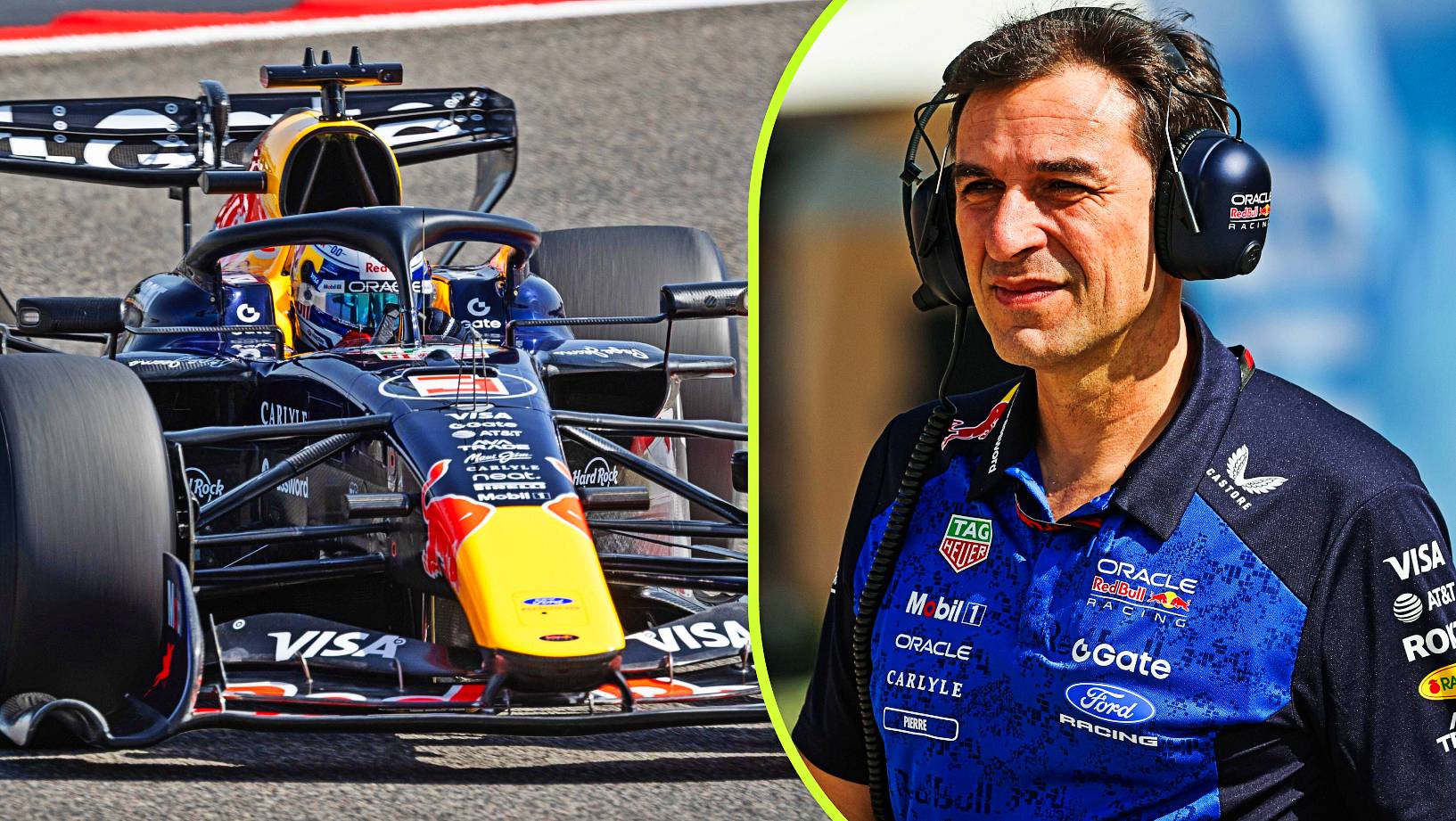
Pierre Waché believes the risk of Red Bull’s correlation issues of recent years is greatly reduced this season, ahead of a state-of-the-art wind tunnel arriving.
Red Bull struggled with correlating the data between its wind tunnel simulations and its real-world findings at points during the ground-effect regulations, but those concerns are less likely to be a factor in F1 2026.
Pierre Waché confident Red Bull will avoid F1 2026 correlation misstep
Want more PlanetF1.com coverage? Add us as a preferred source on Google to your favourites list for news you can trust
The Milton Keynes-based squad particularly encountered issues with correlation in 2024 as the development of the RB20 went in the wrong direction and, for a while, looked as though it could cost Max Verstappen the Drivers’ Championship.
With Red Bull chasing performance to bring to the car, the team was finding that the real-world performance from track-to-track wasn’t matching up with its findings from the wind tunnel.
The complexities of the ground-effect regulations meant these problems could have been costly, but a late floor upgrade at the United States Grand Prix proved decisive in restoring balance and feel to the car, and gave Verstappen the performance boost he needed to see Lando Norris off.
Wind tunnels are perhaps the most important pieces of infrastructure a team can have at its disposal and, after a decade of renting out Toyota’s old facility in Germany, McLaren upgraded to a brand-new tunnel in 2023.
It’s perhaps not a coincidence that correlation issues were not a factor for McLaren as it has introduced successful upgrade after successful upgrade ever since, while Red Bull’s have been less predictable.
Ferrari, too, overhauled its wind tunnel recently, with a 2024 upgrade seeing it move from a metal to a rubber rolling road in order to help with the accuracy of aerodynamic measurements – particularly useful for cars with low ride heights, as the ground-effect cars were.
Like McLaren, correlation was less of an issue for Ferrari than it was for Red Bull or Mercedes with their older tunnels.
Mercedes also had stumbles during the ground-effect era, as its ‘zeropod’ concept had promised much, based on tunnel data, but delivered little at the start of 2022 – a misstep that meant the Brackley-based squad spent the first two seasons of the new rules attempting to catch up.
Wind tunnels are complex laboratories in which teams can explore, in greater detail, their aerodynamics understanding of their cars, progressing ideas from initial CFD designs.
Ensuring the data from the tunnel is accurate to the real world is imperative, as a team not understanding its own data can mean wrong decisions on development routes of upgrades, and introduce undesirable effects in terms of driving dynamics.
Red Bull’s wind tunnel is 30 minutes away from its Milton Keynes headquarters, located in Twinwoods Business Park in Bedford, and dates back to 1947. As former Red Bull CEO and team boss Christian Horner infamously once said, it is a relic of the Cold War, and was also used to help develop the Concorde aircraft during the 1960s.
Asked by PlanetF1.com whether he believes the correlation issues of the last few years could emerge once again in F1 2026, technical director Pierre Waché said the risk is reduced compared to the ground-effect era, with the sport moving back towards more traditional overbody aerodynamics and flat floors.
“The team struggled a lot at the end of the last regulations with correlation, mainly for two aspects,” he said.
“The first one is because the wind tunnel we have is quite old. It’s the oldest in the Formula 1 field.
“The second aspect is, when the regulations arrive at a plateau, what you are trying to find is minimal, and the accuracy requirement is very high, then you can go down the wrong path.
“This year, the regulations are new, and the development path is… the data you can find is bigger and is less risky. That doesn’t mean there is no risk; there’s less risk.”
Data analysis: How F1 2026 cars compare to 2025
F1 2026 vs 2025: Bahrain lap-time data delivers rule change verdict
Bahrain telemetry suggests Red Bull engine edge after Wolff claim
Red Bull has invested in a brand-new, state-of-the-art wind tunnel to be located on campus in Milton Keynes, with Horner revealing last year that this is set to be ready for 2027.
Having spent years preparing for the move into a self-contained facility, Waché said the effort, and the extensive investment, will reduce further the prospect of correlation confusion.
“To reduce the correlation issue, not yet, but quite soon in the future,” the French engineer said.
“The team has invested a lot in the new wind tunnel, and to have the best in the entire field.”
Want to be the first to know exclusive information from the F1 paddock? Join our broadcast channel on WhatsApp to get the scoop on the latest developments from our team of accredited journalists.
You can also subscribe to the PlanetF1 YouTube channel for exclusive features, hear from our paddock journalists with stories from the heart of Formula 1 and much more!
Read Next: Carlos Sainz opens up on private Fernando Alonso chat over 2026 setbacks