

Ferrari and Audi raise concerns as F1 2027 engine talks reach critical stage


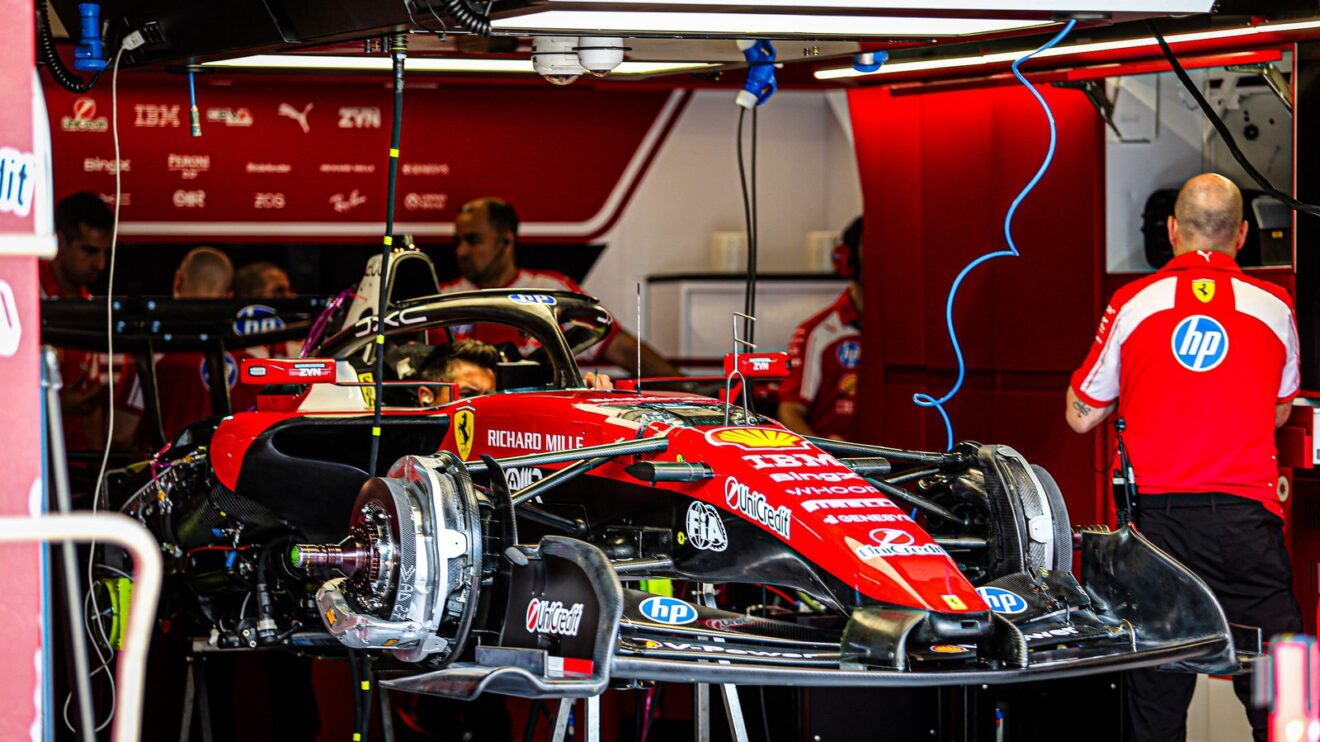
Ferrari and Audi have raised concerns about proposed F1 2027 engine rule changes.
A series of meetings over the Monaco Grand Prix weekend will determine the next proposals to be put before the Power Unit Advisory Committee about the best way to implement F1 2027 engine rule changes.
While an “agreement in principle” has been reached to move away from the current 50/50 power unit split between the internal combustion engine and the electrical ancillaries, the realities of making the change to a 60/40 PU split have not yet been fully defined.
Ferrari and Audi concerns over F1 2027 engine rule changes proposal
Want more PlanetF1.com coverage? Add us as a preferred source on Google to your favourites list for news you can trust.
- Monaco meetings will shape Formula 1’s proposed 60/40 power unit split for 2027.
- Ferrari and Audi are said to have raised concerns over how the changes would be implemented.
- Teams and manufacturers need clarity soon to finalise their 2027 development plans.
This weekend will see power players from the engine manufacturers meet with the FIA to discuss proposals on the table on how best to implement the “agreed in principle” 60/40 power unit split.
In early May, the governing body revealed that, following a meeting with all the power unit manufacturers [PUMs], a general consensus had been reached that the F1 engine regulations should be tweaked to introduce a 60/40 power unit split to favour the internal combustion engine over the electrical output from next season.
Manufacturers divided over proposed changes
PlanetF1.com understands that Mercedes, Red Bull Powertrains, and Honda are open to making the required changes, which will require some engine modifications in light of the revised ratio from a near 50/50 energy split to a 60/40.
Ferrari and Audi are both understood to have concerns.
Ferrari’s relates to the ADUO [Additional Development and Upgrades Opportunities] implementation and how rule changes can be made alongside permitted allowances.
A solution to Ferrari’s concerns is understood to be a separation of the ICE [internal combustion engine] from the electrical ancillaries, with the Scuderia said to be against including the ICE under the ADUO permissions, but in favour of allowing additional development opportunities on the electrical side.
Essentially, the moving goalposts of the proposed rule changes are said to be a critical concern for Ferrari, given the nature of design decisions that were made for the initial F1 2026 regulations and the framework of the ADUO system put in place.
Audi is believed to be amenable to a change to a 60/40 split, but the German manufacturer is keen to stagger this ratio change, with a smaller tweak for ’27 and completing the move for 2028.
This stance is understood to be on the grounds of feasibility, while other sources have suggested that cost is also a key factor.
With Audi having only just arrived in F1 after completing the takeover of the Sauber team, it’s perhaps understandable that it is not keen to add further cost so soon after the initial investment into the R&D to create the current engine.
Critical meetings scheduled for Monaco GP
The intent of the meetings between senior figures from the PUMs and the FIA is to develop a clearer picture of what will be tabled for voting at the next formal meeting of the Power Unit Advisory Committee [PUAC], which, despite the urgency called for by the teams in order to understand what’s happening in 2027, is not yet scheduled to happen before, at the earliest, the Spanish Grand Prix on June 14.
It is only at the PUAC meeting that the critical voting on proposed measures will be cast.
The planned discussions between the FIA and the manufacturers follow an earlier meeting over the Canadian Grand Prix, where it is understood proposed measures to facilitate the introduction of the 60/40 ratio were rejected.
With only six months left in 2026, a supermajority of the manufacturers is required to introduce engine rule changes for F1 2027.
This majority was reached when the proposal was first put forward by the FIA as all parties were in agreement, however, PlanetF1.com understands that there are now at least two manufacturers that have questioned the ease with which the changes can be made.
As reported at the time, the process of turning the initial agreement into hard-and-fast regulation F1 2027 engine rule changes requires some manoeuvring to find a palatable solution for all, given the complexities of introducing a major rule change at short notice for next season.
F1 planning for next-generation engine rules
With the F1 2026 regulations introducing a near 50/50 split between the internal combustion engine [ICE] and the electrical side, the realities of the driving techniques needed have resulted in a tricky start to the new cycle.
It’s led to the FIA President, Mohammed Ben Sulayem, making it clear that a simpler power unit will be introduced for the next rules cycle, starting in 2031, although there is the possibility of introduction in 2030 if there is general agreement across the grid.
Between now and then, the current hybrid V6 will remain, but some tweaks aimed at improving the natural driving dynamics have already been made.
For the Miami Grand Prix, the FIA introduced changes on the grounds of safety by way of allowing for lower energy recovery limits to make lift-and-coast and corner passivity less integral to overall lap time.
The proposals currently being discussed take this a step further with a more fundamental change for F1 2027, increasing the combustion power side by circa 50kW alongside a corresponding 50kW drop on the electrical side.
Technical impact of F1 2027 engine rule changes
This would change the ratio to a 60/40 split and is understood to be possible with relatively minimal hardware changes on the power unit side.
The biggest consideration is the increased fuel flow limit, which would require a bigger fuel tank to complete current Grand Prix distances.
While there are some roadblocks to overcome, it’s understood there is a general consensus of agreement to introduce changes by way of a 60/40 split, but how this is achieved is said to be the critical factor, especially in the time remaining for development this season.
For F1 2027 engine rule changes to succeed, manufacturers must get a clear picture of what is happening soon so they can allocate their remaining test bench hours and budget cap.
On the team’s side, a change to a 60/40 ratio can have chassis carryover implications (for if a team was looking to use its 2026 chassis again next season), as well as components such as the fuel tank and suspension.
With both the PUMs and the teams needing clarity on just how the 60/40 split can become reality, this weekend’s meetings could be decisive in outlining the path forward for F1 2027.
Want to be the first to know exclusive information from the F1 paddock? Join our broadcast channel on WhatsApp to get the scoop on the latest developments from our team of accredited journalists.
You can also subscribe to the PlanetF1 YouTube channel for exclusive features, hear from our paddock journalists with stories from the heart of Formula 1 and much more!
Read Next: Aston Martin issues Adrian Newey update ahead of Monaco Grand Prix