
McLaren team principal proposes major engine changes with F1 2028 deadline


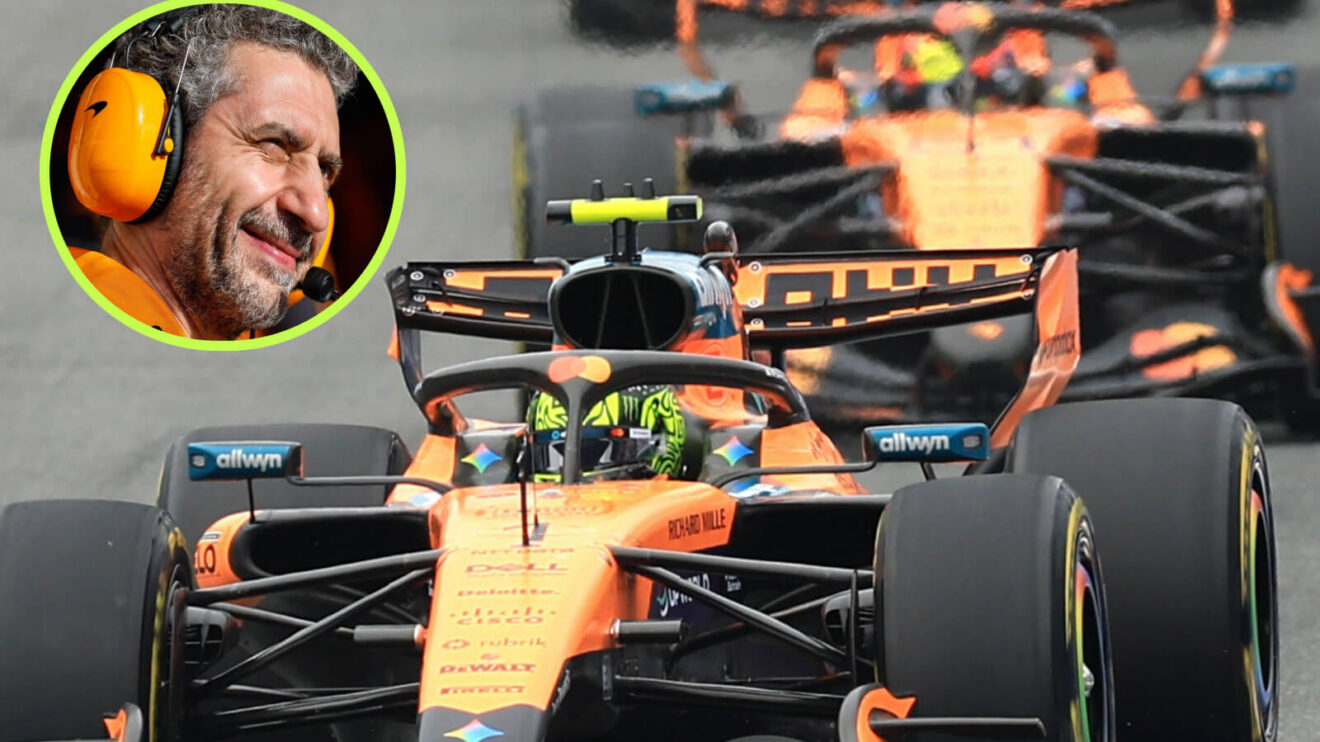
Andrea Stella has called for greater fuel flow and bigger batteries in F1 2028
McLaren team principal Andrea Stella says Formula 1 needs to change the hardware of the engines to maximise the current power unit formula, proposing higher fuel flow and bigger batteries.
He has urged the sport to have the conversation and finalise the details in time for the F1 2028 championship at the latest.
Andrea Stella explains Formula 1’s ongoing power unit concerns
Want more PlanetF1.com coverage? Add us as a preferred source on Google to your favourites list for news you can trust
Last month, Formula 1 announced several tweaks to the energy management regulations, aimed at reducing the need for battery harvesting and super clipping.
For qualifying, the maximum permitted recharge would be reduced from 8 MJ to 7 MJ, which would lessen the need for battery harvesting. In addition, super clips would be increased from 250kW to 350kW in an effort to reduce their duration.
For the grands prix, the maximum power available during boost mode was capped at 150kW, while MGU-K deployment was limited to 250kW in some parts of the lap.
The drivers, almost in one voice, called it a small step in the right direction, but that more needed to be done.
Stella agrees, but concedes it would require changes to the actual hardware of the power unit.
More on the F1 2026 championship
F1 2026: Head-to-head qualifying statistics between teammates
F1 2026: Head-to-head race statistics between teammates
“Hardware adjustments to the power unit in order to improve Formula 1 in general, I personally think are required,” the McLaren team boss told PlanetF1.com and other media in Miami.
“They will have to do realistically with the fuel flow to increase the power from the internal combustion engine.
“I think they might have to do with harvesting more power than the power you actually deploy, because you spend much more time deploying electrical power, rather than harvesting it.
“This can be rebalanced by harvesting to a larger power than we do today. From 350kW, can we go to 400kW, can we go to 450kW? And then I think we just need bigger batteries.”
His proposed changes, though, would take time to implement as first the sport’s powers-that-be would all have to agree – the FIA, FOM, the team principals and the power unit manufacturers – and then the latter would need time to design and test the revised parts.
“If I think about these three requirements from a hardware point of view, and I see things from the perspective of power unit manufacturers,” he continued, “I see this is difficult for 2027 because the implication for the battery size and the implication for coping with the higher fuel flow, they are normally a longer lead time than the time available to go into the 2027 season.
“I would urge that possibly this conversation needs to be finalised, I would say before the summer break to be in time to do it for 2028.
“Definitely, I would hope that that’s the case, because while we have done a good job as an F1 community of looking constantly at improving the exploitation of the engine with what’s available, I think we can extract more out of these regulations, but this will need some hardware tweak.”
Until the hardware changes, whatever they may be, come into effect, Stella says the Formula 1 teams are just going to have to get used to the behaviour of the engines, and the comments that come with it.
“I think because we said that the hardware changes will happen probably ’28, I think we all will have get used to these sort of comments, which include a level of sensitivity to the behaviour of the power unit that we are not used to, probably never in the history of Formula One,” he said.
“But what happens is that today, for instance, with a change of wind, some of our settings started to be affected by the wind, which means the time you spend in a straight, and then you have the tool that wants to optimise the power unit, that starts to chase it, and then you chase the tool, chase the conditions. So it gets pretty tricky in terms of optimisation.
“Everything is so sensitive, so interlaced, if one of these other conditions is realised, then this affects all the rest of the behaviour of the power unit optimisation. So it’s not simply where you deploy your energy, but it’s also how the deployment of your energy is sensitive to some other things that happen.
“So I don’t want to disclose too much here, but I want to give you the sense that it shouldn’t be seen in classical terms of where am I spending my energy? Is much more interlaced between the electrical behaviour and the ICE behaviour itself. Sorry for being cryptic, but that’s what we deal with.”
Want to be the first to know exclusive information from the F1 paddock? Join our broadcast channel on WhatsApp to get the scoop on the latest developments from our team of accredited journalists.
You can also subscribe to the PlanetF1 YouTube channel for exclusive features, hear from our paddock journalists with stories from the heart of Formula 1 and much more!
Read next: McLaren’s ‘sneaky’ trick as Ferrari breaks the ‘number one’ rule – James Hinchcliffe