

Limited live TV coverage for first F1 2026 Bahrain test
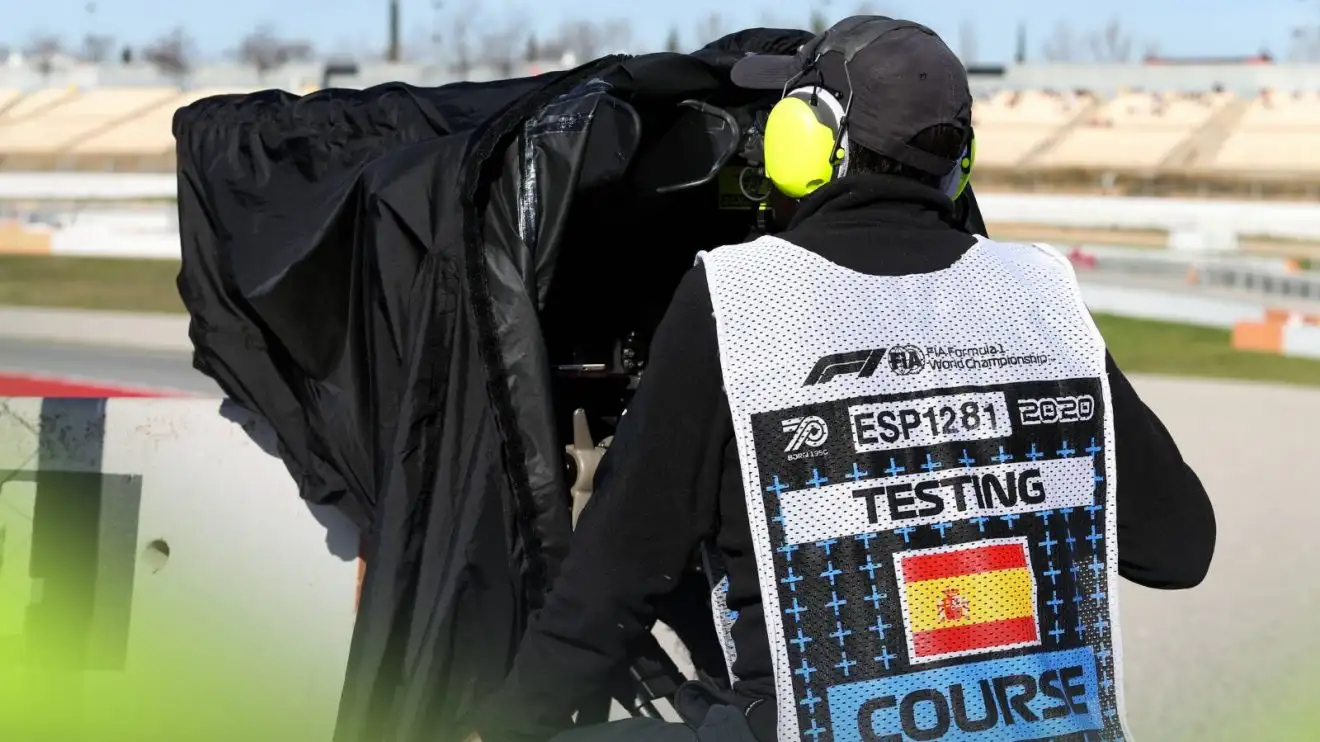
F1 testing coverage will continue to be limited for the first Bahrain test.
Details of the approach to live television coverage of the first test in Bahrain have emerged, with broadcasting of live footage set to be limited.
With the first pre-season test, the Barcelona shakedown, taking place behind closed doors, the limited coverage will continue for the second test, which is the first three-day period in Bahrain.
First Bahrain test to have limited broadcast coverage
The F1 2026 rule changes have resulted in a very different pre-season this year. In stark contrast to a simple three-day outing, which has taken place in Bahrain in recent years, all teams are getting far more preparation mileage in light of the revolutionary new power unit and chassis rules.
The enormity of the engineering challenge in preparing for the new power units, in particular, has resulted in the first test taking place entirely behind closed doors in Barcelona.
The 2026 FIA Sporting Regulations permit a pre-season private collective test, with Article B11.2.7 stating that such an outing, organised between the competitors, the FIA, and the commercial rights holder, must be run over five consecutive days at some point between January 5th and 31st.
This test will be held between January 26th and 30th, with competitors permitted to take part in any three of these five days of operation.
As it is a private collective test, there will be no live broadcast coverage, and media access for journalists and publications is not permitted. Coverage of the test will thus be carried out, on a very limited scale, by the teams across social media, while select on-track footage will be shown via highlights packages for broadcasters in the evenings following the sessions.
In the UK, Sky Sports F1 has confirmed it will show this footage at 9 pm on its TV and YouTube channels.
Following on from that, there are two collective tests in Bahrain in February. These are fully accessible for the media and fans at the circuit and, in recent years, have also been given full broadcast treatment with the likes of Sky F1 in the UK carrying out full coverage throughout the days.
However, this will not be the case this year, PlanetF1.com has learned, with very limited broadcast coverage set to continue for the first test in Bahrain.
With the Barcelona test being used by the commercial rights holder to carry out its own testing of systems, i.e. timing, TV, camera synchronicity, this testing will continue into opening Bahrain test.
While Barcelona will not have any coverage provided by way of live timing or TV footage, the first Bahrain test will have live timing and limited broadcasting.
Precise plans are not yet finalised, but the suggestion is that the final hour of track time will be used, allowing broadcasters to sum up the day’s events as it comes to a close.
It is only at the final test, Bahrain on February 18-20, that full coverage is expected.
More on F1 2026
F1 driver contracts: What is the contract status of every driver on the F1 2026 grid?
F1 2026 driver salaries: Who are the highest-paid drivers on the grid?
Sources have suggested that the increased coverage of testing in recent years has led to higher fan expectations, when the reality is that such outings are intended for exactly what the name suggests: the testing and bedding in of new equipment and systems for the championship.
For F1 2026, the nature and enormity of the regulation changes mean that long periods of inactivity on track are likely, with the teams burrowed away in their garages, working on their cars. The expectation is that periods of time in which there are zero cars on track will be plentiful and lengthy, across both the Barcelona test and the first three days in Bahrain.
It’s only at the final pre-season test, the second Bahrain event, in which the teams are more likely to start hunting for performance in a timeframe that they have become accustomed to in recent years.
With the final pre-season test being given the usual full coverage, the potential for over-saturation of coverage of sessions that are entirely without spectacle or sporting consequence has led to a decision to slowly ramp up the coverage through the pre-season instead of offering full coverage, a move the teams are said to be in favour of.
Read Next: Mercedes confirms lucrative Microsoft sponsorship ahead of W17 launch