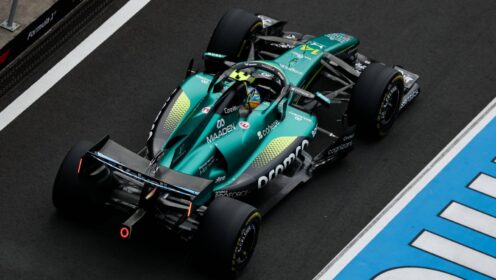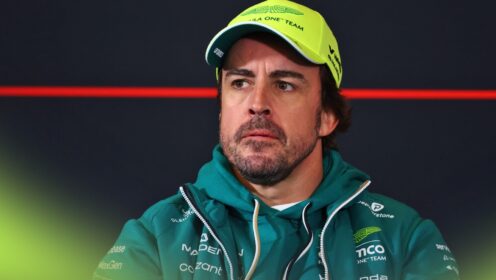

Honda admits to race-ending Fernando Alonso issue in Chinese GP


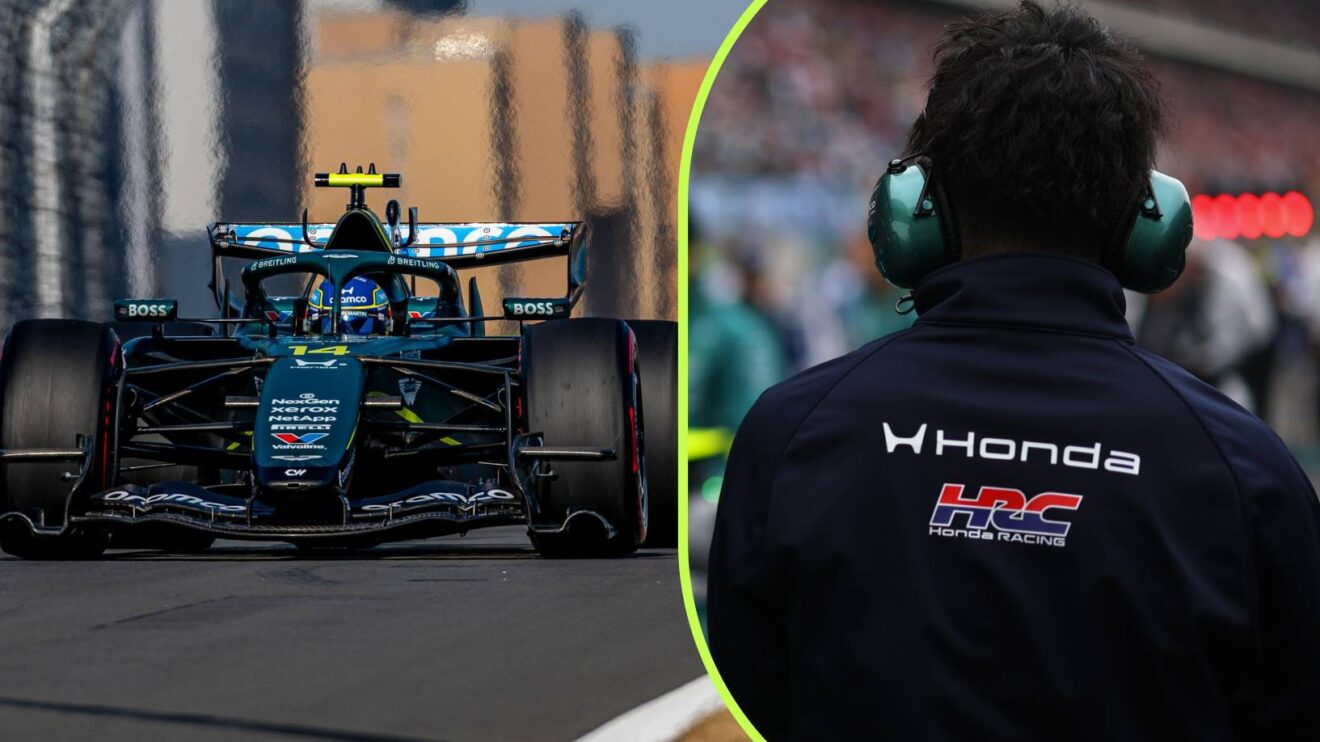
Fernando Alonso was withdrawn from the 2026 Chinese Grand Prix due to his discomfort behind the wheel of the Aston Martin.
Honda failed to achieve its pre-race target of getting both cars to the chequered flag, with Fernando Alonso withdrawing due to discomfort caused by excessive vibrations.
Following an early technical failure on Lance Stroll’s AMR26, Fernando Alonso retired from the Chinese Grand Prix after being unable to overcome any longer the physical discomfort caused by the vibrations of his car.
Fernando Alonso loses feeling due to vibrations in Chinese Grand Prix
Want more PlanetF1.com coverage? Add us as a preferred source on Google to your favourites list for news you can trust.
With Honda continuing to experiment with countermeasures to battle the vibration issues that have plagued reliability in the early stages of F1 2026, the Japanese manufacturer had expressed some hope that a double finish in the Chinese Grand Prix was possible.
But this optimism didn’t last long, as Lance Stroll pulled over on Lap 9 with a suspected battery issue, while Fernando Alonso made it until Lap 35 before he withdrew from the race; Aston Martin confirmed that this was only down to his discomfort behind the wheel due to excessive vibration, rather than being a mechanical constraint.
The vibrations going through the chassis and power unit have been the crux of Aston Martin and Honda’s reliability issues this season, with Adrian Newey’s squad unable to partake at a competitive level as it is yet to establish a baseline of stability from which it can start to chase performance.
The Japanese manufacturer has been working hard to mitigate the vibrations, which have caused problems for the batteries in the energy recovery system, leading to a shortage of parts that forced the team to stop early to conserve parts in the season opener in Australia.
Speaking before that race, Newey had commented on the vibration issues, saying that the drivers risked “nerve damage” if they drove the car for too long. Stroll had suggested a maximum of 15 laps would be tolerable for him in Australia, while Alonso had suggested 25 laps before the discomfort would grow intolerable.
TV footage showed Alonso driving along the straights in China, taking his hands off the wheel to shake them out in an attempt to make it further into the race and allow Honda and Aston Martin to continue data-gathering, having shown little pace in the early stages of the race.
Indeed, on the first lap after the Safety Car restart, Alonso had lost position to five cars, prompting the Spaniard to say “I hope that lap was broadcast”, before laughing in an exasperated fashion.
But that data gathering exercise was called off when the vibrations eventually proved too much for the two-time F1 World Champion, leaving Honda despondent.
“We cannot be satisfied with the double DNF in the Chinese Grand Prix today,” trackside manager and chief engineer Shinato Orihara said.
“However, if we focus on the more favourable areas, we ran more miles than in Melbourne, which is encouraging. We also increased our reliability throughout the Sprint weekend, but this isn’t yet enough to complete the full race distance.
“We have improved the vibrations on the systems side, but it’s still an issue for driver comfort. This is a key area to address as we look ahead to the next race in Japan.
“As for Lance’s DNF, we are currently investigating the root cause, and work will continue with HRC Sakura, together with Aston Martin, to understand what happened on the ninth lap.
“The 2026 regulations are far from simple, as shown by the number of DNFs and DNSs today. We know this isn’t an excuse for our reliability and performance, and we will strive to improve. We have more work ahead of us, and that is our priority right now.”
More on the Australian Grand Prix
Andrea Stella explains rare McLaren double-DNS in Chinese GP
Lando Norris reveals issue behind McLaren DNS disaster in China
While paddock sources have played down the possibility that Aston Martin’s drivers actually risk permanent damage from extended stints in the AMR26, with the suggestion being that such claims are a means of keeping the pressure up on Honda to improve its driveability and reliability, there’s little hiding the fact that excessive vibration is indeed hampering Honda’s progress.
Explaining the extent of his discomfort behind the wheel, Alonso revealed he had started to lose feeling in his extremities.
“It was difficult today. We found more vibrations than in any other session on the weekend. So, physically, I could not continue much longer,” he said.
“I started to lose the feeling of my hands and my feet, so it was not a nice feeling.
“I had fun at the start again, and it seems this is a strong point of our car as we jumped up to P10.
“However, from about lap 2,0 I was struggling with the vibration levels, and we were already one lap down, so in the end we decided to retire the car.
“The vibrations seemed worse today than on any other day of the weekend, so we need to investigate why that was. It’s clear we need more time to fix everything, but we’ll go again in two weeks’ time in Japan.”
Want to be the first to know exclusive information from the F1 paddock? Join our broadcast channel on WhatsApp to get the scoop on the latest developments from our team of accredited journalists.
You can also subscribe to the PlanetF1 YouTube channel for exclusive features, hear from our paddock journalists with stories from the heart of Formula 1 and much more!