
Honda sets Chinese Grand Prix reliability target after Aston Martin double DNF in Australia


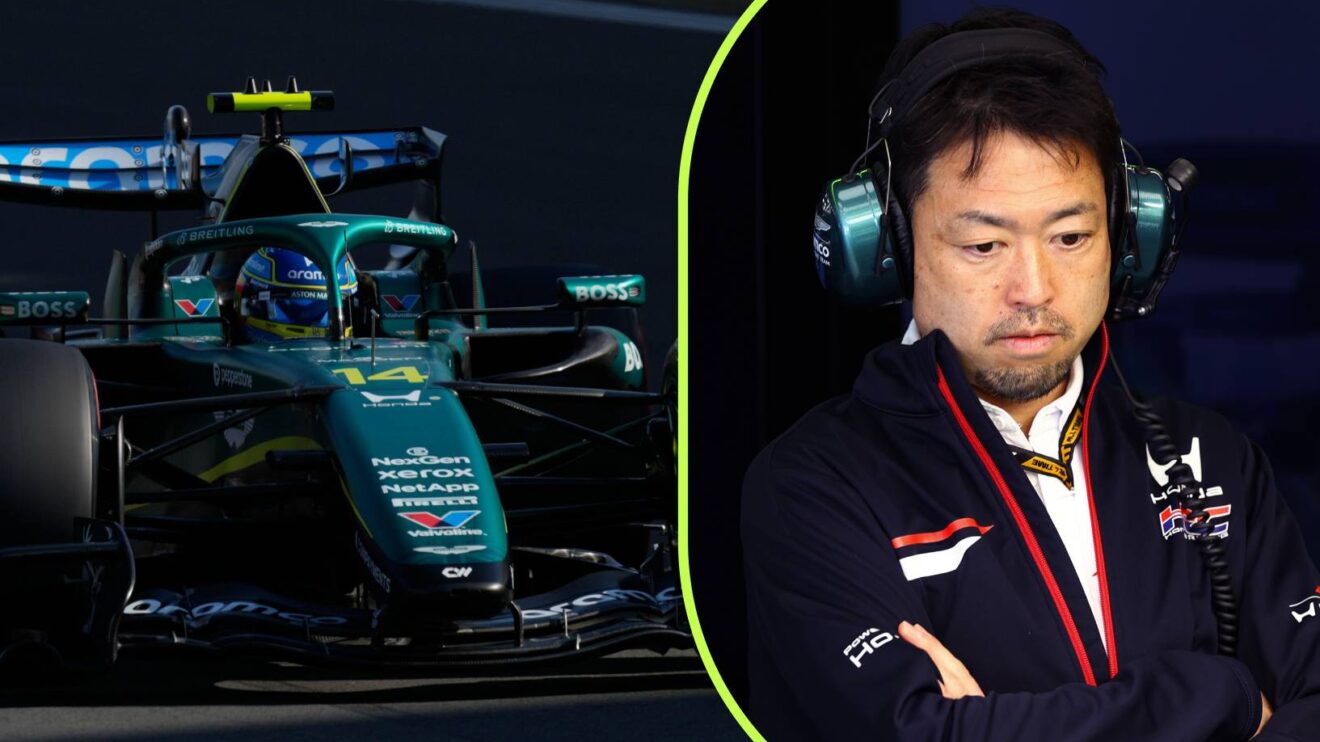
Shintaro Orihara has set a target for Aston Martin to complete the full race distance in Shanghai.
Honda’s countermeasures to improve the reliability of its power units appear to be paying off, and a new target has been set for the Chinese Grand Prix.
Having had a double retirement last week in Australia, Honda is aiming to achieve a full race distance with both Aston Martin cars on Sunday in Shanghai.
Honda targets full race distance with Aston Martin after Australia retirements
Want more PlanetF1.com coverage? Add us as a preferred source on Google to your favourites list for news you can trust.
With reliability issues plaguing Honda at the start of this new regulation cycle, the Japanese manufacturer has had to sacrifice the pursuit of performance with Aston Martin in order to ensure the cars can be kept running on track.
The crux of the matter has been down to excessive battery shake, resulting in severely compromised tests in Barcelona and Bahrain, with the Australian Grand Prix also proving a toil as neither Fernando Alonso nor Lance Stroll could reach the chequered flag.
Unsurprisingly, the Aston Martin cars weren’t competitive in the Chinese Grand Prix qualifying session either, with Alonso taking his AMR26 to 19th, while Stroll managed 21st.
But, with Honda continuing to roll out countermeasures to combat the vibrations and improve reliability, trackside general manager and chief engineer Shintaro Orihara said things are starting to progress in the right direction.
“Yesterday, we had a smooth session in free practice where we could build up mileage and gather a lot of information,” he said.
“That helped us to optimise our data for the Sprint and qualifying today. We also covered the full distance in the Sprint race, which shows that we are heading in the right direction.
“That is a good point for Honda to increase our reliability, and we will keep working hard to continue to improve it. We are seeing good progress.
“As we have mentioned, we introduced new countermeasures to reduce battery vibration in Melbourne, and we ran about 300-400 kilometres in round one. Then we put additional mileage on here in China, so that has built up our confidence a bit.
“For tomorrow, we have another 300 kilometres to run, and our target is to complete the full race distance to confirm that our countermeasures work well. Every single lap is important for Honda and Aston Martin.”
Orihara’s reveal comes after a press conference with himself and Aston Martin’s chief trackside officer Mike Krack on Thursday, during which the two men opted against commenting on the health status of the batteries, or the number of batteries available to the team.
During the session, Orihara confirmed countermeasures to the vibrations in the chassis haven’t yet been applied, with this step planned for when the battery vibration issues have been overcome.
Given it’s just a week since the Australian Grand Prix, the back-to-back nature of the races has meant there’s been little time to concentrate on vastly improving the situation, but Krack said the team has preferred the quick return to the race track as it accelerates learning.
“There are always the two aspects… do you need more time in between, or do you want to accumulate as much as possible, as early as possible?” he said.
“So I think, in this case, I think it’s good. It’s good that we go again, because we have made progress. If we were not having progress since last week, then I think it would have been a bit more difficult to go again here.
“But, yeah, I think we will try to increase the mileage, increase the learning, and from that point of view, the earlier you get it, the better it is.
“You need to be reliable to see where the performance potentials are. But clearly, your development plan, you have to adjust it, because if you do not know what the next step is, then obviously it’s difficult to plan it.
“But I think we need to stay flexible in that, in that regard, and accumulate as much as we can. It was not many laps last weekend, compared to the competitors, but it was very big learning, which is only a small step. But, considering where we were, it was a good step.”
More on the Chinese Grand Prix
What is the grid for the 2026 Chinese Grand Prix?
F1 2026: Head-to-head qualifying statistics between teammates
Fernando Alonso: Reaching the chequered flag is realistic
Having qualified 19th for the Grand Prix after finishing 17th in the Sprint, Alonso was pragmatic about the pace of his car after using three sets of soft tyres during Q1.
Acknowledging that the performance of the car is what he expected, the Spaniard expressed some optimism that he can reach the end of the Chinese Grand Prix.
“I think it is realistic. Both cars, FP1, qualifying, and the sprint have been trouble-free, and reliability has been strong,” he said.
“So there is no sign that tomorrow could be any problem. So yeah, I go into the race thinking that we will see the chequered flag.
“We are not very fast at the moment, so let’s do that thing at least.”
Stroll’s summation of the situation was that he and his side of the garage would “do their best” on race day, but it was evident the Canadian driver wasn’t in a chatty mood when he spoke to the media, although his post-session comments cleared up that he had struggled with understeer and rear-wheel locking that made his car “unpredictable”
Krack explained that, for the drivers, putting a brave face on things at this difficult phase of the season can only go so far when hit with endless questions about how the situation can be improved.
“It’s a difficult situation,” he said.
“Obviously, nobody wants to be in that position, but the drivers are part of the team, just like we are, and we are in this together.
“So we have to try to find ways to work together. And sometimes, it’s more emotional, sometimes it is more constructive.
“You have to understand that… the drivers are in a unique situation, because they have to do what we do all the time.
“After every session, they have to answer questions, and they have to answer questions that are very difficult for them, and often they do not have a solution, or they do not have the right answer to give.
“So I think their frustration levels are understandably a little bit higher, but they’re part of the team. We’re trying to manage the situation together, and there will be better times when your questions will be nicer!”
Want to be the first to know exclusive information from the F1 paddock? Join our broadcast channel on WhatsApp to get the scoop on the latest developments from our team of accredited journalists.
You can also subscribe to the PlanetF1 YouTube channel for exclusive features, hear from our paddock journalists with stories from the heart of Formula 1 and much more!
Read Next: Kimi Antonelli explains ‘risk versus reward’ lesson behind breakthrough Chinese GP pole