
Fernando Alonso was losing feeling in ‘hands and feet’ before Chinese GP retirement


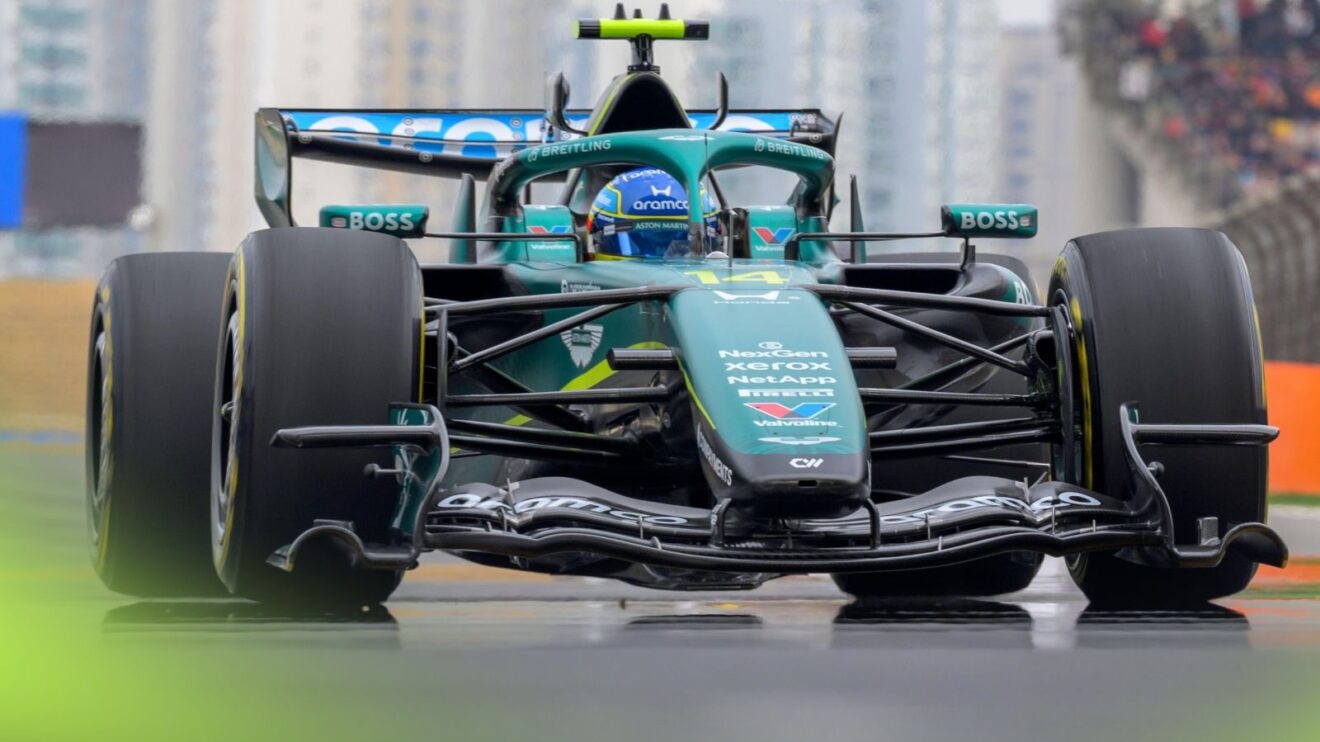
Fernando Alonso driving the Aston Martin AMR26
Fernando Alonso said that he was losing feeling in his hands and feet at one stage due to the Aston Martin AMR26 car vibrations, ahead of his retirement from the Chinese Grand Prix.
Aston Martin’s chief trackside officer Mike Krack confirmed that Alonso did park the car due to the “discomfort” experienced with these vibrations. He also stated that the impact is confined to reliability, rather than also costing Aston Martin major lap time.
Fernando Alonso explains Chinese GP retirement after Aston Martin vibration discomfort
Want more PlanetF1.com coverage? Add us as a preferred source on Google to your favourites list for news you can trust.
These engine vibrations are an issue which Honda detected back in Bahrain testing. The belief was that progress had been made during the season-opening Australia and China double-header, but, the problem has not gone away.
After Lance Stroll’s earlier retirement from the Chinese GP with a suspected battery issue, Alonso retired the second Aston Martin after 33 laps.
Via his onboard camera, Alonso could be seen removing his hands from the steering wheel and shaking them at various points in the lap.
Aston Martin team principal Adrian Newey said ahead of the Australian GP that Alonso and Stroll feared a risk of permanent nerve damage from sustained lapping in the Aston Martin AMR26.
Paddock sources played down the possibility that Aston Martin’s drivers actually risk permanent damage from extended stints in the AMR26. The suggestion was that such claims are a means of keeping the pressure up on Honda to improve its driveability and reliability.
“I could not probably finish the race anyway. Vibrations levels were very high today,” Alonso told the media following his China DNF.
“At one point, from Lap 20 to 35 [sic], I was struggling a little bit to feel my hands and my feet.
“And we were one lap behind, we were last, and it was probably no point to keep on going.
“It was worse today than any other session in the weekend, to be honest. For whatever reason, I don’t know.
“I mean, some of the steps we did were achieved artificially. Just lowering the RPM of the engine and things like that, so everything vibrates less.
“But in the race, obviously, you still need to go higher in some of the RPM when you make an overtake move, so when you have to recharge, or something like that. Over time, it’s more difficult. It’s more demanding.”
More on Aston Martin from PlanetF1.com
Brutal Aston Martin vibrations prove too much for Fernando Alonso in Chinese GP
Honda admits to race-ending Fernando Alonso issue in Chinese GP
Honda had, ahead of the China race weekend, targeted a solution to these vibrations in time for its home race, the Japanese Grand Prix.
Alonso believes that it is important to give Honda time to come up with a fix.
“From Australia to China, we only had five days. The engine was exactly the same as in Australia,” Alonso points out.
“Now we have two weeks, so we need more time in the dyno. We need to give Honda more time to understand the vibrations and where they come from.
“Probably we’ve fixed the battery isolation, even though I think Lance had the problems also today. So I don’t know exactly what was the problem.
“All in all, we need to give Honda more time.”
Krack confirmed that Alonso retired from the race due to “discomfort” from the vibrations, after completing 33 laps of the Chinese Grand Prix.
“Which we have never done in a row,” Krack continued. “So I think it’s a new learning.
“Over the weekend, I think we did 19 in the Sprint. And obviously in between you always have breaks.
“I think he also said that if he fights for the win, it is possible to drive. We were not in a very strong position at that point, so it was a decision that was quite easy to make.”
Krack was asked for a timeline on how quickly Aston Martin and Honda can get on top of these vibration gremlins.
“I think that is difficult,” he responded. “Obviously, everybody’s flat out working on that.
“If we go 10 days back, we were speaking about six laps, and then we found solutions to the problem, especially for the most exposed point, which was the battery at that point.
“So I think, as I said, when you go 10 days back, and you see we have done all the sessions, so there has been progress.
“It’s obviously not a performance progress. We need to be honest with ourselves.
“But we have now a couple of days more to work on that, and I’m quite sure that we will come up with further improvement.
“Now, to give you a final timeline on when, it’s very difficult to say.”
Ahead of Melbourne, Newey claimed that Aston Martin’s AMR26 chassis was the “fifth-best” on the grid.
According to Krack, these vibrations are not a source of extreme lap time loss for the team.
“I think that the vibrations are mainly affecting reliability so far.
“We obviously need to cut down in several areas, but it is not something that is costing us seconds.
“You go maybe a bit more conservative on certain settings, but it is not something that is costing you a huge amount of performance.”
Aston Martin and Honda now has a precious time window to work on the package, ahead of the Japanese Grand Prix race weekend which gets underway on 27 March.
Want to be the first to know exclusive information from the F1 paddock? Join our broadcast channel on WhatsApp to get the scoop on the latest developments from our team of accredited journalists.
You can also subscribe to the PlanetF1 YouTube channel for exclusive features, hear from our paddock journalists with stories from the heart of Formula 1 and much more!
Read next – Chinese GP conclusions: Verstappen sabbatical fear, mixed Hamilton feelings, McLaren Powertrains