
Ferrari identifies ‘pure power’ deficit as deployment theory dismissed


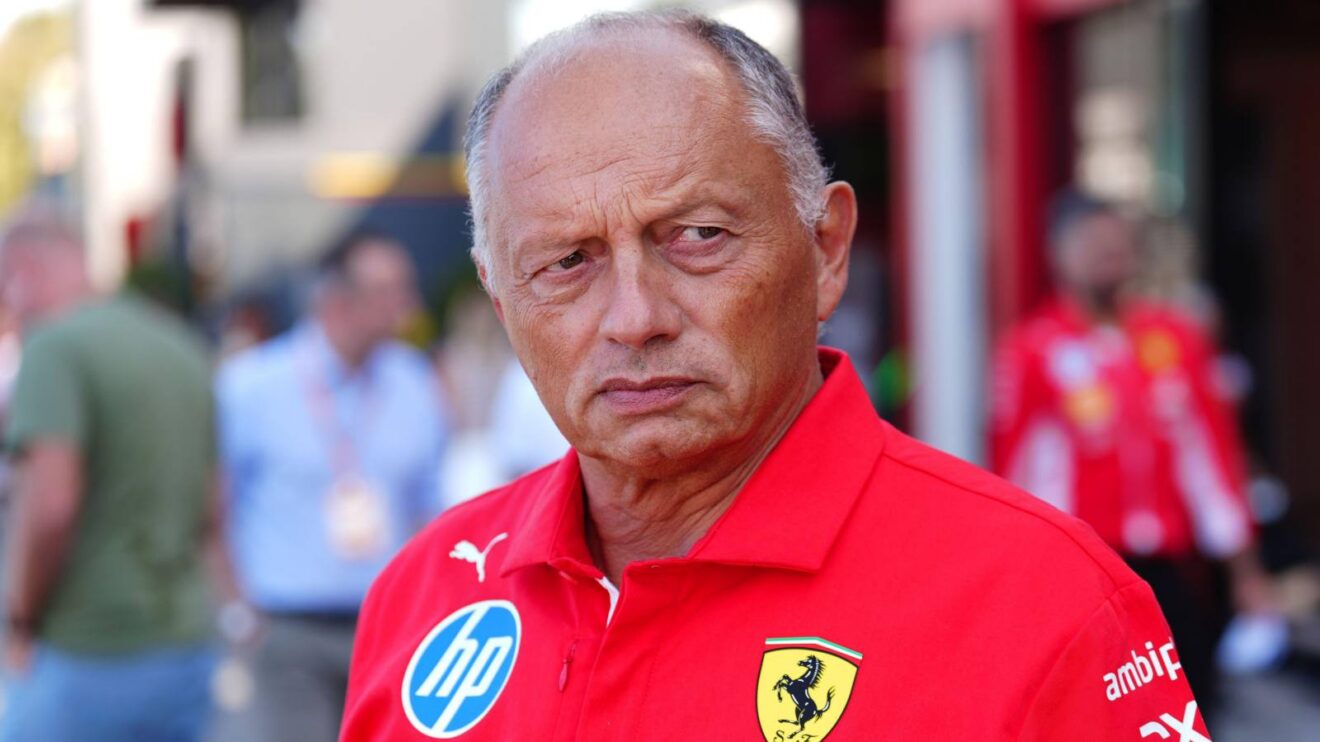
Ferrari boss Fred Vasseur has addressed the team's power unit deficit.
Ferrari’s Monza power unit upgrade has not solved its biggest problem, according to Fred Vasseur – and it is not energy deployment.
Rather, a “lack of pure power” is what is holding the team’s power unit back compared to its rivals, with power having long been cited as a factor behind the Scuderia’s deficit this season.
Ferrari lacking ‘pure power’ as Vasseur dismisses deployment debate
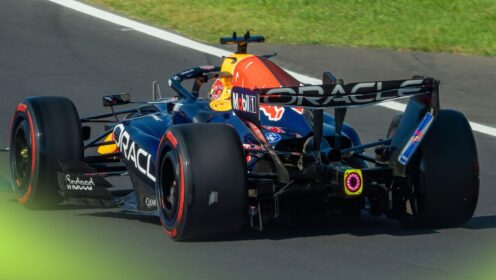
Ferrari introduced a power unit update at Monza last time out under the Additional Development and Upgrade Opportunities [ADUO] scheme available to power unit manufacturers, with Red Bull’s power unit having been named the benchmark internal combustion engine so far this season.
Mercedes had been regarded by rivals as being able to make the most of its energy deployment through a lap, with just shy of half a current engine’s power coming from electrical elements, and driving style adjustments having resulted from this.
Rather than not being able to make better use of its own deployment, however, Vasseur explained the Ferrari unit does not have the same power to fight in the first place.
“I don’t want to give details, but when you have a lack of pure power, then you start to play with deployment to try to compensate in one straight line,” Vasseur told PlanetF1.com and accredited media.
“If you deploy more somewhere, for sure you will deploy less somewhere else, and then you are going in the wrong spiral to try to play with this when you are fighting.
“Honestly, it’s not about deployment. I think deployment was good. Even McLaren, they were playing a little bit Friday and Saturday morning. At the end, we are missing pure power.”
More about the FIA and ADUO
FIA announces ADUO recipients as current engine benchmark confirmed
Explained: F1’s complex power unit upgrade system
ADUO has been added to Formula 1 with the aim of keeping power unit manufacturers within range of one another on track, offering the chance for the chasing pack to bring upgrades.
Unlike standard car updates, however, Vasseur added that a power unit upgrade does not come as easily – or as quickly – as the aerodynamic upgrades more visibly seen on track.
“The process of the engine is mega long,” he said.
“It’s not the chassis, [on the] chassis you can make an upgrade from one day to the other, and on the engine, the process is mega long because the lead time of the part is long and the cost cap is not easy.
“You have to produce the engine for the season, and if you want to start to do the development, you have to produce a new batch of engines.
“We were not expecting to recover [with] ADUO 1 or ADUO 2. We are doing small steps, but what you have to keep in mind is that…even if you make a couple of horsepower, it’s a good step on the grid.
“Now that have a new engine next year, and ADUO 1 in 2027, and ADUO 2, for sure, the target is to catch up as soon as possible, but I was not expecting that within two months we will recover the delta with Mercedes.”
Additional reporting by Thomas Maher
Want to be the first to know exclusive information from the F1 paddock? Join our broadcast channel on WhatsApp to get the scoop on the latest developments from our team of accredited journalists.
You can also subscribe to the PlanetF1 YouTube channel for exclusive features, hear from our paddock journalists with stories from the heart of Formula 1 and much more!
Read next: Kimi Raikkonen’s son officially joins Red Bull programme