

What are those flashing mirror lights on F1 2026 cars? FIA explains
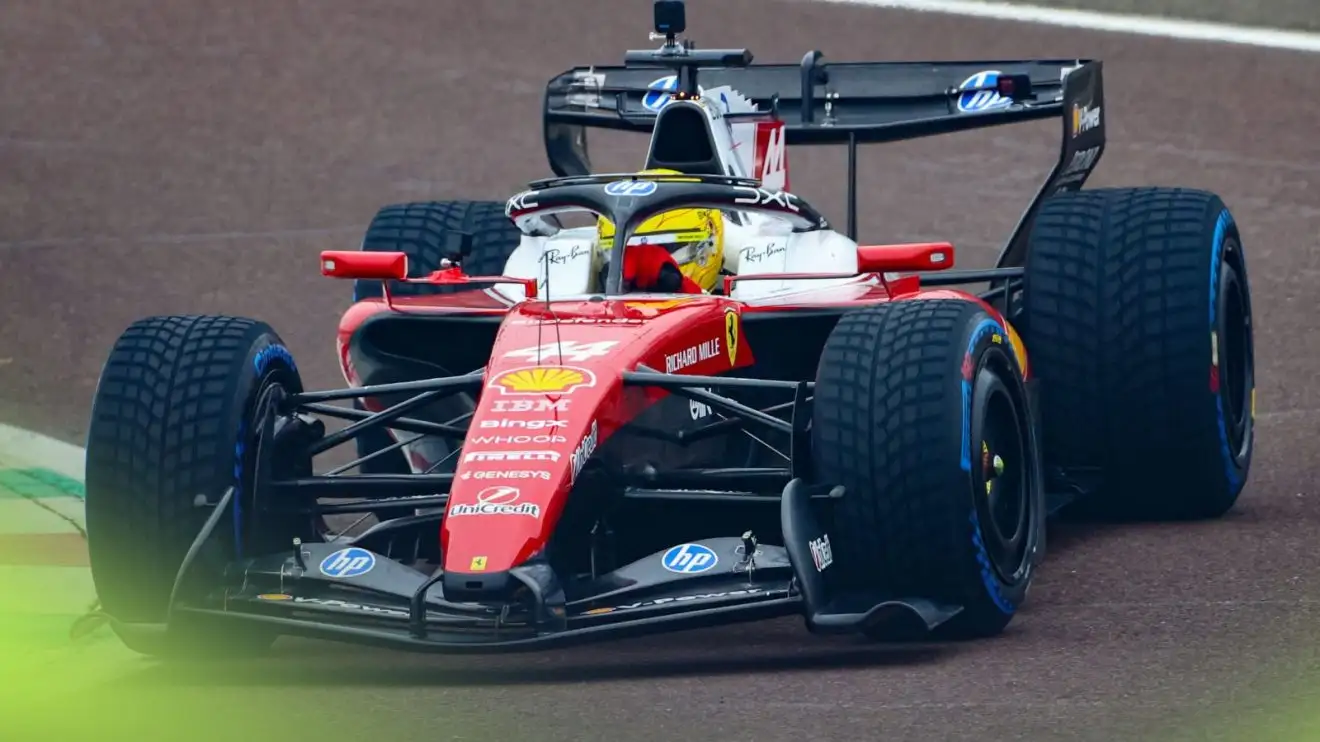
Lewis Hamilton driving the Ferrari SF-26 at Fiorano
The F1 2026 running is unofficially underway in Barcelona, and from the limited pictures and footage to emerge, the wing mirrors have caught the eye.
As part of sweeping changes to the regulations for F1 2026, one of the additions which has received less coverage is that of the flashing safety lights which have been added to the wing mirrors. The FIA’s Nikolas Tombazis explained how these lights are intended to improve safety in wet-weather competition.
FIA introduce F1 side safety lights
Want more PlanetF1.com coverage? Add us as a preferred source on Google to your favourites list for news you can trust.
The Circuit de Barcelona-Catalunya is hosting a five-day shakedown run between 26-30 January. Teams are permitted to run on three of those five days, with this shakedown closed to the media and public.
That has not completely stopped updates emerging from unofficial sources, while the teams have also been posting limited content. Something which has alerted fans is the flashing yellow lights which have appeared on the back of the wing mirrors.
The FIA’s single seater director Nikolas Tombazis has explained that these lights are part of the next step in F1 safety advancements.
Article 14.3.3 of the Technical Regulations governs the addition of these side lights, one required on each side of the car.
Detailing the host of safety-related changes for F1 2026, Tombazis began: “We are making the roll hoop quite a lot stronger.
“The side impact is going to be tougher. The front nose is designed to withstand lateral impacts without falling off, and all the impact structures have become tougher and more strict.
“Another little feature is we have added lights on the side of the car. That is to counter a situation in the wet when there’s poor visibility. If a car is spinning and is in a lateral position onto ongoing traffic, these lights will help the ongoing car see the spinning car, and therefore, obviously, hopefully avoid it.
“So these structures and safety measures are one more sign that safety is always a priority for the FIA.”
Latest F1 2026 updates from PlanetF1.com
Isack Hadjar gives positive engine report during Red Bull first day of testing
Why Ferrari boss Fred Vasseur says Melbourne won’t decide F1 2026 title
The regulatory overhaul for F1 2026 is widely regarded as one of the biggest year-on-year shake-ups in F1 history, if not the biggest.
Smaller, lighter cars, which will make use of active aerodynamics, will be powered by 50-50 electric and biofuel engines.
“We hope this will be a major step for Formula 1, and give the fans something to talk about,” Tombazis added.
“We’ve discussed nimbler, lighter cars, designed to promote exciting racing, close racing to each other, while maintaining the overall aesthetics.
“At the same time, we’ve done a huge step towards sustainability, and another big, important step towards safety.
“The biggest change in the regulations in Formula 1 history, changing the power unit regulations, and the chassis regulations, at the same time. All of that is really giving us good hope to look forward to an exciting season and an exciting few years in Formula 1.”
Want to be the first to know exclusive information from the F1 paddock? Join our broadcast channel on WhatsApp to get the scoop on the latest developments from our team of accredited journalists.
You can also subscribe to the PlanetF1 YouTube channel for exclusive features, hear from our paddock journalists with stories from the heart of Formula 1 and much more!
Read next: How Ford is shaping Red Bull 2026 F1 power unit programme