
Red Bull and Ferrari singled out for early reliability strides in Barcelona
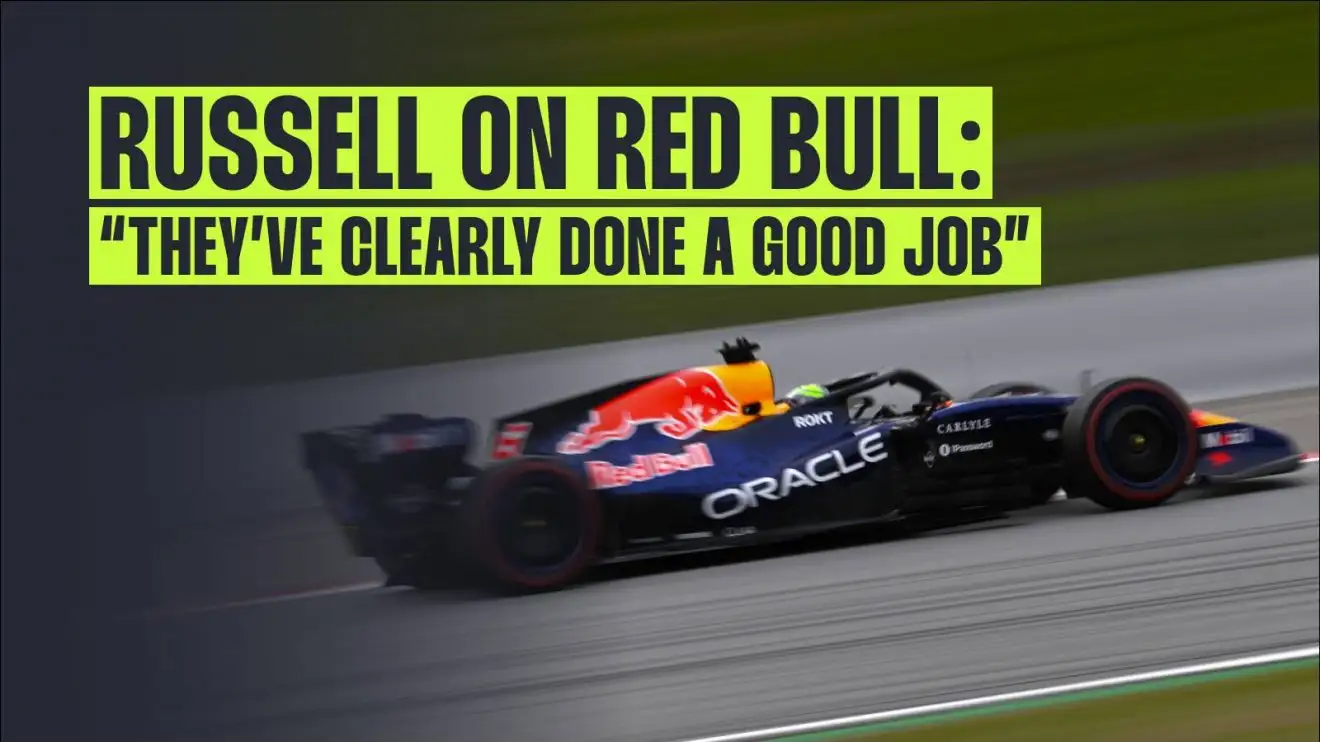
Red Bull immediately showing good reliability caught George Russell's eye on Monday.
Red Bull’s and Ferrari’s brand-new power units were singled out for praise by George Russell after the first day of testing in Barcelona.
Day one at the Circuit de Barcelona-Catalunya finished with Red Bull’s RBPT-powered RB22 at the top of the times.
George Russell: Red Bull mileage shows they’ve ‘done a good job’
Want more PlanetF1.com coverage? Add us as a preferred source on Google to your favourites list for news you can trust.
Driven by Isack Hadjar, the RB22 finished at the top of the unofficial timing screens on day one in Barcelona, as the brand-new 2026 F1 cars took to the track for the first time.
With seven of the 11 teams using up one of their three permitted days on the first of the five-day event, Mercedes opted to split its running between George Russell and Kimi Antonelli.
Russell, driving in the afternoon, finished second in the times, with Antonelli’s morning best netting him fourth place. Russell’s best time was just over half a second down on the best time, set by Hadjar, but it was the mileage racked up by Red Bull that caught Russell’s eye.
“We are pleased with our day, but I’ve also been impressed by several other teams, too,” he said in Mercedes post-running debrief.
“The Red Bull power unit has completed a lot of laps, which, given that it’s their first engine they’ve built, means they’ve clearly done a good job.”
Red Bull rolls out its first power unit this year after four years of building up its new Red Bull Powertrains [RBPT] department, a project initially set up and overseen by former CEO and team boss Christian Horner, with Laurent Mekies succeeding Horner in the roles following the split between Horner and Red Bull last summer.
It’s been a four-year trek to get to the point of becoming a fully autonomous constructor, a move done specifically for the new F1 regulations, and such mileage at the first time of asking in a car that had otherwise not completed a shakedown impressed Russell.
But Haas’ benchmark of 154 laps equally caught his eye.
“Haas also managed a similar amount of running to ourselves, so the Ferrari power unit has also put together plenty of mileage,” he said.
“It’s not quite how it was in 2014! The sport has evolved so much since then, and the level, in every single aspect, is so high now.”
On that occasion, the last time the engine rules changed, Mercedes High-Performance Powertrains dominated with the first iteration of the hybrid V6 power units, both in terms of reliability and performance. The Brixworth-based manufacturer, according to paddock whispers, is the favourite to hit the ground running with the engine to beat for the new regulations, although these rumours are speculative.
While Mercedes didn’t nab the quickest time on this occasion, the power unit powering the W17 did reach 149 laps between the two drivers, and Mercedes’ head of trackside engineering, Andrew Shovlin, said the team was happy with the progress made on the first day.
“The main thing we are looking for in the early running of any new car is to make sure we can get plenty of laps in,” he said.
“That enables us to get into the learning of our programme in subsequent days. Today was all about understanding the car, therefore, making sure it stabilised at the correct temperatures, and ensuring we could do our long runs. It is positive that we were able to achieve that.
“It has been a monumental project to get this car read,y both on the chassis and power unit side; at Brixworth, they have been working on this for years.
“We don’t know where we stand in terms of performance, but we’ve proved we are able to keep the car out on the track, and that isa testament to the hard work of everyone at both our factories.”
More on F1 testing
Valtteri Bottas identifies key Cadillac priority with revolutionary new F1 cars
Aston Martin confirms late start to F1 2026 testing as Barcelona plans announced
As for Antonelli, who is entering his second year in the sport, he was pleased with the initial feel of the W17 as he put in 56 laps and the fourth-quickest time during his morning appearance.
“It was nice to be back in the car this morning and, more importantly, we’ve had a productive first day here in Barcelona,” he said.
“There is lots for us to learn with these new machines, so it’s important that we complete as much mileage as we can and build our knowledge.
“The team at Brackley and Brixworth has done a great job to get us to this position, developing and building a car that has been able to complete over 150 laps on its first proper day of running.
“It is early days, though. There will be things we discover in the coming days that we can improve, but that is the point of testing. For now, though, the package overall feels good, and we will look to build on this start over the following two days of running we’re allowed here in Barcelona.”
The F1 2026 regulations mean the drivers are having to learn a new driving dynamic after four years with ground-effect generated downforce, but Russell said he doesn’t expect it to be too steep a learning curve.
“They are quite different for us as drivers but, once you get your head around it, driving them is quite intuitive,” he said.
“It’s enjoyable being behind the wheel, and I think there’s a lot for fans to look forward to with these new regulations.”
Want to be the first to know exclusive information from the F1 paddock? Join our broadcast channel on WhatsApp to get the scoop on the latest developments from our team of accredited journalists.
You can also subscribe to the PlanetF1 YouTube channel for exclusive features, hear from our paddock journalists with stories from the heart of Formula 1 and much more!
Read Next: Valtteri Bottas identifies key Cadillac priority with revolutionary new F1 cars