

Honda reveals reason for double Aston Martin retirement in Mexico
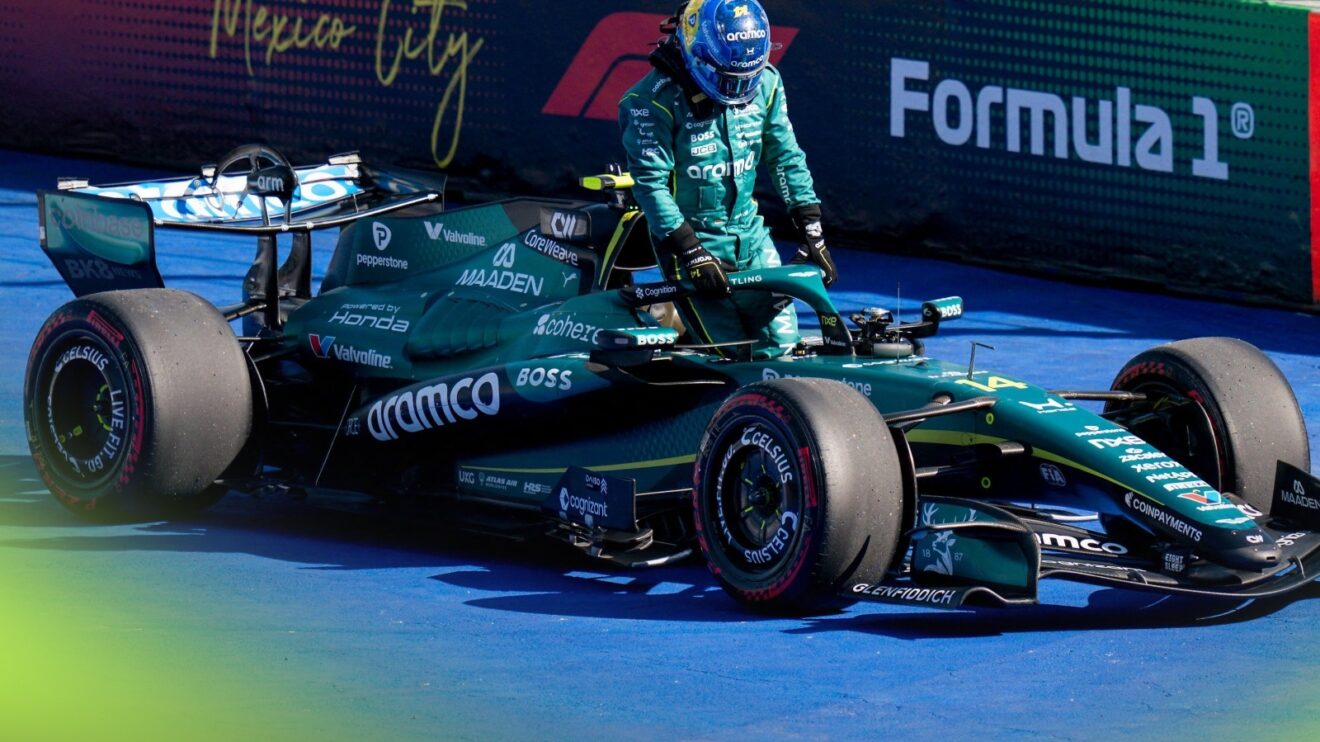
Honda has revealed that an oversight of the cooling demands required to cope with racing on a high-altitude track triggered Aston Martin’s double retirement in Mexico.
Aston Martin’s debut campaign with Honda in 2027 has proven to be an unmitigated disaster, with the collaboration delivering a meagre seven points in 17 rounds to date.
Honda takes blame for latest Aston Martin setback
The Silverstone-based squad appeared primed to have a more competitive showing in Mexico last weekend, as Fernando Alonso placed no lower than 14th through practice.
However, Alonso’s participation in qualifying was brought to a premature end when a suspected water pressure problem linked to the ERS system arose on his Honda power unit in the opening session, putting him out in Q1 along with teammate Lance Stroll.
Alonso would not accrue much more mileage in the race, as both Aston Martin cars were forced to retire five laps in due to “abnormal pressure levels in the PU systems”.
Honda’s Chief Engineer and Trackside General Manager, Shintaro Orihara, explained that the Japanese marque underestimated the unique demands attached to racing at the Autodromo Hermanos Rodriguez, a venue situated 2240 metres above sea level.
“We knew that with the special high-altitude circumstance of Mexico City, we would face some additional challenges compared to other racetracks for the cooling,” he said.
“However, we found that our ERS cooling circuit was under heavier stress than anticipated, and this is why we had to stop the car in different sessions.”
More from the Mexican GP on PlanetF1.com
Orihara stated that no anomalies had been spotted in the data throughout the three practice sessions that could have alerted Honda to the gremlin that emerged later on.
“Despite completing a series of laps during the practice sessions, the issue occurred [in the race] and during qualifying,” he added.
Orihara has vowed that the lessons from Honda’s latest setback will be incorporated into the redesigned power unit that the manufacturer plans to introduce next season.
“At each race this year, we need to learn for 2027, even the hard lessons,” he insisted.
“We have a lot of data that we can bring back to this circuit next year, including on the turbo lag, and we will work on the solutions.”
Read more: How Mercedes can win F1 2026 Constructors’ Championship at the Sao Paulo GP