
Indian Grand Prix return? Karun Chandhok sets timeline as four-step plan emerges


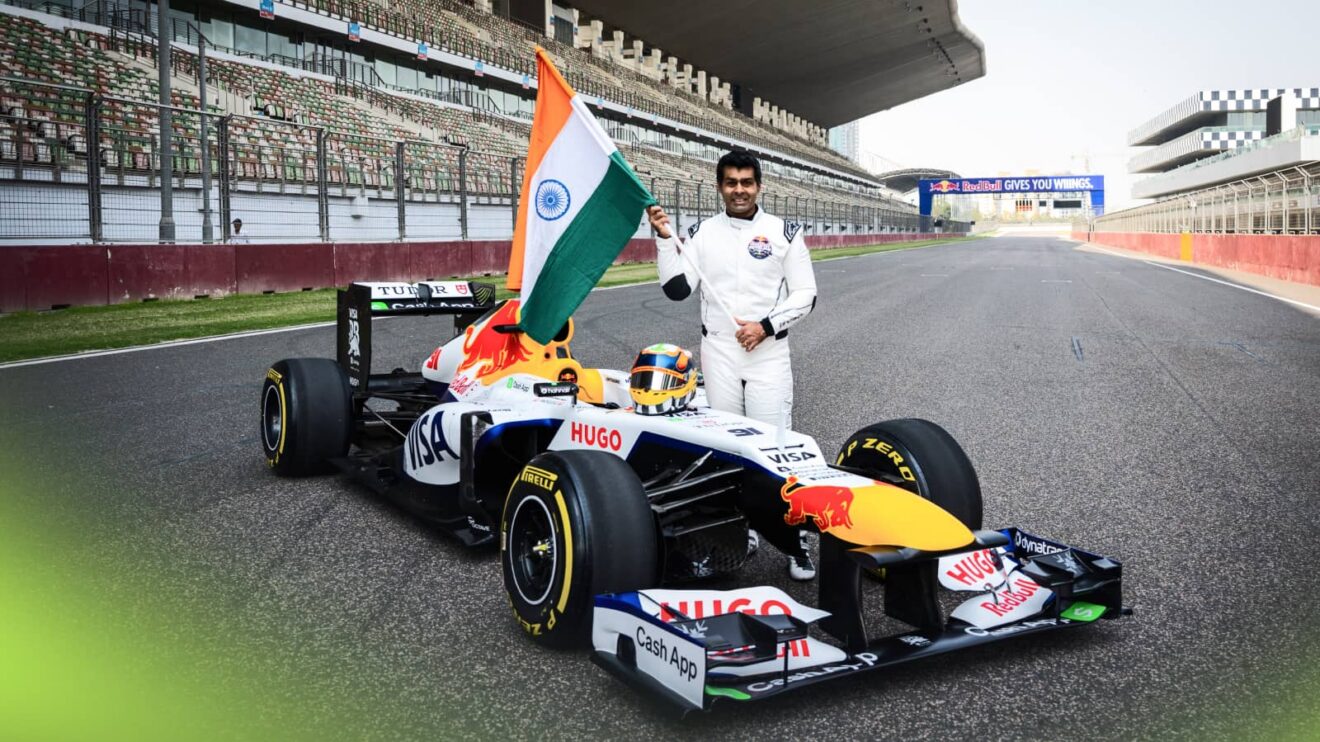
Karun Chandhok lapped the Indian Grand Prix circuit in February 2026 behind the wheel of Sebastian Vettel's title-winning Red Bull 2012 car
Former Formula 1 driver Karun Chandhok fears the Indian Grand Prix will not return to the F1 calendar until 2029 at the earliest.
It comes after PlanetF1.com revealed last week that suggestions of F1 returning to the Buddh International Circuit for 2027 are wide of the mark.
Karun Chandhok: Indian Grand Prix return unlikely before 2029
Want more PlanetF1.com coverage? Add us as a preferred source on Google to your favourites list for news you can trust
The Indian Grand Prix held a slot on the calendar between 2011 and 2013, with Red Bull and Sebastian Vettel winning all three editions of the race before it slipped off the schedule.
The nation’s sports minister, Mansukh Mandaviya, hinted last week that the race could be revived as soon as next season, claiming “there will be an F1 race in India in 2027”.
As reported by PlanetF1.com, however, Formula 1 shot down the suggestion that F1 is poised for an imminent return to India.
Go deeper: F1 circuit contracts
F1 circuit contracts: What is the current contract status of every track?
Seven F1 tracks that deserve a place on the calendar forever
A Formula 1 spokesperson told PlanetF1.com: “While India is a valuable market for Formula 1’s continued growth with an amazing passionate fanbase, we won’t be racing there in 2027.
“Interest in hosting Formula 1 events has never been stronger and there is a limited number of spaces on the calendar.”
Chandhok is one of two Indian drivers, along with former Jordan and HRT star Narain Karthikeyan, to compete in F1, making a total of 11 grand prix starts across 2010/11.
A former Red Bull junior, the 42-year-old returned to the Buddh circuit in February for a run behind the wheel of Vettel’s title-winning 2012 car, which appeared in a 2026-spec Racing Bulls livery.
In a video posted to social media, Chandhok estimated that India will struggle to regain a place on the calendar until 2029 at the earliest due to the number of long-term deals currently in place on the 24-race schedule.
And he believes the organisers must take a number of steps – including establishing a sustainable financial model and bringing the circuit up to modern standards – for Formula 1 to return to India.
Chandhok said: “My phone has been ringing non-stop with questions around the Indian Grand Prix and I thought that I’ll just share some thoughts on the steps that need to be taken for the return of F1 to India because there’s a lot of noise around it.
“Step one: there needs to be some clarifications around the regulatory and legislative side from the government.
“The government really needs to get behind the grand prix and it’s great to hear the positive noises coming out of the sports minister.
“Hopefully the government will get behind it from taxation issues, customs issues, visa clearances.
“You look at MotoGP, for example, even Marc Marquez had some issues with his visa, so the government really needs to get behind it and it’s great to hear the positivity from the sports minister.
“Secondly, the financial model. Who’s going to pay for the race? The owners of the track or the promoter or the government? Is it a joint venture?
“That whole structure needs to be paid because there’s the cost of running the event and there’s the cost of the rights fees. All of that needs to be really secure.
“And we want this to be a long-term thing, not just a one year, two year, three-year thing like we had in the past or like MotoGP or Formula E, which both came just for one year.
“We need to really make sure there’s a robust financial model.
“Step three is the track itself. When the track was built 15-16 years ago, it was at the cutting edge of track design.
“The actual ribbon of asphalt is still in good shape.
“I’m the most recent person to have driven an F1 car there and I can tell you the ribbon of asphalt – the actual track, the kerbs – is still in good shape.
“But there’ll be some upgrades that need to happen for modern infrastructure in terms of hospitality, in terms of the safety standards, the team buildings. All of that will need to be modernised.
“And fourth is the calendar. F1 has a full calendar of 24 races, so realistically I can’t see a slot opening up until 2029, probably more likely 2030, because there are a lot of long-term deals in place.
“But that’s fine. We can give ourselves time as a country, potentially, to put these first three pillars in place if we are then ready to have a slot on the calendar for the future, but there’s a lot of work to be done.
“I’m very encouraged by the enthusiasm and the noises coming out of both the Adani Group and the government so far, but let’s take it one step at a time.”
Want to be the first to know exclusive information from the F1 paddock? Join our broadcast channel on WhatsApp to get the scoop on the latest developments from our team of accredited journalists.
You can also subscribe to the PlanetF1 YouTube channel for exclusive features, hear from our paddock journalists with stories from the heart of Formula 1 and much more!
Read next: Your F1 questions answered: Mat Coch tackles engines, rules and race cancellations