
Mark Webber explains why Formula 1 ‘needs’ Max Verstappen to stay



Formula 1 needs Max Verstappen, says Mark Webber
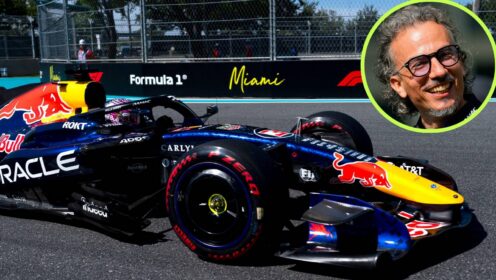
Formula 1 needs Max Verstappen to remain in the sport, so says former Red Bull driver, and current manager of Oscar Piastri, Mark Webber.
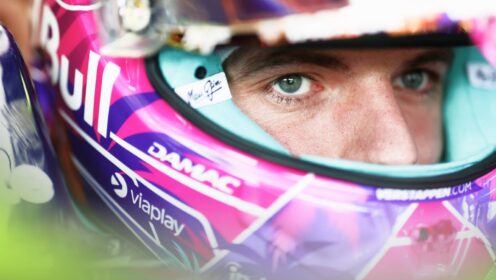
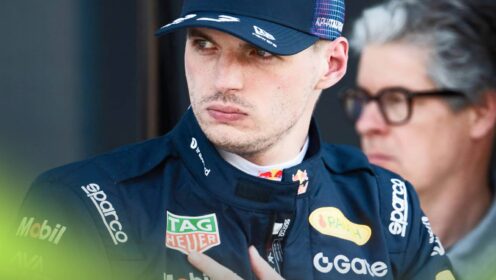
From the four-time world champion’s character, to his ability to lift the standard of his F1 peers, Verstappen’s continued presence is vital, argues Webber. Verstappen’s future has been a major talking point thus far in F1 2026.
Mark Webber discusses Max Verstappen’s F1 future
Want more PlanetF1.com coverage? Add us as a preferred source on Google to your favourites list for news you can trust.
Verstappen is not a fan of the new F1 2026 regulations, rueing the battery-dependent nature of the challenge.
Red Bull, meanwhile, is striving to ensure that should Verstappen stay in the sport, then it is at the wheel of their car.
Verstappen scored his and Red Bull’s best result of the season thus far with P5 last time out in Miami. His contract, which runs until the end of 2028, is understood to contain a performance-related exit clause.
Red Bull would “love” Verstappen to remain in Formula 1 with their team, former Red Bull driver Mark Webber told RacingNews365.
He added: “Holistically, looking at the whole sport, when you’ve got someone like him, characters like Verstappen are what the sport needs. We need these people.
“People switch on the TV because of Max Verstappen, and Liberty know that. Teams know that. He’s important.
“It’s really important that we keep Max in the sport, because he’s lifting every driver in the field, and that’s what Formula 1 is about. You have to be continually lifted.”
At the elite level of sport, a figure like Verstappen, triggering those “sleepless nights”, is vital, Webber states.
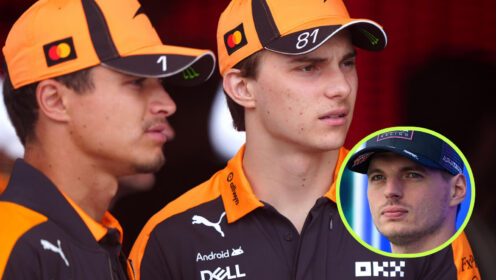
While Webber is “biased to” his client – McLaren’s Oscar Piastri – speaking from a “neutral” standpoint, Webber declared: “I want Max to be in Formula 1, of course.”
But, if it is a question of motivation, then Webber accepts that Verstappen has earned the right to call his own shots.
It was following the 2026 Japanese Grand Prix that Verstappen said he was contemplating leaving Formula 1 after the 2026 season.
Various tweaks have since been made to the regulations, while for 2027, there is an agreement in place to adjust the electric versus internal combustion power ratio of the engines.
“But if the stimuli are decreasing for him, in conjunction with his experience, and I’m not saying for one minute he’s losing motivation, but, of course, it granularly drifts away, then he’s earned the right to make choices,” Webber said of Verstappen.
“He’s got an immense trophy cabinet, he’s delivered year in, year out, and that gives him choices.”
More on Max Verstappen from PlanetF1.com
Lando Norris says F1 2026 rules ‘not at Formula 1 level’ as clear request made
Juan Pablo Montoya defends F1 2026 with blunt ‘so boring’ V8 warning
Miami was the first example of the rule tweaks in action. While the maximum recharge permitted per lap stayed the same for this event, drivers bounced between 250 and 350 kW of energy deployment in different sections of the lap.
Verstappen is unmoved.
“My car drives a bit better, but what I said before about the regulations is still the same,” he declared to PlanetF1.com and other accredited media after the Miami GP.
Asked if he found qualifying to be any better on the ‘energy rich’ Miami circuit, Verstappen responded: “You still need to go a bit slower in places to go faster. It’s still not how I would like to see it.
“It’s still punishing you. The faster you go through corners, then you go slower on the next straight. So that’s not what it should be about.
“But at least my car is working a bit nicer, so it’s a bit less stressful to drive.”
Want to be the first to know exclusive information from the F1 paddock? Join our broadcast channel on WhatsApp to get the scoop on the latest developments from our team of accredited journalists.
You can also subscribe to the PlanetF1 YouTube channel for exclusive features, hear from our paddock journalists with stories from the heart of Formula 1 and much more!
Continue reading: Why F1’s agreed 60/40 engine split could still unravel