
F1 data exposes why Max Verstappen’s Japanese GP charge stalled


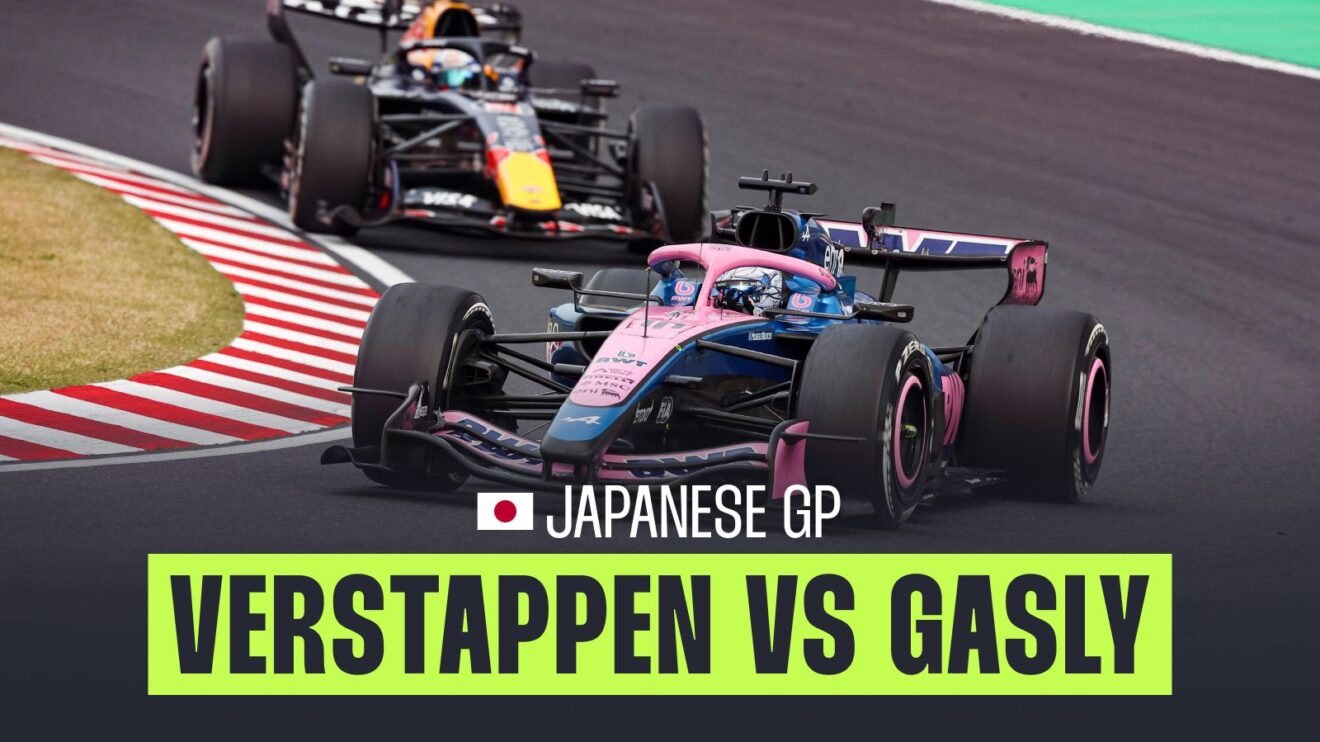
Max Verstappen and Pierre Gasly battle at Suzuka
Max Verstappen spent 53 laps locked in a duel with Pierre Gasly during the Japanese Grand Prix, with the four-time world champion unable to clear the Alpine.
Largely overlooked by the broadcast, telemetry reveals exactly how Gasly was able to fend off the advances of Verstappen’s charging Red Bull.
Max Verstappen struggles to pass Pierre Gasly at Japanese Grand Prix
Want more PlanetF1.com coverage? Add us as a preferred source on Google to your favourites list for news you can trust.
For the first time since 2019, Max Verstappen did not start the race in Japan from pole position. This time, on a track where he had been extremely fast in previous years, he failed to even reach the Q3 part of qualifying and started the race from P11.
Verstappen’s poor result in qualifying could be sensed even during the free practice sessions in Japan. Despite a short list of upgraded parts, Max was constantly complaining about the car’s balance and the inability to find a good pace.
From P11, Max had a good start to the race and, within the first few laps, managed to make up three positions, after which he found himself in P8, behind Pierre Gasly with a gap of just under five seconds.
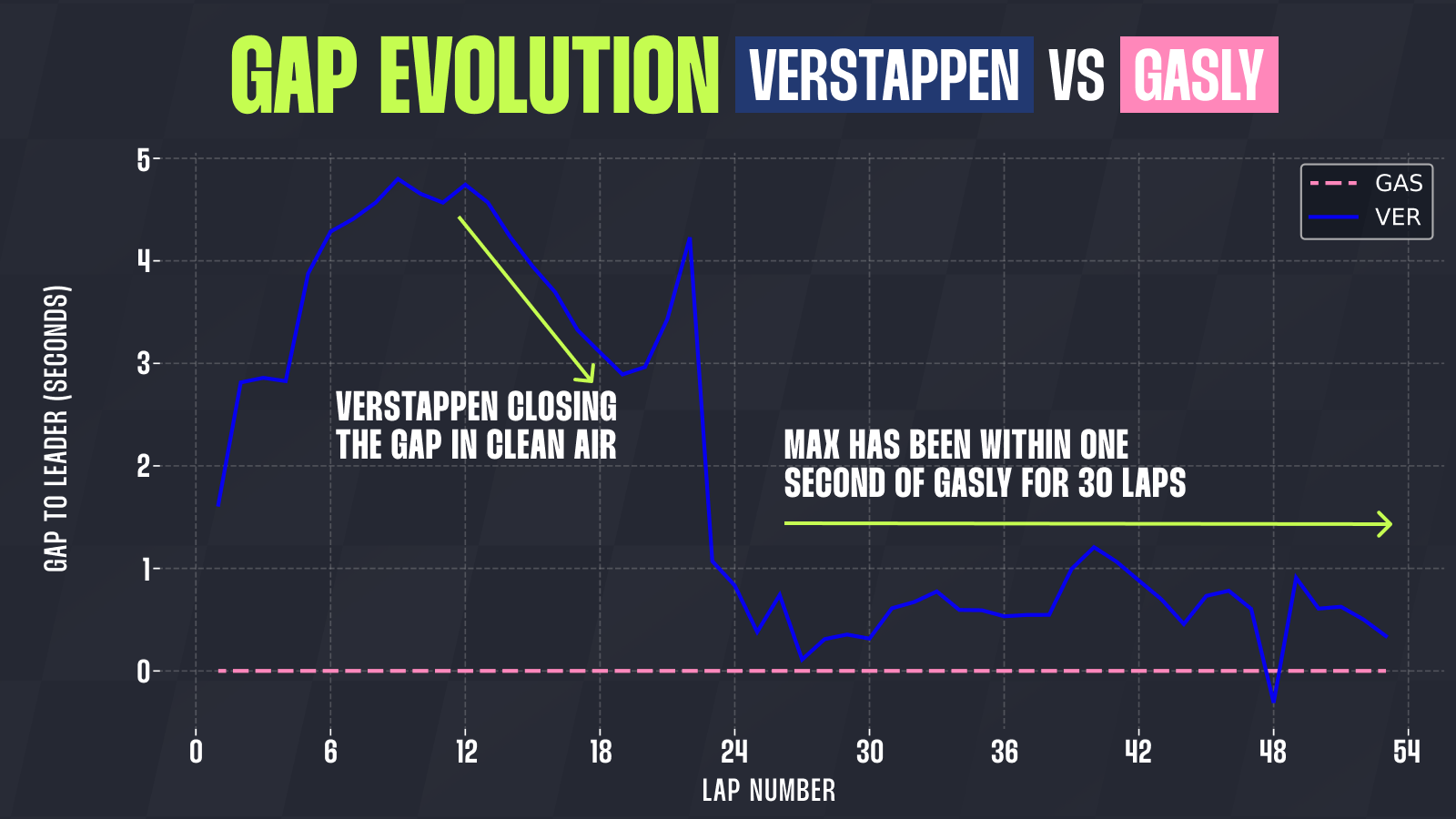
With clean air in front of him, Max made up 2 seconds of the gap within six laps, and it seemed that there would be no major problems in his duel with the Alpine driver.
What we can see from the data is that Gasly had a significantly higher top speed on the main straight in this part of the race, where he increased his gap to Max. However, the Dutchman was faster on the rest of the track and closed the gap corner by corner.
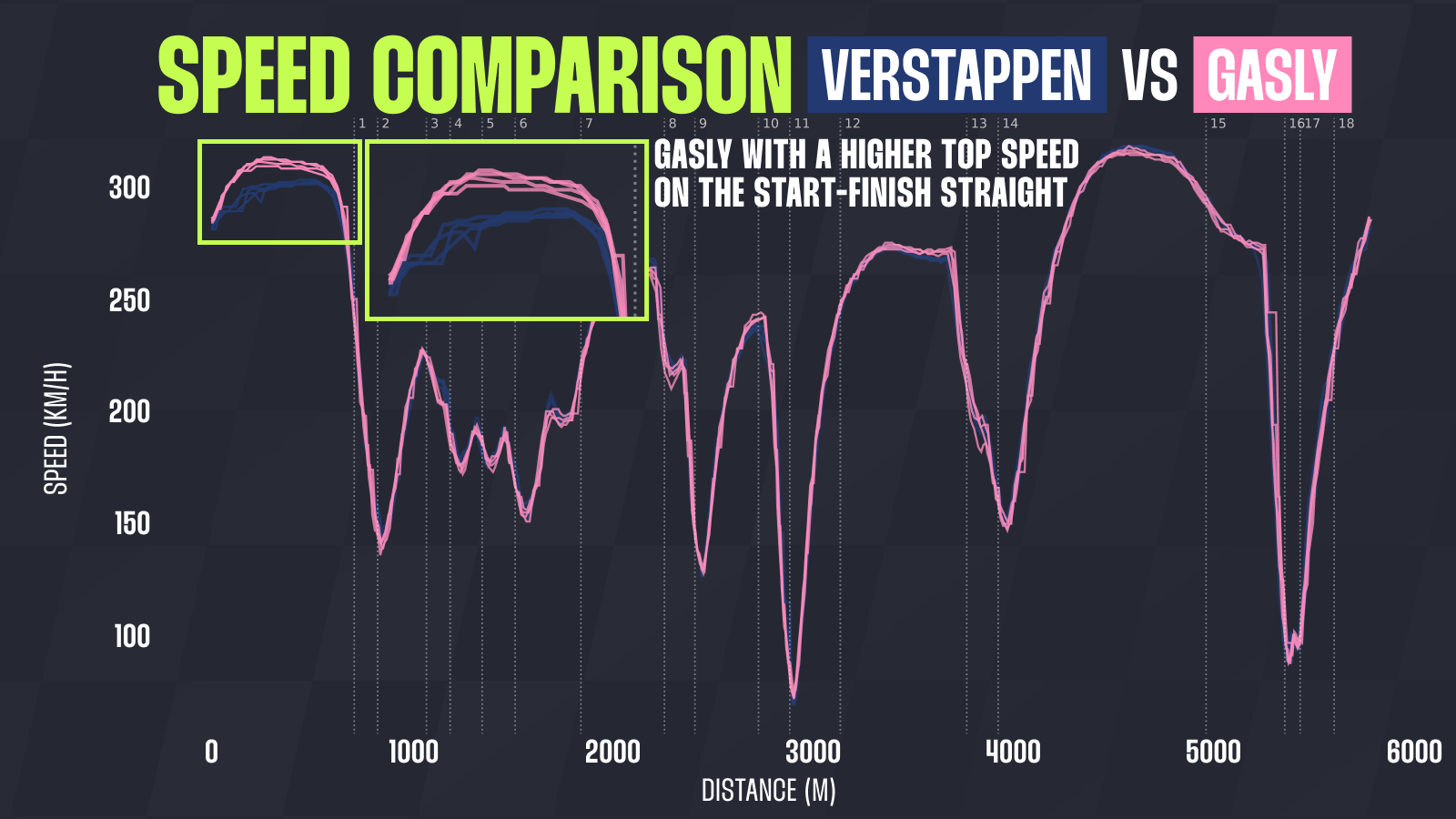
The only exception was the final chicane, where the Frenchman constantly “took back” about two tenths of a second. The Frenchman lifted off the throttle later before entering T16 and was more aggressive on acceleration later on. Besides that, a big role in this distribution of power was played by the deployment strategy itself, which was different between these two drivers.
More Japanese Grand Prix reaction via PlanetF1.com
Japanese GP 2026 driver ratings: Piastri surge, Bearman crash, and Alonso’s quiet performance
F1 cannot ignore warning signs after Oliver Bearman crash exposes 2026 flaws
The Safety Car on Lap 21 allowed both Gasly and Verstappen to go for a cheaper tyre change, but in the end, this brought them no advantage in terms of track position, so they remained in P7 and P8 even after the restart.
However, what did change was the delta time – Max was now within one second. Therefore, considering his better pace from earlier, he should have made the overtake without any major problems, right?
As we saw later, expectations deceived us – the four-time champion spent the rest of the race within one second of the Alpine driver.
From the telemetry data, we can also see some changes compared to the first half of the race.
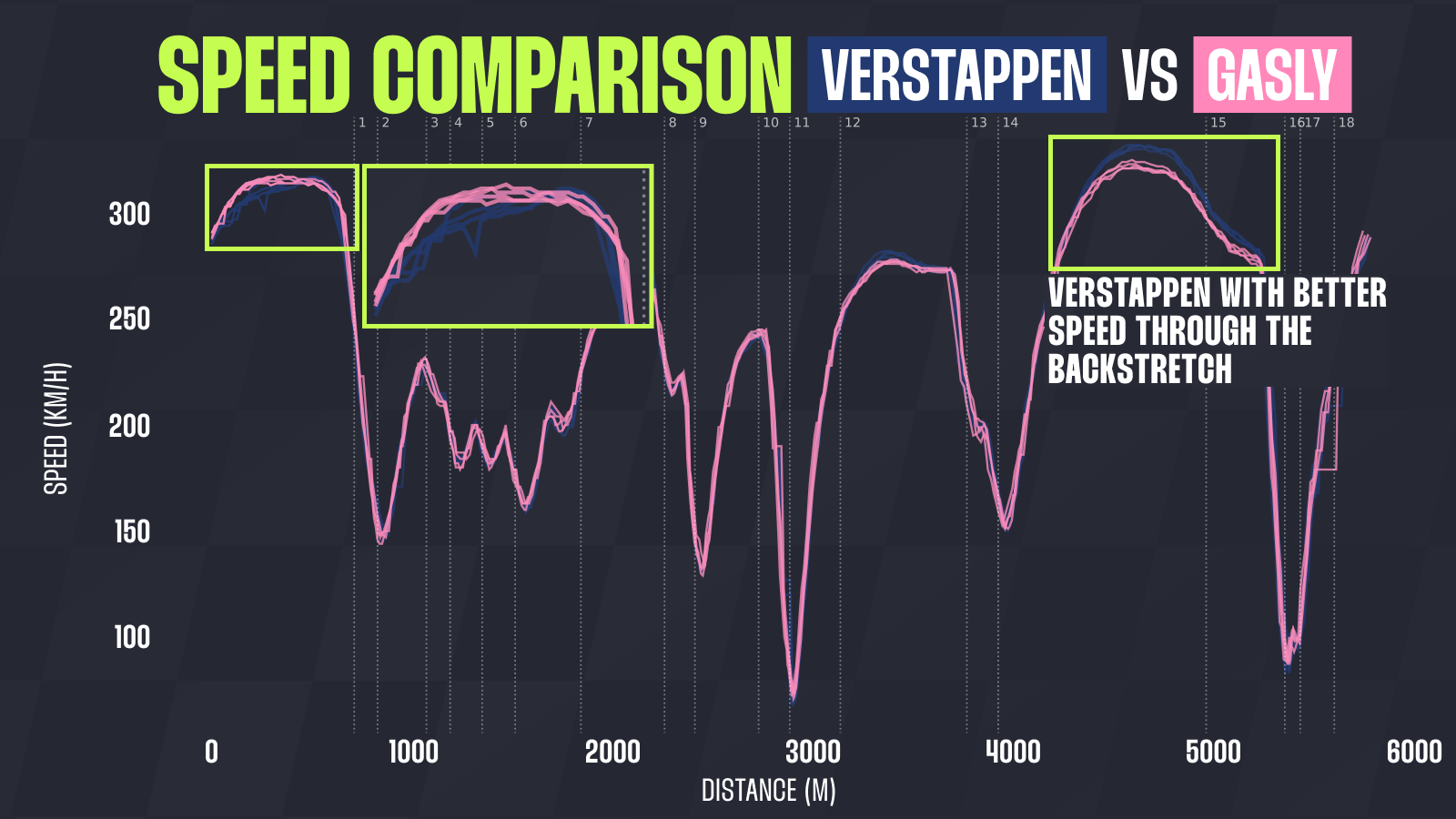
Now, Verstappen matched the top speed on the straight much better and entered the first corner with higher speed. However, as soon as they entered the S-curves, Gasly started to make a difference that stayed on his side all the way to T14, despite the Red Bull’s better speed between T7 and T8.
On the other hand, the back straight, where they had been equal until now, now belonged to Verstappen, who managed to make up about 0.3 seconds per lap here alone. The lap ended once again with a significantly better run by Pierre through the final chicane, and we got a performance seesaw that lasted for 30 laps.
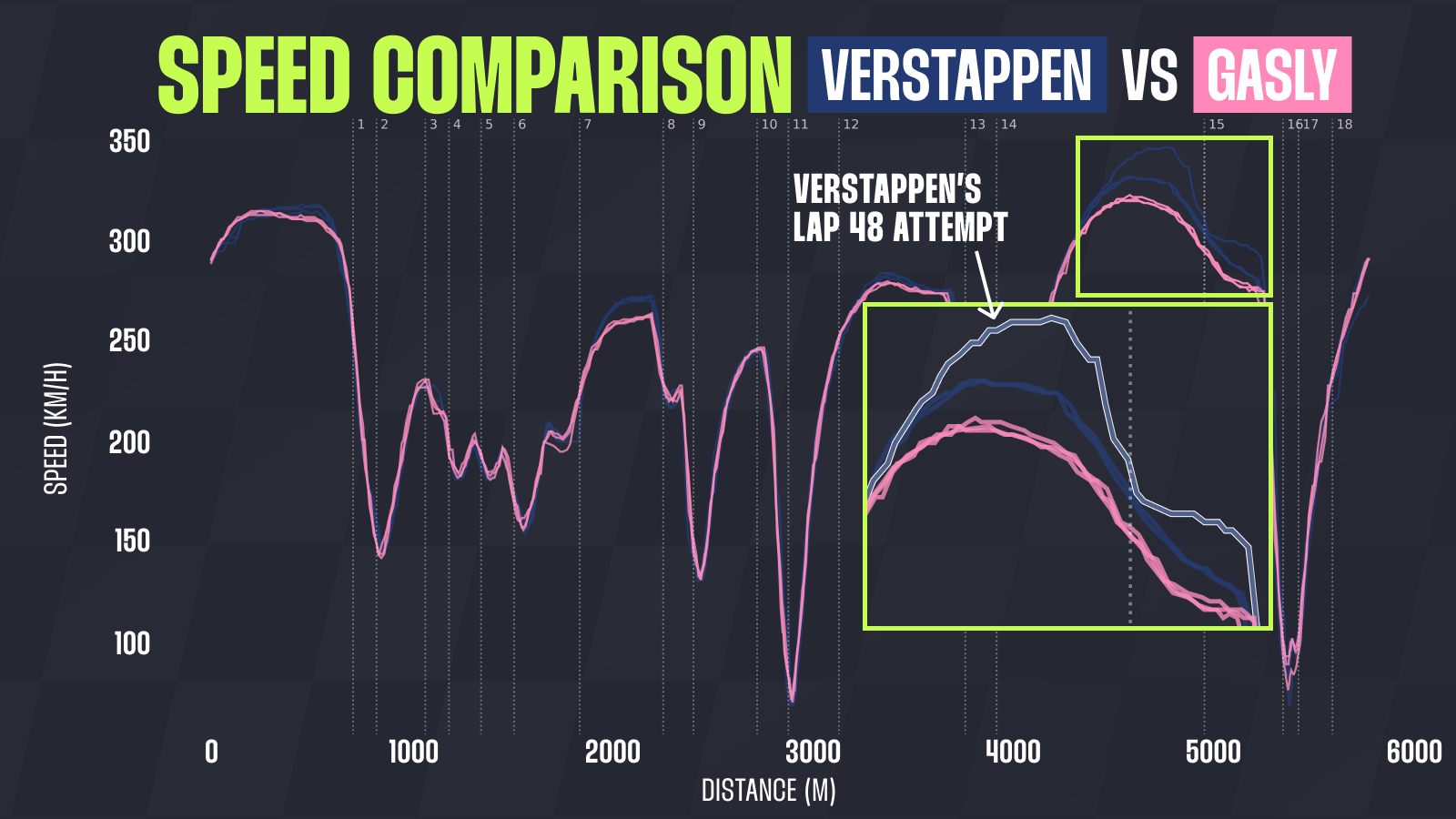
Probably in a desperate attempt to try something, Max tried a different deployment strategy on Lap 48, which brought him even higher speed through 130R. Verstappen overtook Gasly, but not for long – on the start-finish straight, his battery was empty, which the Frenchman used to his advantage, and the order on the track returned to the initial setup.
The Red Bull and Alpine pace was almost identical, so these two drivers spent the entire race right next to each other. In the first part, the Alpine was faster on the straights, in the second part the Red Bull, but the result remained the same.
For the Alpine team, this P7 brought valuable points and certainly represents a very positive step forward after last year’s season to forget. It is very nice to see this team returning to its old form.
On the other hand, Red Bull definitely cannot be satisfied with this result, keeping in mind that Isack Hadjar did not finish in the points. Red Bull is definitely lagging behind the most when it comes to the top four teams, so the upcoming April break will likely mean the most to them.
Want to be the first to know exclusive information from the F1 paddock? Join our broadcast channel on WhatsApp to get the scoop on the latest developments from our team of accredited journalists.
You can also subscribe to the PlanetF1 YouTube channel for exclusive features, hear from our paddock journalists with stories from the heart of Formula 1 and much more!
Read next: Max Verstappen contemplating Formula 1 exit after 2026 season