

F1 2026 telemetry exposes Suzuka qualifying energy compromise


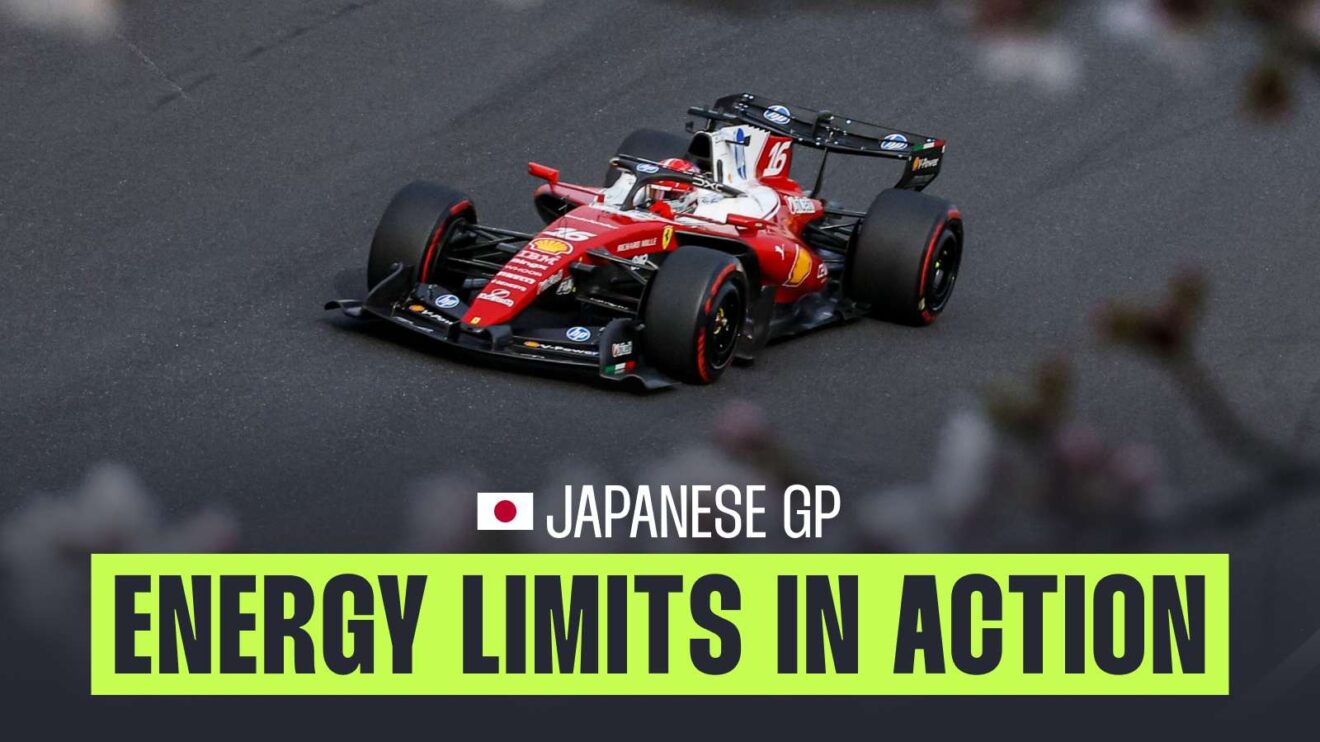
Charles Leclerc was vocal about where he lost time in Japanese GP qualifying.
From the drivers’ perspective, their first impressions of the new Formula 1 era are not what they had hoped for. Complaints of ‘artificial’ overtaking during the races and the inability to push their skills to the absolute limit during qualifying have been among the most frequent, though others, such as Lewis Hamilton, have offered a kinder assessment.
On a track like Suzuka, which by its very nature makes things even more difficult when it comes to energy deployment, these mentioned problems only become more apparent. Telemetry data offers us a new perspective on why the drivers are so dissatisfied and helps us answer the question: can this situation actually be improved?
Charles Leclerc Suzuka telemetry reveals energy limits impact
Want more PlanetF1.com coverage? Add us as a preferred source on Google to your favourites list for news you can trust.
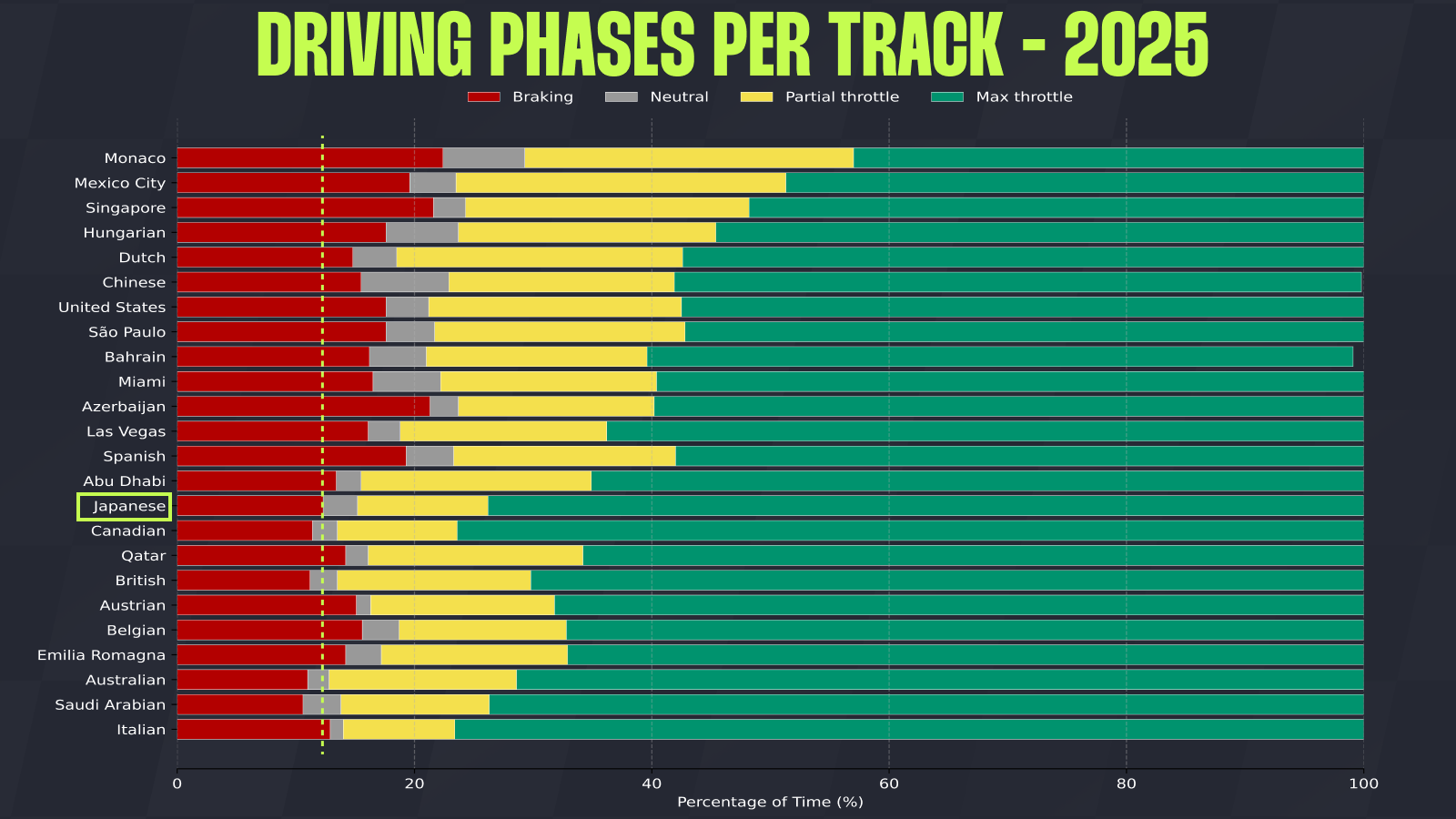
The track at Suzuka is on a similar level to Melbourne when it comes to the total amount of energy available across the lap. Having very few heavy braking zones represents a significant challenge for electrical energy recovery, considering that braking is the most efficient way to do so.
Because of this, teams are forced to find solutions and rather untypical places on the track where they intentionally reduce their speed, just to remain competitive with their battery levels.
To make the whole situation at least a little bit easier for them, the FIA reduced the per-lap recharge limit for qualifying in Japan from 9MJ to 8MJ. In theory, this change should force teams to worry less about managing the electric energy and increase the factor of driver skill during a single flying lap.
As we saw later, this didn’t bring any drastic results, considering that Oscar Piastri was the only non-Mercedes driver who managed to keep the gap below 0.6 seconds compared to the pole position.
More on the Japanese Grand Prix
George Russell reveals Mercedes setup error forced ‘massive’ front wing change
Max Verstappen labels Red Bull ‘undrivable’ after Suzuka Q2 exit shock
As we could have guessed even before qualifying, Suzuka – with its three straights coming one after another – offers a high probability that we will see different energy deployment strategies. The team that solves this puzzle best will be rewarded with a good starting position for Sunday’s race.
The way this puzzle works can be seen in the example of Charles Leclerc, who was one of the louder drivers after the qualifying session.
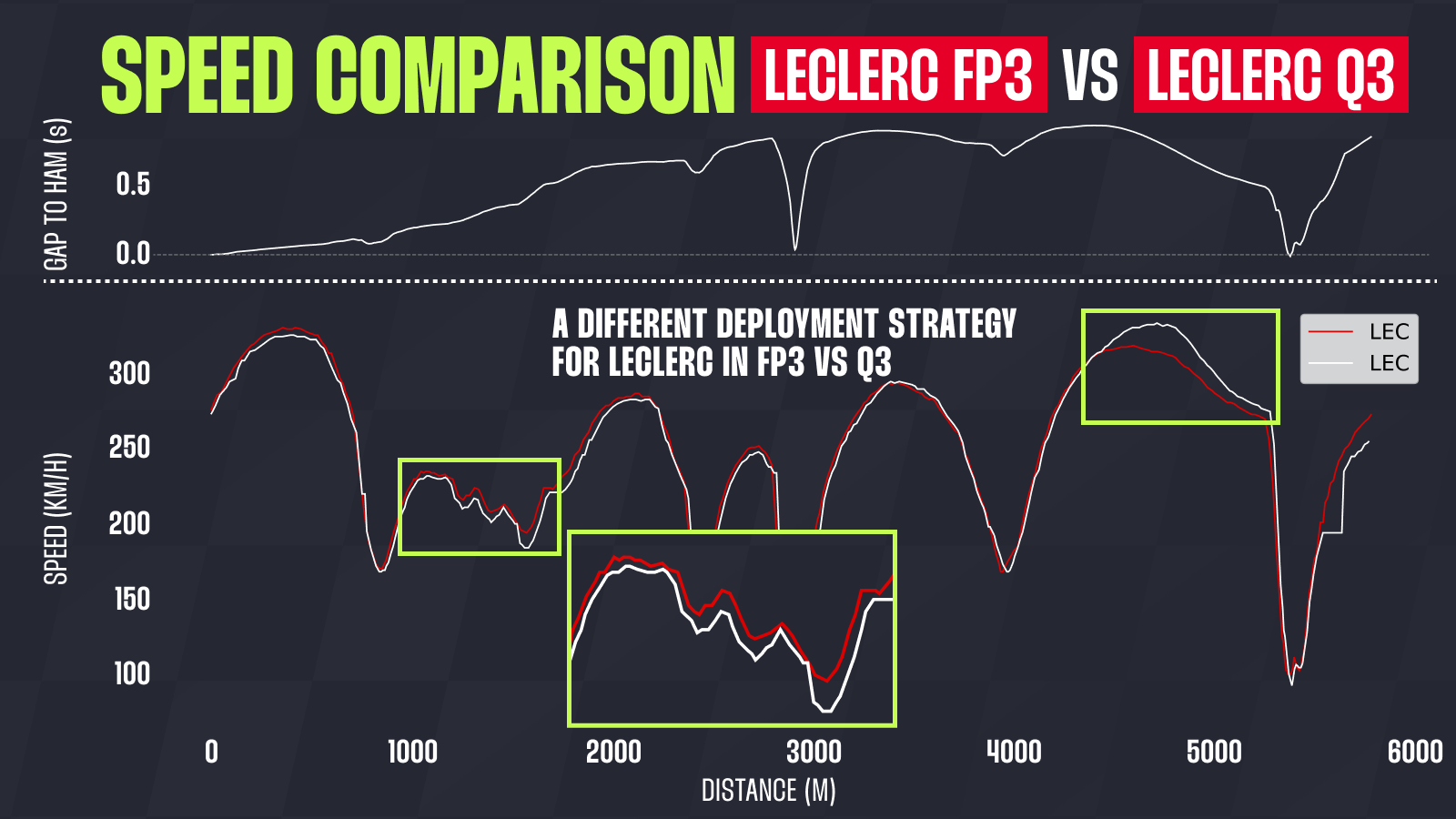
From the graph above, you can see the difference in speed between the fastest FP3 and Q3 laps. What we notice is a “seesaw” effect between speeds in the corners and on the straights – more precisely, between the speeds in the S-curves and on the straight towards 130R.
In FP3 (shown in white), Leclerc was significantly slower through the S-curves – notice the rise of the delta line in this part of the track. However, this gives him the chance to collect more electrical energy which he uses later on the straight – once again, we can see the difference in the delta time, which now drops.
What we saw during qualifying is that this exact straight towards the 130R corner was the place where Leclerc lost out compared to Oscar Piastri.
Besides the S-curves, a section where we saw lower-than-expected speeds was also the Spoon curves (T13 and T14). Simply put, to record a better lap time, teams are forced to intentionally limit their maximum speed through these corners, something the drivers absolutely do not like, especially if their results are still poor.
“I go faster in the corners, I go earlier on throttle and I lose everything on the straights,” Leclerc stated, which more or less summarises what we are talking about.
Besides Leclerc, some of the louder dissatisfied drivers were also Alex Albon and Carlos Sainz, a group that Max Verstappen definitely belongs to.
Reminding us that things aren’t quite so bleak was Lando Norris, who, after a qualifying results he surely wasn’t happy with, stated: “The car is better to drive, better to follow, better to race, you can race better and closer, and it’s more exciting. The problem is the stuff that makes you go faster.”
So, how to solve these problems and use the potential that the chassis of the new cars certainly has?
One of the solutions currently being suggested is an even more drastic reduction of the electrical energy recharge limit. Although this isn’t the first time the FIA has reduced these numbers, it seems this change must be more dramatic.
Of course, not too drastic, so that teams have enough time and data needed for adaptation.
Besides more dramatic and competitive qualifying sessions that this could bring, positive changes could also happen during the race. Even if it meant fewer actual overtakes on the track, the focus would return to the driver’s skill and strategy instead of the level of electrical energy available to the driver at that moment.
The impression is that the FIA currently has an open mind and that the changes it brings together with the teams will truly lead to better racing. It remains to be seen to what extent the rules will change and whether or not it will be too late to see drivers push closer to the limit in qualifying.
Want to be the first to know exclusive information from the F1 paddock? Join our broadcast channel on WhatsApp to get the scoop on the latest developments from our team of accredited journalists.
You can also subscribe to the PlanetF1 YouTube channel for exclusive features, hear from our paddock journalists with stories from the heart of Formula 1 and much more!
Read next: What is the starting grid for the Japanese Grand Prix?