
Suzuka data shows where Ferrari lost out as Charles Leclerc’s frustration explained



Charles Leclerc was frustrated by how his qualifying turned out, so we've run the numbers.
It appears that the Ferrari drivers have taken a step back during this weekend in Japan, with McLaren now emerging as the team with a genuine chance of challenging Mercedes.
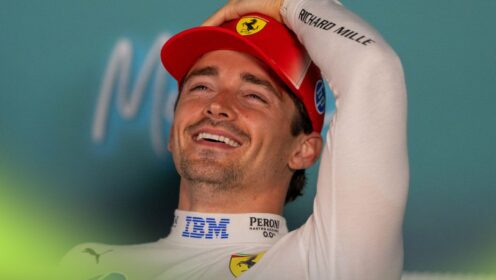
The faster of the two Ferrari drivers this time was Charles Leclerc, who didn’t hide his frustration with the way his qualifying sessions were unfolding in this new era of Formula 1. Let’s dive into the telemetry data to find out where Leclerc is losing the most time and whether a better result was actually possible during qualifying at Suzuka.
Suzuka data explains Charles Leclerc frustration and Ferrari pace loss
Want more PlanetF1.com coverage? Add us as a preferred source on Google to your favourites list for news you can trust.
In the first two race weekends, the Maranello outfit established themselves as the only team capable of putting Mercedes under pressure, whether in qualifying or the race. Even if they didn’t quite manage to beat them, they were certainly the only ones making life difficult for the Silver Arrows.
A similar situation was expected in Japan – especially after the FIA reduced the single-lap recharge limit from 9MJ to 8MJ, which was theoretically supposed to close the gaps between the teams. However, it seems this hasn’t been the drastic change many hoped for.
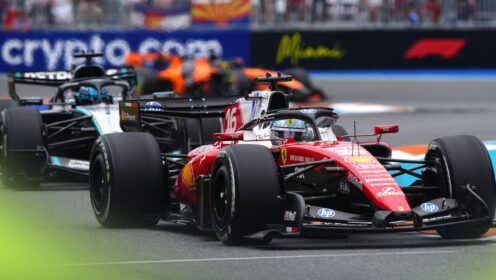
Leclerc finished qualifying in P4, a significant 0.627s behind the pole time, while Lewis Hamilton could only manage P6, with a gap of 0.789 seconds.
More on the Japanese Grand Prix
George Russell reveals Mercedes setup error forced ‘massive’ front wing change
Max Verstappen labels Red Bull ‘undrivable’ after Suzuka Q2 exit shock
The main threat to the Ferraris this time was Oscar Piastri, who was the closest to the Mercedes drivers and a potential front-row start.
So, where did Leclerc lose time? He voiced his frustration at how qualifying as it stands could have impacted his lap, so let’s take a closer look.
The telemetry data shows that Leclerc actually managed to match Russell’s pace in the first and final sector, but the gap in the second sector was simply too large. While Sector 2 at Suzuka is the longest and offers the most room for error, it also contains two lengthy full-throttle sections.
If we compare the fastest Q3 laps of Leclerc and Piastri, we can see that despite a gap of nearly three-tenths, the Monegasque was actually faster for the majority of the lap.
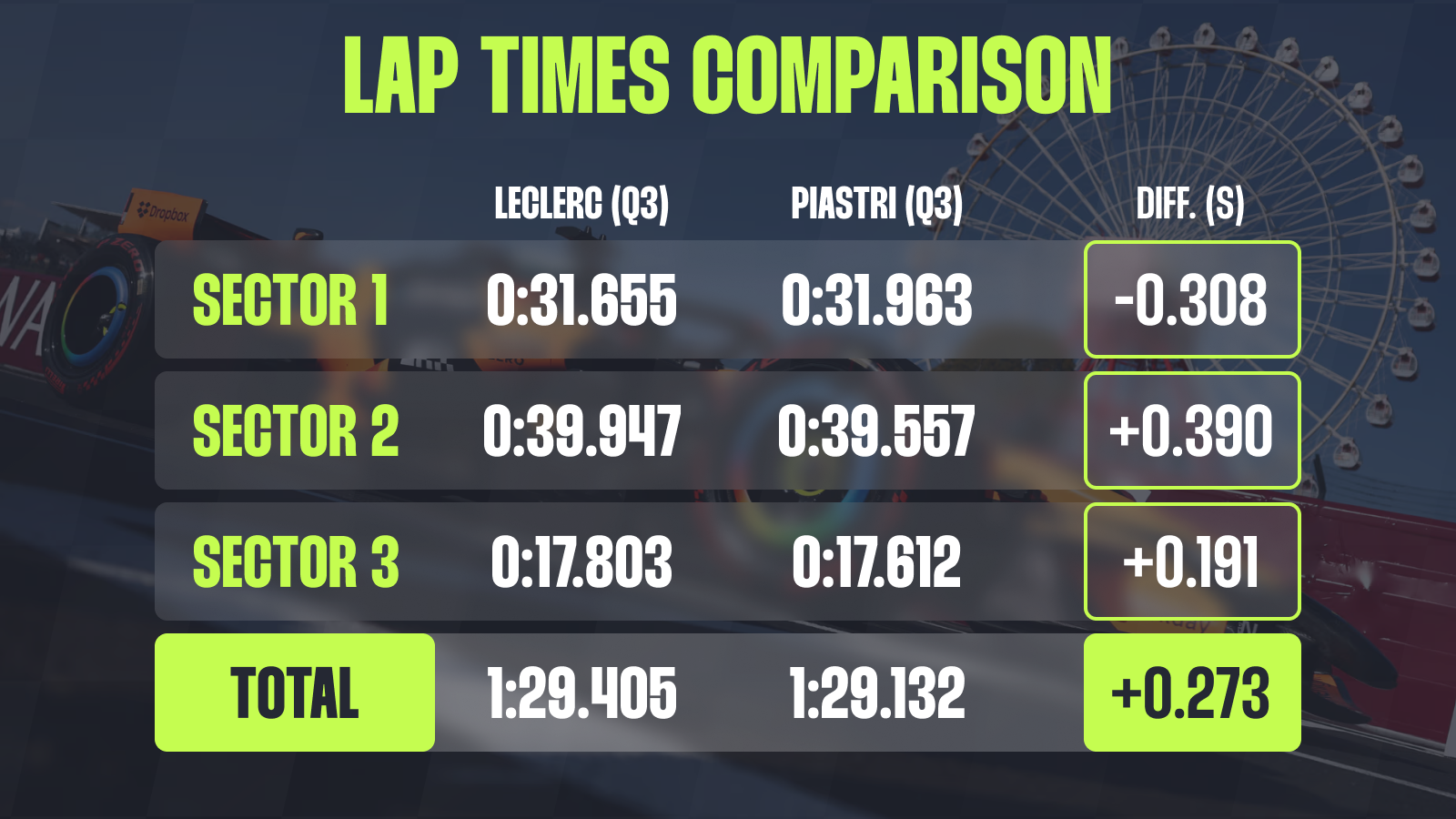
Leclerc was phenomenal in the first sector, recording the fastest Sector 1 on the grid and building a three-tenth advantage over Piastri. The data shows he carried significantly more speed into Turn 1, likely due to a different energy deployment strategy.
A better chassis and superior aerodynamics allowed him to further increase the delta through the “S” Curves. He was also much more aggressive on the throttle, particularly on the exit of Turn 6, which gave him an edge on the short blast between Turns 7 and 8.
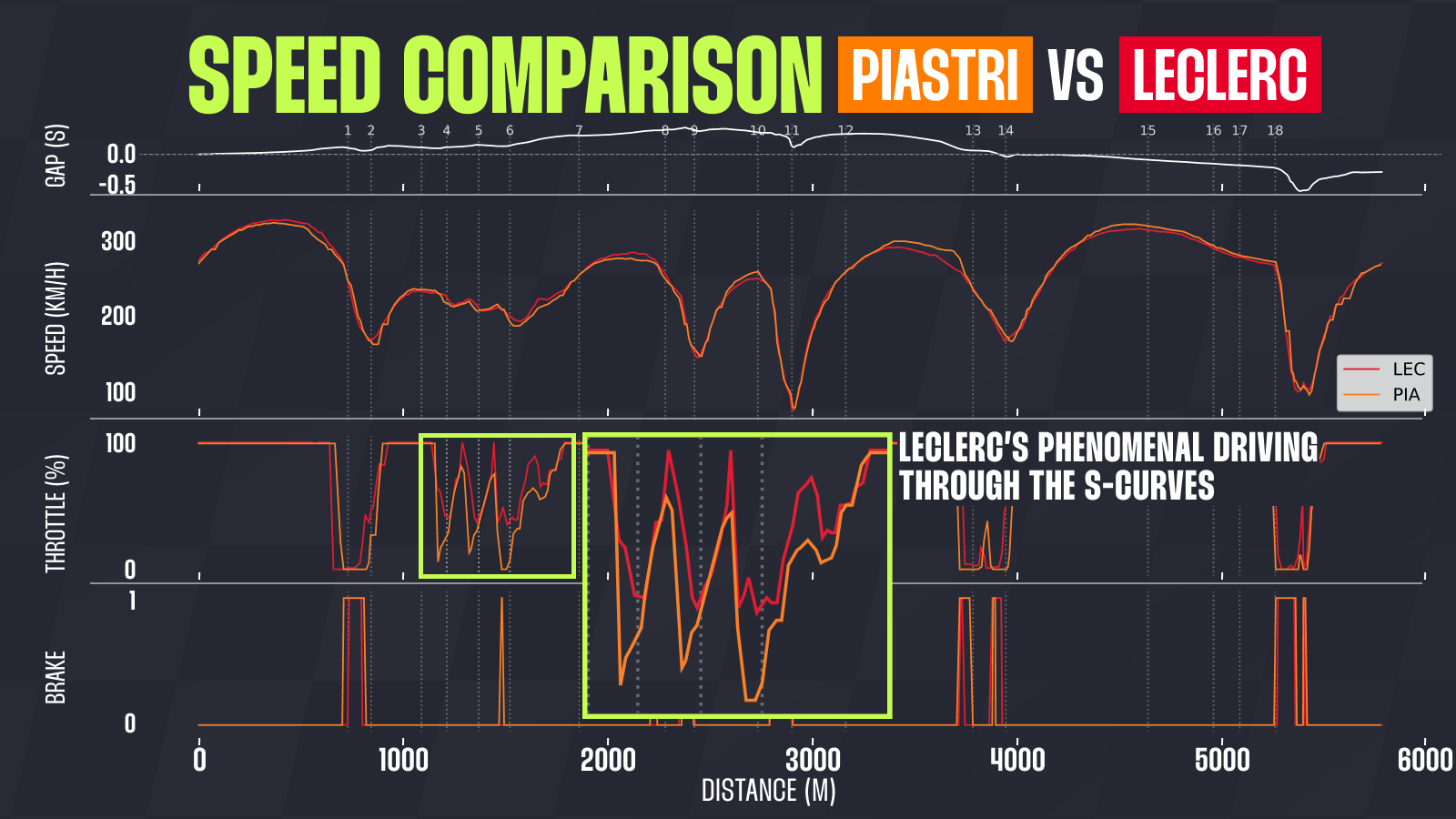
However, as we enter the middle sector, the picture begins to change. From Turn 10 onwards, Leclerc’s lead started to shrink. Piastri carries a higher apex speed here, a result of a different electrical energy deployment strategy.
It’s also interesting to observe the contrasting driving styles through the Hairpin. Leclerc stays on the throttle much longer and enters the corner with more speed, rotating the car later. Despite this, the gap between the two doesn’t change drastically at this point.
With almost identical speeds through Turn 12, McLaren then utilises the extra electrical energy they’ve saved, building a significant advantage in top speed heading towards Turn 13. By the time they exit the Spoon curves, Piastri has completely wiped out Leclerc’s lead.
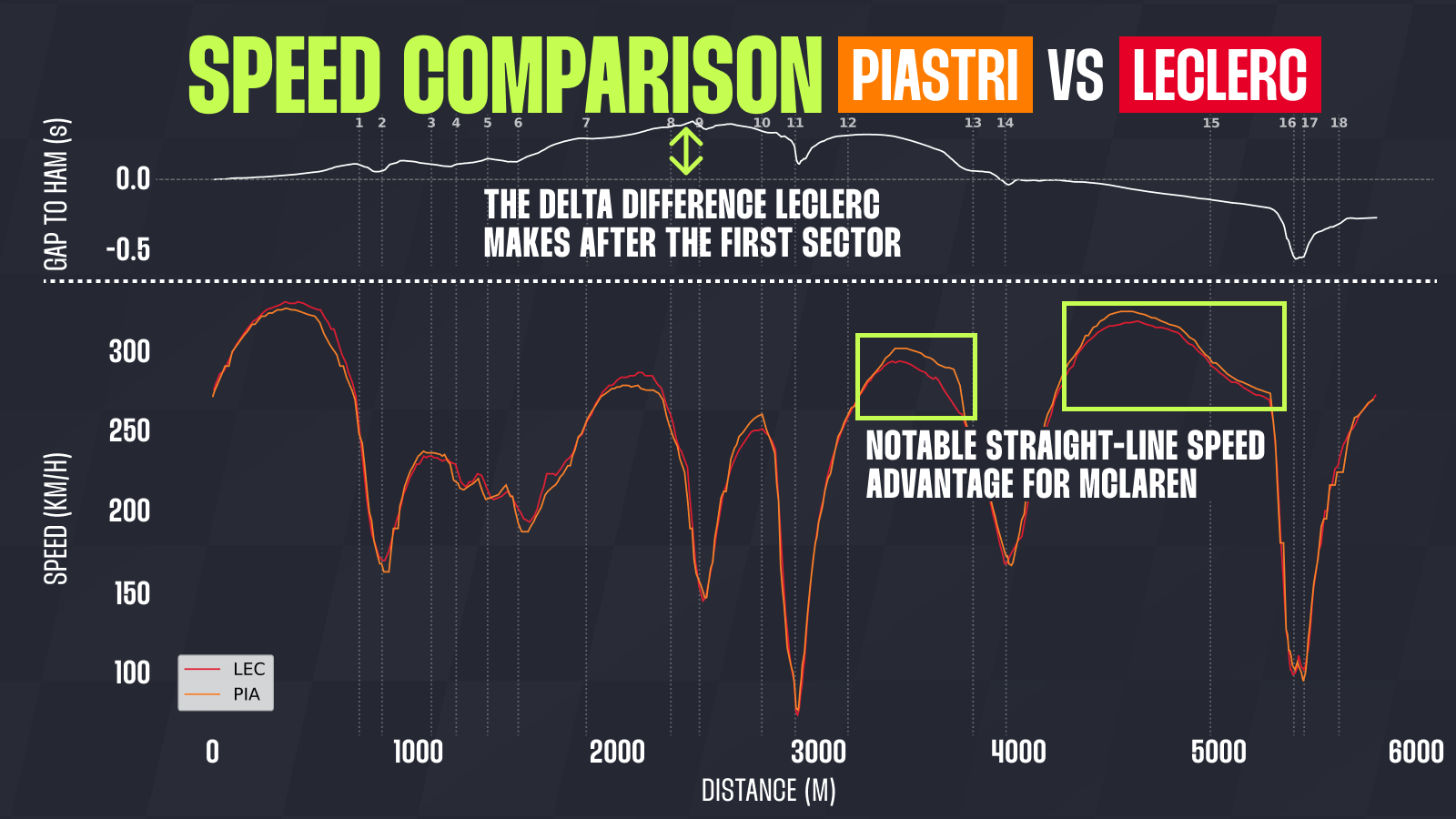
On the back straight, McLaren’s Mercedes power unit shows a clear advantage. By the entry to the final chicane, the Australian had built more than enough of a lead, purely thanks to higher top speeds on the straights.
Leclerc’s frustration after the Japanese qualifying seems entirely justified. His exceptional driving ability and the time he gains through the corners are easily cancelled out on Suzuka’s long straights.
Ferrari is clearly better in the traction zones compared to McLaren, and it seems they tried to maximise this by spending more electrical energy in the first half of the lap. Ultimately, it wasn’t enough; the advantage Mercedes and McLaren have on the T12-T13 and T14-T16 sections is simply too great.
Moreover, Leclerc did have some room for a better lap time – if you combine his best individual sectors from the entire session, his “ideal lap” would be a 1:29.178. However, even that perfect lap would have still left him in P4.
As the season progresses, McLaren is clearly getting a better handle on their power unit and how to extract its maximum potential. If Ferrari wants to remain competitive and change the current hierarchy, they must find a new way to threaten Mercedes at the top.
Want to be the first to know exclusive information from the F1 paddock? Join our broadcast channel on WhatsApp to get the scoop on the latest developments from our team of accredited journalists.
You can also subscribe to the PlanetF1 YouTube channel for exclusive features, hear from our paddock journalists with stories from the heart of Formula 1 and much more!
Read next: What is the starting grid for the Japanese Grand Prix?