

What’s going on with Audi’s new sidepods? Under the skin of the B-spec R26

The Audi F1 team has immediately taken the shackles off at the first pre-season test of F1 2026 in Bahrain, arriving with new sidepod bodywork, which will surely raise some eyebrows and signal its intent.
This follows the team’s use of more conventional bodywork for the three-day shakedown event at Barcelona and brings to mind the tactic employed by Mercedes in 2022, when the team later unveiled its famous B-spec ‘zeropod’ solution.
Audi F1 shrinking the game
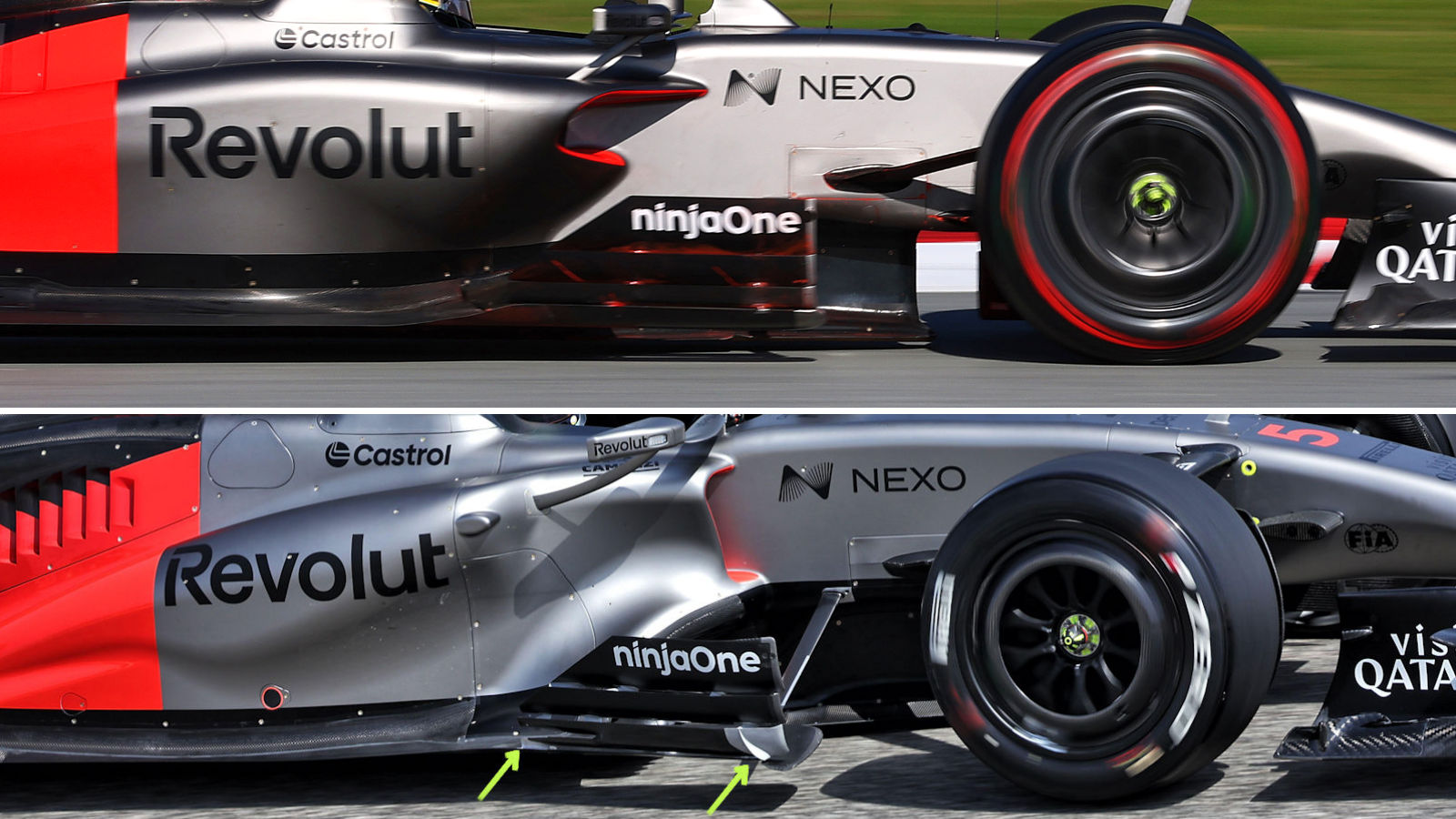
The new solution, as you’d expect, is a much more detail orientated option, with an inverted inlet layout that’s been stretched further forward and runs vertically up the side of the chassis and also affords much more room to be created beside for flow management.
The sticking point – as is always the case when the designers try to create these very narrow shapes at the front of the sidepod – is the the side impact protection spars, with the upper of those two always an irritant from an aerodynamics point of view.
In the case of the aforementioned ‘zeropod’ solution from Mercedes, the team opted to shroud its version within a wing-shaped element above the main sidepod bodywork, whereas Audi has sought to incorporate it within the main bodywork, albeit the tip does protrude out the side of the outer shoulder, which is a common design option used up and down the grid.
The inlet and the spar arrangement has led to an almost two-tier arrangement for the bodywork around them, with the curvature of the bodywork at the front of the sidepod aiming to deal with the wake turbulence being generated by the wheel assembly ahead.
The wider section around the upper spar carries the usual DNA we’d expect, with a continuation of that curvature that forms the undercut as it merges into the now almost ubiquitous pelican-style G-line that feeds down the side of the bodywork to the rear.
The upper surface of the sidepod also features a gentle gulley shape, with the downsloping bodywork now set to feed down into the floor at the rear, rather than sit above it, as Audi’s previous solution had.
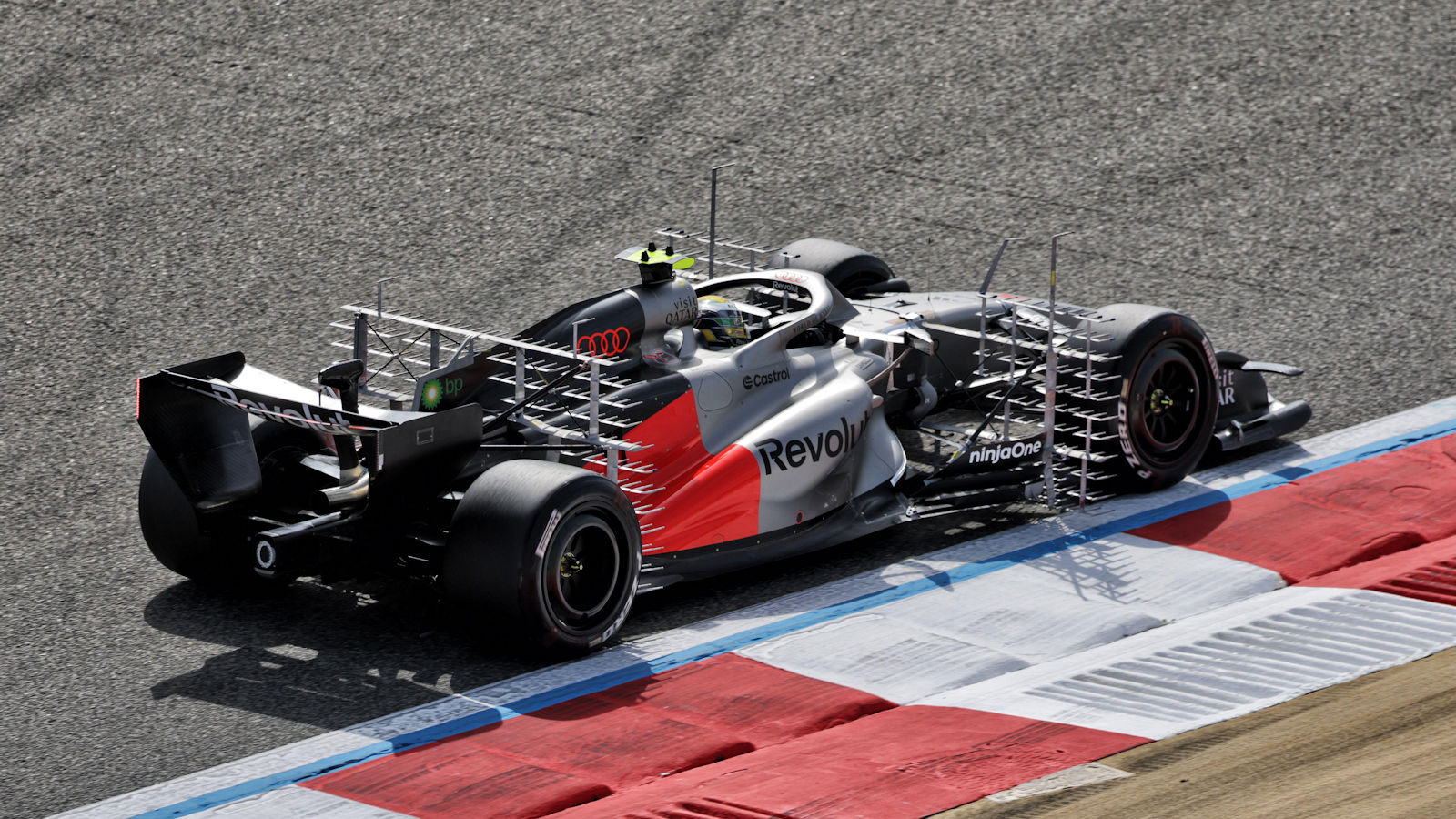
The team got straight down to work in terms of data gathering too, with large kiel probe rakes attached behind the front wheels and wrapped around the cars rear end in order to capture information regarding how the air moves around the car and ensure the real world information correlates with their virtual tools, such as CFD and the wind tunnel.
More than just a change to the sidepods…
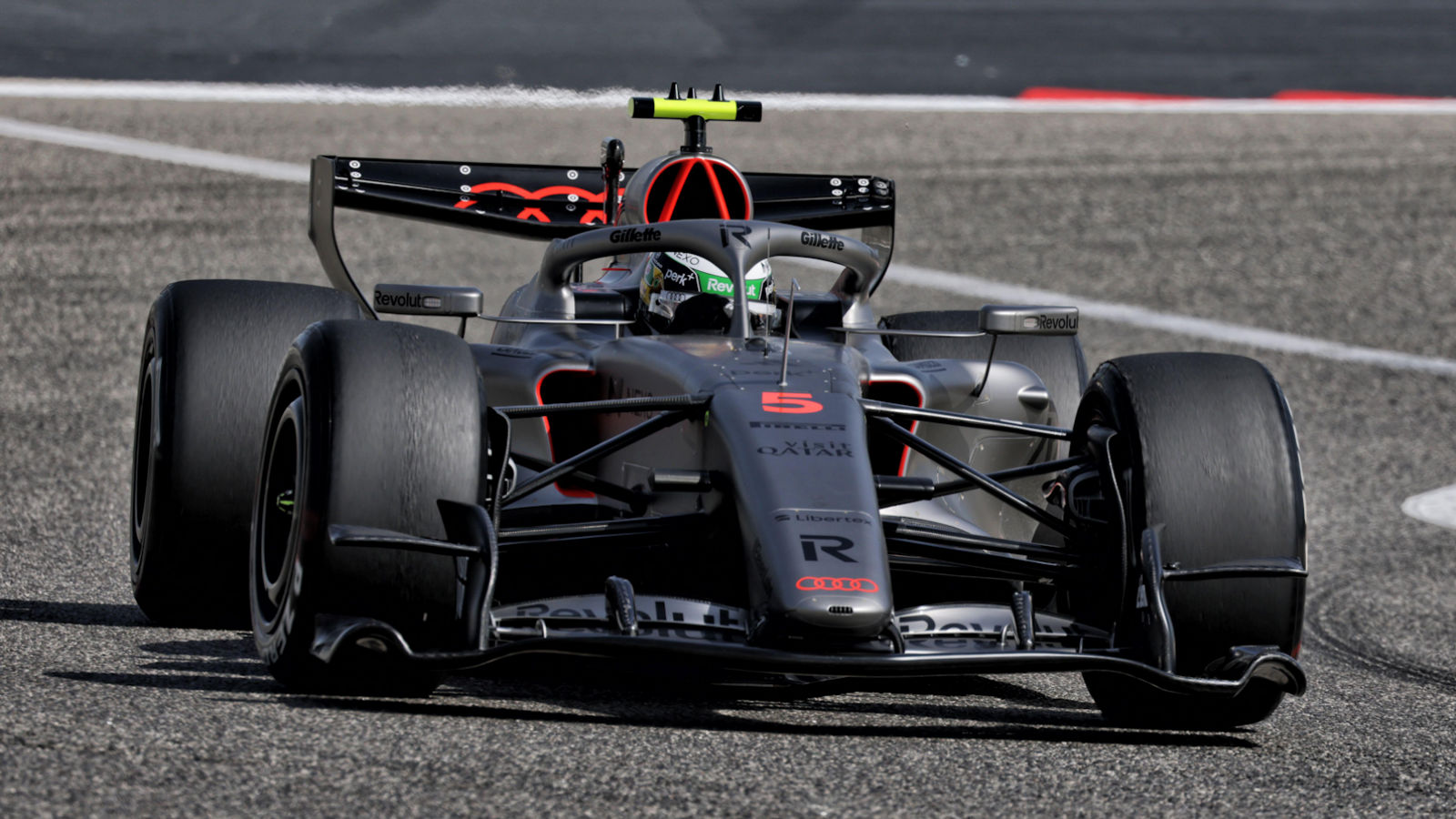
The car is also littered with plenty of other, smaller details that weren’t present in Barcelona, such as the switch to a twin pod active aero arrangement on the front wing, which previously had a single, centreline activation system.
The floor deflector array now has a metal upwashing vane on the forward portion of the lower element, whilst the tail of that slat has also been broken up into two sections, rather than one (green arrows, top image).
Matt Somerfield tech analysis: Aston Martin AMR26 and McLaren MCL40
Adrian Newey masterclass revealed as Aston Martin AMR26 dissected
McLaren MCL40 reveals next-level aero design in Barcelona
Audi has also taken a different approach when it comes to the rear wing active aero, as whilst most of the grid have opted for a DRS-style approach there are other options open to the teams in terms of the layout.
And given that active aerodynamics will be employed on more designated straights around a lap than was available with DRS and that there’s no need to be within one second of the lead car to deploy it, the teams have to rethink how it works from a performance aspect.
In Audi’s case, it has opted for a central pivot solution rather than having it pivot in the uppermost corner, which reduces the gap between the trailing edge of the mainplane and leading edge of the first flap when compared with the more traditional arrangement but, it does mean the trailing edge of the uppermost flap sits lower too.
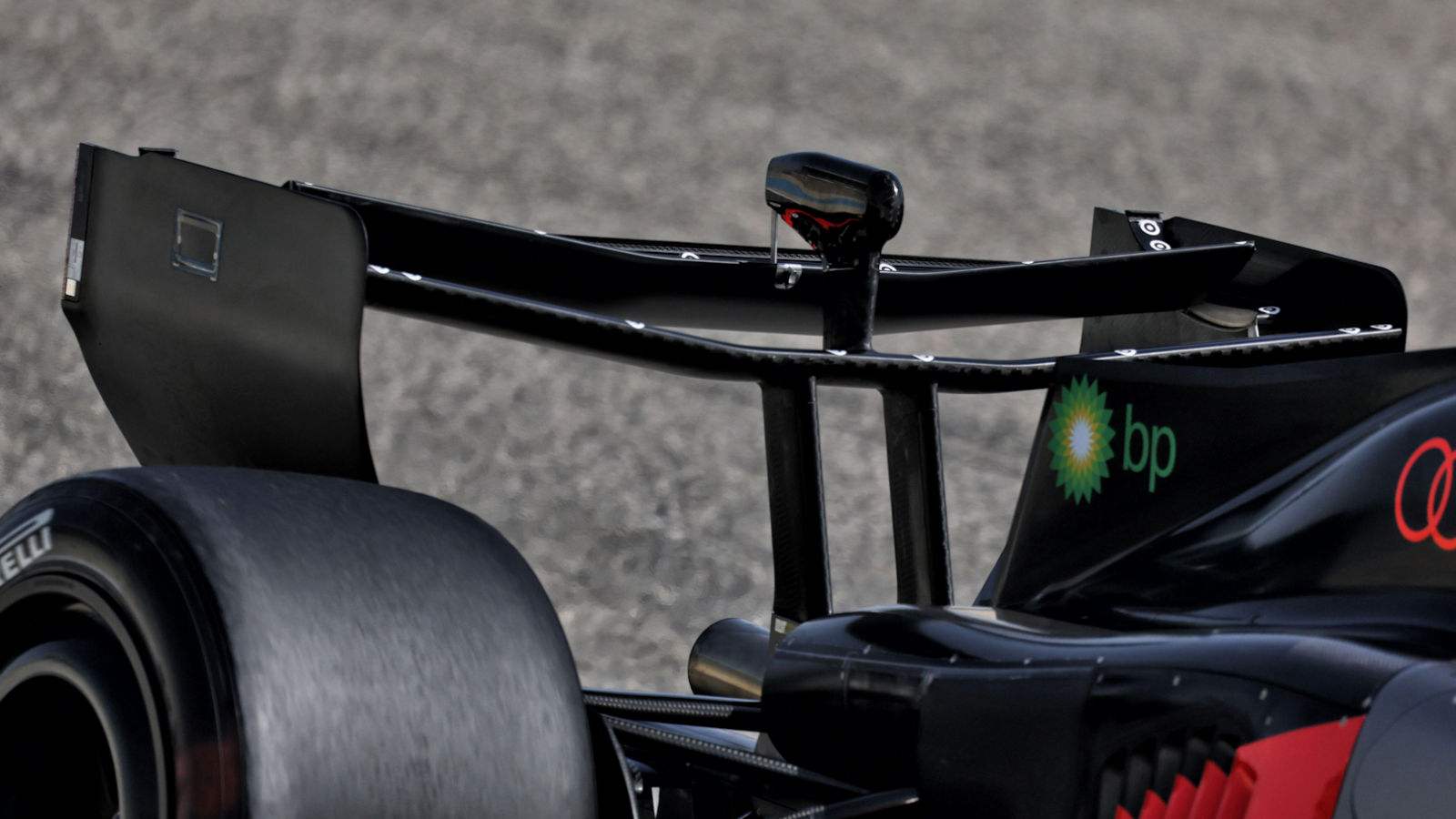
There will, of course, be a trade off in terms of performance, with the likely outcome being slightly less drag being shed for a more balanced transitional airflow reattachment phase, which in turn will make the car more balanced overall.
It remains to be seen if other teams will follow in Audi’s footsteps in this regard, or whether another solution, coming from the Alpine stable might prove more profitable.
But in the short term at least, we do have several different solutions on the table.
Read next: Push-rod vs Pull-rod: How F1 teams are shaping 2026 suspension strategies