

McLaren weighs in on F1 2026 suspension debate as Cadillac and Alpine break early trend
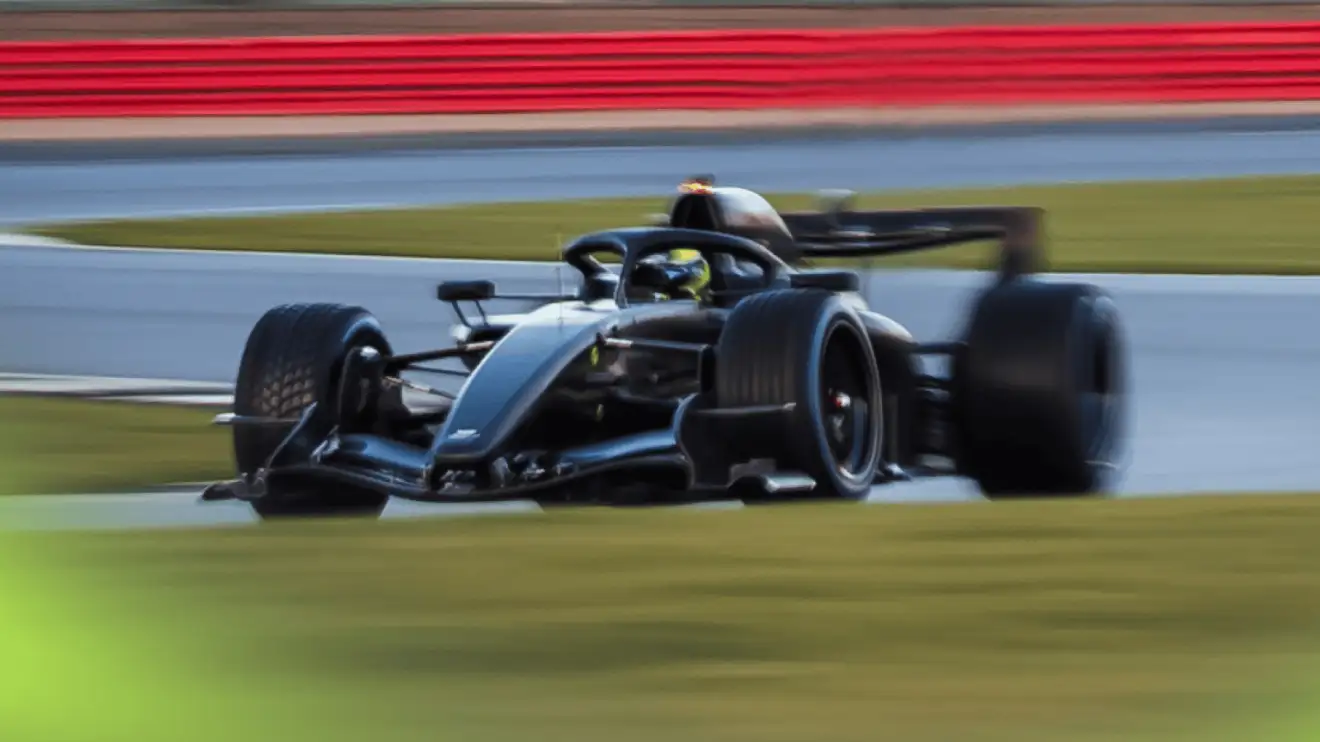
Sergio Perez in action during the Cadillac F1 2026 shakedown at Silverstone
Mark Temple, the McLaren technical director of performance, says the choice between a pushrod and pullrod suspension for F1 2026 is driven by which variation suits each team’s front wing.
It comes after Cadillac and Alpine broke from convention by adopting a pullrod suspension setup with their new 2026 cars.
McLaren explains pullrod vs pushrod suspension choice for F1 2026 season
Want more PlanetF1.com coverage? Add us as a preferred source on Google to your favourites list for news you can trust
A double-pushrod suspension layout has emerged as one of the early tech trends of the new season having been spotted on six of the eight cars launched to date.
Audi, Red Bull, Racing Bulls, Haas, Mercedes and Ferrari have all opted for a pushrod suspension at the front and rear of the car.
Only Alpine and the new Cadillac team have decided to use a pullrod suspension so far with three cars – McLaren, Williams and Aston Martin – yet to break cover in F1 2026.
Matt Somerfield tech analysis: F1 2026 cars in detail
Mercedes W17 reveal raises first technical puzzle of F1 2026
F1 2026 uncovered: Racing Bulls demo reveals extra details of new cars
Reports claimed last week that Adrian Newey, the legendary F1 designer and Aston Martin team principal, has agonised over the suspension choice for the new AMR26, leaving it as late as possible to decide between pullrod and pushrod.
Newey is known to place a heavy emphasis on suspension choice with the veteran personally designing the suspension for Red Bull’s first ground-effect car in 2022.
His influence meant Red Bull was not as affected as other teams by the porpoising phenomenon that season as Max Verstappen claimed a then-record 15 victories en route to a second consecutive world championship.
An anti-dive, anti-squat suspension was also a key element of the Red Bull RB19 car that won all but one of a possible 22 races in 2023.
Despite a large number of teams taking the pushrod route for 2026, Temple says that the decision depends entirely on the way the suspension interacts with the front wing.
Asked to explain the different solutions pursued by teams, he told PlanetF1.com and other select media this week: “Various cars had pushrod [and/or] pullrod last year and the previous years.
“It really comes down to an aerodynamic choice what front suspension set suits your new front wing.
“And obviously the new front wings are all new, so I guess the way that the teams that you’ve seen so far have basically organised their suspension sticks to suit their front-wing package and their front-end package.
“So it’s really aerodynamically driven.
“Both are quite easy to do mechanically, they’re not a particularly difficult mechanical challenge.”
Alpine’s presentation of the A526 on Friday marked the final car launch before the start of F1’s first pre-season test of 2026.
A five-day test will be held behind closed doors in Barcelona between across January 26-30 with each team restricted to a maximum of three days of running.
Williams – which announced on Friday that it will miss the entire Barcelona test – will then reveal the FW48 on February 3 before Aston Martin and McLaren launch their cars on February 9, two days before the start of the second test of the winter in Bahrain.
As revealed by PlanetF1.com on Thursday, limited television coverage will be available for the second test held between February 11-13.
Only the final pre-season test in Bahrain, scheduled to be held across February 18-20, will be treated to full live coverage.
Additional reporting by Thomas Maher
Want to be the first to know exclusive information from the F1 paddock? Join our broadcast channel on WhatsApp to get the scoop on the latest developments from our team of accredited journalists.
You can also subscribe to the PlanetF1 YouTube channel for exclusive features, hear from our paddock journalists with stories from the heart of Formula 1 and much more!
Read next: Mercedes W17 reveal raises first technical puzzle of F1 2026


