

Key Adrian Newey design decision emerges as Aston Martin AMR26 hits track

Aston Martin's future is in Adrian Newey's hands
A double-pushrod suspension has been spotted on the Aston Martin AMR26 car for the F1 2026 season.
It comes after rumours earlier this month suggested that designer Adrian Newey had agonised over a decision on the car’s suspension.
Adrian Newey chooses pushrod suspension for Aston Martin AMR26
Want more PlanetF1.com coverage? Add us as a preferred source on Google to your favourites list for news you can trust
After PlanetF1.com revealed last week that Aston Martin would miss the start of testing, the AMR26 made its highly anticipated on-track debut on the penultimate day of the Barcelona shakedown.
Lance Stroll ventured out in the final hour of Thursday’s running with the Canadian triggering a late red flag to bring the afternoon session to a premature end after trackside marshals had signalled for Stroll to stop after spotting a potential electrical issue with the car.
The AMR26, the first Aston Martin F1 car to be designed by Newey since his high-profile move from Red Bull, appeared in an all-black testing livery ahead of its official launch on February 9.
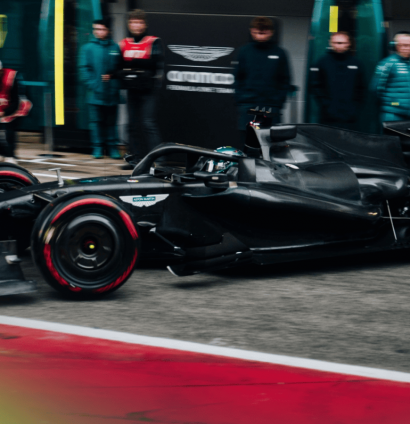
Aston Martin is expected to return to the track on Friday, with the team set to carry out just two of its permitted three days of running in Barcelona.
PlanetF1.com technical editor Matt Somerfield has confirmed that the design – strikingly different to most other 2026 cars in areas like the nose, sidepods and engine cover – includes a pushrod suspension at the front and rear of the car.
A double-pushrod suspension has emerged as the early tech trend of the F1 2026 season with all but two teams taking this development route so far.
Only Alpine and Cadillac have opted for a pullrod suspension to date, with Williams the only team yet to take to the track in 2026.
As reported by PlanetF1.com on January 19, rumours ahead of pre-season testing suggested that Newey had been agonising over the suspension choice for the AMR26, leaving it as late as possible before making a final decision.
The claims appeared to imply that the choice between a pullrod and pushrod suspension for F1 2026 was not as clear cut as previously thought.
Yet Newey has sided with the majority of Aston Martin’s competitors by opting for a double-pushrod solution with the AMR26.
Aston Martin AMR26 makes on-track debut in F1 2026 Barcelona testing
Aston Martin AMR26: What we’re hearing about Adrian Newey’s first Aston Martin
Why Adrian Newey’s private Alonso talks are so important for Aston Martin
Suspension design has been a key consideration for Newey over recent years, with the 67-year-old personally designing the suspension for Red Bull’s first car of the ground-effect era in 2022.
The RB18 won a drivers’ and constructors’ title double in 2022 as Max Verstappen won a then-record 15 races.
An anti-dive, anti-squat suspension was also a key component of the Red Bull RB19 in 2023 as the team won all but one of a possible 22 races, with Verstappen breaking his own record by collecting 19 victories.
The move away from ground-effect machinery and the switch to a smaller diffuser for 2026 is believed to have contributed to the decision by most teams to opt for a pushrod suspension.
A pushrod suspension is also thought to offer more predictability in terms of handling than a pullrod alternative as well as bringing advantages in terms of engine packaging, another key pillar of Newey’s design philosophy.
Speaking to PlanetF1.com and other select media outlets last week, Mark Temple, the McLaren technical director of performance, argued that the choice between pushrod and pullrod for 2026 depended entirely on how each team’s front suspension interacts with the front wing.
He explained: “Various cars had pushrod [and/or] pullrod last year and the previous years.
“It really comes down to an aerodynamic choice what front suspension set suits your new front wing.
“And obviously the new front wings are all new, so I guess the way that the teams that you’ve seen so far have basically organised their suspension sticks to suit their front-wing package and their front-end package.
“So it’s really aerodynamically driven.
“Both are quite easy to do mechanically, they’re not a particularly difficult mechanical challenge.”
Additional reporting by Thomas Maher
Want to be the first to know exclusive information from the F1 paddock? Join our broadcast channel on WhatsApp to get the scoop on the latest developments from our team of accredited journalists.
You can also subscribe to the PlanetF1 YouTube channel for exclusive features, hear from our paddock journalists with stories from the heart of Formula 1 and much more!
Read next: Aston Martin AMR26 debut ends early due to precautionary concern