
Carlos Sainz proposes radical qualifying rule after Austrian GP saga


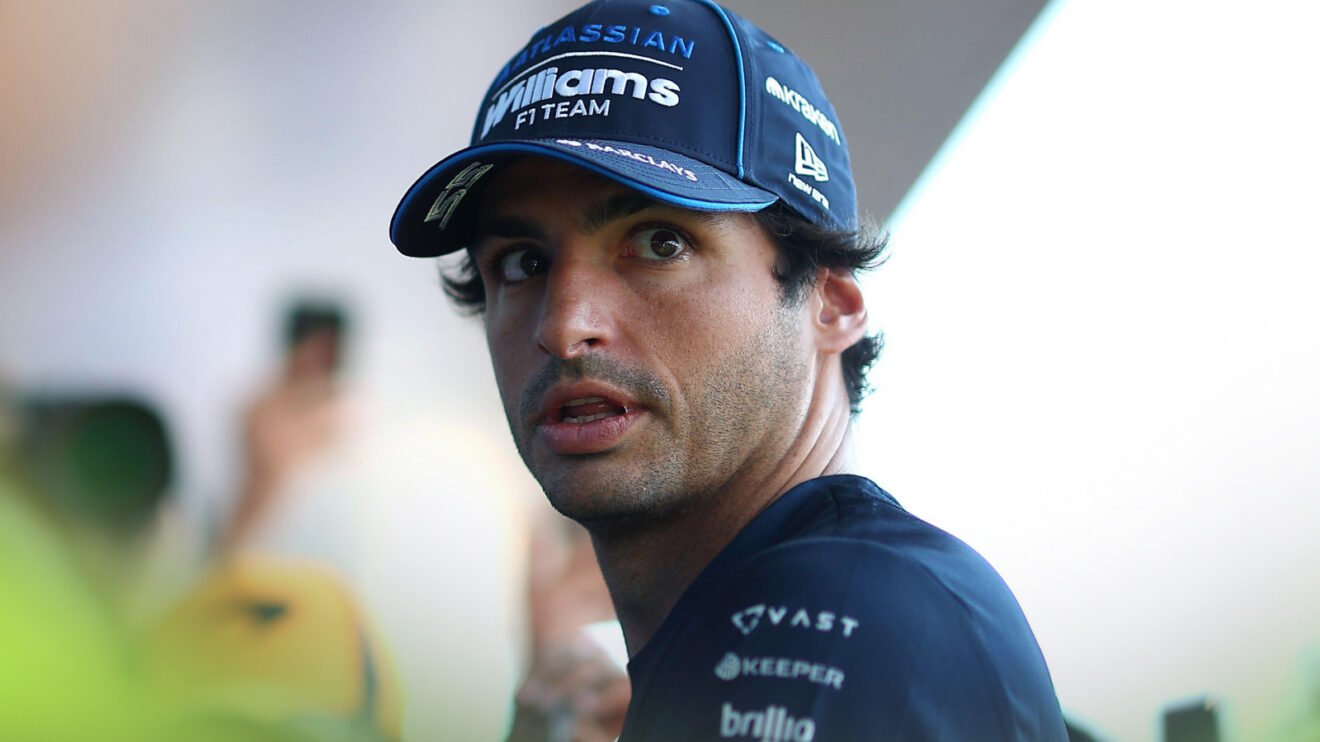
Carlos Sainz has proposed a radical new qualifying rule.
Carlos Sainz has proposed a radical new rule designed to stamp out the potential for drivers to gain an unfair advantage during qualifying.
In Austria, George Russell claimed pole despite yellow flags at the penultimate corner after Max Verstappen crashed out.
Carlos Sainz suggests automatic grid penalty for qualifying yellow flags
Want more PlanetF1.com coverage? Add us as a preferred source on Google for news you can trust.
The situation led to confusion as to whether Russell’s lap would be allowed to stand.
Verstappen left the road at the fast left-hander with his car impacting the barrier at the fast right-hander towards the end of the lap.
The incident was covered under a single yellow flag, meaning Russell was permitted to improve his time – provided he could demonstrate he’d acknowledged the yellow flag zone.
He met that obligation by lifting heading into Turn 9, but such was the advantage he’d built earlier in the lap that his time was still good enough to secure pole.
Russell’s Mercedes teammate, Kimi Antonelli, abandoned his lap after misidentifying the yellow flag as a double-waved yellow.
Under double-waved yellow, drivers must slow down and be prepared to stop, forcing them to abandon their lap.
Immediately after the session there was confusion as to whether Russell’s lap would stand, with timing screens serving only to reinforce that confusion with the Brit’s in lap deleted as a result of yellow flags.
Speaking in Silverstone ahead of this weekend’s British Grand Prix, Russell conceded the incident probably warranted double yellow flags.
Since they weren’t present, there was no regulatory issue with his actions in the Red Bull Ring.
Instead, it has prompted discussion around how such incidents are handled in future, and a radical suggestion from Sainz.
“It’s clear to me, at least, that that situation should have been a double yellow or a red [flag],” Sainz told PlanetF1.com and other accredited media in Silverstone.
“The way George handled it, I think, was perfect for what the rule book allows you to do, and he deserved that pole position because he played the rules to perfection.
“But he should have never been, I think, allowed to finish that lap or to close a lap in that kind of dangerous situation.
“At the same time, if Max would have been on pole in the first run, and then he produces that crash, and then not everyone is in a red flag, and no one improves the lap, I think it would be unfair for George, Kimi, and everyone, because the guy that is on pole is not letting us improve the lap time.”
His solution is to penalise drivers who trigger a yellow or red flag during qualifying with a grid drop, reasoning that it penalises those who disadvantage others, and disincentivises abuse of the system.
More ahead of the British GP
Lawson reveals stance after Lindblad ignored Racing Bulls team orders
Jeremy Clarkson at centre of new Alpine announcement ahead of British GP
“I could have done last year in Baku when I was on pole and I was the first car out of the pits,” he explained.
“I said, if I crash now, I’m on pole. We all have these thoughts, and we all have these second thoughts and we all know how the rule book works.
“For that, I think that anyone who generates a yellow flag or a red flag in a qualifying should be three place grid drop, so at least you get penalised and you get disincentivised.”
Sainz’s concern is reasonable, with Michael Schumacher judged to have deliberately parked his Ferrari at the Rascasse during qualifying for the 2006 Monaco Grand Prix.
On provisional pole at the time, the German was penalised for his actions and made to start from the rear of the grid.
A director of the Grand Prix Drivers’ Association, Sainz has often spoken on behalf of the body which represents the drivers’ interests.
In this instance however his comments are made of his own accord.
“I will potentially bring forward as an idea, and then we can maybe discuss if it should be the case or not,” Sainz said of floating the concept with the GPDA.
“I think this weekend, because of being a Sprint, we don’t have a proper meeting about it, but I think we should.”
What impact those discussions might have, even if received positively by the group, given the GPDA has no formal voice or power in the decision-making process.
Such a concept would also require careful consideration as it would place even greater scrutiny on race control’s handling of qualifying incidents.
In Austria, Verstappen had cars on track behind him when he crashed in the final corners.
That put those cars in a vulnerable position as, had officials thrown a double-waved yellow flag, they’d have had to abort their lap.
However, if the incident occurred early in the lap with no cars behind to impact, does a yellow flag incident still warrant a penalty, or should drivers be free to complete their laps?
“As there’s one guy behind you, it’s unfair, because that guy doesn’t get a chance to finish the lap,” Sainz reasoned.
“The same time, you could argue the same thing that is, if you have 10 minutes to complete a lap, why do we all leave it to the last moment?
“Why don’t we all go [with] 18 minutes to go, post our lap, and we are sure that a yellow doesn’t – or a red – disrupt.
“I’ve seen in so many places by now, that in places like Bahrain and Monaco, people are forcing yellows in Q1, and Q2, and Q3, and it’s impossible to steward, unless you are a very clever ex-F1 driver to know how it works.
“With all this, not saying Max did it on purpose, I think Max had a failure – Max was not even on pole so he had zero incentive to do that – but I think we need to come up with ideas to try and solve those.”
Want to be the first to know exclusive information from the F1 paddock? Join our broadcast channel on WhatsApp to get the scoop on the latest developments from our team of accredited journalists.
You can also subscribe to the PlanetF1 YouTube channel for exclusive features, hear from our paddock journalists with stories from the heart of Formula 1 and much more!
Read Next: Adrian Newey’s Aston Martin masterplan is finally about to face its verdict