

David Croft relives Lewis Hamilton Times Square moment as F1 reality hit
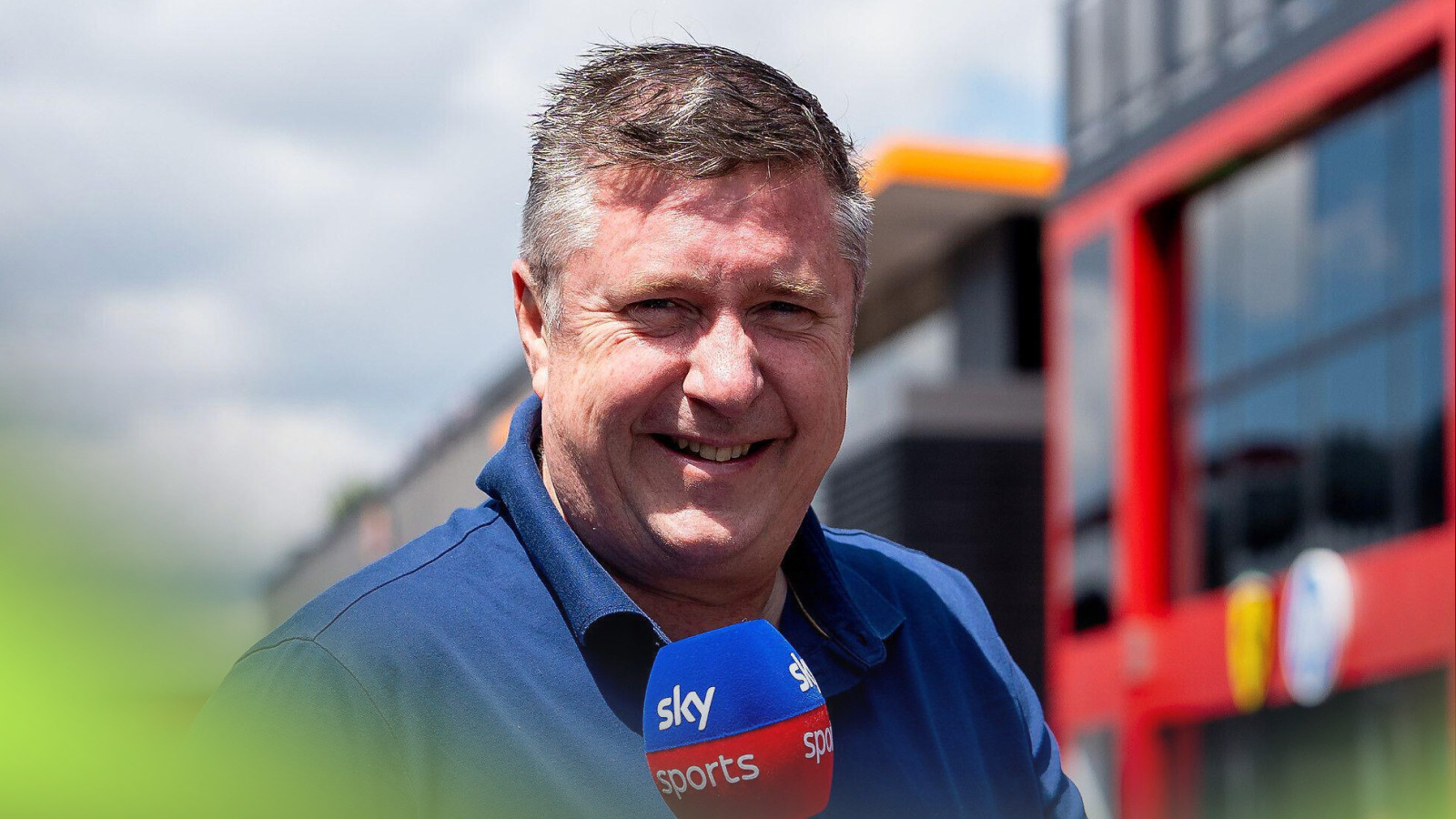
David Croft
It hit David Croft, the voice of Formula One, as he stood beside Lewis Hamilton in Times Square at the world premiere of F1 The Movie.
In front of him Hollywood stars Brad Pitt and Damson Idris posed for pictures. To his left and right every billboard seemed to be advertising their film.
David Croft previews 2026 Formula 1 rule changes
Want more PlanetF1.com coverage? Add us as a preferred source on Google to your favourites list for news you can trust.
Croft turned to the man in the white tux next to him, a seven-time world champion with whom he shares the same birthplace in Hertfordshire, England.
“Did you ever think we’d go from Stevenage to Times Square?” Sky Sports’ lead F1 commentator asked Hamilton.
“It’s insane, isn’t it,” the Ferrari driver replied with a laugh. “I never thought the sport would be able to do this. Not when I first started out.”
That was last June. Eight months later the movie has grossed over $633 million worldwide and Croft, who commentated on the races in the film at the insistence of Hamilton, has turned to his next challenge.
Next weekend the curtain goes up on the 2026 Championship in Australia, bringing with it a new set of rules described as the most radical, comprehensive and fundamental overhaul in the sports’ 75-year history.
From smaller cars with less downforce and grip to a shift to a near 50-50 split between internal combustion and electric power, this is still F1 – but not as you’ve known it.
Even for the most knowledgeable fan this raft of changes take a bit of understanding. But the man charged with making sense of it for us all is sanguine.
“I’ve done 20 years in Formula One,” ‘Crofty’ tells Planet F1 exclusively. “And this year, with these new rules and regulations, is a massive challenge.
“I think once we get into the racing we’re not going to see much of a change, as fans of the sport, albeit there’ll be a lot going on that isn’t as visible.
“But it’s my job and Martin’s (Brundle) job to make those invisible, key moments shine through so people understand what is happening.
“For me, the best thing is there’s less downforce. The cars are going to be a bit more lairy, lighter, more nimble. They look so much better than the big heavy machines we had for the last couple of years. And I think the drivers in time will get used to it.
“They want a load of downforce. We want to see them, not struggling, but having to work to overcome the challenges they’re faced with, because that’s why they’re the best in the business, and that’s why we’re fans of it.”
Croft heads Down Under this weekend. On Monday he will be in Sydney hosting The Crofty Show at the Bondi Pavilion Theatre. From there it is on to Melbourne and Albert Park.
He thinks George Russell and Mercedes are in a “great place” to contend this year and that eight drivers will win races in this year of change.
“Whatever the complexities of the new regs, the cars are still fast,” he adds. “They’re still difficult to control and there’s still going to be wheel-to-wheel racing and the best drivers doing what they do best.”
Latest F1 2026 talking points via PlanetF1.com
Aston Martin faces Australia unknown as Honda reliability fix looms
Formula 1’s realistic replacement options if Middle East races falter
Croft has come a long way since his primary school days being unsure whether he wanted to become a sports commentator or a dustman.
“In the end I chose sports commentary because there was a bit more talking involved,” he jokes.
“Seriously, I was inspired listening to Murray Walker. I loved the way Murray delivered his passion, his enthusiasm. When I finally got to meet him, I realised it wasn’t put on; he was enthusiastic about everything and everyone. Just a wonderful guy.
“It wasn’t just F1 when I was young, I was a big fan of all sport. I loved listening to Harry Carpenter commentate on boxing, Sid Waddell conjuring up Greek mythology and philosophy at the darts, John Motson, Barry Davies and Peter Jones on football.
“Peter’s commentary, I remember, made me throw a radio against the wall when my team, West Ham, beat Everton in an FA Cup semi-final replay in 1980.
“Frank Lampard senior scored the winner in extra time and as he danced around the corner flag at Elland Road, I threw the radio in celebration.
“I was nine and mum and dad raced upstairs wondering what all the fuss was about. I got the biggest telling off but then was allowed to stay up and watch the highlights on Sportsnight.
“These guys, Brian Butler, Jim Rosenthal and others, were masters of the trade. They conveyed their knowledge and their passion and got me excited as a sports fan. That’s what I try to do now.”
Those broadcasting giants might have provided the soundtrack to his youth, but finding a way into the profession took time.
“I had no idea how to get into sports broadcasting,” Croft says. “It’s not the sort of thing they tell you about when you go for careers advice in the fourth year at school.
“I first got a job working backstage in a local theatre, then as a press officer at the same venue. My big break came when a mate of mine got a job as sports editor on the local newspaper.
“He asked me to write about Stevenage Borough and I got a bit of guidance and training on how to be a sports journalist. I took it from there, working my way up through the ranks.
“I was always struck, as a kid, by how genuine the commentators sounded on TV and radio. They were clearly fans in love with their sport. It’s very much the same with me and F1.
“I absolutely adore this sport. It is complex sometimes, but it is never short on drama, never short on high-emotion stories. And my respect is boundless for the people doing it, not just those in the car, but the engineers and the teams as well.
“They are all at the top of their game. And the drivers do superhuman things with these cars, which mere mortals like you or I would love to try our hand at, but would never get anywhere close.”
Croft has done more than all right for himself. ‘From hospital radio to Hollywood’ could be the title of his memoirs, given his first commentaries were for patients at (hospital) Radio Fairfield.
Fast forward 30-odd years and he’s in Times Square chatting with the greatest of all F1 drivers. Two boys from Stevenage made good.
Want to be the first to know exclusive information from the F1 paddock? Join our broadcast channel on WhatsApp to get the scoop on the latest developments from our team of accredited journalists.
You can also subscribe to the PlanetF1 YouTube channel for exclusive features, hear from our paddock journalists with stories from the heart of Formula 1 and much more!
Read next: FIA’s Nikolas Tombazis open to F1 2026 tweaks despite strong start